🐟 A high school that shut its doors in rural Aomori has reopened, not as a school but as a farm where fish feed the vegetables and the vegetables clean the water for the fish. It makes for a tidy sustainability story. The harder, more interesting question is the one the planners had to answer first: how do you make money from a kind of farming that has quietly bankrupted operators all over the world?
A closed school, reborn as a circular farm
"Fujisaki Aquaponics Town" opened on June 13, 2026, in Fujisaki, a small town in northern Japan's apple country. The former Hirosaki Jitsugyo High School Fujisaki campus closed at the end of March 2019 and reopened in April 2024 as a local industry and culture center called Ringoka. The new site occupies the area behind it and comes in three parts: a working aquaponics farm, a cafe serving pizza topped with its own greens alongside a marketplace of local products, and a free public lawn out back dotted with apple-shaped benches.
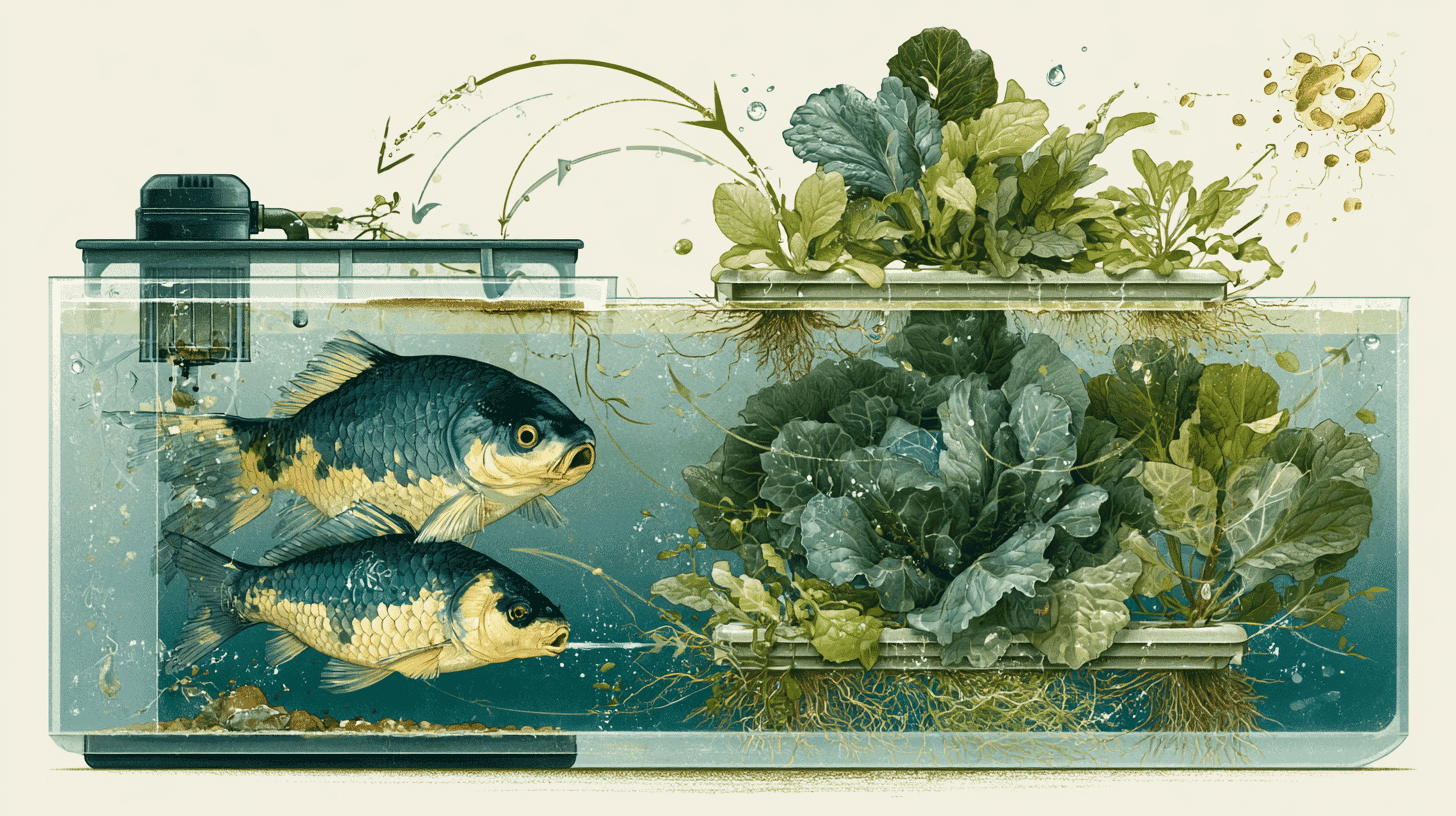
The system at its heart is aquaponics, a word stitched together from aquaculture and hydroponics. Fish waste is broken down by microbes into nutrients the plants absorb; the plants in turn clean the water, which flows back to the fish. No chemical fertilizer, no soil, and a fraction of the water that field farming needs.
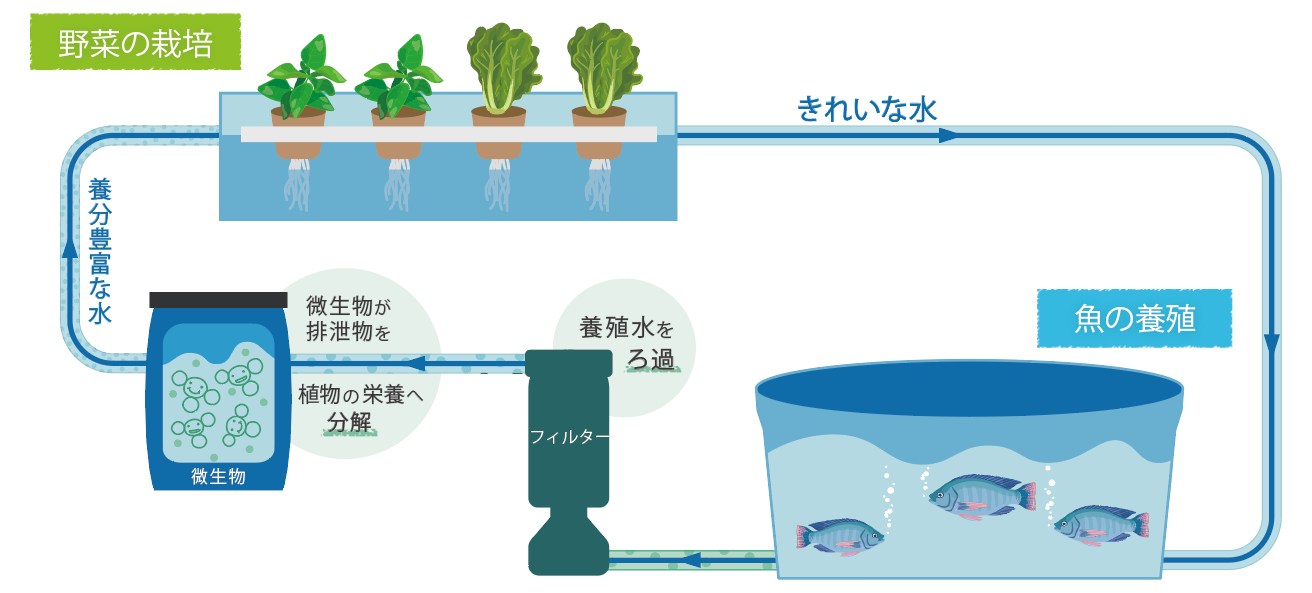
Source: Aquponi Inc. (PR TIMES)
The town didn't build this alone. Aquponi, a Yokohama company led by CEO Kengo Hamada that has installed more than 40 farms nationwide, has advised the project since 2023. The town council approved the budget in March 2025, and the scheme was selected for one of the national government's regional-revitalization grants.
The part the brochures skip
Aquaponics is beloved in sustainability circles. As a business, it carries a brutal track record. Academic reviews find that many commercial aquaponics ventures have short lifespans and that steady profitability is the exception, not the rule. The economics are unforgiving: heavy energy use, technical complexity spanning fish biology, plant science and plumbing, and the awkward fact that in most working systems up to 90% of the profit comes from the vegetables, not the fish.
Put plainly, if you build an aquaponics farm and try to live off selling fish and lettuce, the numbers rarely close.
So Fujisaki isn't trying to.
Where the money actually comes from
The town's bet is that you don't monetize the tank. You monetize everything around it.
Start with value-added food. Raw lettuce is a commodity; a pizza made with that lettuce and eaten on-site carries a restaurant margin. The cafe turns low-value produce into higher-value meals, then pairs them with a marketplace selling Fujisaki's apples and other specialties, retail the farm by itself could never capture.
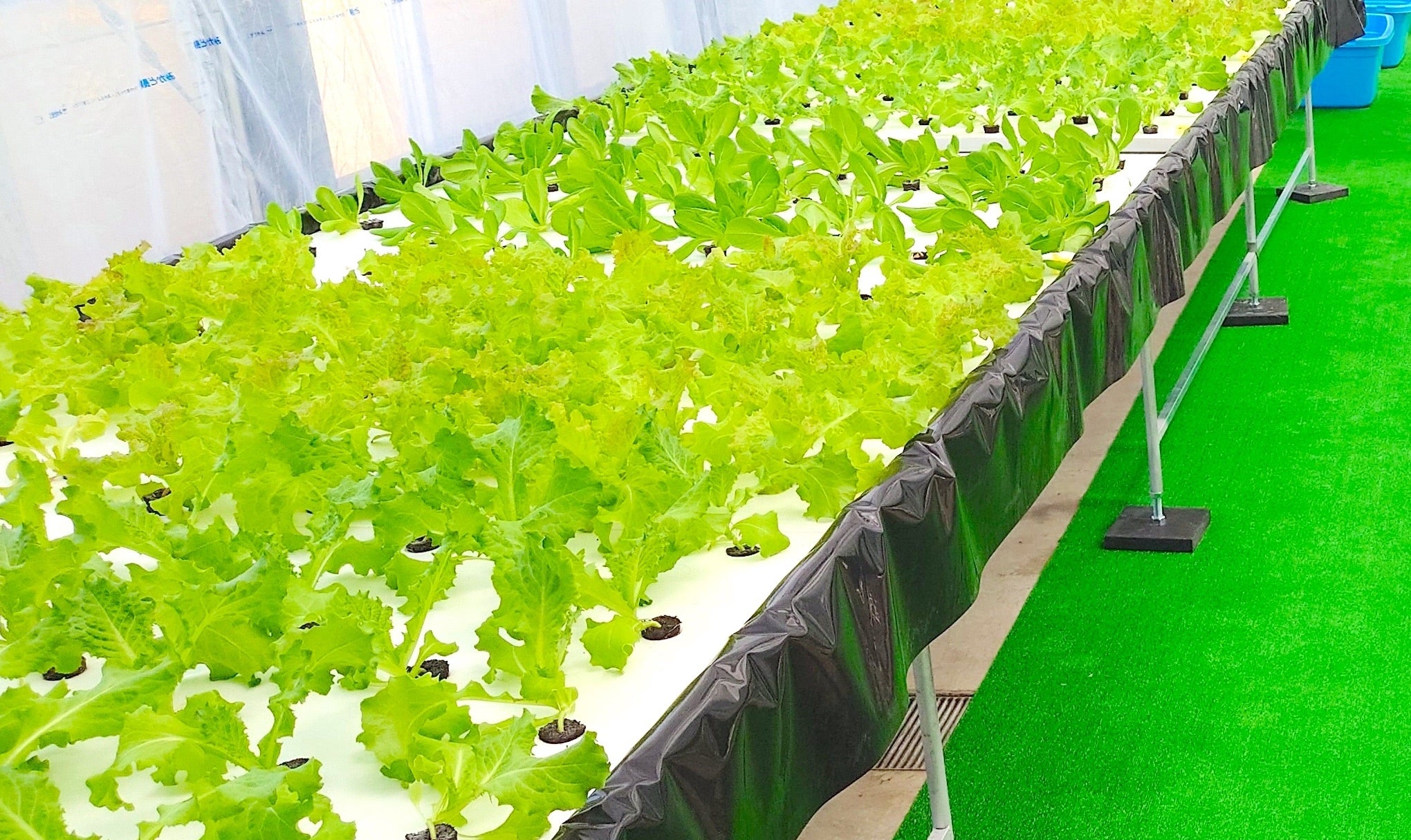
Source: Aquponi Inc. (PR TIMES)
Then tourism. From July 2026 the farm opens to guided tours. In a town most travelers would otherwise drive straight through, a novel fish-and-vegetable farm becomes a reason to stop, eat and spend.
Education and welfare add another layer. The site is designed as a place to learn about food and circular systems, with school visits and hands-on programs. And the cafe is run by a local nonprofit under a model Japan calls noufuku renkei, or "agriculture-welfare collaboration": farm and food work staffed in part by people with disabilities. It is a genuine social mission, but also a labor model that lines up with public support.
Underneath all of it sit public money and reused assets. The national grant and town budget covered much of the upfront cost, and building inside an existing school with an existing greenhouse meant a far smaller capital outlay than a farm from scratch. The operator is largely spared the construction bill that sinks so many greenfield aquaponics ventures.
Stack those together, cafe and retail and tours, education, welfare employment, grants, cheap reused infrastructure, and the produce margin stops being the whole business. It becomes one line item among many.
Why a town would take this on
For Fujisaki, the real return was never the farm's profit-and-loss statement. It is revitalization: a use for a decaying school, work that keeps residents in town, a draw for visitors and would-be migrants, and a brand. Japan's countryside is dotted with shuttered schools, the birth rate having fallen for decades, and finding any productive second life for them is itself a policy goal. The aquaponics farm is the engine; the town's payoff is measured in foot traffic and relevance, not in heads of lettuce.
That public-backing piece is also where Japan's approach diverges from much of the world. Overseas, commercial aquaponics has mostly had to sink or swim on private economics alone, which is part of why so much of it sank. Fujisaki instead wraps the fragile core business in food service, tourism, social employment and government money, betting that the bundle survives where the bare farm would not.
Whether it works is an open question. Grant-funded launches are the easy part; year-five sustainability is the hard part. But as a template for what to do with an empty school in a shrinking town, "wrap a farm in everything that pays" is a more honest design than "build a farm and hope."
A circular hub, not just a farm
Water scarcity and food security are pushing closed-loop farming up the agenda worldwide. Fujisaki's real export may not be the farm at all, but the wrapper around it.
Does your country have empty schools or factories quietly waiting for a second act? And if so, what would you put inside them?
Update: The farm tours have since settled into a regular slot: every Saturday at 10:00 and 13:30, six people per session, paid and by advance reservation through the town's website.








Global Discussion
4 comments