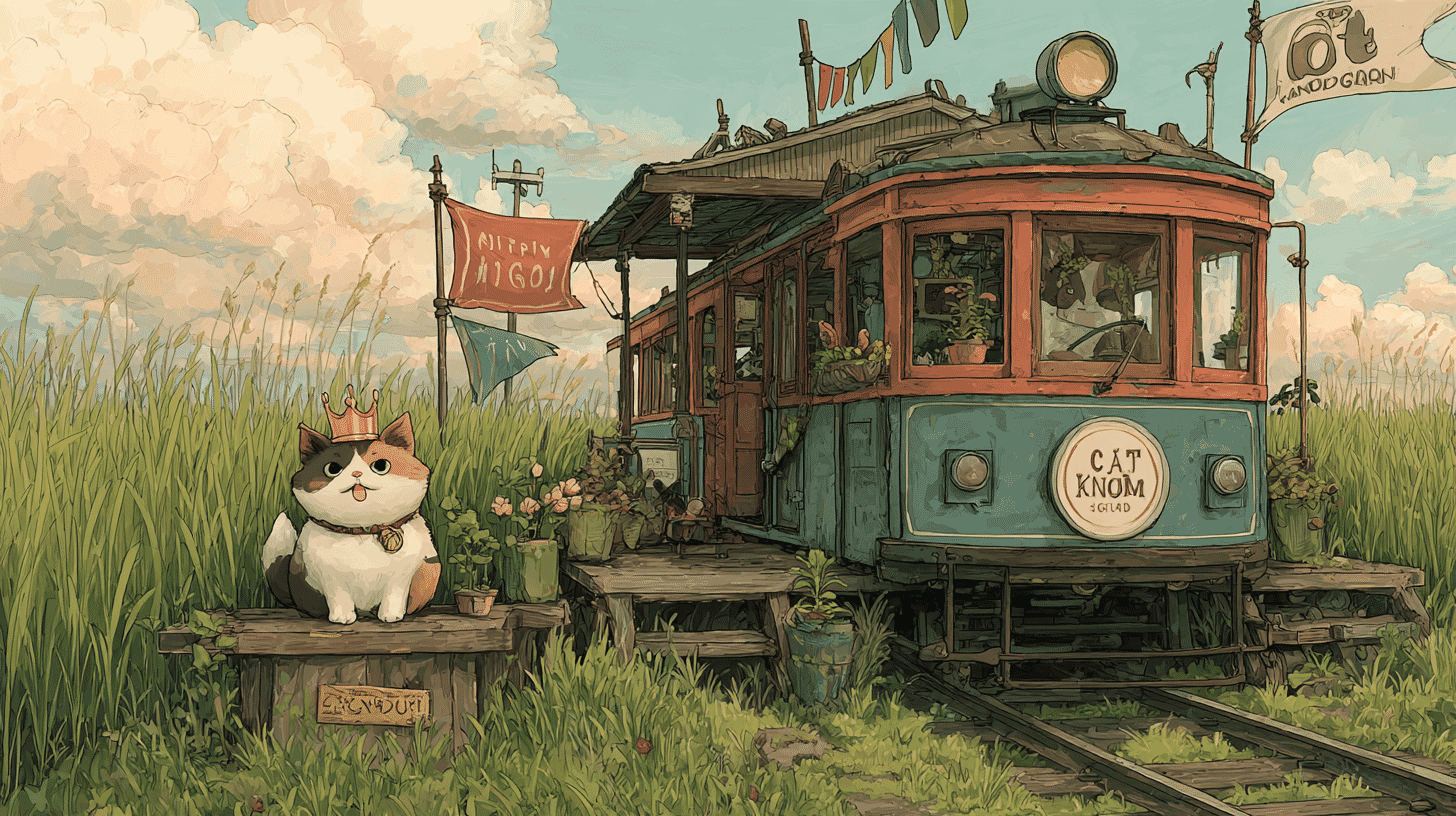
🐱 Twenty years ago, this little train line in western Japan was headed for the scrapheap. Then a stray calico named Tama was handed the job of stationmaster, and saved it. Two decades on, the railway has unveiled its most ambitious idea yet: turn the whole line into "Nyanderland," a tongue-in-cheek cat nation with passports, visas, citizens, and an elected queen. Here's the warm, slightly bonkers story behind it.
The line a cat saved
The Kishigawa Line runs just 14.3 kilometers through the rice fields of Wakayama Prefecture, from Wakayama Station to the village of Kishi, about 30 minutes end to end. In 2003 its previous operator, Nankai, declared the money-losing line beyond saving and moved to shut it down. A railway group from Okayama, Ryobi, stepped in, and in April 2006 a new company, Wakayama Electric Railway, took over.
The new operator inherited a quirk along with the tracks: an unstaffed terminus at Kishi, where a calico cat named Tama lived at the station kiosk. As the company tells it, president Mitsunobu Kojima locked eyes with her and saw a stationmaster. In January 2007, Tama got the title, a little cap, and one official duty: greeting passengers.
What happened next is railway legend now. Tama became a national, then global, sensation, and tourists started riding the line just to meet her. Kansai University economist Katsuhiro Miyamoto estimated she generated around 1.1 billion yen (roughly $7 million at today's rate of about 160 yen to the dollar) in economic impact in 2007 alone, and she's often credited with helping kick off Japan's wider cat-tourism boom. When Tama died in 2015 at the age of 16, the company gave her a Shinto funeral, named her "honorary eternal stationmaster," and enshrined her as a deity, Tama Daimyojin, in a small shrine built right on the platform.
Two cats, one cake, and a worldwide singalong
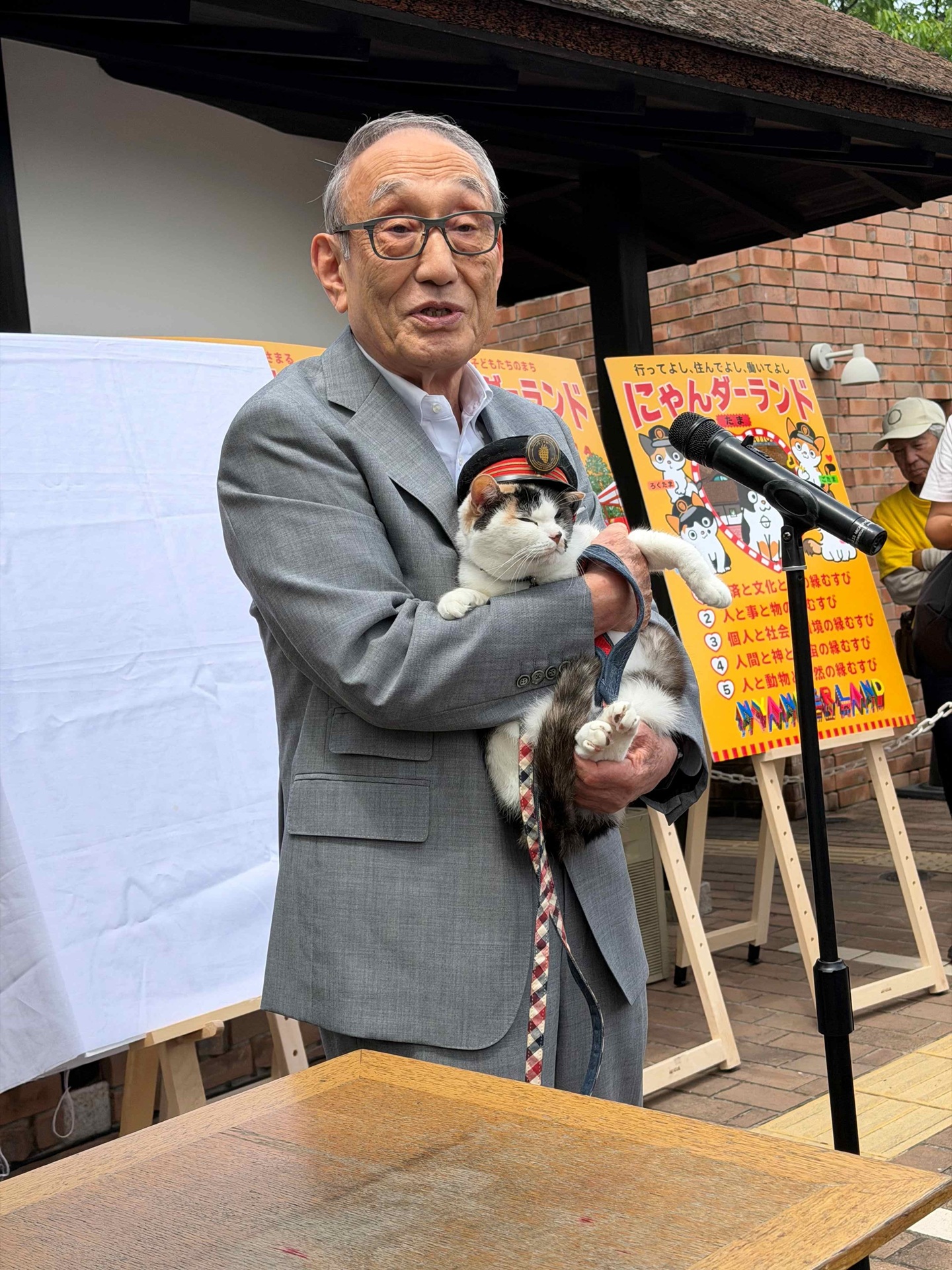
Source: Wakayama Electric Railway
The succession has rolled on ever since, with each cat named for its number in the naming line: Tama, then Nitama ("Tama II"), and now Yontama, literally "fourth Tama" by name, though only the third cat to hold the Kishi post. Yontama, a calico born in 2016, took the job in January 2026 after the much-loved Nitama died on November 20, 2025, at the age of 15. Her company funeral at Kishi Station on December 13 drew about 500 mourners from across Japan. Gotama, stationmaster at Itakiso, doubles as acting stationmaster at Kishi, and a trainee named Rokutama, "sixth Tama," is still learning the ropes.
On April 29, 2026, which is Tama's own birthday, the railway threw a joint party. Tama, enshrined on the platform, would have turned 27; Yontama, born on April 17, turned 10. Rokutama joined in, and fans who had traveled from across Japan and abroad sang "Happy Birthday" and blew out the candles together. It was there, billed as a "Nyanderland kickoff," that the company laid out what comes next.
Welcome to Nyanderland (passport required)
"Nyanderland" puns on nyan, the Japanese sound a cat makes, and "wonderland": a plan to rebrand the entire rail corridor as a whimsical cat country. First floated on April 4, its full rollout schedule was unveiled at the birthday kickoff.
The opening phase, covering the three years from April 2026, reads like the founding of a very cute micro-state. The company plans a "Nyanderland Gateway" on platform 9 at JR Wakayama Station, an official emblem, and a scheme certifying people who work on revitalizing the corridor as "citizens." Nyanderland passports and visas will come with perks, and a public vote will crown one of the cat stationmasters as queen. A rented house in front of Itakiso Station is to become a cat-themed café, garden, and museum.
The whimsy has a hard-headed aim behind it. The plan runs across roughly ten years, in three blocks of three, three, and four years. The second phase, from April 2029, promises the railway's first-ever new rolling stock design and a bid to attract a "Nyanderland transport university," its working title. Kojima framed it as a pivot: for 20 years the company focused on reviving the railway and pulling in tourists, and from year 20 on, he says, the emphasis shifts to building up the community itself, with the railway as the lever.
Can a town really run on cats?
It's easy to grin at passports for a cat country, and fair to ask whether feline branding can actually grow a town's population. But the railway has receipts. Tama didn't just sell plush toys; she kept alive a line that a major operator had given up on. Local government has played along too, easing zoning rules along the route, which opened the door to small housing developments and turned the corridor into a rare rural area where the population is actually rising.
Whether "citizens" and a crowned queen can build on that is the real experiment. What isn't in doubt is the affection underneath it. Every cat in the line has been a real animal, cared for, mourned, and in Tama's case quite literally worshipped. The Nyanderland plan is, at bottom, a promise to keep that going.
In Japan, a cat can save a railway and inspire a whole town to reinvent itself. Does your country have an animal that became a local hero?







Global Discussion
4 comments