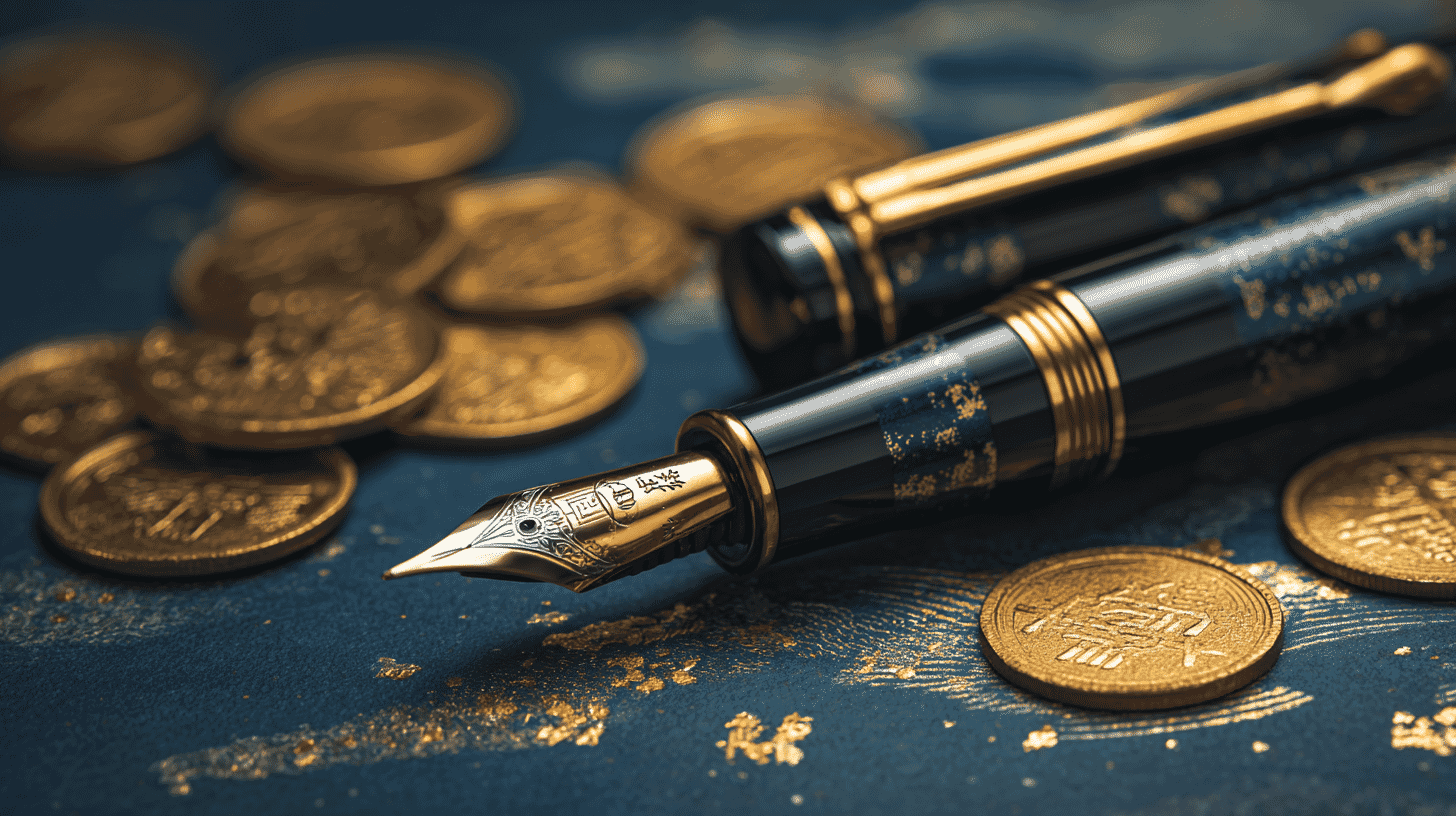
A staple model from one of Japan's best-known fountain pen makers doubled in price overnight. The revision Sailor Pen put into effect on February 1, 2026 centers on products that use gold, and for most of them the new figure is almost exactly twice the old one.
From 22,000 Yen to 44,000 Yen
Sailor Pen Co., Ltd. announced on January 5, 2026 that it would revise prices from February 1, concentrating on gold-bearing products. The standard "Profit Standard" fountain pen went from 22,000 yen to 44,000 yen, tax included. The "Professional Gear Silver" moved from 38,500 to 77,000 yen, and the "Professional Gear Pink Gold" from 49,500 to 82,500 yen. In each case, roughly double.
Founded in 1911 and headquartered in Kure, Hiroshima Prefecture, Sailor said in its announcement that resource prices for gold bullion, other metals, and resin materials had combined with rising logistics and labor costs. The company had absorbed these in stages before, it said, but keeping supply stable at current prices had become extremely difficult.
The Real Driver Is the Gold Price
Several reasons get cited, but the numbers point at one. According to figures published by Tanaka Kikinzoku Kogyo, the annual average gold price in Japan rose from 6,122 yen per gram in 2020 to 17,302 yen in 2025. Roughly triple in five years.
The market kept moving after the announcement. Tanaka's over-the-counter retail price climbed to 29,969 yen per gram on March 3, 2026, fell to 22,624 yen on August 3, and stood at 24,822 yen on September 4. The level the repricing was built on has swung by nearly 30% in half a year. Pricing off a bullion market is easy to explain on the way up; it leaves an awkward question on the way down.
Sailor uses 14K and 21K nibs across much of its range, so the bullion market feeds straight into unit cost. Gold is not there for decoration: it gives the nib a particular flex and resists corrosion from ink. That makes substituting a cheaper material to hold the price down an unattractive option.
The rest of the bill of materials is no easier. Resin, ebonite, and celluloid for pen bodies all face tight supply. And because nib tuning and feed assembly resist automation, wage increases pass almost directly into cost.
All Three Japanese Makers Moved
This is not a Sailor-specific problem. All three of Japan's major fountain pen manufacturers have raised prices in succession.
Pilot (founded 1918) announced increases on fountain pens and oil-based ballpoints in August 2025, citing raw material and energy costs. The Elabo went from 39,600 to 47,300 yen. Pilot is Japan's largest writing instrument company, known worldwide for the erasable FriXion line.
Platinum (founded 1919) revised prices twice, in June 2025 and January 2026, by up to roughly 40 percent depending on the model. Its Slip & Seal mechanism keeps ink from drying during long periods of disuse, and the #3776 Century is its signature pen.
Sailor (founded 1911) builds its reputation on writing feel, through the Professional Gear and King of Pen lines and its distinctive Naginata Togi nib grind.
Who Buys a 44,000-Yen Fountain Pen?
Demand survived digitization because of a specific set of buyers: people particular about their writing tools, younger users who chose handwriting deliberately, and overseas enthusiasts of Japanese goods. The strength of "Made in Japan" in this category rests on them.
The size of this increase narrows the entrance. At 22,000 yen a fountain pen is an indulgent hobby purchase. At 44,000 it becomes a once-in-a-lifetime decision. The industry's argument that a good pen lasts decades is true, but if fewer people pick up a first one, the pool of buyers who can appreciate the writing feel shrinks with it. What the increase protects is quality and supply. What it may cost is the base of the pyramid.
What are fountain pens perceived as where you live? And how do you feel about rising prices for writing instruments? We'd like to hear your take.









Global Discussion
15 comments