A Shizuoka lab has closed the breeding loop on the douman crab. Individual boxes are standard practice in Southeast Asia; what took eight years was larval die-offs and timing the female's molt.
Rausu, Rishiri, hosome, ma-kombu: four kelps sold under four names and four price tiers. A Hokkaido University team read the DNA of 475 plants and found no genetic line between them.
Fish have no eyelids, yet pufferfish close their eyes. Shimonoseki's Kaikyokan aquarium dissected 51 species and traced the eye-closing muscle to the one that deflates a puffed-up puffer.
Warming seas pushed a pufferfish north across the Tsugaru Strait, and the hybrids do not fit Japan's 1983 table of edible species and parts. How the rulebook caught up, and why the Mediterranean has the same gap.
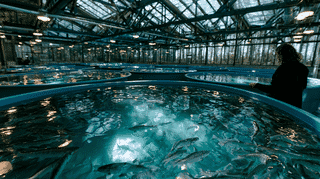
Murakami's salmon run fell from 55,000 fish to 1,400 in a decade. Now the town is spending about $32,000 to attempt what Norway and Chile have not: closing the life cycle of chum salmon entirely on land.
A kawakawa hybrid made bluefin tuna sperm at eight months, and rainbow trout now spawn Chinook salmon yearly. Inside Japan's 20-year surrogate broodstock effort and Kindai's 32-year tuna project.
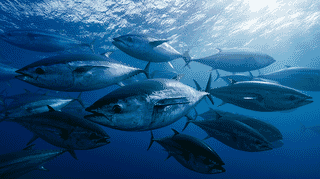
Pacific fishing nations agreed on August 18, 2026 to raise the quota for bluefin tuna over 30 kilograms by 25 percent, to 14,836 tons in the western Pacific, and to cut the quota for juveniles by 6 percent.
Japan's 2025 seafood output fell to 3,577,400 tonnes, the lowest since 1956, while FAO puts world production at 235 million tonnes. Comparing quota rules with Norway and the US shows why fewer fishermen isn't the answer.
Japan's food exports hit 897.7 billion yen (about $5.7 billion) in the first half of 2026, a record. Green tea rose 83.5% and yellowtail 69.0%, but the yen was 5.5% weaker, so about half the growth was currency.
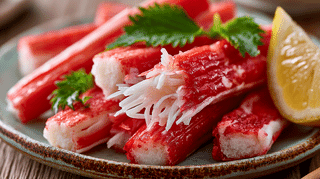
The crab stick in your salad or sushi roll traces back to a small town on Japan's Noto Peninsula, where it was invented as one of the country's great postwar food breakthroughs. The global surimi market is worth several billion dollars, roughly half of it crab sticks. Riding a wave of fish-eating and high-protein diets, kanikama is spreading fast, so why is Japan's surimi know-how so hard to imitate, and how is it sold abroad?
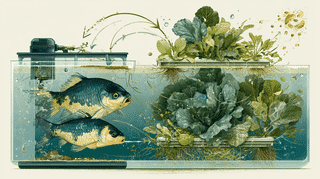
Aquaponics rarely pays as a standalone farm. So how does Aomori's closed-school project plan to make money? By monetizing the cafe, tours, education and welfare work around the tank, backed by public funds.
Anglers curse it, and it devours kelp forests. Now a patent-pending method to kill the rabbitfish's notorious stench has Japan talking. A look at turning a nuisance fish into food, and how the world is doing the same.
In 2002, Japan's Kindai University pulled off the world's first full-cycle bluefin tuna farming. Two decades on, the major seafood companies are walking away and commercial output is fading. The irony: the headwind is the recovery of wild tuna stocks. A look at the gap between sustainable and profitable.
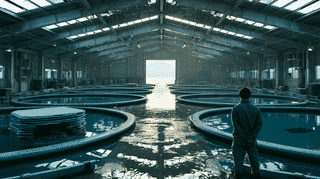
With water that is neither sea nor fresh, Okayama University of Science is trying to farm salmon through its entire life cycle on land. If it works, the university calls it a world first. We unpack the technology behind it, why salmon is the hardest fish to farm this way, a 250-year-old salmon town's role, and the global scramble for farmed salmon.
Tokai University is chasing a world-first: land-based, full-cycle aquaculture of the common octopus, long considered one of the hardest animals to farm. We unpack the cannibalism and escape problems, the clever 'octopus apartment,' the global octopus shortage behind it, and the ethical fight that has already produced farming bans abroad.
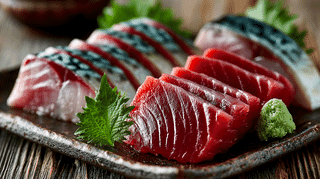
Kumamoto University has built a world-first device that kills anisakis parasites in raw fish using a 30,000-volt pulse lasting one-millionth of a second, without freezing or cooking. A look at the food-safety tech behind Japan's sashimi culture.
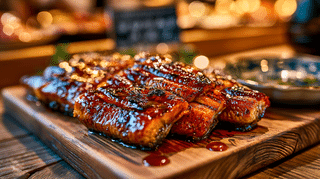
Yamada Suisan and Japan's fisheries research agency put fully farmed eel on public sale for the first time on May 29. After cutting glass-eel production cost from 40,000 to 1,800 yen, the country aims to end wild-juvenile dependence by 2050.
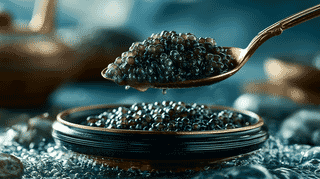
Caviar's definition of 'best' has shifted from geography to aquaculture technology. As China supplies 60% of the world's farmed caviar and Russian product disappears under sanctions, a landlocked Japanese prefecture is challenging the global hierarchy with a hybrid land-based farming system that combines patented closed-loop tech with rare ultra-soft spring water.
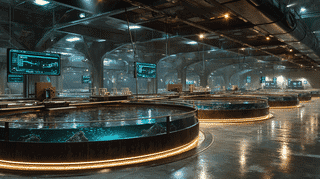
Japanese telecom giant NTT runs a land-based shrimp farm in Iwata, producing 180 tons/year and capturing the largest domestic share. A deep dive into the 10-year plan to free Japan from its 90% shrimp import dependence, plus how it stacks up against Norway and Singapore.
On April 23, PM Sanae Takaichi met five foodtech CEOs at the PM's Office: Oishii Farm, PlantX, FRD Japan, Regional Fish, and Toko Tekko. Why these five? This article decodes how each company's technology answers one of the world's four shared food crises, climate-driven farmland collapse, ocean depletion, population growth, and shrinking farmer populations, and the strategic logic behind Japan choosing to win in specific categories rather than competing across the board.