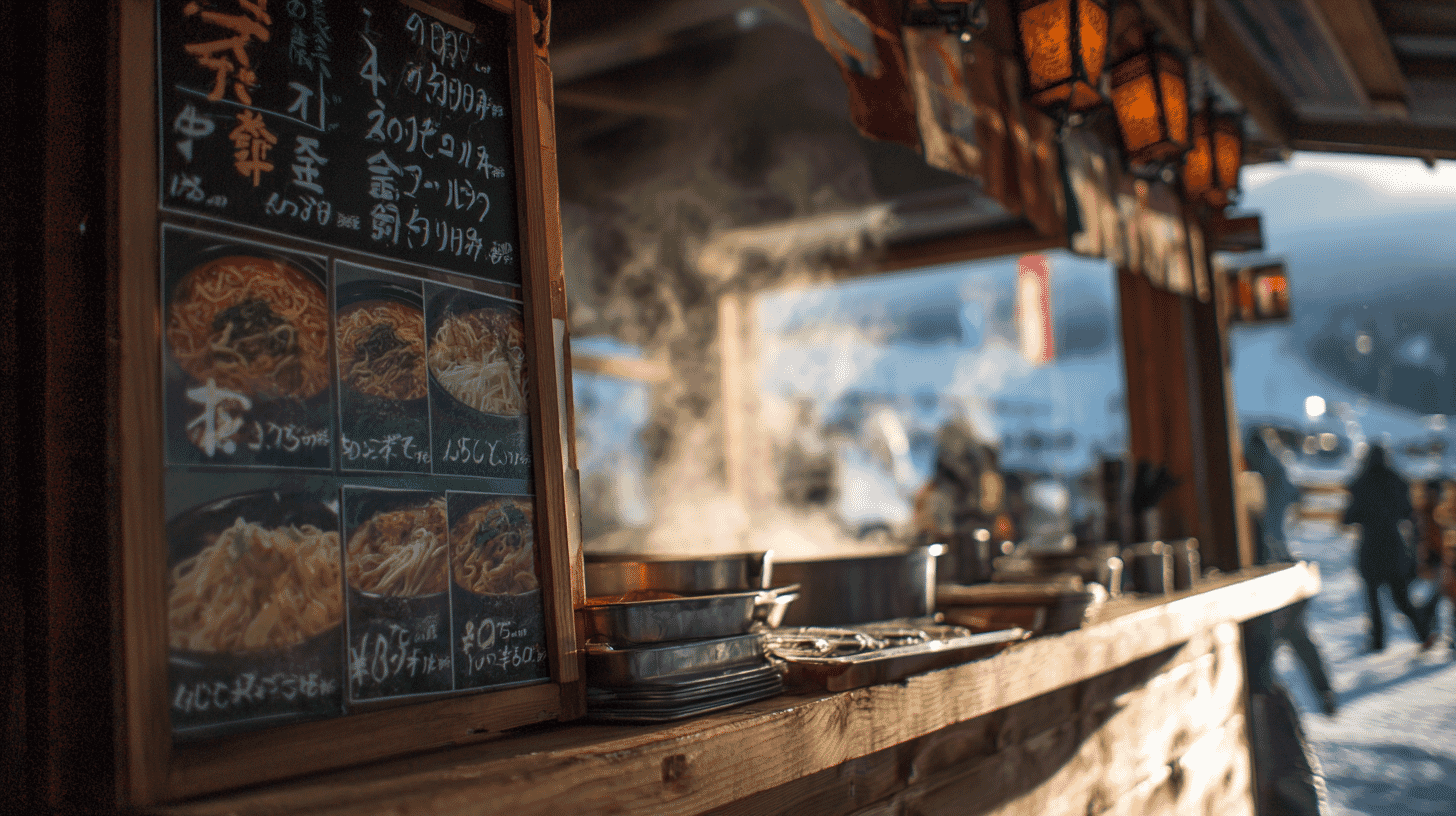
A bowl of yakisoba for ¥3,000 (about $20). A bowl of miso ramen for the same. That is the going rate at the food trucks in Niseko, Japan's premier ski resort, and the price tag tends to stop Japanese visitors cold. But "tourist pricing" doesn't explain it. Hourly wages above ¥2,000, Tokyo-level rents in rural Hokkaido, and a 100-day winter in which to earn a year's income: this is the arithmetic behind the number.
The "Niseko 100-Day War": A Year's Income in Three Months
The Niseko area in Hokkaido (encompassing Kutchan, Niseko, and Rankoshi towns) operates as a world-class ski resort with just roughly 100 days of winter season from December to March. In 2023, the region recorded a historic high of 738,800 foreign overnight stays, leading industry insiders to call this period the "Niseko 100-Day War."
Walk down the streets and you'll hear English, French, and Chinese more than Japanese. Finding a Japanese visitor is actually the exception. Along Hirafu Slope, condominiums priced over ¥1 billion (approximately $6.7 million) line the streets, with land prices exceeding ¥700,000 per square meter, higher than Sapporo's most upscale residential areas.
¥3,000 Curry, ¥180 Profit: The Hidden Economics
While the "Niseko pricing" phenomenon has drawn attention and criticism, business operators face genuine financial pressures. Tatsumi Tomita, who previously operated a restaurant in Niseko, explains: "Even stores that charge high prices are essentially fighting to survive in just 100 winter days. Even if you charge double the normal price, trying to earn 365 days' worth of revenue in 100 days still isn't enough."
The extreme costs driving Niseko's prices include:
- Rent: ¥90,000/month for a studio apartment (Tokyo levels)
- Part-time wages: ¥2,000-3,000/hour (exceeding Tokyo rates)
- Food truck licensing fees: Several hundred thousand yen per month
For a ¥3,000 katsu curry, more than half goes to labor costs and rent. The actual profit? Just around ¥180. Surprisingly, this isn't much different from the profit margin of selling the same dish for ¥1,000 in Sapporo.
Why 50+ Food Trucks Have Descended on Niseko
This season's most visible change in Niseko is the proliferation of food trucks that begin operations at dusk. More than 50 trucks now operate in the area.
The reason? A severe restaurant shortage. While Kutchan's bed capacity has grown to over 16,000, restaurant seating remains at just 2,500. The situation has become so dire that reservations must be made months in advance, creating a gap that food trucks have rushed to fill.
The Kutchan Tourism Association has responded by establishing "Eat Street in Niseko," a designated area with proper waste management and restroom facilities.
"Price Equals Value": What Wealthy Visitors Actually Want
Perhaps most fascinating is how wealthy visitors respond to pricing. "We once lowered our prices, but customers assumed the quality was poor and stopped buying. We had to raise them back," says one food truck operator who comes in from Sapporo.
Tomita adds: "What I've learned from wealthy customers is that they think 'price equals value.' Global VIPs aren't looking for cheap options, they want personalized service that meets their specific needs and preferences."
At the luxury hotel The Vale Niseko, wages are set at global standards rather than Japanese levels to attract experienced talent. Separately, a sushi chef who comes to your lodging costs ¥38,000 a head, or over ¥300,000 for a party of eight. Set against the ¥30,000-70,000 an omakase runs at a high-end sushi counter in Hong Kong, having the chef to yourself reads as good value.
¥30,000 Sea Urchin Flying Off Supermarket Shelves
At the MaxValu supermarket in Kutchan, scenes unfold that seem surreal for a regular grocery store:
- Hokkaido sea urchin: ¥32,184 per tray
- Boiled king crab: ¥27,864
- Premium marbled wagyu beef: Extensively stocked
About 60% of shoppers in the store are foreign visitors, casually placing luxury items in their baskets without hesitation. One American visitor interviewed had ¥115,000 worth of groceries in his cart. "Everything here is cheaper than in America, and for this quality, it's not expensive at all," he said with a broad smile.
"Kutchan ID+": Learning from Hawaii's Dual Pricing
The price surge has inevitably affected local residents. Many have begun feeling that the resort area is "not a place for us," creating both psychological and physical distance from the tourism zone.
To address this, Kutchan has launched "Kutchan ID+," a resident discount program using My Number Card verification. Residents can receive discounts of up to 70% on all-mountain day lift passes and other benefits.
The concept was inspired by Hawaii's "kamaaina discount" system (for local residents), representing an innovative nationwide approach to balancing tourism development with resident quality of life.
Care Facilities Closing: The Dark Side of the Resort Bubble
Behind the glamorous resort economy, serious problems are emerging.
With hourly wages exceeding ¥2,000, higher than Tokyo, non-tourism businesses struggle to hire staff. Some care facilities have been forced to close. Traffic accidents involving foreign visitors exceed 500 per winter season, and conflicts between tourists and residents are increasing.
Is Niseko a Success Story or a Warning?
As Japan's government promotes tourism and targets wealthy visitors, Niseko stands at the forefront. However, experts offer different perspectives.
Professor Toru Azuma of Rikkyo University's College of Tourism warns: "Excessive tourism development causes not just price increases but various forms of deterioration in residents' living environments, leading to fear of and backlash against tourism. There's a gap between the national policy of increasing inbound tourism and local communities worried about over-tourism."
Niseko Town itself has begun communications campaigns stating that "prices aren't high," attempting to correctly convey the difference between resort area and residential area costs.
How are prices at ski resorts and tourist spots in your country, and how do they affect local residents?







Global Discussion
15 comments