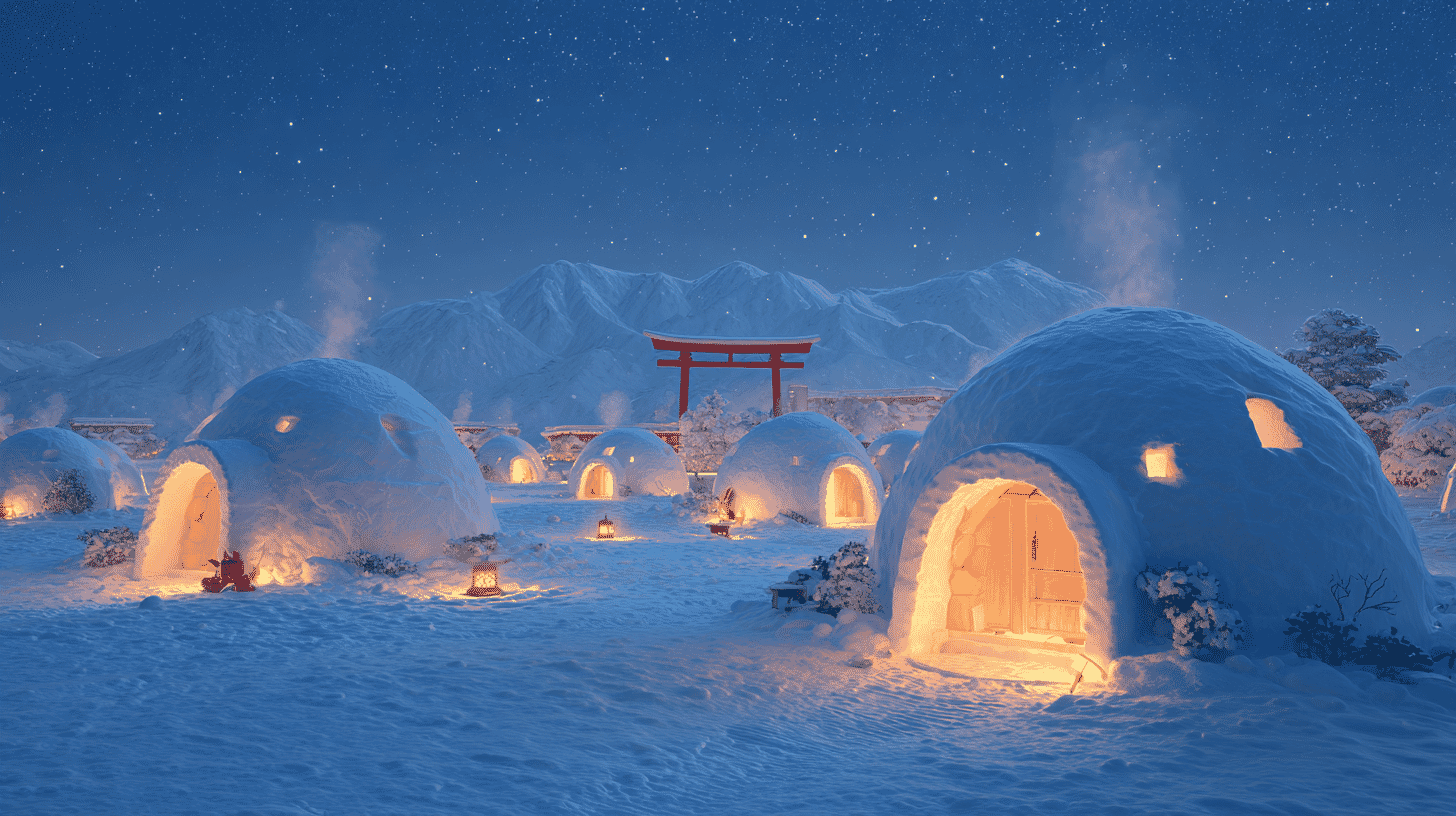
Iiyama in Nagano Prefecture gets some of the heaviest snow in the prefecture. Local volunteers use it to build more than twenty snow huts each winter, and inside them a restaurant serves hot pot. The dish is Noroshi Nabe, simmered in Shinshu miso, and after dark every hut is lit from within. The 2026 season ran from January 23 to March 1.
What is a Kamakura? Understanding Japan's Winter Tradition
A kamakura is a traditional Japanese snow hut that has been part of Japan's snow country culture for centuries. The most famous kamakura tradition comes from Yokote City in Akita Prefecture, where this practice dates back approximately 450 years.
Originally, kamakura were built as part of the koshogatsu (Little New Year) celebrations around January 15th on the lunar calendar. Villagers would pile up snow, compact it into a dome shape, and hollow out the interior to create a cozy space. Inside, they would enshrine a water deity (suijin-sama), and children would welcome visitors with sweet sake (amazake) and rice cakes.
The origin of the word "kamakura" remains debated among scholars. Some believe it derives from "kamikura" (seat of the gods), while others suggest it comes from "kamadokura" (hearth hut) due to its resemblance to a traditional cooking stove. The German architect Bruno Taut famously praised this enchanting tradition when he visited Yokote in 1936, later writing about it in his book "Rediscovering Japanese Beauty."
What is Restaurant Kamakura Village?
Located in Iiyama City, Nagano Prefecture, "Kamakura no Sato" (Kamakura Village) is a seasonal winter destination that operates for approximately one month from late January to late February each year. At its heart is "Restaurant Kamakura Village," a unique dining experience where guests can enjoy meals inside authentic snow huts.
Iiyama City is known as one of Nagano Prefecture's heaviest snowfall areas, and the local "Kamakura Support Team" harnesses this abundant snow to handcraft more than 20 kamakura each winter. Having celebrated its 20th anniversary in 2020, this attraction has grown into a popular destination drawing visitors from across Japan and around the world.
What makes these kamakura particularly interesting is their construction method. Unlike traditional kamakura built by hollowing out a snow mound, the Iiyama team uses an innovative approach: they pack snow around a giant balloon, then deflate and remove the balloon once the snow has hardened. This efficient technique allows them to create large kamakura with walls nearly one meter thick.
2026 Event Information
Restaurant Kamakura Village 2026 ran from January 23 (Friday) to March 1 (Sunday). It operated in lunch and dinner sessions, all by reservation only, and weekend dinner slots often filled up within days of booking opening.
Note: the 2026 season closed on March 1. Organizers said they made it through the full schedule despite a thin snow year. The event usually runs from late January to the end of February, and dates for the next season are announced on the official site.
General admission is ¥300 for adults and ¥100 for elementary school students. Restaurant diners and preschool children enter free. Even without a dining reservation, visitors can enjoy the snow playground, souvenir shop, and a designated "free kamakura" open to everyone.
For the 2026 season the day plan, covering use of a hut, the Noroshi Nabe and a rice ball of locally grown Koshihikari, cost ¥6,300 for adults and ¥4,800 for elementary school children at lunch, and ¥6,800 and ¥5,200 in the evening, paid online by card. Preschoolers were free, given a bowl and chopsticks. The pot serves about two, so bookings generally assume two or more, though a single-diner rate exists. Evening slots required either arriving by car or taking a plan that includes the return bus.
The Signature Dish: Noroshi Nabe
The star attraction at Restaurant Kamakura Village is the "Noroshi Nabe" (Signal Fire Hot Pot), a hearty dish prepared with Shinshu miso. This flavorful hot pot features local vegetables including napa cabbage, daikon radish, carrots, traditional Iiyama vegetables like Tokiwa burdock and Sakai taro, various mushrooms, and the prized local "Miyuki Pork."
The name "Noroshi Nabe" pays homage to the signal fire towers that once stood on nearby Mount Kuroiwa, used by the forces of the famous feudal lord Uesugi Kenshin during the Sengoku period. The rising steam from the hot pot evokes images of those ancient signal fires.
Accompanying the hot pot is a rice ball made from Iiyama-grown Koshihikari rice, renowned for winning numerous gold awards at national rice tasting competitions.
Each group gets exclusive use of their kamakura, creating a private dining experience. Despite being surrounded by snow, the interior stays surprisingly warm, and many guests report feeling quite toasty while enjoying their hot pot.
Highlights and Recommendations
Evening Illumination is a Must-See
As dusk settles, all 20-plus kamakura are lit from within, creating a magical wonderland. Warm lights flickering against the pristine white snow offer a quintessentially Japanese winter scene. Enjoying your hot pot while watching snowflakes drift by is an unforgettable experience.
Diverse Plan Options
Beyond the standard Noroshi Nabe day plan, visitors can choose from a casual "Snack Plan" featuring roasted sweet potatoes with sweet red bean soup or amazake, accommodation packages with nearby hot spring hotels, and a new "Doburoku Plan" for 2026 featuring local unfiltered sake.
Winter Activities
Even without a dining reservation, visitors can enjoy snow rafting pulled by snowmobiles, snow vehicle rides, sledding, and more. It's a winter playground for all ages.
Kamakura Shrine Visit
At the far end of the venue stands a striking red torii gate marking the Kamakura Shrine. This snow shrine creates an otherworldly atmosphere, complete with a sacred altar and offering box. According to tradition, a deity descends from Mount Kuroiwa each winter to reside here.
Getting There
Restaurant Kamakura Village is surprisingly accessible from Tokyo. Take the Hokuriku Shinkansen from Tokyo Station to Iiyama Station (approximately 2 hours), then a 15-minute taxi ride or 20-minute bus ride on the "Express Togari Line" to the Shinanodaira bus stop. By car, it's about 25 minutes from the Toyota-Iiyama IC on the Joshinetsu Expressway.
Note that for dinner sessions, the last public bus departs at 17:07, so evening guests must either drive themselves or book a plan that includes return shuttle service to Iiyama Station.
Nearby attractions include Togari Onsen and Madarao Kogen, offering excellent opportunities to combine your kamakura experience with hot springs and skiing.
Reservation Information and Tips
Web reservations offer the best value and convenience. For the 2026 season, accommodation packages opened on November 4, 2025, day trip plans on December 19, and phone reservations on January 15, 2026. A similar schedule is likely for the next season.
Vegetarian and halal dietary accommodations are available with advance notice. Halal meals require an additional fee.
Dress warmly: ski wear and proper winter footwear are strongly recommended. Temperatures drop significantly during evening sessions, so thorough cold-weather preparation is essential.
The venue has seen growing international interest, with visitors from Taiwan, Australia, and other countries increasingly discovering this authentic Japanese winter experience.
Does your country have traditional winter structures made from snow, or special cold-weather food customs? What do you make of the Japanese kamakura experience?



Global Discussion
16 comments