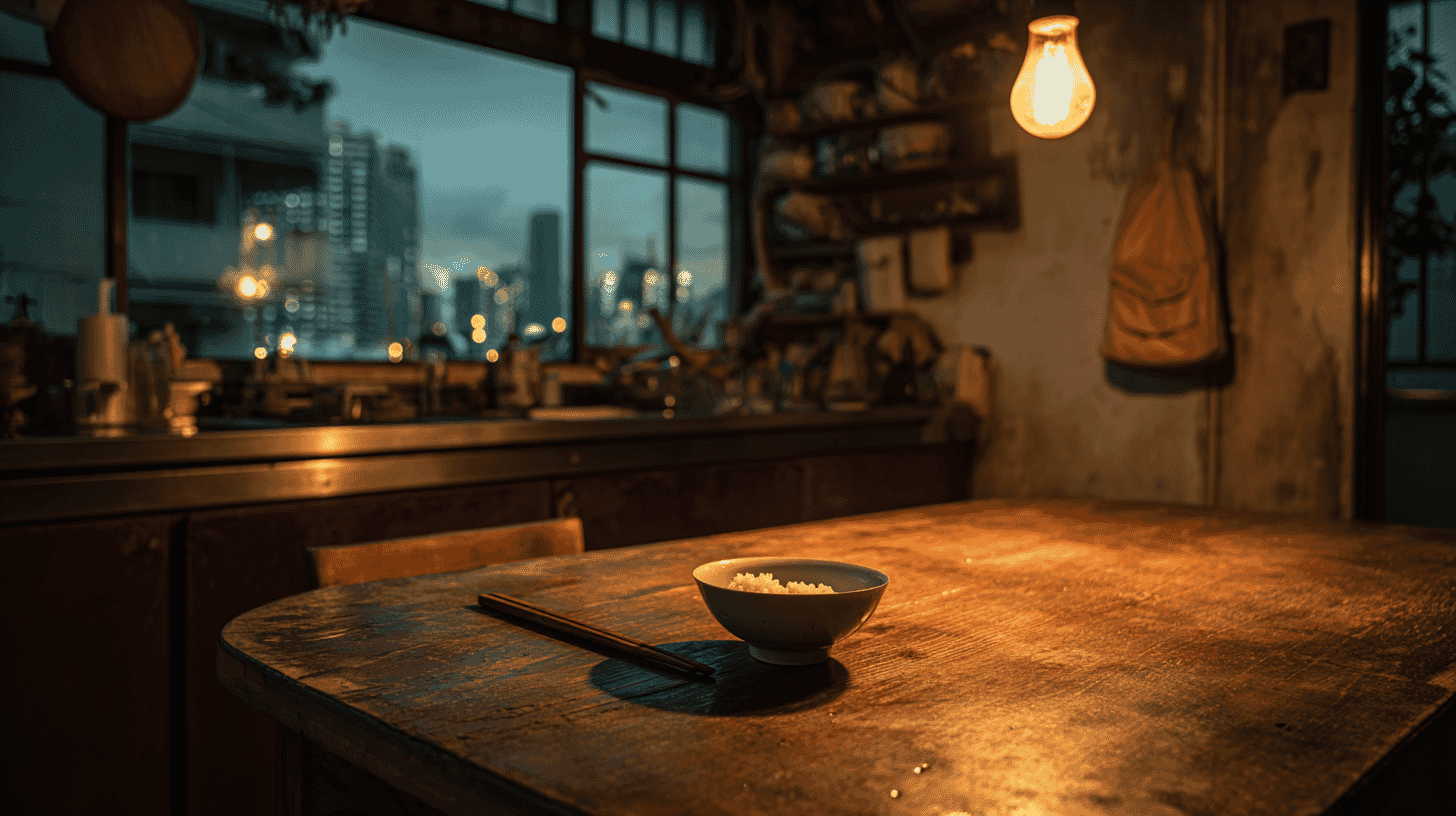
In one of the world's wealthiest nations, children are going hungry. One in nine Japanese children lives in relative poverty, and for single-parent households, nearly half are struggling below the poverty line. As prices surge and wages stagnate, a food bank serving more than 5,600 families each month reveals what Japan's "invisible poverty" really looks like.
What Is "Invisible Poverty"?
When most people hear the word "poverty," they picture extreme deprivation, malnourished children in developing nations, families without clean water or shelter. Japan, one of the world's largest economies, seems like the last place where children would go hungry.
But poverty in Japan takes a different form. It is what researchers call "relative poverty" (soutaiteki hinkon), a condition in which a household's income falls below half the national median. In Japan, this threshold, known as the poverty line, sits at roughly 1.27 million yen (about $8,500) per person annually. A family of three living on less than approximately $14,700 a year qualifies as relatively poor.
According to the Ministry of Health, Labour and Welfare's 2022 National Life Survey, 11.5% of Japanese children, roughly 1 in 9, live in this state of relative poverty. For single-parent households, the rate jumps to a staggering 44.5%, meaning nearly every other single-parent family is struggling.
The reason this crisis remains largely unseen is rooted in Japanese culture. Affordable fast fashion and secondhand markets mean that children in poverty can dress the same as their peers. Smartphones, now essential for daily life, are found in almost every household regardless of income. No parent or child readily admits to financial hardship among classmates or casual acquaintances. This is why experts call it mienai hinkon, "invisible poverty."
Behind closed doors, however, the reality is starkly different. Parents skip their own meals so children can eat. School lunch becomes the most nutritious, sometimes the only, proper meal of the day.
The Price Surge That Pushed Families to the Edge
Japan's prolonged inflation has dealt a severe blow to families already living on the margins. Rice prices have roughly doubled compared to a few years ago. Vegetables, meat, and fish have all become significantly more expensive, while utility costs continue to climb.
Good Neighbors Japan, a certified NPO that operates a food bank called "Good Gohan" (Good Meals) for low-income single-parent families, conducted a survey in February 2025 with over 2,300 respondents. The findings paint a troubling picture:
- 90% of respondents said that purchasing rice, meat, fish, and vegetables has become "economically difficult" due to price increases.
- About 80% reported no wage increases at their workplaces, despite rising living costs.
- 14.2% said they are unable to provide their children with enough food to satisfy hunger on a regular basis, with some experiencing this "almost every day."
- 28.3% reported being unable to prepare a single balanced meal (with a main dish, side dish, and staple) for their children on a daily basis.
One mother shared: "My child says they're hungry, but it's getting harder and harder to feed them properly." Another described how her child has started refusing food, seemingly sensing that eating is putting pressure on the household budget.
Roughly half of Good Gohan users have annual household incomes below 2 million yen (approximately $13,400). Many are contract workers or part-time employees earning a take-home pay of around $1,100–$1,200 per month. One interviewee, a single mother working full-time for 11 years, said even the $1.50 lunch at her company cafeteria feels expensive.
When School Lunch Disappears: The Summer Crisis
For many children in struggling families, school lunch (kyushoku) is a nutritional lifeline. It is subsidized, balanced, and guaranteed five days a week during school terms. But when summer vacation arrives, that safety net vanishes.
Good Neighbors Japan's June 2025 survey of over 2,100 families found alarming patterns during school breaks:
- The number of children eating two or fewer meals per day increased roughly 2.5 times during long holidays compared to regular school days.
- Around 90% of respondents said their children's nutritional balance worsened during vacation periods.
- The primary causes were economic hardship (about 40%) and time constraints (about 30%), with many single parents unable to take time off work to prepare meals.
Children, too, are affected emotionally. Some begin telling their parents, "I don't need to eat that much", not out of lack of appetite, but out of concern for the family's finances. A parent described how her children stopped asking for seconds, quietly sensing the strain.
Good Gohan: A Food Bank on the Front Lines
Good Neighbors Japan launched Good Gohan in 2017, beginning with food distribution in Tokyo's Ota Ward and gradually expanding to the greater Tokyo area, Kansai (Osaka-Kyoto-Kobe region), and Kyushu. As of mid-2025, the program delivers food to over 5,600 households per month, a 70% increase over the previous year and an all-time high.
Each eligible household receives roughly $67 worth of food once a month, rice, seasonings, retort pouches, snacks, and sometimes meat. For families managing on a monthly food budget of just $70–$140, this contribution is transformative.
The program targets single-parent households that hold a special medical expense certificate (hitorioya katei-tou iryouhi jukyuusha-shou), a local government document issued to single-parent families with children under 18 whose income falls below a specified limit. Families receiving public assistance (seikatsu hogo) are not eligible, as they are covered by a separate government program. Exceptions are made for cases such as mothers fleeing domestic violence.
Beyond food, the distribution events serve as a rare point of human connection. Staff talk with parents who often feel isolated, and the time spent unpacking the food together with their children brings a measure of breathing room and smiles back into the home. The program is not just about calories; it is about dignity.
However, Good Gohan faces its own challenges. As food companies reduce surplus production to cut food waste, donated inventory has declined. At the same time, demand keeps rising. The gap between need and supply is one of the most pressing issues confronting food banks across Japan.
The Systemic Roots of the Problem
Japan's child poverty is not simply about individual misfortune. It is deeply intertwined with structural issues in the country's labor market and social safety net.
First, the gender wage gap. Japan's labor market has long relied on a model where women, particularly mothers, work in low-wage, part-time, or non-regular positions. These jobs offer limited benefits, no bonuses, and minimal job security. Single mothers, who make up the vast majority of single-parent households, are disproportionately trapped in this cycle.
Second, unpaid child support. Many single mothers do not receive child support (youikuhi) from their former partners. In some cases, mothers who experienced domestic violence hesitate to pursue legal claims out of fear of re-engaging with their abusers.
Third, the stigma around welfare. Japan's public assistance system (seikatsu hogo) is designed to help, but cultural stigma and public backlash against recipients discourage many eligible families from applying. Poverty researcher Aya Abe of Tokyo Metropolitan University has noted that while receiving welfare is a legal right, societal attitudes often treat it as something shameful.
Fourth, the "experience gap." Poverty does not only mean less food. About 80% of Good Gohan users reported that their children's opportunities for extracurricular activities, sports, music, field trips, decreased significantly after becoming a single-parent household. This "experience gap" (taiken kakusa) affects children's social relationships, self-esteem, and long-term development.
A $290 Billion Problem Japan Cannot Afford to Ignore
The Nippon Foundation estimates that leaving child poverty unaddressed would result in a loss of 42.9 trillion yen (approximately $287 billion) in national income and 15.9 trillion yen ($106 billion) in government revenue. Even a single cohort of 15-year-olds represents roughly $19 billion in potential economic loss.
In other words, child poverty is not just a humanitarian issue; it is a fiscal and economic crisis. In a country with a rapidly declining birthrate (fewer than 700,000 births expected in 2025), every child's potential matters more than ever.
Good Neighbors Japan was selected in 2024 as a fund distribution organization under the government's Dormant Deposits Utilization Act, using dormant bank accounts to fund child welfare projects. Through this initiative, the organization is distributing grants of $67,000–$114,000 to approximately seven partner organizations in Tokyo, Osaka, Fukuoka, and Saga to provide both food support and experiential activities for children.
What Can Be Done?
Experts and organizations point to several key areas for improvement:
The expansion of school meal programs to cover weekends and holidays would directly address the "summer crisis." Greater investment in affordable childcare and after-school programs would allow single parents to work without compromising their children's welfare. Reforming the labor market to provide better wages, benefits, and job security for non-regular workers, the majority of whom are women, would address one of the root causes.
Removing stigma around public assistance and making the application process more accessible would ensure that families who need help actually receive it. And supporting food bank infrastructure with both government funding and corporate partnerships would help bridge the growing gap between supply and demand.
Japan is a country that prides itself on social harmony, safety, and care for the vulnerable. Yet beneath the surface of this well-ordered society, hundreds of thousands of children are growing up without enough to eat, without the experiences their peers take for granted, and without a clear path to a brighter future.
The poverty is invisible, but the consequences are very real.
In Japan, this issue is sparking urgent conversations about inequality, welfare, and the future of the country's children. But child poverty is not unique to Japan, it exists in every country, often hidden behind similar social pressures and stigmas.
How does your country handle child poverty? Are there food banks or meal programs for struggling families? What role do schools play in ensuring children are fed?
References
- https://www.gnjp.org/survey/
- https://www.gnjp.org/hakusho2024/food/
- https://prtimes.jp/main/html/rd/p/000000105.000005375.html
- https://www.mhlw.go.jp/toukei/saikin/hw/k-tyosa/k-tyosa22/dl/14.pdf
- https://www.cfa.go.jp/assets/contents/node/basic_page/field_ref_resources/0357b0f6-8b14-47fc-83eb-2654172c2803/16d135ea/20241009_resources_white-paper_r06_05.pdf
- https://www.furusato-tax.jp/gcf/4213







Global Discussion
15 comments