GO, Waymo and Nihon Kotsu want driverless taxis in Tokyo in 2027. Japan has had a permit regime since 2023, but the permits granted so far cover fixed lines: a 2 km cart route, a 700 m shuttle, a busway.
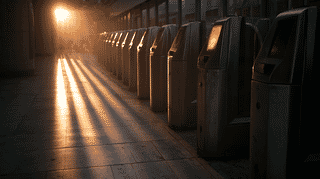
Japan's automatic ticket gates opened at Kitasenri in 1967. Sixty years of punched holes, magnetic standards and IC cards later, the QR switch in spring 2027 takes the journey data off the short-distance ticket.
JR East opened public voting on three successors to the Suica penguin, and about 58% of Japanese posts turned negative. What they object to, why the 2018 Takanawa Gateway vote poisoned the well, and why it may not last.
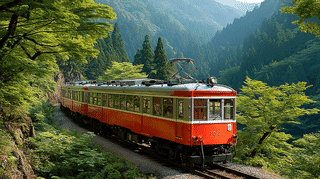
Odakyu Hakone will run a charter train on August 30, 2026 with every window pushed open on a 107-year-old railcar that has no air conditioning. The Hakone Tozan Railway's Type 100 retires in January 2028.
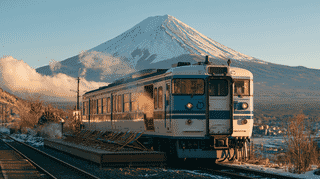
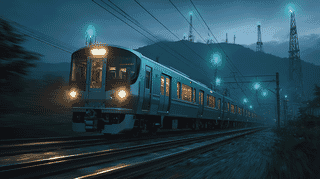
Fujikyu is turning a retired commuter train into SADEN, a day sauna sitting on the tracks at Shimoyoshida Station near Mt. Fuji. The Blue Train sleeping car that stood on the site will not be scrapped.
Hokuriku Electric has broken ground on a 2,000 kW hydropower plant in Komatsu, Ishikawa, the first in Japan dedicated to a bullet train. All output will flow to JR West under an offsite PPA. How does Japan's decarbonization push compare with SNCF and Deutsche Bahn?
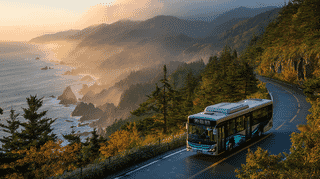
JR East launches Japan's fastest and longest Level 4 autonomous bus on May 29, 2026, on the tsunami-rebuilt Kesennuma BRT in Miyagi Prefecture: 60 km/h top speed and 15.5 km route, both national records. As China's Baidu and Waymo race ahead with city robotaxis, Japan is taking a quieter, magnet-marker path on dedicated bus corridors.
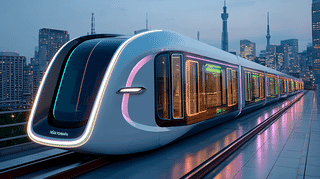
JR East has unveiled a concept render for the next-generation 'sustina' commuter train, and it looks nothing like the iconic Yamanote Line trains running today. Featuring autonomous control and 'emotional graphics,' the design reimagines what a Tokyo commuter train can be. Here's why Japan's commuter trains are a global obsession.
Why JR Central chose a standard white livery for Doctor S, the successor to the legendary yellow inspection train. Inside the official reasoning, the meaning of yellow in Shinkansen color codes, how inspection trains look in other countries, and where to photograph the new Doctor S along the Tokaido line.
Uber Japan has launched flight-linked pre-booking at six major airports, Haneda, Itami, Chubu, New Chitose, Naha, and Kobe, with automatic adjustment for delays and early arrivals. The new feature dramatically simplifies airport transfers for inbound travelers, though the surprising omission of Narita raises questions.
Kunio Okawara, the legendary mechanical designer who created Gundam's Mobile Suits, will design Seibu Railway's new tourist limited express debuting in 2028. Running from Shinjuku to Kawagoe, aka 'Little Edo', the train pairs Japanese anime heritage with access to Edo-period streetscapes and the scenic Chichibu region.
JR Kyushu's new RK System will control trains over public cellular networks starting 2028—a Japan-first approach. How it compares to Europe's ERTMS and America's PTC, and what it means for aging societies everywhere.
In April 2026, a rusting steam locomotive on the tiny Pacific island of Nauru is heading to Japan for restoration. The plan began when Nauru's tourism office tweeted 'Can anyone identify this steam engine?' and Japanese rail preservation groups recognized it as a German-built Orenstein & Koppel locomotive from the phosphate-mining era. Now Japan's legendary SL restoration craftsmen will bring it back to life, with plans to eventually run it as a tourism train in Nauru itself.
Two people have been injured on the 'grand staircase' at Tokyo's Takanawa Gateway City, which opened in March 2026. The station building next door, designed by world-renowned architect Kengo Kuma, is part of a broader pattern where Kuma's wood-heavy creations rot, mold, and crack within years. Behind the problem: Japan's domestic timber policy, elite university networks, and a philosophy that treats buildings as photographic objects.
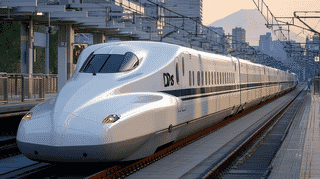
JR Central reveals 'Doctor S', the successor to the beloved Doctor Yellow inspection train. Based on the N700S Shinkansen, it will start service in October 2026 and take over track-testing duties from January 2027. Here's why Japan runs dedicated inspection trains and how you might still spot the new yellow logo.
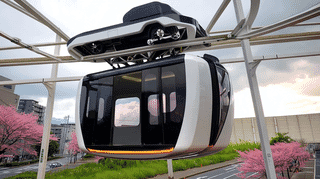
Zippar, a self-propelled urban ropeway developed by Fukushima-based startup Zip Infrastructure, can run every 12 seconds and navigate curves. At 1/20 the cost of subway and 1/5 of monorail construction, it could rescue Japanese cities facing a bus driver shortage.
Japan's new Blue Ticket system fines cyclists on the spot, and yes, tourists on rental bikes are included. Here's a complete breakdown of 14 violations, fine amounts from $19 to $75, and essential tips for riding safely in Japan.
JR East, Japan's largest railway group, opened onigiri shop TOKYO ONIGIRI in London's Leicester Square in December 2025. Behind this unusual move, a railway company entering overseas food retail, lies the government's GOHAN Project strategy to boost Japanese rice exports. From Onigiri Summit 2026 to convenience store packaging innovations, we explore how the humble rice ball could become Japan's next global food hit after sushi and ramen.
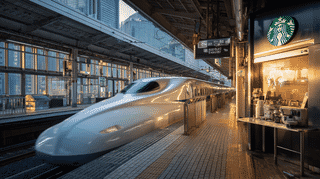
The only Starbucks on a bullet train platform in Japan is temporarily closing for renovations after overwhelming popularity exceeded expectations. Explore Japan's unique ekinaka station culture and what makes Shinkansen travel special.
Japanese robotics startup Jinki Ittai unveils its Bilateral Arm — a collaborative robot that transmits force feedback to operators — at Japan IT Week 2026. Also on display: a transformable humanoid heavy machine designed by Macross anime creator Shoji Kawamori. Partnering with Advantech (42.5% global IPC share), the company pursues a distinctly Japanese approach to robotics: human-operated force control rather than full autonomy, setting it apart from Boston Dynamics and Tesla Optimus.