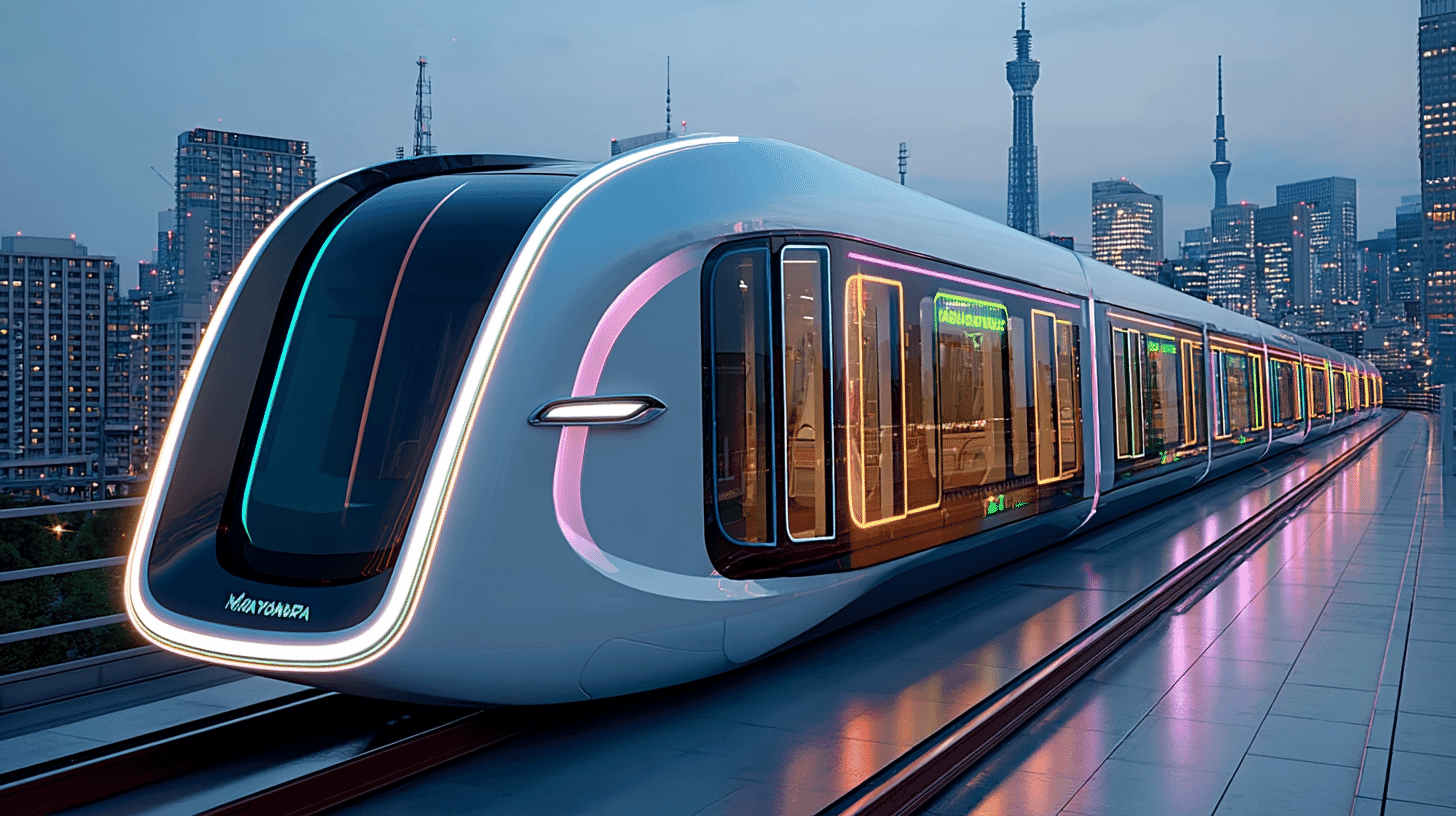
Picture the last time you rode the Yamanote Line in Tokyo: that boxy stainless-steel train wrapped in a green stripe. Now set that image aside. JR East has unveiled a concept render for the next generation of its commuter trains, and it looks nothing like the trains threading Tokyo's loop today. With "advanced autonomous control" and "emotional graphics" as its design pillars, Japan's most iconic commuter train is being reimagined for a new era.
What Was Announced
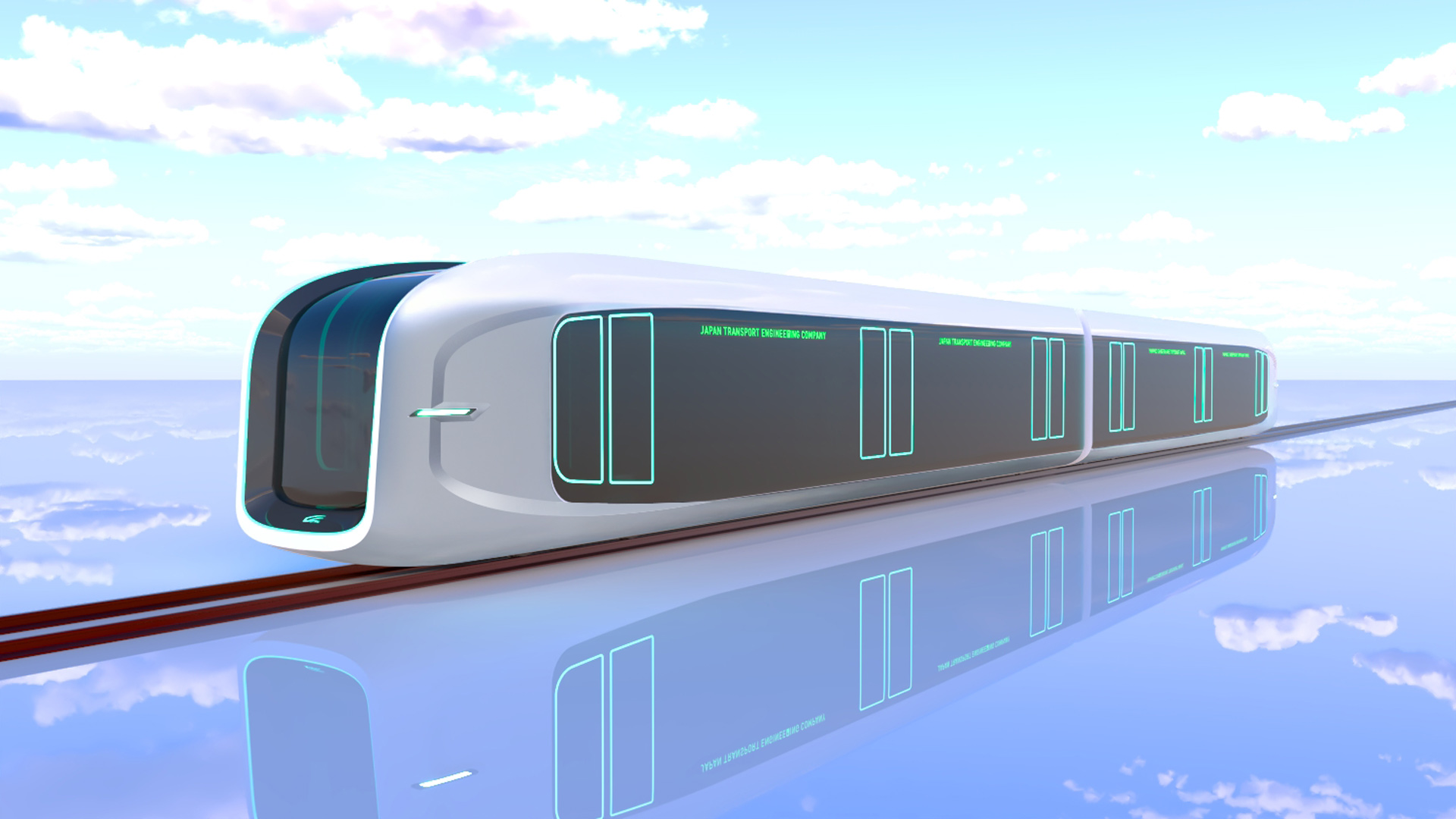
On April 30, 2026, East Japan Railway Company (JR East) revealed a concept rendering for the next-generation "sustina" stainless steel commuter train, manufactured by group company Japan Transport Engineering Company (J-TREC). The news was reported by transit specialist outlet Norimono News on May 8, 2026.
The render breaks sharply from the current sustina lineup. J-TREC describes the concept as a fusion of:
- Advanced autonomous control for flexible operations
- "Emotional graphics" for richer, more expressive vehicle communication
Together, these elements aim to create what the company calls "a new era of mobility", a vehicle that's both beautiful and comfortable.
JR East's recently published management strategy for fiscal year ending March 2027 also calls for deepening the common platform approach behind sustina, lowering both design and manufacturing costs while creating value for railway operators and suppliers alike.
Japan Transport Engineering Company (J-TREC)
What Is "sustina"? A Quick Primer for Overseas Readers
If you've never heard of sustina, you're not alone, it's a brand name aimed primarily at industry professionals. Launched in 2013 by J-TREC (a JR East group company), sustina is the brand under which most of Tokyo's modern stainless steel commuter trains are built.
The name itself is a portmanteau:
- SUS, the Japanese Industrial Standards code for stainless steel
- sustainable, the design philosophy
- -ina, a Latin suffix evoking a goddess who saves the Earth
Its signature engineering trick is laser-welded, fully-flat stainless steel exterior panels. This eliminates the corrugated panels and visible welds that defined earlier Japanese stainless commuter trains, producing a smooth, mirror-like body that's also lighter.
If you've ridden any of these trains in greater Tokyo, you've already experienced sustina:
| Series | Line(s) |
|---|---|
| Tokyu 5050 (car 5576) | Tokyu Toyoko Line (the 2013 prototype) |
| JR East E235 | Yamanote Line, Yokosuka & Sōbu Rapid Lines |
| JR East E131 | Various Chiba area lines, Sagami Line |
| Keio 5000 | Keio Line |
| Toei 5500 | Toei Asakusa Line |
| Sotetsu 12000 | Sotetsu–JR through-services |
In short: a significant share of the trains that visitors actually ride in Tokyo are already sustina.
The Current Star: The Yamanote Line E235
Before looking at the future, here's the present. The E235 series entered service on the Yamanote Line in November 2015, and is by far the best-known sustina train.
Its exterior was designed by Ken Okuyama, the Yamagata-born industrial designer who previously served as design director at Pininfarina, the legendary Italian carrozzeria. Okuyama has previously designed cars for Porsche, Ferrari, and Maserati, so the train you see circling Tokyo's core was, in a real sense, drawn by a supercar designer.
Notable features:
- Oversized front windshield, with a transparent driver's cab so children can watch the operator
- Smooth stainless steel body wrapped in the line's signature uguisu (warbler) green gradient
- Up to 36 in-car digital information monitors per train
- Baggage racks and grab handles lowered by 5 cm for shorter passengers
- Seats widened by 1 cm versus the previous generation
The E235 is the workhorse of one of the world's most-used loop lines. The Yamanote moves several million passengers a day, with trains running at intervals as short as 2 minutes during peak hours.
Decoding the Future Concept: Two Keywords
The official J-TREC language for the new concept is short but loaded. Two phrases do most of the work:
"Advanced autonomous control for flexible operations"
In railway terms, "autonomous control" most likely points to the next stage of ATO (Automatic Train Operation) and CBTC (Communications-Based Train Control). JR East has been testing ATO on the Yamanote Line since 2018, with eventual driverless operation as a long-term horizon.
The phrase "flexible operations" hints at something more interesting: dynamic train length, dynamic scheduling, and demand-responsive deployment. As Japan's population shrinks and ridership patterns shift, the rigid timetables and fixed train compositions of the past are increasingly inefficient. A future commuter train that can reconfigure based on real-time demand is a powerful idea.
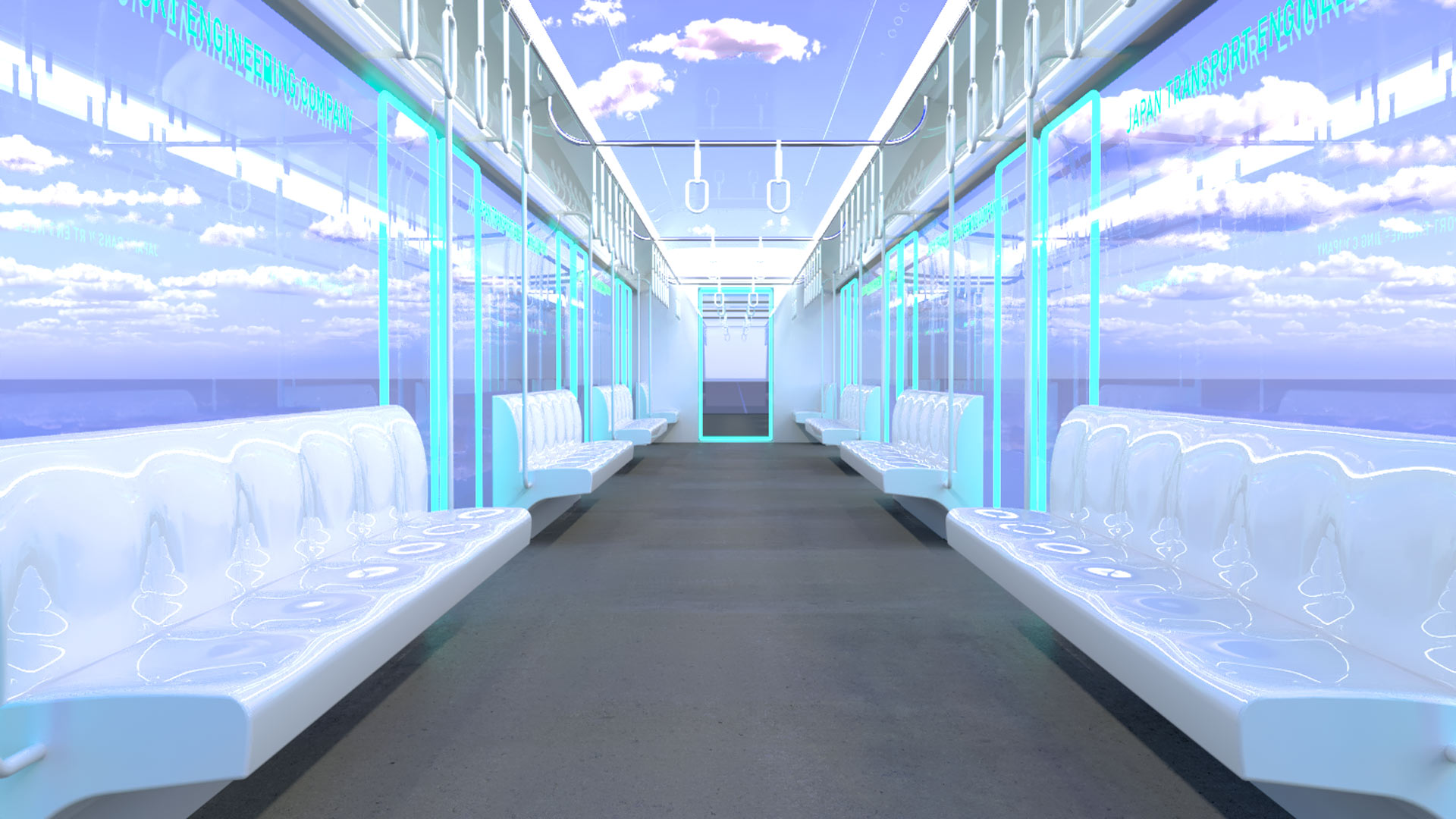
"Emotional graphics for expressive presentation"
This phrase is harder to decode, but the most likely interpretation is dynamic, full-body exterior displays, think LED or e-paper surfaces on the stainless body itself, allowing the train to change appearance, communicate season, mood, or even line identity in real time.
Rail wrapping today is largely static, a vinyl skin advertising a movie or a tourism campaign. "Emotional graphics" suggests turning the train itself into a programmable canvas.
Japan Transport Engineering Company (J-TREC)
Why the World Cares About Japanese Commuter Trains
A concept rendering from a domestic Japanese rolling stock manufacturer might sound niche. But it isn't, Japanese commuter trains command global attention for good reason.
Punctuality at a level few cities match
Tokyo trains are famous for apologizing over the loudspeaker if they are late by more than a minute. Yamanote trains run from 04:26 to 01:04 the next day, at intervals as short as 2 minutes during peak periods and four minutes at other times. Very few major cities sustain that frequency and hold that level of punctuality at the same time.
Density that defines a city
The Tokyo area is said to have more than 140 rail lines and over 2,200 stations. The Yamanote loop literally defines what counts as central Tokyo, inside the loop is the city center, period. The Yamanote, Chūō, Sōbu, and Keihin-Tōhoku lines together form a transit lattice studied by urban planners worldwide.
The rush hour as cultural icon
At peak hours, passenger loads approaching 200% of design capacity still occur on parts of the network. Station staff known as "oshiya" (pushers) physically press passengers into closing doors, a sight repeatedly captured by foreign journalists. It's a mixed badge of honor: criticized for inhumanity, and simultaneously beloved as part of Tokyo's mythology.
Trains designed by serious designers
Japan stands out in giving rolling stock to top-tier creatives. The E235 (Ken Okuyama / ex-Pininfarina). Seibu's Laview special-express train (architect Kazuyo Sejima, Pritzker laureate). Seibu's revived "New Red Arrow" tourist train, announced in April 2026 for a fiscal 2028 debut, with mecha designer Kunio Okawara of Mobile Suit Gundam fame supervising both exterior and interior. It is his first rail vehicle. Multiple JR Kyushu trains by Eiji Mitooka. In few other countries do daily commuter vehicles get this caliber of design attention.
sustina's Global Footprint
J-TREC's sustina business doesn't stop at the Japanese coast.
- Bangkok MRT Purple Line, Thailand, 63 cars delivered in 2016, the first overseas sustina, redesigned to meet European EN standards
- Manila North-South Commuter Railway, Philippines, 104 cars planned for delivery starting 2023
Southeast Asia's mega-cities, drowning in surface congestion, are turning to Japanese rail technology. Investing in next-generation sustina therefore isn't just about replacing the Yamanote in 10 years, it's also about stocking the export shelf with a credible, future-ready product.
The Production Numbers and the Cost Strategy
Since 2012, J-TREC has built roughly 3,000 rail cars, of which around 1,200 are sustina-branded. Pushing the common platform deeper means:
- Lower design costs through reuse
- Lower procurement costs through parts standardization
- Lower maintenance costs through shared service data
- Stable utilization at the dedicated sustina factory in Niitsu, Niigata Prefecture
The original sustina mission, set out by JR East and J-TREC in the 1990s, was famously "half the lifecycle, half the price, half the weight." The next-generation sustina is the latest interpretation of that decades-old north star.
What Could Go Wrong
Not everyone is sold yet. Two concerns surface in fan and industry discussion:
Concept versus production reality. Japanese rail history is full of striking concept renders that quietly shed their boldest features by the time the first revenue-service train rolls out. Safety regulations, maintainability, cost ceilings, and passenger flow tend to discipline ambition.
Emotional graphics versus billboard. If "emotional graphics" turns into a revenue product, the trains could become rolling digital billboards. The line between expressive design and overwhelming visual clutter is thin, and Tokyo's already-saturated visual environment doesn't need much help getting noisier.
What's It Like in Your Country?
Tokyo's commuter trains have always been a balance of extremes, punishing crowds and surgical punctuality, industrial steel and high-craft design. The next sustina is trying to bridge that legacy into a future built on autonomous control and dynamic exterior expression.
For comparison:
- London's Elizabeth line opened in May 2022 with Class 345 Aventra units built by Bombardier, now Alstom, at Derby. It has since become the UK's single busiest rail service, and ten more units are being added during 2026
- Paris's RER uses double-decker trains to maximize capacity on its commuter network
- New York's MTA subway is gradually modernizing infrastructure that dates back over a century
- Seoul's Metropolitan Subway is among the world's most punctual
What does your country's commuter train look like? Sleek, gritty, futuristic, on time? Tell us in the comments, both what you love and what you'd want changed.
References
- https://news.yahoo.co.jp/articles/e0e5bfe07d53f5e6218b0438a129ebeb55bc1889
- https://trafficnews.jp/post/663189
- https://www.j-trec.co.jp/business/sustina/
- https://en.wikipedia.org/wiki/E235_series
- https://en.wikipedia.org/wiki/Yamanote_Line
- https://www.nippon.com/en/japan-topics/b11302/
- https://www.andemagazine.jp/2021/02/25/andem-j-trec.html
- https://www.railjournal.com/passenger/commuter-rail/jr-east-reveals-new-yamanote-line-emu/




Global Discussion
14 comments