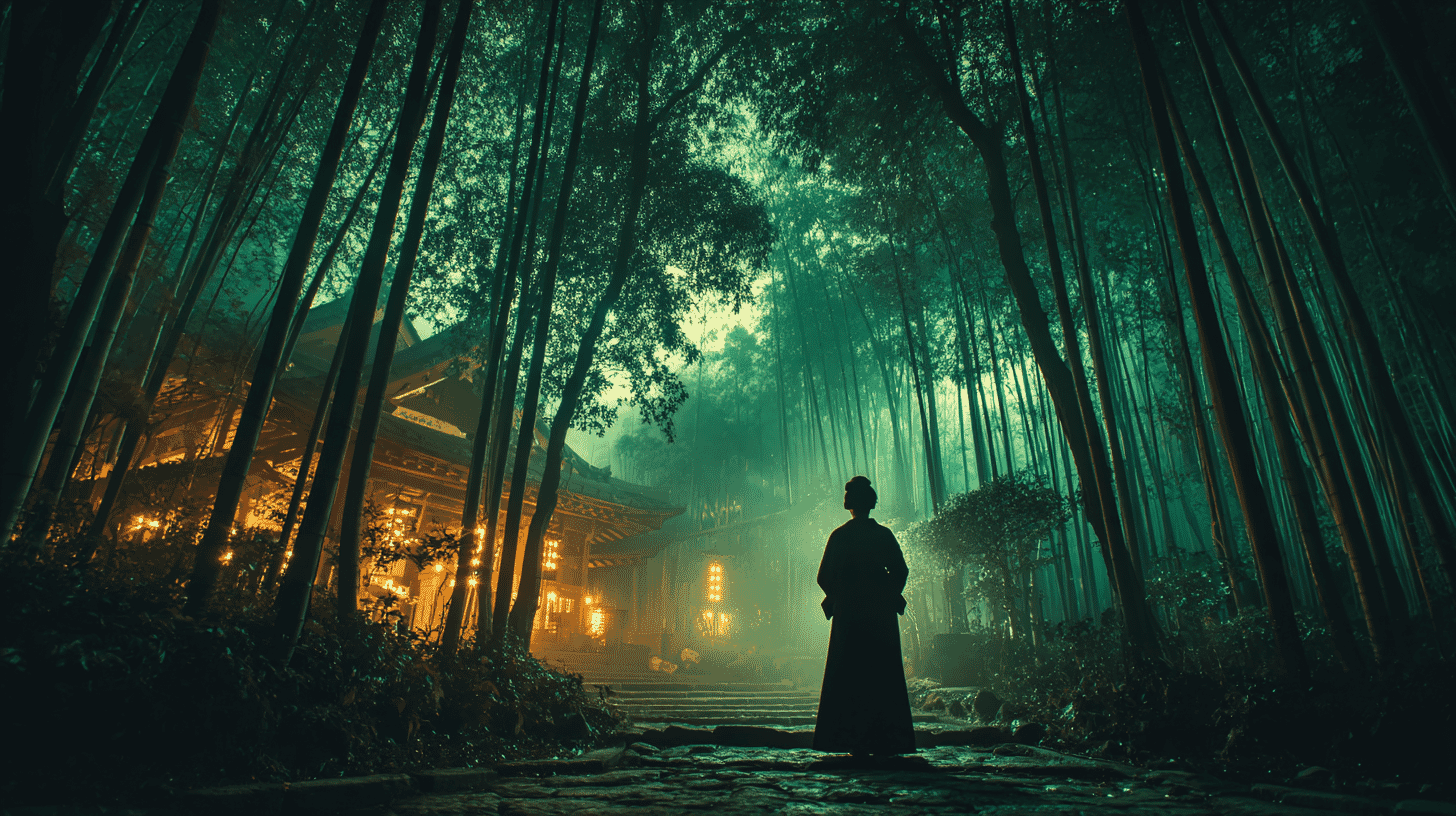
Imagine stepping into a 700-year-old Zen temple at dusk, where an actress whispers tales of Nobel laureate Yasunari Kawabata, a Noh vocalist and cellist perform under bamboo groves, and a chef serves dishes that tell the story of the land beneath your feet, all for about $920 per person. This is "Kagerohi," Japan's boldest attempt yet to turn its spiritual heritage into the ultimate luxury experience.
A New Kind of Luxury: Not What You Own, But What You Feel
Japan's travel giant JTB has launched something the country's tourism industry has never seen before. Called "Kagerohi" (かげろひ), it is an immersive cultural experience brand that merges performing arts, gastronomy, and historic spaces into a single, unrepeatable evening.
The first event took place in December 2025 at Hokokuji Temple in Kamakura, a Zen temple famous for its breathtaking bamboo grove of roughly 2,000 stalks, founded in 1334 during Japan's turbulent Muromachi period. For 3.5 hours, a group of just 12 participants were guided through a multi-sensory narrative woven around the literary world of Yasunari Kawabata, Japan's first Nobel Prize laureate in literature, who once lived near the temple and drew deep inspiration from the region.
The price tag: ¥144,000 per person, approximately $920 at current exchange rates.
What Does $920 Buy You?
This is not a typical dinner show. "Kagerohi" is built on the philosophy of "things that appear and then vanish", a Japanese aesthetic concept explored by the legendary architect Arata Isozaki, which lies at the heart of the experience's design. The idea is that the most powerful impressions are those that cannot be captured or preserved, only felt in the moment.
The evening, titled "Kokū (Void): Yasunari Kawabata and the Beauty of Kamakura," unfolded as participants physically walked through the temple grounds in the darkness of night, guided by an actress whose narration connected the history of Kamakura, the temple's deep ties to the Ashikaga samurai clan, the mythical imagery of "The Tale of the Bamboo Cutter" (Taketori Monogatari), one of Japan's oldest stories, and Kawabata's own relationship with the temple.
Performances included Ryoko Aoki, a globally acclaimed artist who has pioneered "Noh Vocal Art" (Nōseiaku), a fusion of the traditional Noh chanting style called "utai" with contemporary music, alongside cellist Fumino Kamimura and actress Arisa Omori. Chef Ryo Utsumi prepared dishes that served as narrative chapters, with each course reflecting a story or historical connection to the land.
Hot water (sayu) was served in the bamboo grove, a simple but symbolic gesture that participants described as marking the threshold between the everyday world and the "Kagerohi" realm.
Why Now? The Shift from "Mass Tourism" to "Depth Tourism"
The timing of this launch is no coincidence. Japan welcomed over 42 million foreign visitors in 2025, surpassing its previous record by a wide margin. The inbound tourism spending surpassed ¥8 trillion (roughly $51 billion) in 2024, and the government's target for 2030 stands at 60 million visitors with ¥15 trillion ($96 billion) in spending.
But JTB's leadership is looking beyond the numbers. Etsuko Kazaguchi, JTB's CMO, emphasized that the company's focus is no longer on quantitative growth but on "qualitative transformation." The new generation of wealthy travelers, from both Japan and abroad, is increasingly drawn to Zen, gastronomy, and cultural depth rather than luxury goods and five-star hotel suites.
Akihito Hidaka, JTB's Innovation Strategy Manager who spearheaded the project, noted that while plenty of high-end experiences exist in Japan, many fail to truly meet the evolving needs of affluent travelers. "We wanted to create a brand that could confidently respond to this shift in values," he said.
Born from a Corporate Venture: The "Living Auberge" Story
"Kagerohi" didn't come from JTB's headquarters boardroom. It emerged from "Living Auberge," an internal startup born out of JTB Group's "JUMP!!!" new business development program in 2023.
The venture is built around a unique network of chefs across Japan, offering five distinct services: gastronomy production, party catering, dispatch chefs, pop-up restaurants, and the flagship "Kagerohi" immersive events.
Hidaka describes the philosophical core of Living Auberge as "kyōshoku" (共食), the act of eating together, which he considers one of the most fundamentally human cultural behaviors. By combining this with artistic expression and historic spaces, the venture aims to create a new category of experience that didn't previously exist.
The venture has also expanded into solving practical tourism challenges, such as deploying pop-up restaurants in ski resort towns like Hakuba where the influx of inbound tourists has created a "dinner refugee" crisis, travelers who cannot find available restaurant seats during peak season.
Sold Out in One Week, and What Comes Next
The inaugural Kamakura event sold out within one week of advertising on social media. The 12 attendees were primarily investors, business executives, and affluent seniors from the surrounding region, most of whom found the event through JTB's own channels.
Yusuke Narita, the head priest of Hokokuji Temple, expressed his support for the concept, saying the temple wanted to convey not just the visible cultural properties but the deeper context and stories behind them. He sees immersive experiences like "Kagerohi" as an ideal vehicle for that mission.
JTB plans to hold seasonal editions of "Kagerohi" throughout 2026, with a spring event currently in preparation. Crucially, the company is also developing English-language versions aimed at international visitors, a move that could position these experiences as Japan's answer to the global demand for transformative, rather than transactional, luxury travel.
The Bigger Picture: Japan Redefines "High-Value Tourism"
"Kagerohi" sits at the intersection of several major trends reshaping Japan's tourism landscape. The government's push for "high-value-added tourism" seeks to move beyond volume-driven growth and attract visitors who spend more, stay longer, and engage more deeply with local culture.
At the same time, there's a growing recognition that Japan's most valuable tourism assets aren't necessarily its infrastructure, they're the intangible qualities of its culture: the aesthetics of impermanence (mono no aware), the precision of craft (monozukuri), and the art of hospitality (omotenashi).
What makes "Kagerohi" distinctive is that it doesn't just showcase these qualities, it builds them into the very structure of the experience. The event is designed to be unrepeatable. Each edition is unique to its location, artists, and season. You can't buy it again. You can't replay it. You can only carry the memory.
In a world where luxury increasingly means access to the irreplaceable, that may be exactly the point.
Japan is pioneering a new frontier in luxury cultural tourism that goes far beyond sightseeing and shopping. Does your country have similar immersive experiences that connect you to local history and spirituality through food, art, and storytelling?






Global Discussion
15 comments