Japan says ¥8.2 trillion in self-driving investment will yield ¥187.3 trillion in economic effects, about 23 to 1. The government's own footnotes show what that number measures and which assumption drives it.
GO, Waymo and Nihon Kotsu want driverless taxis in Tokyo in 2027. Japan has had a permit regime since 2023, but the permits granted so far cover fixed lines: a 2 km cart route, a 700 m shuttle, a busway.
Tier IV, the company behind open-source self-driving stack Autoware, listed in Tokyo on July 22, 2026 and opened 7% below its offer price. How do you monetize software you give away?
On June 24, 2026, the UN's WP.29 forum adopted the first international standard covering Level 3 and Level 4 automated driving systems, with Japan serving as a co-chair. It takes effect around January 2027. Here is what the rules actually require, how much Japan really led, and why the US and China are not bound by them.
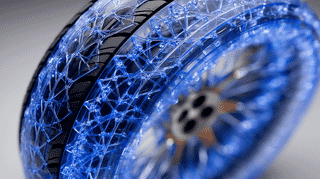
Bridgestone's airless AirFree tire is now in permanent service on an autonomous shuttle in Higashiomi, Shiga, a national first. How its puncture-proof resin-spoke design works, why driverless and MaaS fleets need it, how it contrasts with Michelin's Uptis strategy, and whether it's really Moon-bound.
Dynamic Map Platform, known for self-driving HD maps, now sells North American road authorities a bridge and tunnel clearance solution. We explain the 15,000 annual bridge strikes, the new SNBI standard, and how it compares with existing U.S. services.
Why a Nissan deep in restructuring picked Red Hat for its next-generation in-vehicle OS. We unpack the trap of in-house software development that cost Volkswagen's CARIAD 14 billion euros, and the path Nissan chose to avoid it.
JR East launches Japan's fastest and longest Level 4 autonomous bus on May 29, 2026, on the tsunami-rebuilt Kesennuma BRT in Miyagi Prefecture: 60 km/h top speed and 15.5 km route, both national records. As China's Baidu and Waymo race ahead with city robotaxis, Japan is taking a quieter, magnet-marker path on dedicated bus corridors.
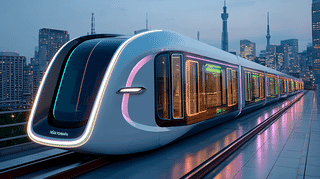
JR East has unveiled a concept render for the next-generation 'sustina' commuter train, and it looks nothing like the iconic Yamanote Line trains running today. Featuring autonomous control and 'emotional graphics,' the design reimagines what a Tokyo commuter train can be. Here's why Japan's commuter trains are a global obsession.
On April 14, 2026, the headline from Nissan's long-term vision wasn't rare earths or robotaxis, it was the return of the Skyline, the continuation of the GT-R, the revival of the Xterra, and the debut of the all-new X-Trail/Rogue e-POWER and Juke EV. Here's Espinosa's 56-to-45 model cull, the new 'Heartbeat' classification, and how Japan, the US, and China each get distinct lineups as Nissan walks a standalone path after the Honda merger collapse.
Waymo and Toyota have agreed to explore bringing L4 robotaxi technology to personally owned vehicles. We unpack how Waymo's sensor-heavy approach differs from Tesla's camera-only FSD and China's Baidu Apollo, and what this means for Toyota's strategic direction.
A rigorous evaluation of Nissan's triple strategy against a global EV slowdown. With Trump's tax credit repeal, China's sales slump, Honda canceling its 0 series, and BloombergNEF cutting EV forecasts by 14 million units, is this Nissan's genuine breakthrough or just the fifth failed long-term plan in six years? Surprisingly, the EV slowdown might actually be a tailwind for Nissan. Here is why.
Japan's METI announced a $377M subsidy for Sony's new image sensor factory in Kumamoto on April 17. With $1.13B total investment and production starting May 2029, this is Japan's counter-strike against Samsung's bid to break Sony's iPhone monopoly and capture the booming AI-camera and self-driving car sensor markets.
SoftBank, NEC, Honda, and Sony have established a new company to develop Japan's own AI foundation model, backed by $6.3 billion in government support over five years. Instead of competing head-on with US and Chinese tech giants in general-purpose AI, Japan is betting on 'Physical AI', AI that controls robots and factory equipment using the country's deep manufacturing expertise.
An in-depth look at Woven by Toyota, the software subsidiary steering Toyota's transformation. From the Arene platform's debut in the new RAV4 to the $1B Woven City experiment, we analyze how Toyota is fighting Tesla and BYD in the SDV era.
Tokyo conducted Japan's first operational-scenario flight test of the domestic eVTOL 'SKYDRIVE' at Tokyo Big Sight, featuring facial recognition boarding and a mobile vertiport terminal. With Tokyo targeting commercial urban flights by 2030, we compare Japan's progress with US rivals Joby and Archer in the global air taxi race.
Kyoto Institute of Technology and Chuo University have developed a cooling-free infrared sensor using semiconductor carbon nanotubes (CNTs) with 11x greater sensitivity than conventional materials. Building on Japan's legacy in CNT research since their 1991 discovery at NEC, this breakthrough could transform autonomous driving, security screening, and medical imaging. Here's what it means and how Japan is reacting.
Consumer Reports' first Safety Verdict ranked Mazda first among the 29 brands sold in North America, with Volvo 12th and Tesla 26th. What separated them was not crash performance but cockpit controls.
Kyocera, Toyota, Denso and three other major Japanese firms have formed a consortium to promote the deployment of 760MHz ITS roadside communication units. By accelerating V2X technology — enabling vehicles and roads to "talk" to each other wirelessly — the initiative aims to support Japan's 2030 goals of reducing traffic fatalities and scaling Level 4 autonomous driving to 10,000 vehicles.
Japan's Ministry of Land, Infrastructure, Transport and Tourism has significantly strengthened pedal misapplication prevention standards, now mandating pedestrian detection, creep-speed protection, and expanding coverage to light trucks. Based on UN Regulation No. 175 — a standard Japan helped create — these new rules roll out from 2030 for new vehicles. A deep dive into how the world's most aged society is leading global automotive safety innovation.