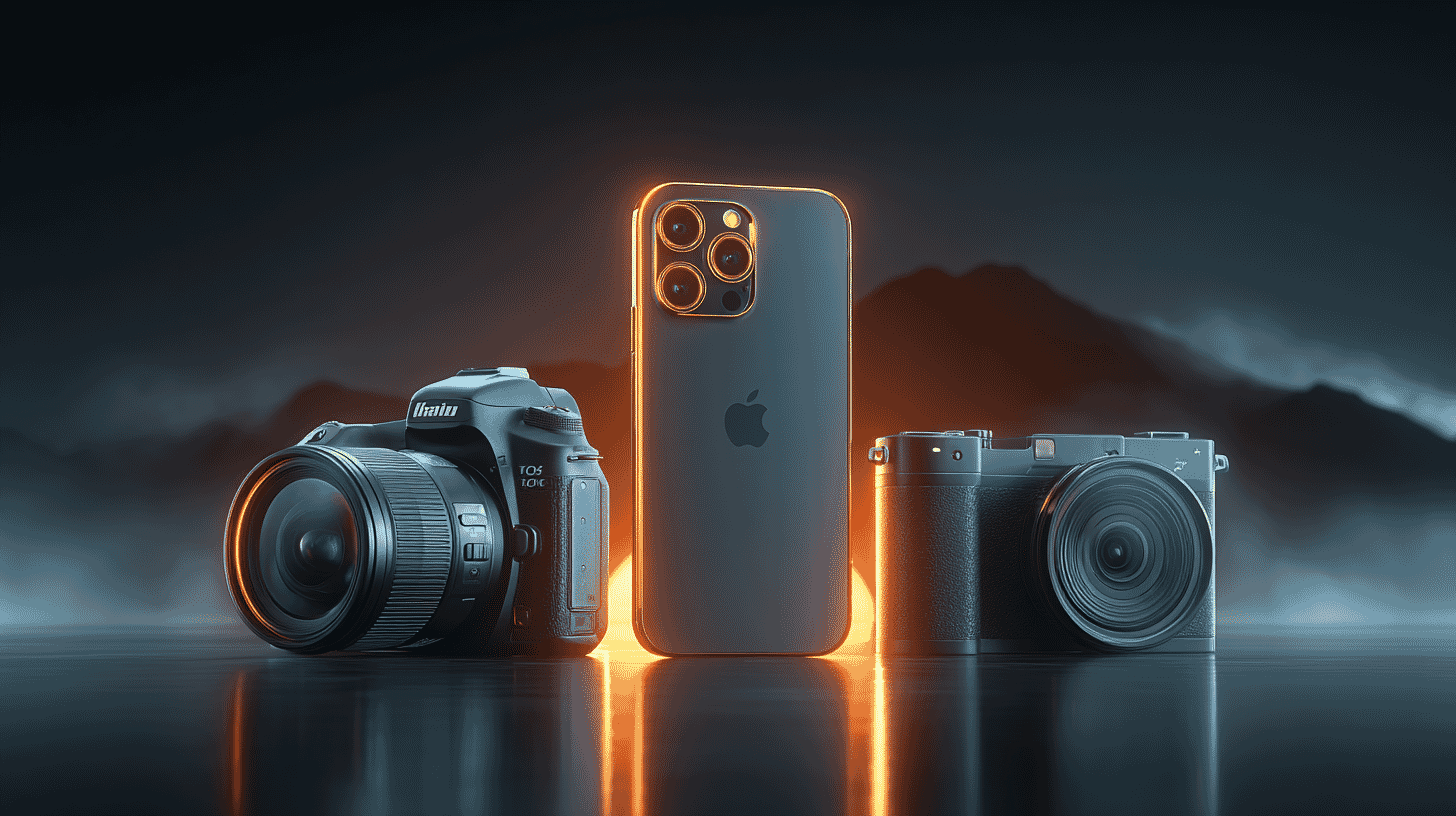
Ever wonder why your phone takes such clear night photos? Hidden deep inside the lens, a tiny chip called an image sensor turns photons into electrical signals, and roughly half the smartphones on Earth use a Sony-made one. But that throne is now wobbling under pressure from Samsung and Chinese challengers. On April 17, 2026, the Japanese government announced up to 60 billion yen ($377 million) in subsidies for Sony's new factory, a nation-scale counter-strike, timed exactly as the iPhone monopoly begins to crack.
What Was Announced
On the morning of April 17, 2026, Japan's Minister of Economy, Trade and Industry Ryosei Akazawa told reporters that the government will subsidize up to 60 billion yen (roughly $377 million) to Sony Semiconductor Manufacturing Corporation (SCK), the chip-manufacturing arm of Sony Group.
The subsidy will go toward a new image sensor factory currently under construction in Koshi City, Kumamoto Prefecture. SCK's total investment in the facility is 180 billion yen (about $1.13 billion), so the government is covering up to one-third of the project. The new fab will have a production capacity of 10,000 wafers per month (300mm equivalent), with supply scheduled to begin in May 2029.
The legal basis is Japan's Economic Security Promotion Act, which designates certain materials, including advanced semiconductors, as "Specified Critical Materials" whose supply must be secured through government support. The money will fund equipment purchases at the new fab. Minister Akazawa framed the move bluntly: image sensors are "a key device for the AI era," and Japan needs to secure stable supply.
What Is an Image Sensor, Exactly?
A CMOS image sensor (CIS) is the retina of a digital camera. It converts light captured by the lens into electrical signals that become an image. Every device that "sees", smartphones, cars, robots, medical scanners, drones, surveillance systems, contains one.
The reason your phone's night mode produces low-noise photos, and the reason a car's camera can detect a pedestrian in milliseconds, both come down to sensor performance. Sony pioneered back-side illumination and stacked sensor designs, and has led the world in low-light performance, readout speed, and dynamic range for over a decade.
According to market researchers, Sony holds roughly 50% of the global CMOS image sensor market, and 40–45% of mobile-phone sensors specifically. For Apple's iPhone, Sony has been effectively the sole supplier for years, to the point where the iPhone's camera quality has long been synonymous with Sony silicon.
The Monopoly Is Cracking: Samsung's iPhone Gambit
That dominance is now under serious threat.
In February 2026, Nikkei Business reported that Samsung Electronics is expected to begin supplying Apple with CMOS image sensors as early as 2027. Samsung developed a three-layer stacked image sensor, separating photodiode, transfer transistor, and logic circuitry into independent layers, in early 2025, specifically targeting the iPhone 18 lineup scheduled for 2026 production.
What makes Samsung formidable is vertical integration: it makes memory and image sensors in-house, using its own 28nm processes, which keeps manufacturing costs low. Apple has long wanted to diversify its supplier base, but until now only Sony had the performance to meet its standards. Samsung's 3-layer tech changes that calculation.
Even if Sony doesn't lose the iPhone contract entirely, moving from a monopoly to a duopoly changes everything: pricing power, supply chain structure, long-term investment decisions. For Sony, it's existential.
China's Omnivision Closing In on Automotive
Korea isn't the only threat. China's Will Semiconductor acquired US-based OmniVision Technologies in 2020, becoming the world's number three CIS player. OmniVision has grown aggressive in mid-tier smartphones and, more importantly, automotive applications, where it's been winning on price.
And automotive is where the next decade of sensor growth lives. As autonomy levels rise and ADAS (Advanced Driver Assistance Systems) become standard even in mass-market cars, the number of image sensors per vehicle is exploding. Global Market Insights projects the automotive sensor market will grow from $35.3 billion in 2025 to $81.8 billion by 2035, more than doubling in a decade.
But automotive is brutally price-competitive. Sony's brand premium in smartphones won't transfer automatically to cars, where Tier-1 suppliers like Bosch and NVIDIA call the shots.
METI's Real Message: "Losing This Risks Losing Japan's Auto Industry Too"
Read between the lines of METI's statement and you'll find the real calculation.
According to Japanese press reports, ministry officials explained that "expanding share in high-quality automotive sensors is also important for Japan's automotive industry" and that the subsidy is "necessary to secure the installation of cutting-edge production lines for economic security."
Translated, this means:
- Japan's automakers, Toyota, Honda, Nissan, Denso, and others, do not want their ADAS and self-driving brains dependent on Korean or Chinese sensors.
- If Japan does nothing, Samsung and China's Will Semiconductor will grow their share and Japan's automotive electronics supply chain will be effectively controlled by foreign rivals.
- For Sony to hold the #1 position globally, it needs expanded, cutting-edge domestic manufacturing.
- From an economic security standpoint, the government is willing to bankroll that expansion.
In other words, this subsidy isn't really just about Sony. It's about keeping a critical component of Japan's automotive and smartphone supply chains inside Japan.
Why Koshi City Matters
The new fab's location, Koshi City, Kumamoto, is no accident. It's right next to Kikuyo Town, home of TSMC's Kumamoto Fab 1 (JASM). TSMC makes the leading-edge logic chips; Sony makes the image sensors. Kumamoto is quickly becoming Japan's new semiconductor cluster, echoing the "Silicon Island" reputation Kyushu held in the 1980s.
SCK already operates multiple facilities in Kumamoto that produce smartphone-bound image sensors. The new factory is reported to install "the most advanced micro-fabrication equipment," suggesting it will produce next-generation stacked sensors where logic and sensor layers are bonded at unprecedented density, the kind of premium product that commands premium prices in automotive and industrial markets.
The 10,000 wafer/month capacity is modest by flagship-smartphone standards but deliberately calibrated for high-value niches where Sony can defend pricing.
A Coordinated Japanese Semiconductor Push
Japan's semiconductor support has reached historic scale:
- Rapidus (2nm logic): cumulative 2.354 trillion yen
- TSMC Kumamoto (Fab 1 + Fab 2): up to 1.208 trillion yen
- Kioxia + Western Digital (NAND flash): up to 243 billion yen
- Micron Hiroshima (DRAM): up to 500 billion yen
- Sony SCK (image sensors): up to 60 billion yen, now added
Cumulative Japanese semiconductor subsidies since 2022 now approach 3 trillion yen. That's smaller in absolute terms than the US CHIPS Act ($52.7 billion), but as a share of GDP, Japan is among the world's heaviest spenders.
The Sony subsidy is smaller in yen than the others, but strategically it might be the most important single piece. Image sensors are the nervous system of every "machine that sees": phones, cars, robots, drones, factories, medical scanners, security cameras. In the physical AI era, when robots and vehicles must perceive the real world, whoever makes the sensors owns the sensory apparatus of AI itself.
How Japanese People See This Decision
Reactions in Japan are mixed. Supporters argue that protecting a strategic industry champion is a legitimate government role. Critics ask why a profitable private company needs taxpayer money, Sony Group earns billions and arguably should self-fund. Skeptics note that 180 billion yen might not be enough to outpace Samsung's deep pockets. "They could spend this and still lose" is a common refrain among economic analysts online.
For Kumamoto residents, though, this is the latest in a string of major chip investments attracting jobs and infrastructure, following TSMC's Fab 1 and now Fab 2 expansion. Concerns about water use, traffic, and rural-urban tensions are real, but so is the feeling that Kyushu is becoming Silicon Island again.
What About Your Country?
Image sensors have become so strategic they're now being called "the eyes of the AI era." Should governments subsidize domestic champions in sectors like this? Does your country have an equivalent debate, protecting a national technology champion versus letting markets sort it out? We'd love to hear how this kind of industrial policy plays out where you live.
References
- https://news.yahoo.co.jp/articles/8e99b5c32561a5363311568a4f0a932c9d3e4eb4
- https://news.yahoo.co.jp/articles/15b30d5987ef6be84ada1ffee8f6079b923a28cb
- https://www.nikkei.com/article/DGXZQOUA170X00X10C26A4000000/
- https://ymcinema.com/2026/02/25/apple-moves-to-samsung-sony-sensor-monopoly-ending/
- https://www.gminsights.com/industry-analysis/automotive-sensors-market









Global Discussion
14 comments