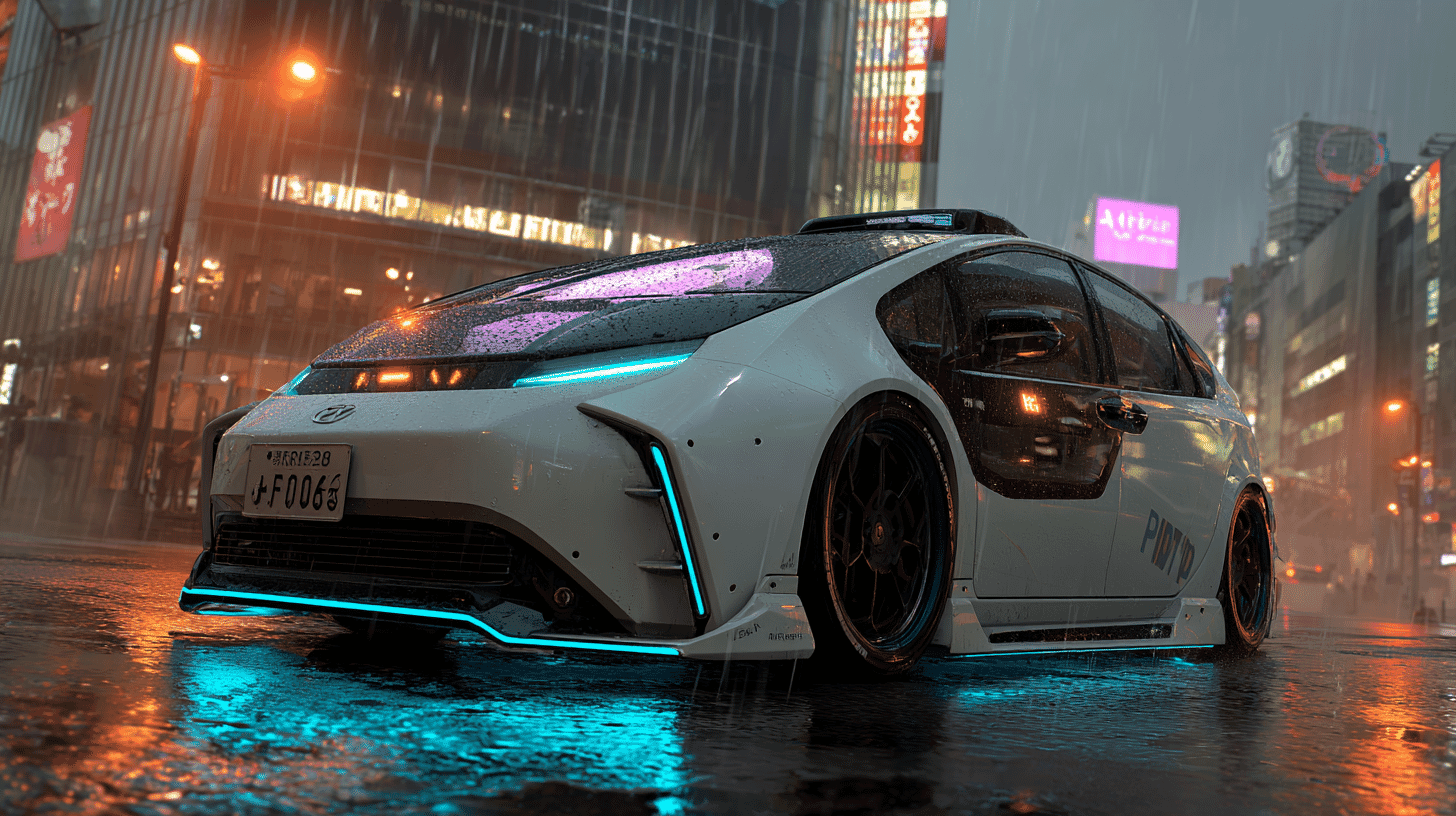
In April 2026, struggling Japanese automaker Nissan unveiled three bold strategic moves: 90% rare earth reduction in EV motors, E2E autonomous driving across 90% of its lineup, and a robotaxi partnership with Uber and the UK's Wayve. The international press called it Nissan's "Triple Transformation."
But with the global EV market visibly running out of steam, can these three arrows really save the company? Factoring in cool analyst reactions, long-term plans that have repeatedly missed their targets over six years, and the surprising possibility that the EV slowdown might actually be a tailwind for Nissan, here's a rigorous evaluation of each arrow.
First, Reality Check: The Global EV Market Has Plateaued
Before evaluating Nissan's strategy, we need to understand the macro context. The narrative that "EVs will replace everything" has shifted meaningfully since late 2025.
- United States: The Trump administration ended the $7,500 EV tax credit on September 30, 2025. January 2026 EV sales fell 33% year-over-year, the lowest since early 2022
- China: January EV registrations dropped 20% YoY after Beijing reinstated a 5% purchase tax and slashed trade-in subsidies
- Industry-wide: BloombergNEF cut its global EV sales forecast by 14 million units through 2030. GM took a $1.6 billion writedown, and Ford's CEO warned EV demand "could be cut in half"
- Japanese majors hit too: Honda posted its first-ever loss since going public and scrapped its "Honda 0" EV series. VW's software subsidiary Cariad was effectively a failure
That said, this isn't the "end of EVs" but the "end of the subsidy bubble." Global EV sales still grew 20% in 2025 to 20.7 million units, with emerging markets like Thailand and Vietnam surging. What's changed is that the political tailwind has lifted, and automakers must now compete on genuine product merit and economics.
Nissan's Triple Crunch: 20,000 Layoffs, Oppama Plant Closure, Junk Rating
Against this backdrop, Nissan's crisis has deepened severely.
Fiscal 2024 net loss hit 670.9 billion yen (about $4.4 billion), the worst in 20 years. Another 650 billion yen loss is projected for the current fiscal year. The dividend is suspended, asset sales are on the table, 20,000 jobs (15% of global workforce) are being cut, and 7 plants are closing, including the iconic Oppama plant that has operated since 1961 and symbolized Japanese motorization. Fitch has downgraded Nissan's credit rating to junk status.
The Weight of a "Fifth" Long-Term Plan
On April 14, 2026, new CEO Ivan Espinosa unveiled the long-term vision "Mobility Intelligence for Everyday Life" at the Yokohama headquarters. But here's the uncomfortable truth: this is Nissan's fifth major long-term plan in six years.
| Year | Plan | Result |
|---|---|---|
| 2019 | M.O.V.E. to 2022 | Missed targets |
| 2020 | Nissan NEXT | Missed targets |
| 2024 | The Arc | Missed targets |
| 2025 | Re:Nissan (turnaround plan) | In progress |
| 2026 | Mobility Intelligence (this one) | ? |
Historically, the problem has never been the quality of the vision. It has been execution precision. The three arrows must be evaluated in this context.
Arrow 1: 90% Rare Earth Reduction: Rating ◎ (Genuine Tailwind)
On April 17, 2026, Japan's Nikkei reported Nissan achieved approximately 90% rare earth reduction in the new Leaf's EV motor versus the original 2010 Leaf. The focus was on "heavy rare earths", particularly dysprosium and terbium, where Chinese dependency is most acute.
Three technical breakthroughs made this possible: a new motor design that suppresses internal heat generation, precision optimization of rare earth distribution within magnets, and high-precision manufacturing developed jointly with parts suppliers. Nissan's Ariya SUV already uses a wound-field synchronous motor (EESM) that eliminates permanent magnets entirely.
Why This Arrow Is the Strongest
This arrow matters most because it doesn't depend on EV market trends.
Rare earth reduction benefits aren't limited to EVs, they extend to hybrid motors, wind turbines, and industrial robots. More importantly, when China tightened export controls on seven rare earth elements in April 2025, Japan's Suzuki was literally forced to halt domestic small-car production. In the context of economic security, this technology is easy for the Japanese government to support as a national strategy.
And the decisive point: this is "deployed" not "promised." It's already in the mass-produced new Leaf, and the Ariya's EESM is already running. While the other two arrows are future commitments, this one has real product on the road today.
Arrow 2: E2E Autonomy + 70% Parts Reduction: Rating △ (Double-Edged Sword)
End-to-End (E2E) autonomous driving uses a single AI model to handle perception, decision-making, and control. Nissan has partnered with UK AI startup Wayve, aiming to deploy it as next-generation ProPILOT in the new Elgrand by end of FY2027, with long-term rollout across 90% of the lineup as "Nissan AI Drive."
In parallel, Nissan plans to consolidate hardware and software platforms, cutting part types by 70% and targeting 500 billion yen in cost savings by 2027.
What's Positive, What's Concerning
Positive:
- 70% parts reduction delivers real cost savings. The SDV (software-defined vehicle) shift is inevitable industry-wide
- Deploying in Tokyo, one of the world's most challenging traffic environments, is a meaningful validation
- Wayve's generative AI predicts driving conditions every 0.1 seconds, genuinely cutting-edge technology
Concerning:
- The E2E technology itself belongs to Wayve. It doesn't become Nissan's core competency, only a supplier dependency
- Other automakers have struggled mightily with autonomous software in-house: VW's Cariad failed, GM's Cruise was scaled back, Honda's Mythic partnership has stalled, Stellantis has retreated from AI
- "90% of models with E2E" is a long-term goal; it contributes nothing to near-term earnings
- Tesla has been developing FSD since 2014. Chinese makers (XPeng, Huawei, BYD) are ahead. Catching up requires massive investment Nissan can't easily afford
In short: the cost-reduction part is certain, but there's no guarantee Nissan becomes a winner in the AI autonomous driving part. Being "Wayve's customer" rather than building the technology in-house is a strategically weak position.
Arrow 3: Robotaxis with Uber and Wayve: Rating ○ (Strong PR, Weak Near-Term)
On March 12, 2026, Nissan announced the three-way partnership with Uber Technologies and Wayve, launching robotaxi trials in Tokyo in the second half of 2026. Nissan provides the new Leaf-based vehicle platform, Wayve supplies the AI driving system, and Uber offers the ride-hailing platform.
The Sober View
Positive: Low investment for high publicity. Nissan only needs to supply vehicles. Its position as a platform provider (Apple-style) means a Tokyo success could be a showcase for global expansion.
Concerning: Commercial rollout won't happen before roughly 2030. It contributes nothing to near-term cash flow. Level 4 (fully driverless) timing is "TBD." Japan's strict regulations make scaling slow, and Uber has zero track record in Japan, this is their first project in the country.
This is excellent medium-to-long-term PR, but it's not a direct engine for the turnaround.
Paradox: The EV Slowdown Might Actually Be a Tailwind for Nissan
Here's a counterintuitive insight. While the EV market slowdown seems bad for Nissan on the surface, it may actually be a tailwind.
Reason 1: Hybrid Resurgence Plays to e-POWER's Strength
With EV subsidies shrinking in the US and China, hybrids are being re-evaluated. Nissan's e-POWER (engine generates electricity, motor drives the wheels) is targeting 20% fuel efficiency improvement from 2nd to 3rd generation. As a bridge rather than an alternative to EVs, it works economically even without subsidies.
Toyota's strength is strong hybrids (THS), Honda's is e:HEV. In a world where every maker pivots back to hybrids, Nissan's distinct e-POWER technology becomes a clear differentiator.
Reason 2: Time to Catch Up on Lost EV First-Mover Advantage
In a head-to-head EV race against Tesla and BYD, Nissan loses. But if the EV market shifts from "explosive growth" to "gradual adoption," Nissan gets time to catch up. Speed competition becomes endurance competition, and that actually favors an automaker with 15 years of mass EV production experience.
Reason 3: Rare Earth Reduction Shines in a "Slow-Growth EV" World
Without explosive EV growth, rare earth supply pressure eases somewhat. But price competition intensifies, making any technology that cuts costs by 10% decisively important. Nissan's Arrow 1 actually shines brighter in a world where EVs spread gradually than in one where they explode.
Analyst Reaction: Skepticism Outweighs Enthusiasm
Nissan shares rose 1.4% on announcement day. But the Nikkei index rose 2.4% the same day. Nissan underperformed the market. Bernstein analysts noted the outlook was "relatively constructive and could be viewed modestly positively in the near term, but visibility remains limited on whether Nissan can deliver sustained top-line growth and achieve a genuine turnaround."
The market's caution has roots. Recent long-term plans have repeatedly missed their targets, and Re:Nissan is still mid-course. That litmus test arrived on May 13, 2026: the full-year net loss narrowed from 670.9 to 533.1 billion yen, and operating profit stayed positive at 58 billion yen. Nissan now guides to a 200 billion yen operating profit and a return to net profit in FY2026.
Conclusion: A 50/50 Bet
Taking everything into account, the probability of a genuine Nissan turnaround sits around 40-50%. Neither pessimism nor optimism is the honest read.
Reasons for hope:
- Full-year FY2025 operating profit of 58 billion yen and a narrower net loss signal an inflection
- The new Leaf won Women's Worldwide Car of the Year 2026
- Rare earth reduction is real, deployed technology
- 15 years of EV mass production experience and strong parts supplier network
- In an EV-slowdown world where hybrids matter more, e-POWER shines
Reasons for caution:
- The heavy track record: five plans in six years, with the predecessors falling short
- A 533.1 billion yen (about $3.5 billion) FY2025 net loss and Fitch's junk rating
- Trump tariffs raising US production costs, with lag time on Mexico-to-US transfers
- No option to merge with Honda after that deal collapsed, Nissan must stand alone
- Wayve dependency on E2E means it doesn't become Nissan's core
Espinosa's vision makes logical sense. But for five years, Nissan has built logical plans and failed on execution. The question has always been whether Nissan can execute, not whether it can plan.
Whether this time is truly different will come down to three questions: Can the rare earth reduction be sustained in long-term mass production? Can the 70% parts reduction proceed without collapsing the supplier network? And can they realistically catch up to US and Chinese leaders in E2E within a workable timeframe?
If Nissan can turn the EV headwind into an unexpected tailwind, it could reinvent itself from "EV pioneer" into "master of diverse powertrains." But if the headwind becomes an excuse to soften structural reform, the fifth plan will fail too.
How are EV subsidies faring in your country? Is EV skepticism spreading, or is adoption still climbing? And how is the "tech-company-ification" of traditional automakers, their pivot into software, AI, and autonomous driving, being received where you live? We'd love to hear your perspective.
References
- https://www.nikkei.com/article/DGXZQOUC056LK0V00C26A2000000/
- https://global.nissannews.com/en/releases/260414-vision
- https://global.nissannews.com/ja-JP/releases/260312-01-j
- https://xtech.nikkei.com/atcl/nxt/column/18/03565/041400004/
- https://electrek.co/2026/02/12/europe-surges-us-stumbles-china-cools-ev-sales-dip-in-2026/
- https://www.investing.com/news/stock-market-news/nissan-to-streamline-global-lineup-to-45-models-from-56-4611624








Global Discussion
15 comments