
China accounts for roughly 70 percent of the world's rare earth mining and more than 90 percent of refining. Japan was the first country to have that leverage turned against it, after the 2010 collision near the Senkaku Islands. Fifteen years on, diversified sourcing, substitute technology, stockpiles and recycling have brought Japan's dependence down from 90 percent to about 60. Other countries are now following the same sequence.
PM Takaichi's Taiwan Comments and China's Retaliation
In November 2025, Japanese Prime Minister Sanae Takaichi's parliamentary statement suggesting that a Taiwan contingency could trigger Japan's exercise of collective self-defense rights ignited fresh tensions with Beijing. In response, China has deployed a series of "economic coercion" measures, including travel advisories discouraging Chinese tourists from visiting Japan and reinstating bans on Japanese seafood imports.
On January 6, 2026, China's Ministry of Commerce issued Announcement No. 1 of 2026, effective the same day. It bars the export of any dual-use item to Japanese military end users, military applications, or uses that would strengthen Japan's military capability. It is not a blanket halt on rare earth shipments to Japan, but rare earth items brought under dual-use controls in 2025 fall within its scope where the end use or end user qualifies. Japanese industry took it seriously.
Seventeen Elements, the "Industrial Vitamins"
Rare earths comprise 17 metallic elements essential to modern technology: electric vehicle motors, wind turbine generators, smartphones, MRI machines, and even missile guidance systems. Their ability to dramatically enhance product performance in small quantities has earned them the moniker "industrial vitamins." Neodymium magnets, in particular, are the world's strongest permanent magnets and hold the key to EV proliferation.
Currently, China accounts for approximately 70% of global rare earth mining and over 90% of refining capacity, making this dominance a potent geopolitical weapon.
The 2010 Wake-Up Call: Japan's First-Mover Experience
Japan was the first nation to experience China's weaponization of rare earths.
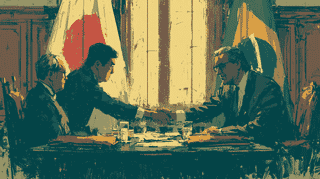
In September 2010, following the arrest of a Chinese fishing boat captain after a collision with Japanese Coast Guard vessels near the Senkaku Islands, China effectively halted rare earth exports to Japan. At the time, Japan depended on China for approximately 90% of its rare earth imports, throwing its automotive and manufacturing sectors into panic.
From this crisis, Japan swiftly formulated a national strategy built on four pillars.
1. Supply Diversification
Japan's Organization for Metals and Energy Security (JOGMEC) and trading house Sojitz invested approximately $250 million in Australia's Lynas Corporation, building a supply chain independent of China. Lynas is now the largest rare earth producer outside China, supplying about one-third of Japan's rare earth needs. Japan also strengthened partnerships with Vietnam, India, and Kazakhstan to spread supply risk.
2. Alternative Technology Development
Japanese companies including Shin-Etsu Chemical, Proterial (formerly Hitachi Metals), and Daido Steel have focused on technologies to reduce rare earth usage and develop magnets completely free of heavy rare earths like dysprosium and terbium. Daido Steel has commercialized "heavy rare earth-free" neodymium magnets, targeting independence from heavy rare earths that remain 100% sourced from China.
3. Strategic Stockpiling
Through JOGMEC, Japan expanded its strategic rare earth reserves to approximately 60 days' supply (42 days national stockpile plus 18 days private sector), enhancing resilience against short-term supply disruptions.
4. Recycling Promotion
Japan advanced technologies to recover rare earths from used products, leveraging domestic "urban mines." Shin-Etsu Chemical established a recycling facility in Vietnam, building a circular supply chain.
These efforts reduced Japan's rare earth dependence on China from 90% to approximately 60%. In neodymium magnet production, while China commands about 80% of global output, Japan alone produces roughly half of the remainder (approximately 10%), a remarkably large share compared to Japan's overall 5% share of global manufacturing.
Shin-Etsu's Resilience: Full Production Even in Crisis
In April 2025, when China curtailed rare earth exports amid tit-for-tat tariffs with the United States, American automakers were forced to halt production. Meanwhile, Japan's Shin-Etsu Chemical reported to investors in July that its magnet factories "continued operating at full capacity."
This is clear evidence that preparations since 2010 have paid off, demonstrating Japanese companies' "learning effect."
Why the World Is Following the "Japan Model"
Each time China deploys rare earth restrictions, more nations look to Japan's approach as a template.
United States
President Trump signed an executive order in March 2025 for "emergency measures to increase mineral production." The US also concluded a "Minerals Resources Agreement" with Ukraine to secure critical minerals including rare earths. Reactivation of California's Mountain Pass mine and magnet supply chain development in Texas and North Carolina are underway.
Australia
The government has committed AUD 1.25 billion to build domestic rare earth refineries. Following Japan's JOGMEC model, Australia aims to create an integrated supply chain from mining to refining.
Europe
Japan's JOGMEC has participated in rare earth refining investments in France's Carémag, advancing international cooperation. The EU has also developed its own critical minerals strategy, promoting stockpiling and alternative technology development.
Saudi Arabia
With support from the Public Investment Fund (PIF), Saudi Arabia has announced plans to build a "mine-to-magnet" integrated rare earth supply chain.
The Royal United Services Institute (RUSI) in the UK has praised Japan's JOGMEC as a "model for successful supply chain diversification," recommending that other nations study its methods.
Economic Impact Assessment
According to estimates by Takahide Kiuchi of Nomura Research Institute, if China maintains rare earth export restrictions for three months, Japan's economic loss would be approximately ¥660 billion (0.11% of GDP). If restrictions continue for one year, losses could reach approximately ¥2.6 trillion (0.43% of GDP).
Having built resilience since 2010, though, Japan is less exposed than it was. Kohei Okazaki of Nomura Securities also suggests that "economic losses limited to rare earths would be relatively contained."
Minamitori Island: A Potential Game-Changer
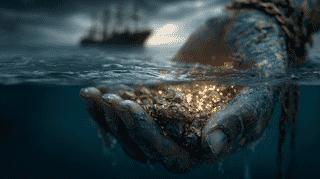
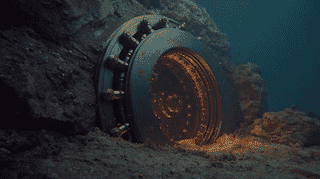
Japan holds a potential trump card for the future. Beneath the seafloor approximately 6,000 meters deep near Minamitori Island lie rare earth mud deposits estimated to meet global demand for hundreds of years. The drilling ship Chikyu left Shimizu on January 12, 2026, reached the site on the 17th, began recovery on the 30th, and brought the first rare earth mud on deck in the small hours of February 1, the first time material has ever been lifted from roughly 6,000 meters down. It returned to Shimizu on February 15. A larger demonstration, targeting 350 tonnes a day, is set for around February 2027, a full assessment is due by March 2028, and industrialization is not expected before fiscal 2028. Success could dramatically improve Japan's rare earth self-sufficiency.
The drilling vessel Chikyu left Shimizu on January 12, 2026, reached the site on the 17th and began test drilling on the 30th, aiming to lift about 35 tonnes of mud a day from around 5,500 metres down.
Is China's "Economic Coercion" Backfiring?
Intriguingly, each time China plays the rare earth card, the global "de-risking" movement accelerates. A Tokyo-based consultant describes export controls as "a bell that cannot be unrung."
Even after relations with China improved following the 2010 embargo, Japan never relaxed its diversification strategy. This lesson is now being shared with the United States and Europe.
Japan's Preparedness Put to the Test
PM Takaichi's cabinet approval rating held above 70% in the immediate aftermath of her November 2025 remarks, and China's economic pressure did little to soften Japan's stance toward Beijing.
However, the economic impact of declining Chinese tourist arrivals may intensify going forward, and the trajectory of Japan-China relations remains uncertain. Economic security issues including rare earths are expected to be agenda items at G7 finance ministers' meetings, with Japan's experience and strategy continuing to attract international attention.
Resilience against the "weaponization" of rare earths cannot be built overnight. That is what fifteen years have taught Japan.
How does your country discuss and prepare for critical resource supply risks? Please share your thoughts in the comments below.
Update: The Minamitori seafloor mining trial ran from January 12 to February 14, 2026, and on February 1 became the first operation anywhere to lift rare earth mud from roughly 6,000 meters down. Analysis published in July found that 54% of the rare earths in the recovered mud were mid-to-heavy elements. Because the US Department of Energy estimates China handles about 93% of dysprosium separation, that composition matters more than the tonnage. The next large-scale demonstration is set for around February 2027, with a full assessment including economics due by March 2028. Takaichi's cabinet approval, meanwhile, fell to a range of 41% to 61.6% across eight major polls in July 2026, a record low for the government in every one. (Added August 2026)
References
- https://news.yahoo.co.jp/articles/6e16235093088a2d15aeb7861a50dec3b279d64e
- https://www.nri.com/jp/media/column/kiuchi/20251128_2.html
- https://www.nri.com/jp/media/column/kiuchi/20260107.html
- https://www.spf.org/spf-china-observer/document-detail071.html
- https://www.dlri.co.jp/report/macro/560809.html
- https://www.weforum.org/stories/2023/10/japan-rare-earth-minerals/
- https://www.rusi.org/explore-our-research/publications/commentary/japans-responses-chinas-supply-chain-dominance
- https://www.newsecuritybeat.org/2024/08/how-to-diversify-mineral-supply-chains-a-japanese-agency-has-lessons-for-all/
- https://moderndiplomacy.eu/2026/01/12/japan-launches-deep-sea-rare-earth-mission-as-china-tightens-supply-grip/






Global Discussion
16 comments