Hong Kong's SCMP reports that Trump asked Xi to lift China's export curbs on Japan, citing a threat to US industry. In July, China's magnet exports to Japan fell 52.2% while US shipments rose 4.6%.
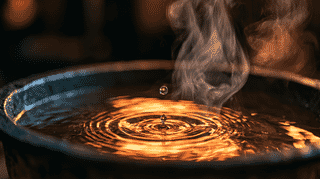
Desalination makes about 35 trillion liters of fresh water a year and discards roughly 50 trillion liters of brine. A Tokyo lab drips it onto molten tin and recovers magnesium oxide, 280 times concentrated.
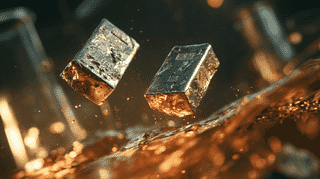
Hafnium keeps advanced chips and jet engines running, yet the world makes about 71 tonnes a year, nearly all of it in France and the United States. An Osaka chemical maker now wants a share of it by 2028.
China's rare earth magnet shipments to Japan fell 52.2% in July 2026 while US-bound shipments rose 4.6%. Japan tells itself pressure breeds breakthroughs. Optical glass and neodymium magnets agree; aluminium does not.
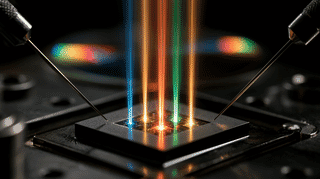
A terbium-doped AlGaN LED from the University of Osaka and Ritsumeikan University emits four colors from a single spot, with wavelengths that barely move as the current rises.
The Super-Kamiokande collaboration has caught the first-ever evidence of the diffuse supernova neutrino background, the combined glow of every massive star that has died since the universe began. Here is what it could reveal, and the spoonful of gadolinium that made it possible.
Japan discards 650,000 tons of small electronics a year, yet recovers only a little over a tenth of it. The rest mostly leaks abroad through an untracked invisible flow. On June 5, 2026, the Environment Ministry picked six pilots enlisting movers and couriers to keep the metals home.
Dysprosium and terbium, essential to EV magnets, were China's one unbroken monopoly. In 2025, Australia's Lynas, backed by Japan since 2011, produced them outside China for the first time. What it means, and what it doesn't.
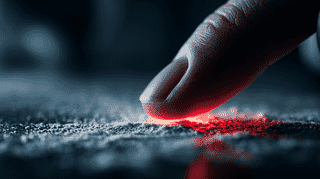
A team in Japan re-engineered zinc oxide, the harmless powder in sunscreen, into a material that emits near-infrared light from a gentle fingertip press. No power, no rare earths. Here's why it matters for medicine, bridges, and the rare-earth standoff.
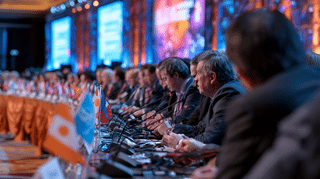
At the APEC trade ministers meeting in Suzhou, China, Japan's industry minister demanded that exporting countries rectify arbitrary rare earth curbs. A look at the slow squeeze on Japan, its roots in a Taiwan remark, and Tokyo's exit strategy.
Brazilian Foreign Minister Mauro Vieira visited Japan on May 17–19 for the inaugural Japan-Brazil Foreign Ministers' Strategic Dialogue. Here's what oil-dependent Tokyo wants from South America's resource giant amid the Hormuz crisis.
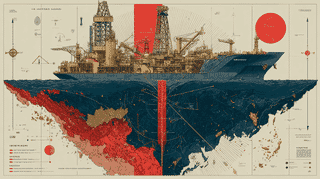
Japan's ruling LDP has asked the government to build a dedicated rare earth mining vessel for ~100 billion yen ($640M) at Minamitorishima, handing the proposal to Prime Minister Takaichi on June 12, 2026. Why JAMSTEC's Chikyu isn't enough, the roadmap from the February 2027 demonstration test to FY2028 industrialization, and how Japan's approach compares with the US, EU and Australia.
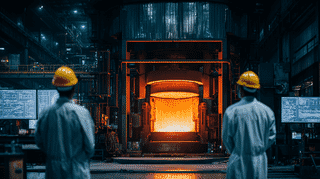
Japan's vacuum equipment leader ULVAC is reshoring production of vacuum melting furnaces for rare earth magnets, with orders from US and European manufacturers projected to roughly triple. With over 70% global share in continuous vacuum furnaces, Japan's equipment dominance becomes a geopolitical asset.
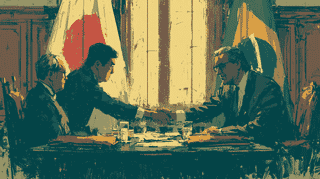
On May 4 in Canberra, PM Takaichi and PM Albanese signed five joint documents including the Economic Security Joint Declaration. Six critical mineral projects backed by $1.2B. How Japan's approach differs from the US IRA and EU CRMA, and what it means for global supply chains.
On May 2, Japanese PM Sanae Takaichi met Vietnam's new PM Le Minh Hung in Hanoi. Amid Middle East instability, Japan agreed to underwrite crude purchases for the Nghi Son refinery through NEXI, the first project under the Power Asia framework, and to work with Hanoi on rare earths and other critical minerals. In a speech at Vietnam National University, Takaichi set out three pillars for an evolved Free and Open Indo-Pacific: supply chains, shared rules, and security. How it differs from US friendshoring and the EU's Global Gateway.
On April 14, 2026, the headline from Nissan's long-term vision wasn't rare earths or robotaxis, it was the return of the Skyline, the continuation of the GT-R, the revival of the Xterra, and the debut of the all-new X-Trail/Rogue e-POWER and Juke EV. Here's Espinosa's 56-to-45 model cull, the new 'Heartbeat' classification, and how Japan, the US, and China each get distinct lineups as Nissan walks a standalone path after the Honda merger collapse.
A rigorous evaluation of Nissan's triple strategy against a global EV slowdown. With Trump's tax credit repeal, China's sales slump, Honda canceling its 0 series, and BloombergNEF cutting EV forecasts by 14 million units, is this Nissan's genuine breakthrough or just the fifth failed long-term plan in six years? Surprisingly, the EV slowdown might actually be a tailwind for Nissan. Here is why.
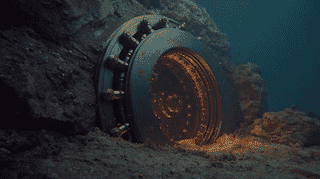
Japan pulled rare earth mud from 6,000m down in February 2026, but the 'Rare Metal King' Shigeo Nakamura says don't commercialize it. His counterintuitive argument: Minami-Torishima's 16 million tons is worth more as a silent deterrent co-held with the US than as a commercial mine. We unpack Nakamura's career, his 'don't mine, but keep the capacity' thesis, and how it compares to the US SPR, Project Vault, and Chinese stockpile strategy.
At the G7 finance ministers' expanded meeting on April 17, 2026 in Washington, members aligned on strengthening critical mineral supply chains. Japan committed $20M each to the Asian and Inter-American Development Banks, marking a pivot to the resource-country funding phase. From the Japan-EU BRT proposal to the Kananaskis CMAP, C$6.4B (~US$4.6B) in unlocked projects, and now MDB funding, progress is real. But China still processes 90% of rare earths. A sober assessment of whether 'slow but steady' is actually fast enough.
In spring 2026, Japan and the United States began building a three-layered rare earth alliance: Treasury Secretary Bessent's May visit, Mitsubishi Materials' stake in US recycler ReElement, and Proterial's breakthrough heavy-rare-earth-free magnet. Here is what this quiet realignment means for the global critical minerals map.