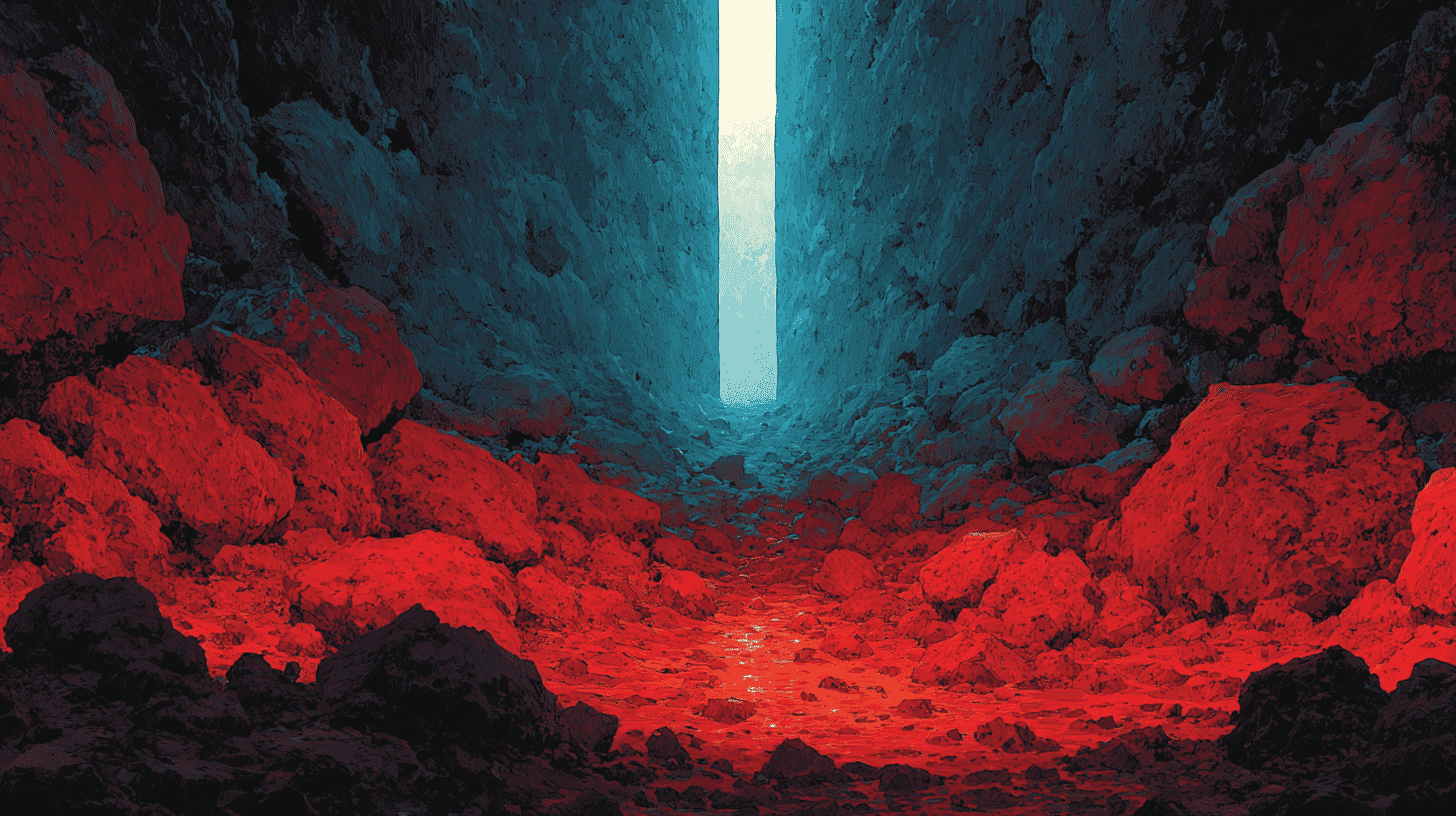
⚙️ For fifteen years, every plan to escape China's grip on rare earths ran into the same wall. You could dig up the ore elsewhere. You could even refine the "light" stuff. But the heavy rare earths, the handful of elements that keep an EV motor magnet from melting down under heat, came from China, full stop. In 2025, that wall finally cracked. Not with a government decree, but quietly, inside a factory in Malaysia owned by an Australian company that Japan has been bankrolling since 2011.
The part of the problem nobody had solved
"Rare earths" get talked about as one thing, but they split into two camps, and the difference is the whole story.
The light ones, neodymium and praseodymium (the famous "NdPr"), are the bulk material in the powerful magnets inside electric-vehicle motors, wind turbines and hard drives. They matter, but the world already has alternatives to China for them. Australia's Lynas mines and refines NdPr. America's MP Materials does too. The light-rare-earth monopoly was already leaking.
The heavy ones are different. Dysprosium and terbium are added in small amounts to those same magnets, and they do one specific, unglamorous job: they let the magnet hold its strength at high temperature. An EV motor or a fighter-jet actuator runs hot, and without a pinch of dysprosium the magnet quietly loses its punch. There is no skipping them and no easy substitute. And here is the catch: almost all of the world's separated heavy rare earths came from China. Not 70 percent, not 90. Effectively all of it.
That is why, when Beijing put seven heavy rare earths (samarium, gadolinium, terbium, dysprosium, lutetium, scandium and yttrium) and related magnets under export licensing on April 4, 2025, the reaction was sharper than for any earlier restriction. Automakers scrambled for magnet supply, some plants paused, and prices outside China spiked, in Europe to as much as six times the Chinese price, according to the IEA's 2025 World Energy Outlook. The light-rare-earth problem had answers. The heavy one did not.
A circuit in Kuantan changes the math
Then, in mid-May 2025, Lynas Rare Earths confirmed something that had never happened commercially: it had produced separated dysprosium oxide outside China.
It happened at Lynas Malaysia, a refinery in Kuantan that has been running since 2012, processing ore shipped from the company's Mount Weld mine in Western Australia. Until now that plant made light rare earths. During the first quarter of 2025 the company commissioned a new "heavy rare earth separation circuit": essentially a dedicated chemical line that isolates dysprosium and terbium from the rest. First dysprosium came in May, terbium followed in June, both on schedule.
Chief executive Amanda Lacaze described the company as the only commercial producer of separated heavy rare earths outside China. The phrasing was precise, and it was true.
The new circuit can separate up to about 1,500 tonnes a year of mixed heavy-rare-earth compounds. Lynas also priced the output at a premium over the Chinese benchmark, arguing bluntly that the index reflects transactions inside China, while demand for a non-Chinese source is something customers will pay for.
Japan's long, quiet bet
This is where Japan enters, and it is not a recent arrival.
Back in 2011, a year after China briefly throttled rare-earth exports to Japan during the Senkaku Islands dispute, the trading house Sojitz and the state agency JOGMEC (the Japan Organization for Metals and Energy Security) stepped in to help finance Lynas. The logic was simple: build a rare-earth supply chain that a single country could not switch off. For most of the following decade that meant light rare earths, and Lynas grew into the largest producer of NdPr outside China.
The 2025 heavy-rare-earth milestone is the same fourteen-year bet finally reaching the hardest part of the problem. JOGMEC, in its year-end review of 2025, flagged the Lynas dysprosium line as the first case of commercial-scale heavy rare earth production anywhere outside China, and noted that Japan is making the same move in Europe, where Iwatani and JOGMEC bought into France's Carémag heavy-rare-earth refining project in March 2025.
For a country that imports nearly all of these materials, the appeal is less about owning a mine than about owning an option: a supplier that answers to a contract, not to another government's export desk.
How big a dent, really?
It would be easy to oversell this, so it is worth being honest about the size.
One circuit in Malaysia does not unseat China. The 1,500-tonne figure is the line's capacity for mixed heavy compounds, not pure dysprosium and terbium, and the ore from Mount Weld is relatively poor in heavy rare earths to begin with, which limits how much Dy and Tb actually comes out the other end. China still controls the overwhelming share of heavy-rare-earth separation, and rebuilding that capability elsewhere is measured in years, not quarters.
Lynas itself is hedging its feedstock: it has signed a preliminary agreement with Malaysia's Kelantan state for access to ion-adsorption clay deposits, which are naturally richer in heavy rare earths, and it is building a separate refinery in Seadrift, Texas, backed by close to US$300 million from the US Department of Defense.
So the realistic reading is not "China's monopoly is over." It is narrower and, in a way, more interesting: for the first time, a buyer who needs dysprosium has somewhere else to call. The premium price is the proof: companies are willing to pay extra precisely because, until 2025, the alternative did not exist at all.
Japan spent fourteen years and a lot of public money to make sure that phone call could be placed. In your country, who is paying to keep the supply chains for these invisible materials open: the government, private companies, or no one yet?
References
- https://mric.jogmec.go.jp/reports/current/20260113/187778/
- https://www.mining.com/lynas-becomes-first-producer-of-heavy-rare-earths-outside-china/
- https://www.miningweekly.com/article/lynas-begins-first-heavy-rare-earth-output-outside-china-2025-05-16
- https://www.iom3.org/resource/first-dysprosium-oxide-production-at-lynas-malaysia.html
- https://www.phoenixrefining.com/blog/only-producer-of-heavy-rare-earths-outside-china




Global Discussion
3 comments