Japan is often called resource-poor, yet four new minerals containing rare earths have been identified at once, at an abandoned mine in Gunma Prefecture. With the country still relying on China for about 60 percent of its rare earths, what does a find in its own backyard mean for resource security?
The Discovery: A Rare Achievement of Four Simultaneous New Minerals
On January 23, 2026, a research team led by Associate Professor Mariko Nagashima from Yamaguchi University's Graduate School of Sciences and Technology for Innovation announced the discovery of four new rare earth-containing minerals from the Mokurasawa Mine in Kiryu City, Gunma Prefecture.
The four newly discovered minerals are:
- Cerium-vanadium-akasakaite (approved October 2024)
- Cerium-akasakaite (approved May 2025)
- Lanthanum-akasakaite (approved May 2025)
- Lanthanum-vanadium-akasakaite (approved May 2025)
All four were officially recognized as new species by the International Mineralogical Association's Commission on New Minerals, Nomenclature and Classification (IMA-CNMNC). Having four new minerals from a single location approved through one research project is exceptionally rare on a global scale.
Mokurasawa Mine: A Treasure Trove of New Minerals
The Mokurasawa Mine, located in Hishimachi, Kiryu City, Gunma Prefecture, is a stratiform manganese deposit about 9 km northeast of JR Kiryu Station. Once an active manganese mining operation, it has long ceased commercial extraction.
Among mineral researchers, this site is renowned as a "treasure trove of new minerals." Previous discoveries include Nagashimalite and Suzukiite, both minerals first identified in Japan. The mine is also famous for producing rare manganese and vanadium minerals such as rhodonite, roscoelite, and pyrochroite.
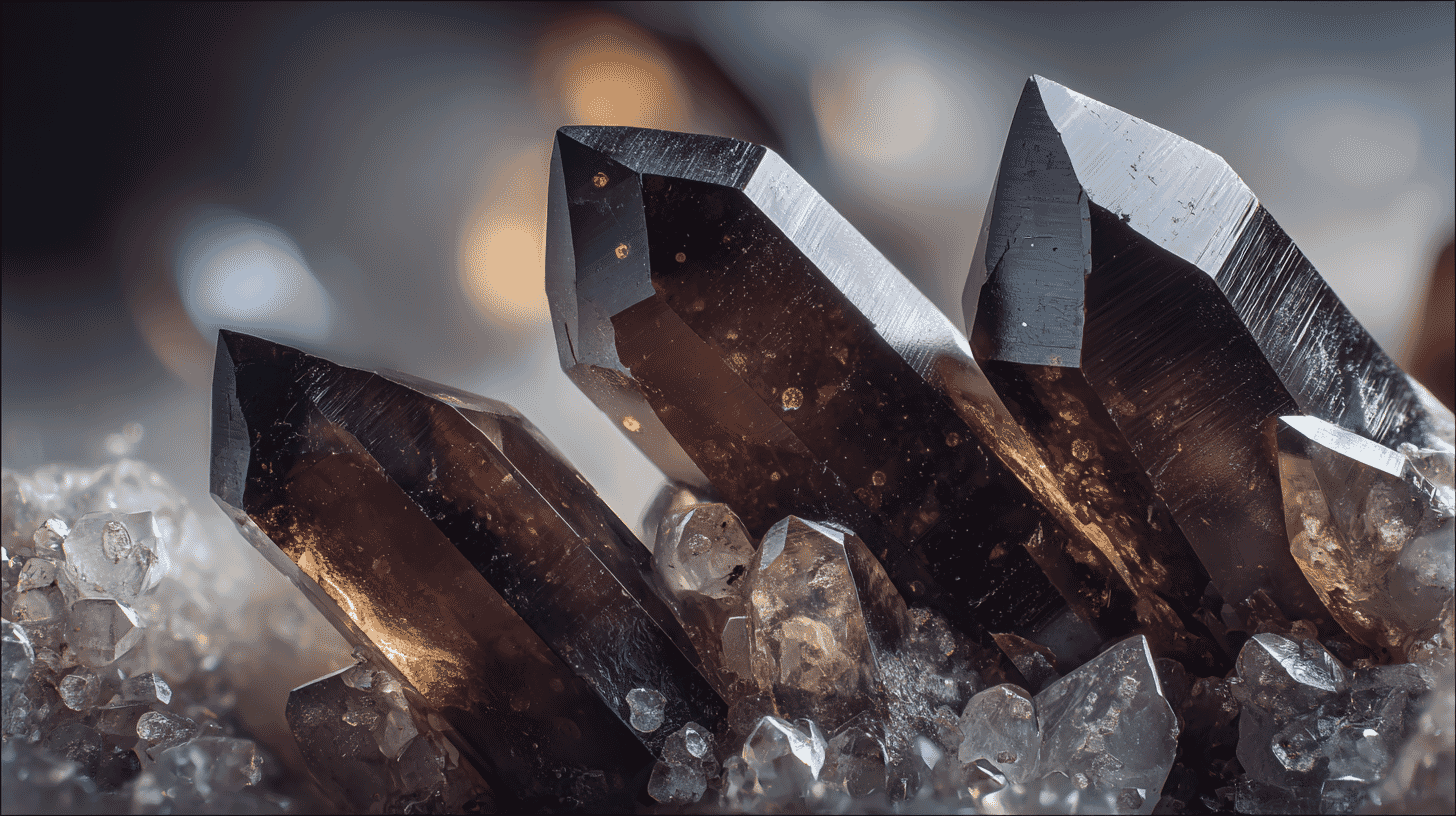
The four newly discovered minerals existed within quartz lenses in rhodonite-rich rocks. All appear as dark brown prismatic crystals and are virtually indistinguishable to the naked eye, chemical analysis and crystal structure determination are essential for identification.
Understanding Rare Earths: The "Vitamins" of Modern Industry
Rare earth elements (REEs) refer to a group of 17 elements including lanthanum and cerium. Despite their name, these elements are relatively abundant in the Earth's crust; however, economically viable concentrations are limited to specific locations.
REEs dramatically enhance material performance in small quantities, earning them the nickname "industrial vitamins." Key applications include:
- Electric and hybrid vehicles: Neodymium magnets for drive motors
- Wind power generation: High-performance magnets for generators
- Smartphones and electronics: Phosphors and magnetic materials
- Medical equipment: Powerful magnets in MRI machines
- Aerospace: Engine components and defense applications
The Reality of China Dependency: Japan's Structural Vulnerability
According to the U.S. Geological Survey (USGS), China accounts for approximately 70% of global rare earth production. The situation is even more critical in refining, where China's share reached 91.7% in 2024 according to the International Energy Agency (IEA).
Japan's rare earth dependence on China has decreased from about 90% during the 2010 Senkaku Islands incident to approximately 60% in 2024. However, heavy rare earths like dysprosium and terbium, essential for EV motor magnets, remain nearly 100% dependent on Chinese supply.
In 2025, China restricted exports of seven rare earth types as retaliation against U.S. tariffs. This move forced automakers in Japan and other countries to halt production. According to Nomura Research Institute estimates, a three-month Chinese rare earth restriction would cost Japan approximately ¥660 billion in economic losses.
Scientific Significance: Filling a "Missing Link" in Crystal Chemistry
All four newly discovered minerals belong to the akasakaite group within the epidote supergroup. The name "akasakaite" honors Masahide Akasaka, a mineralogist at Shimane University known for his research on epidote-group minerals and manganese deposits.
The scientific significance is substantial. The four minerals systematically demonstrate patterns of minor element substitution within crystal structures:
- Cerium-lanthanum substitution relationships
- Aluminum-vanadium substitution relationships
- Coexistence patterns with manganese
The simultaneous discovery of four end-members constituting the akasakaite series from a single locality represents a beautiful example of nature's chemical equilibrium, a textbook-worthy case study.
The research was published in the Journal of Mineralogical and Petrological Sciences, issued by the Japan Association of Mineralogical Sciences, on January 23, 2026.
Resource Potential: Practical Challenges Remain
This discovery does not immediately translate to commercial mining. Mokurasawa Mine is currently abandoned and serves only as a site for academic research. No economically viable ore deposits have been confirmed.
Even if mining were possible, the structural challenge of China's dominance in refining processes remains. Rare earth production requires multiple stages, extraction, separation, refining, electrolysis, reduction, and alloying, and China holds overwhelming market share in these technologies.
Environmental concerns also exist. Rare earth refining requires strong acids and generates radioactive waste. Some analysts suggest China's low-cost refining advantage stems partly from less stringent environmental regulations.
Japan's Resource Strategy: A Multi-Pronged Approach
Since the 2010 rare earth shock, the Japanese government and industry have pursued multiple countermeasures:
Supply diversification: Trading house Sojitz invested in Australia's Lynas Rare Earths, securing contracts for up to 65% of heavy rare earths to be supplied to Japan. In March 2025, Iwatani Corporation and JOGMEC (Japan Organization for Metals and Energy Security) established investment in France's Caremag to secure 20% of Japan's heavy rare earth demand.
Alternative technology development: Proterial (formerly Hitachi Metals) and others are developing rare earth-free magnets and materials. In January 2025, Kyoto University announced the world's first successful synthesis of carbon-based magnets.
Strategic stockpiling: JOGMEC has expanded rare earth reserves.
Recycling promotion: Development of technologies to recover rare earths from used products continues.
Minamitorishima seabed resources: Rare earth mud discovered offshore of Minamitorishima Island in 2013 contains reserves equivalent to centuries of global demand. In January 2026, the research vessel Chikyu began the world's first deep-sea mining tests, recovering about 50 tonnes of rare earth mud by February 14. While extracting from 6,000-meter depths presents technical challenges, industrialization is targeted from fiscal 2028 onward.
The Discovery's Meaning: The Value of "Looking Beneath Our Feet"
This discovery may have limited direct impact on resource security. However, the fact that cutting-edge scientific findings emerged from an "abandoned relic", a disused mine, demonstrates the value of examining what lies beneath our feet.
Also noteworthy is the collaboration between university researchers (Professor Nagashima of Yamaguchi University and Dr. Hamane of the University of Tokyo) and amateur mineral researchers (Ōnishi, Miyajima, and Harada). This partnership between academia and enthusiast communities produced remarkable results.
Japan may be called "resource-poor," but scientific efforts to uncover the potential hidden within its territory hold value as intellectual resource exploration. This research, revealing that modern treasures like rare earths lie hidden in ordinary rocks across Japan's mountains, offers insights for future resource strategies.
In Japan, reducing rare earth dependency on China has become a critical national challenge. How does your country approach rare earth and critical mineral procurement? What discussions exist about domestic resource development or dependency on specific nations?









Global Discussion
15 comments