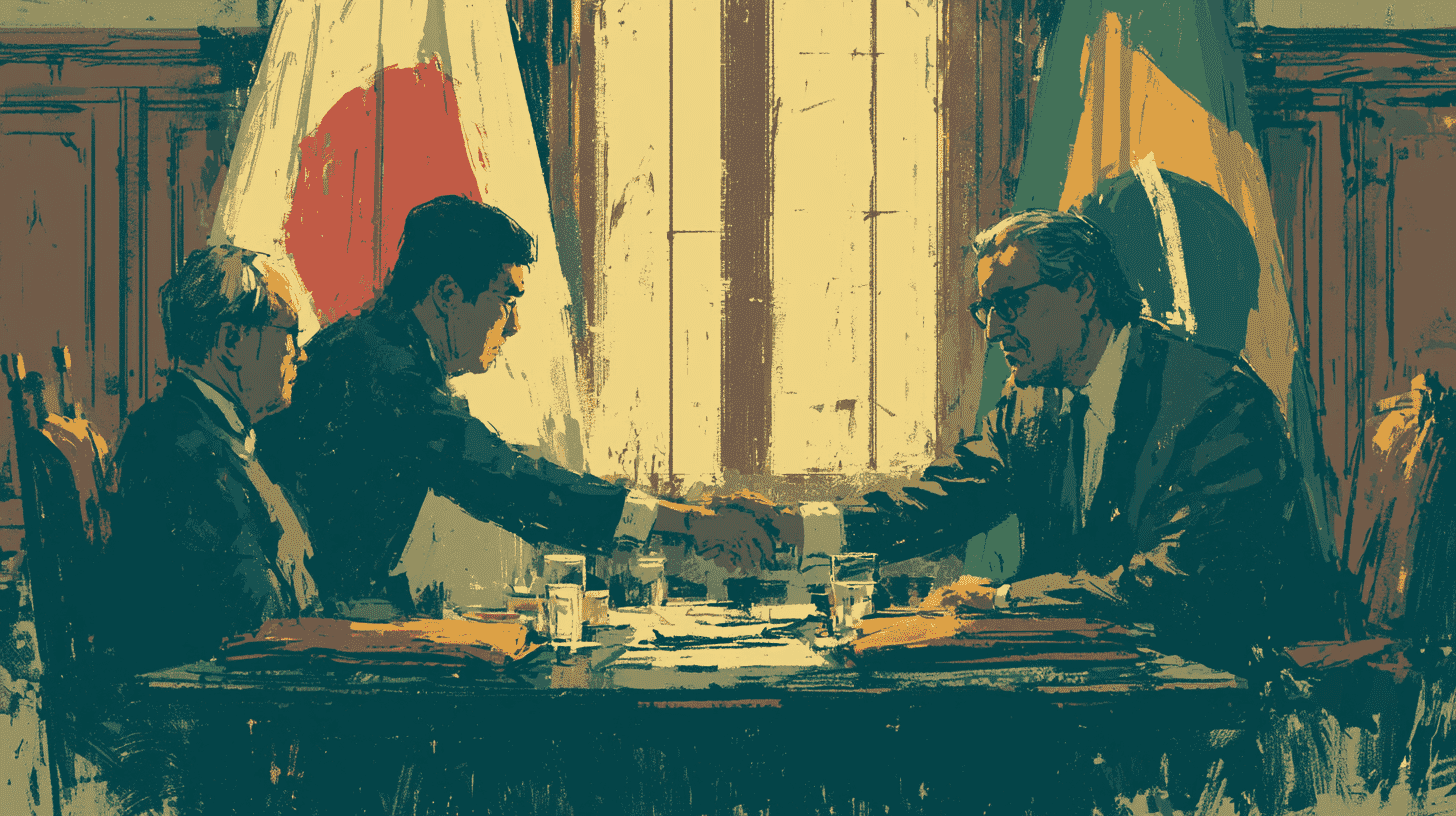
🇧🇷🇯🇵 With the Strait of Hormuz effectively shut, Japanese diplomacy has just moved a new piece onto the board, one located on the other side of the planet. On May 18, 2026, in Tokyo, Brazilian Foreign Minister Mauro Vieira and Japan's Foreign Minister Toshimitsu Motegi formally upgraded what used to be called the "Japan-Brazil Foreign Ministers' Dialogue" into a "Strategic Dialogue," and held the inaugural meeting for nearly two hours. South America's largest economy, an oil producer that ranks somewhere between seventh and ninth depending on the metric and holds the world's second-largest reserves of rare earths, has just been firmly slotted into Tokyo's top tier of partners.
What was actually agreed
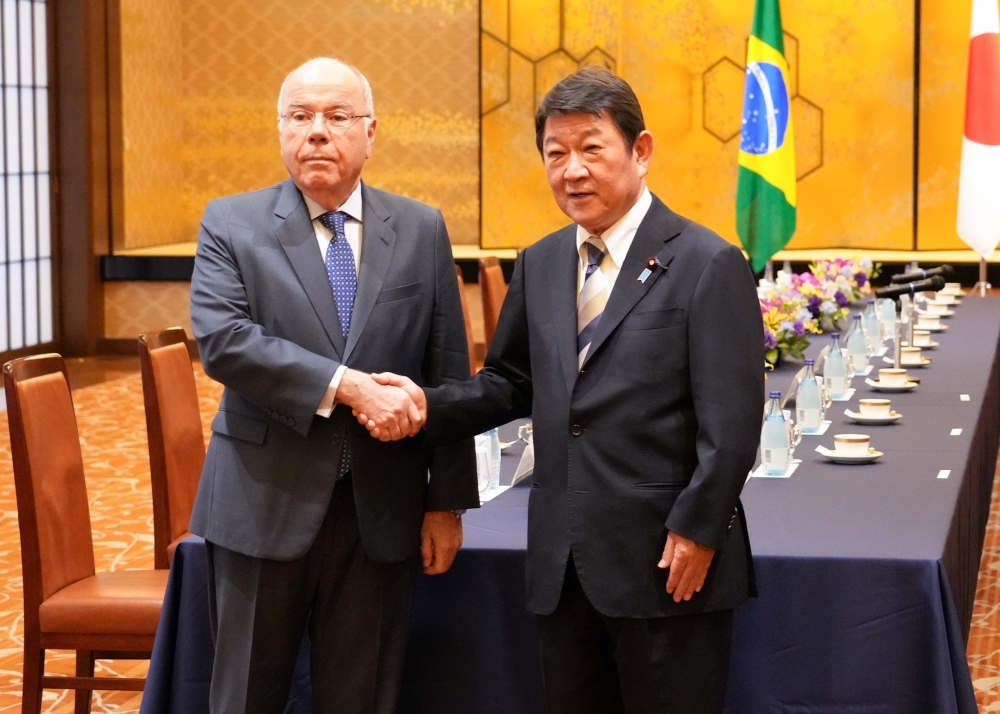
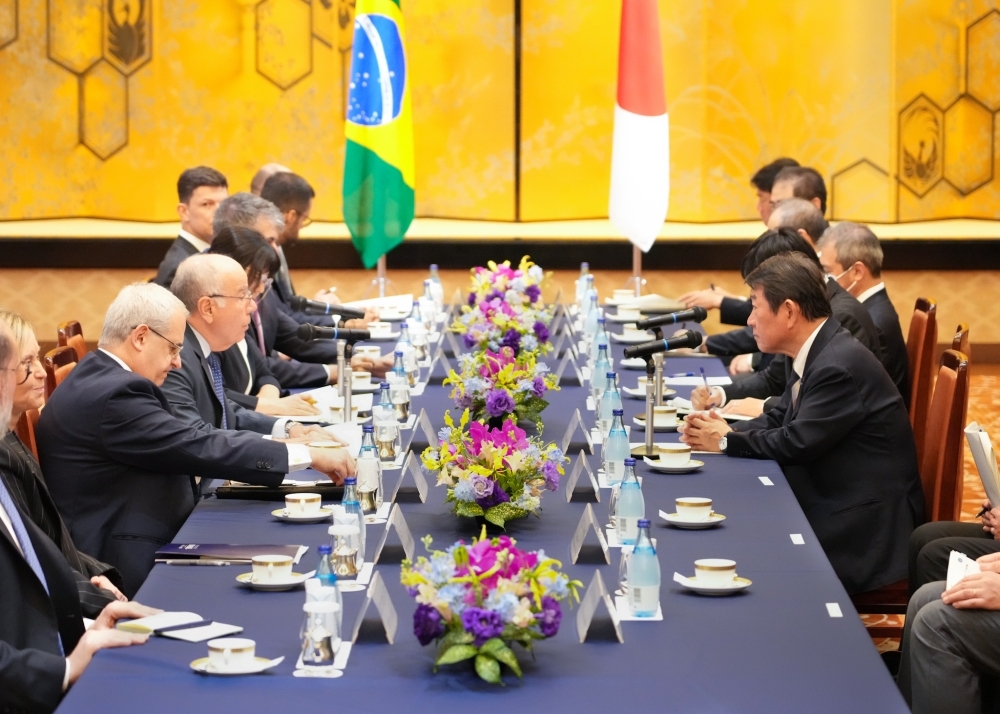
The first-ever Japan-Brazil Foreign Ministers' Strategic Dialogue began at 6:20 p.m. on May 18 at the Foreign Ministry in Kasumigaseki. It is built on the foundation laid in March 2025, when President Lula made a state visit to Japan and the two governments rolled out the "Japan-Brazil Strategic Global Partnership Action Plan 2025–2030." This first foreign-minister-level mechanism is finally activating that five-year roadmap.
The two ministers signed two documents on the day: a memorandum on bilateral cooperation for the protection of nationals overseas, and a supplementary agreement on a disability-inclusive health services project. They also formalized two technical cooperation projects, one on forest monitoring in Brazil's Legal Amazon, another on restoring degraded pasture in the Cerrado region. The Amazon project, which combines satellite tracking with local data collection, is a good illustration of how Japan tends to do this kind of work: respect the partner country's sovereignty over its own forests, then cooperate on climate-related technology.
Source: Ministry of Foreign Affairs of Japan
Why Brazil, and why now
The timing is not subtle.
In February 2026, the United States and Israel struck Iran, and the Strait of Hormuz fell into a state of de facto blockade. Japan imports more than 95% of its crude oil from the Middle East, and the vast majority of it passes through that single chokepoint. As of 2025, Japan's Middle East dependence on crude stood at around 94%, with roughly 90% of imports moving via the Strait. In March, Tokyo authorized a release from its national oil reserves, only the second such release in the program's history. Japan holds about eight months of stockpiles, but if the crisis drags on, the cushion shrinks fast.
That is the context for the recent burst of resource diplomacy. Foreign Minister Motegi spent late April and early May touring four African countries, Zambia, Angola, Kenya, and South Africa, and agreed with Angola to back Japanese firms participating in its crude oil trade, with cooperation on rare earths and other critical minerals also on the table. Brazil is the next piece on the same board.
Brazil is the largest economy in Mercosur, an oil producer ranked between seventh and ninth depending on the data source, and second only to China in rare earth reserves. Production from offshore Rio de Janeiro fields is accelerating, and March 2026 marked a record high in monthly output. After the strategic dialogue, Vieira met separately with Economy and Industry Minister Ryosei Akazawa at METI and said Brazil "can contribute to Japan's stable oil supply." In the dialogue itself, he indicated readiness for "constructive discussions" on Brazilian crude exports to Japan. Given that Japan has historically not bought Brazilian crude on any regular basis, that is not a small signal.
The unfinished homework called the Mercosur EPA
The talks also revisited a piece of unfinished business: the long-stalled Japan-Mercosur Economic Partnership Agreement (EPA). Mercosur, the customs union of Brazil, Argentina, Uruguay, Paraguay, and Bolivia, is one of the few large economic blocs Japan does not yet have a trade deal with. The two ministers welcomed progress under the "Japan-Mercosur Strategic Partnership Framework" and agreed that a stocktaking of those discussions is coming soon.
Source: Ministry of Foreign Affairs of Japan
Reporting from Nikkei adds another layer here. Ahead of the meeting, the paper reported that the two governments would agree to launch an AI cooperation dialogue, only the second such bilateral track Japan has set up, after the one with India. The plan is to put Japanese AI services to work in Brazilian agriculture and mining. A new layer, AI governance in the Global South, is being grafted onto the Japan-Brazil relationship.
Mercosur EPA, AI cooperation, oil, rare earths, the Amazon. Lined up like that, almost every major thread of today's economic security agenda, energy, food, supply chains, climate, technology, runs through this one bilateral track. From Tokyo's vantage point, Brazil is no longer a "faraway country in South America." It is the rare partner that can absorb several different kinds of risk all at once.
What Brazil gets out of it
Brazil has its own arithmetic. It is a core BRICS member and has been deepening ties with China for years. But the Lula government's brand is "non-aligned multipolarity", and the deeper the US-China rivalry runs, the more value Brazil sees in middle-power partners like Japan. It is also a hedge against US protectionism.
The fact that Japan hosts roughly 200,000 Brazilian residents, many of Japanese descent, while Brazil itself is home to a community of about two million people of Japanese descent, the largest of its kind anywhere, is another reason Brasília takes Tokyo seriously. Motegi opened the meeting by calling Brazil "a strategic global partner that shares values and principles" and explicitly referenced the world's largest Japanese diaspora community. It's a relationship built on neither pure values nor pure interests, but on a century of human migration, something that is harder for China or Russia to replicate.
A quieter but important agreement on UN reform
It didn't make the headlines, but there was another notable agreement. The two foreign ministers reaffirmed their commitment to working through the G4, Japan, Germany, India, and Brazil, for concrete progress on UN Security Council reform. The G4's bid for permanent seats has been quiet for a few years, but as the Council looks more and more paralyzed by the US-Russia-China standoff, demand for reform is rebuilding. Brazil, which served its eleventh term as a non-permanent Security Council member in 2022–23, is arguably the easiest "Global South candidate" to rally support behind.
How other powers approach South America
Tokyo's South America playbook is one of several competing approaches.
Washington under the second Trump administration has tilted toward protectionism, and its distance from Mercosur has widened rather than closed. Beijing has been embedded for over a decade, with deep positions in Brazilian soybeans and iron ore, Chilean lithium, and Peruvian copper, all wrapped in Belt-and-Road-style infrastructure financing. Brussels reached a political agreement with Mercosur in December 2024 and signed both texts in Paraguay on January 17, 2026; the interim trade agreement has been applied provisionally since May 1, 2026. Full ratification of the broader partnership agreement remains stalled after the European Parliament asked the EU Court of Justice in January whether the deal is compatible with EU law.
Japan's chosen approach is neither a bloc-wide FTA blitz nor a bilateral mega-deal. It is a two-track design: keep advancing the strategic global partnership with Brazil bilaterally, while keeping the wider Japan-Mercosur framework alive in parallel. It is slower than China's model, but it leans on people-to-people history and technical cooperation, tools that don't trip the sovereignty alarms in Latin American capitals the way infrastructure debt does.
What still has to be answered
The strategic dialogue is only the starting line. Several hard implementation questions are now visible.
Can Japan's refining infrastructure actually handle large volumes of Brazilian crude? Much of Brazilian output is heavy and sour, and Japanese refineries have technical and cost constraints. Rare earths require not just reserves but separation and refining capacity, and that capacity remains heavily concentrated in China. The Mercosur EPA runs straight into Japanese domestic politics around agricultural imports, especially Brazilian beef. And the AI cooperation track has India as a precedent, but no track record yet.
Still, the price of dependence, the bill that the Strait of Hormuz has now made unavoidable, is heavy. Africa, Australia, the UAE, and now Brazil. In the mosaic of diversification Japan is assembling, the Brazilian piece may be larger than it first appears.
For years, "breaking out of Middle East dependence" was a slogan in Tokyo. The dialogue on May 18 is one of the first moments where it started to look like an actual blueprint. How does your country think about where its energy and critical minerals come from? Does Japan's emerging "South America × Global South" mosaic look like a model worth copying, or like a hedge stretched too thin?
References
- Japan MOFA: "First Japan-Brazil Foreign Ministers' Strategic Dialogue": https://www.mofa.go.jp/mofaj/press/release/pressit_000001_03734.html
- Japan MOFA: "Memorandum on Cooperation for Protection of Nationals Overseas": https://www.mofa.go.jp/mofaj/press/release/pressit_000001_03733.html
- Nikkei: "Brazilian foreign minister to visit Japan from May 17": https://www.nikkei.com/article/DGXZQOUA137FC0T10C26A5000000/
- Nikkei: "Japanese AI services for Brazilian agriculture and mining; both governments to establish cooperation dialogue": https://www.nikkei.com/article/DGXZQOUA157V60V10C26A5000000/
- Infoseek/TBS NEWS DIG: "Brazilian foreign minister says Brazil 'can contribute' as Akazawa pushes for oil supply cooperation": https://news.infoseek.co.jp/article/tbs_2668800/
- nippon.com: "Japan's crude oil dependence on the Middle East exceeds 95%": https://www.nippon.com/ja/japan-data/h02718/
- Middle East Institute of Japan: "Strait of Hormuz closure shakes Asia's oil supply network": https://www.meij.or.jp/research/2023/58.html
- Council of the EU: "EU-Mercosur agreements explained": https://www.consilium.europa.eu/en/policies/eu-mercosur-agreements-explained/







Global Discussion
4 comments