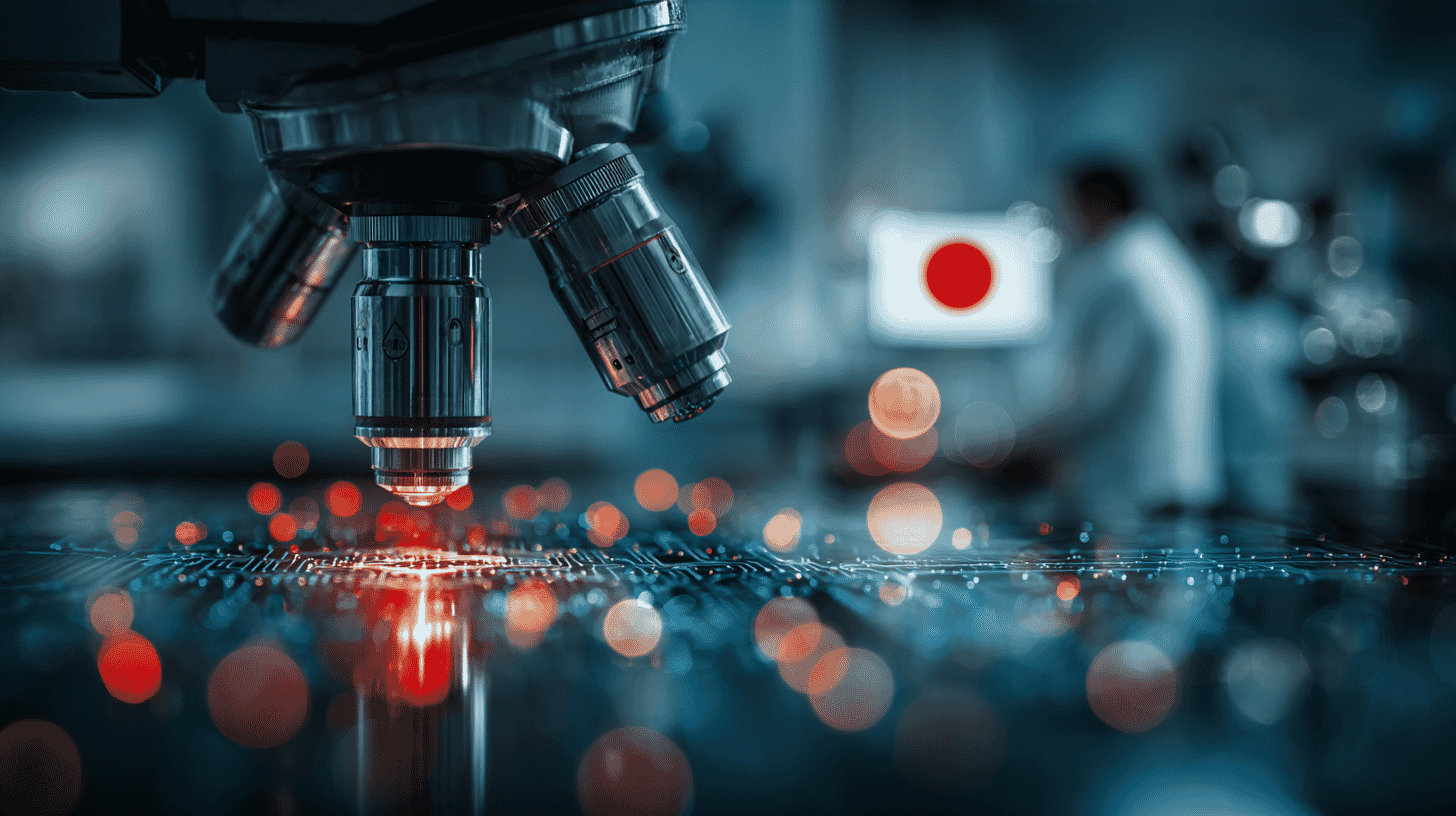
🔬 Can Japan really double its research funding and reclaim its place as a global science superpower?
On May 13, 2026, Prime Minister Sanae Takaichi met the head of Japan's largest business federation and pledged to "effectively double" the country's research spending by strengthening lab infrastructure. She also floated a certification system for top research universities and an expansion of Japan's national R&D institute, all part of her "New Technological Nation" vision targeting AI, semiconductors, and quantum technologies.
Japan's R&D budget, meanwhile, has barely moved for nearly two decades. Over the same stretch China built its science and technology budget up to roughly $55 billion a year, and Korea now puts around 5% of GDP into research.
What Takaichi Actually Announced
At the Prime Minister's Office on May 13, Takaichi met with Yoshinobu Tsutsui, chairman of Keidanren (the Japan Business Federation), who handed her a proposal titled "Science and Technology Nation Strategy." She used the occasion to lay out three concrete commitments.
First, she promised to "effectively double research spending" by investing heavily in research equipment and infrastructure, the unglamorous backbone of any laboratory. She framed it as a foundational issue, stating that "basic research capability is directly tied to national power."
Second, she said the government will "consider creating a certification system for universities that possess particularly high research capabilities in specific fields and that practice sophisticated management." The system is meant to concentrate resources on the institutions most able to compete internationally, rather than spreading thin support across all national universities.
Third, she signaled an expansion of the National Institute of Advanced Industrial Science and Technology (AIST), Japan's largest public research organization, which sits under the Ministry of Economy, Trade and Industry.
The vehicle for all three, the "Japan Growth Strategy," was adopted by cabinet decision on July 21, 2026, alongside the annual Basic Policy on Economic and Fiscal Management. The same day, the Japan Growth Strategy Headquarters signed off on a public-private investment roadmap covering major products and technologies across the 17 strategic fields. Takaichi told the meeting that working groups had been set up for each field, drawing 186 academics and business figures across 54 rounds of discussion: past industrial policy, she said, was criticised as government-led and doubted on whether officials could pick winners, whereas this had been worked out jointly by industry, academia and government. The roadmap names 62 priority products and technologies.
The "New Technological Nation" Framework
This isn't a one-off announcement. Takaichi has been building toward this since her October 2025 inauguration. Her February 20, 2026 policy speech laid out the philosophical core: Japan's potential growth rate has stagnated relative to other developed countries, but its innovation capacity and labor efficiency are still competitive. What's missing, she argued, is capital investment, particularly domestic investment in technology.
To fix that, her cabinet identified six national strategic technologies at the Council for Science, Technology and Innovation in November 2025:
- AI and advanced robotics
- Quantum
- Semiconductors and communications
- Bio and healthcare
- Fusion energy
- Space
These six get priority budget allocation and tax incentives. A broader list of 17 strategic investment fields, including shipbuilding, content industries, food tech, drug discovery, materials, and defense industry, receives coordinated support through tax breaks, regulatory reform, government procurement, and international standards setting.
Takaichi's catchphrase from the February speech was memorable: "I will push the growth switch, push it, push it, push it, and keep pushing it."
How Japan Actually Stacks Up
The hard numbers tell a more sobering story.
Japan's gross domestic expenditure on R&D is around 3.44% of GDP (2023), placing it roughly tied with the United States at 3.45%. In absolute terms, Japan spends about $200 billion a year on R&D, the third-largest in the world. By those measures, Japan looks healthy.
But the trends are unfavorable. According to the World Intellectual Property Organization, Japan is "the only country in the East Asia/Oceania region trending downward" in R&D intensity. Japan's R&D spending has been essentially flat since the late 2000s, while every major competitor has surged ahead:
| Country | R&D / GDP (2023) | Trend |
|---|---|---|
| Israel | 6.33% | Rising |
| South Korea | 5.0% | Rising |
| Taiwan | 4.0% | Rising |
| United States | 3.45% | Rising |
| Japan | 3.44% | Flat |
| Germany | 3.11% | Rising |
| China | 2.6% | Surging |
The China comparison is particularly striking. China's absolute R&D spending has reached 96% of US levels (up from 72% a decade ago), and Beijing committed about $55 billion to its 2025 science and technology budget, a 10% increase over the prior year, with semiconductors, AI, and quantum computing as named priorities. On top of that, China launched a 1-trillion-yuan (roughly $138 billion) national venture guidance fund covering the same technologies. South Korea, despite being economically smaller than Japan, runs the highest R&D intensity of any major economy at around 5%.
So when Takaichi says she wants to "effectively double" Japanese research spending, the question is: doubled to what level? And from what base?
The Hidden Crisis: Researchers, Not Money
Money is only part of the story. The other part is people.
Japan's PhD numbers are one of the most-cited indicators of trouble. According to the latest NISTEP science and technology indicators, Japan produces about 123 PhD-holders per million people (2022). South Korea produces around 350. The United Kingdom: about 350. The United States: about 280. Doctoral enrollment in Japan peaked in 2006 and has been declining since, while it has more than doubled in the US and China over the same period.
In April 2026, NISTEP published its annual "fixed-point survey" of Japanese researchers. The headline finding was bleak: Japan's relative ranking in "internationally outstanding results in basic research" has fallen from 1st place 15 years ago to 16th place today.
The reasons researchers themselves give are consistent:
- The share of tenure-track jobs has collapsed. In national universities, the proportion of permanent positions for under-39 faculty fell from 23.4% (2007) to 15.1% (2016); for under-34, from 8.5% to 4.5%.
- Researchers report spending only about 10% of their time on actual research. The rest goes to paperwork, grant applications, evaluations, and committee work.
- The weak yen has made imported research equipment dramatically more expensive, a quiet but serious squeeze on every lab in the country.
- About 64% of under-39 university researchers are on fixed-term contracts.
Takaichi's "effectively double" framing, focused on equipment and infrastructure, directly addresses the yen-and-equipment problem. The university certification system is meant to give top institutions stable, predictable funding.
On the people problem, the Growth Strategy adopted in July does have language. It calls for strengthening both baseline funding and competitive research funding, explicitly including large increases in national university operating grants and KAKENHI grants-in-aid; for better pay and career prospects for doctoral students and highly specialised staff; for promoting emerging and interdisciplinary research led by young researchers; and for strengthening international brain circulation through overseas placements and joint research. On paper it touches nearly every complaint researchers have been making. Whether the money follows is the open question.
Can Japan Catch Up in AI, Semiconductors, and Quantum?
This is the question that matters most for Japan's economic future. Let's go field by field.
Semiconductors. Japan's strategy here is the most concrete. Rapidus, founded in 2022 with backing from Toyota, Sony, NTT and others, is targeting mass production of 2nm logic chips at its Hokkaido fab starting in 2027. The government has committed roughly 2 trillion yen (about $13 billion) in support, and successfully demonstrated 2nm GAA transistor prototypes in July 2025. Renowned semiconductor engineer Jim Keller publicly praised the prototype data. Reaching production-grade yield at 2nm is the hard part, and Japan will need every yen of the doubled research budget to get there.
AI. Japan is investing heavily but starting from behind. Domestic large language models like SoftBank's "Sarashina" and NEC's "cotomi" exist but trail OpenAI, Anthropic, and Chinese frontier labs in scale. Japan's actual edge may lie in AI applications: robotics, manufacturing, healthcare, "AI for Science," where its industrial base provides natural advantages. Recent partnerships like SoftBank-Intel on AI memory and the AI-RAN alliance with the US and Korea suggest Japan is positioning as a high-value contributor rather than trying to win the foundation model race outright.
Quantum. Japan has world-class research. In July 2025, Osaka University launched a fully domestic superconducting quantum computer. Fujitsu and RIKEN announced a 256-qubit superconducting machine in April 2025 and are targeting 1,000 qubits in 2026. The Institute for Molecular Science and Hitachi operate a neutral-atom quantum computer. But China has scaled rapidly: Tianyan-504 (504 qubits) launched in 2024, Zuchongzhi 3.0 hit 107 qubits in 2025, and Beijing's $10 billion Hefei laboratory dwarfs any single Japanese facility. Japan's quantum push is real, but it's competing against a state-led Chinese effort with five-to-ten times the resources.
What Critics Worry About
Not everyone in Japan is convinced.
Some academics warn that the "university certification" idea risks concentrating money on a handful of large research universities while starving smaller regional institutions where unexpected breakthroughs often originate. The existing "International Research University" certification process for Tohoku University, Tokyo Science University, Kyoto University, and the University of Tokyo has been criticized as opaque and politically charged.
Others point out that "effectively doubling" is a softer commitment than "doubling." Infrastructure upgrades matter, but the headline number depends on baseline assumptions and accounting choices that haven't been published yet.
A third concern is that Takaichi's "responsible expansionary fiscal" framing requires sustained political support. Past Japanese governments have announced ambitious science budgets and then quietly let them slip during fiscal tightening cycles. The Basic Policy adopted in July replaced the primary-balance surplus with a stable decline in the debt-to-GDP ratio as the central fiscal target and branded FY2027 "year one of responsible expansionary fiscal policy," a shift that has drawn its own warnings about loosening fiscal discipline. Past Japanese governments have announced ambitious science budgets and then quietly let them slip during tightening cycles. The October 2025 inauguration of a new prime minister gave the science community optimism, but plenty of researchers have seen this scene before.
Why This Matters Beyond Japan
The bigger picture is global. The world is splitting into rival technology blocs: US-led, China-led, with Europe and Japan trying to remain consequential. Japan's choice is whether to be a senior partner in the US-aligned bloc with real capabilities of its own, or a junior participant that depends on others for the foundational technologies of the 21st century.
Doubling research funding won't, by itself, decide that. But it's a necessary condition. The question now is whether the doubled budget reaches the bench scientists, the PhD students, and the equipment closets, or whether it gets consumed by procurement bureaucracy and headline announcements.
The strategy documents are now on the table. What comes next is the Japan Growth Strategy Implementation Plan and a regional budget package, and that is where the actual research numbers should become visible. How is research funding handled where you live? Is your government investing more, less, or about the same as five years ago? Let us know.
References
- https://www.nikkei.com/article/DGXZQOUA135TU0T10C26A5000000/
- https://www.kantei.go.jp/jp/105/statement/2026/0220shiseihoshin.html
- https://toyokeizai.net/articles/-/922908
- https://www.wipo.int/en/web/global-innovation-index/w/blogs/2025/end-of-year-edition
- https://www.oecd.org/en/data/insights/statistical-releases/2025/03/rd-spending-growth-slows-in-oecd-surges-in-china-government-support-for-energy-and-defence-rd-rises-sharply.html
- https://reseed.resemom.jp/article/2026/04/27/13123.html
- https://www.tomshardware.com/tech-industry/china-to-spend-usd55-billion-on-r-and-d-in-2025-semiconductor-ai-and-quantum-computing-fields-to-benefit
- https://www.csis.org/analysis/understanding-chinas-quest-quantum-advancement







Global Discussion
14 comments