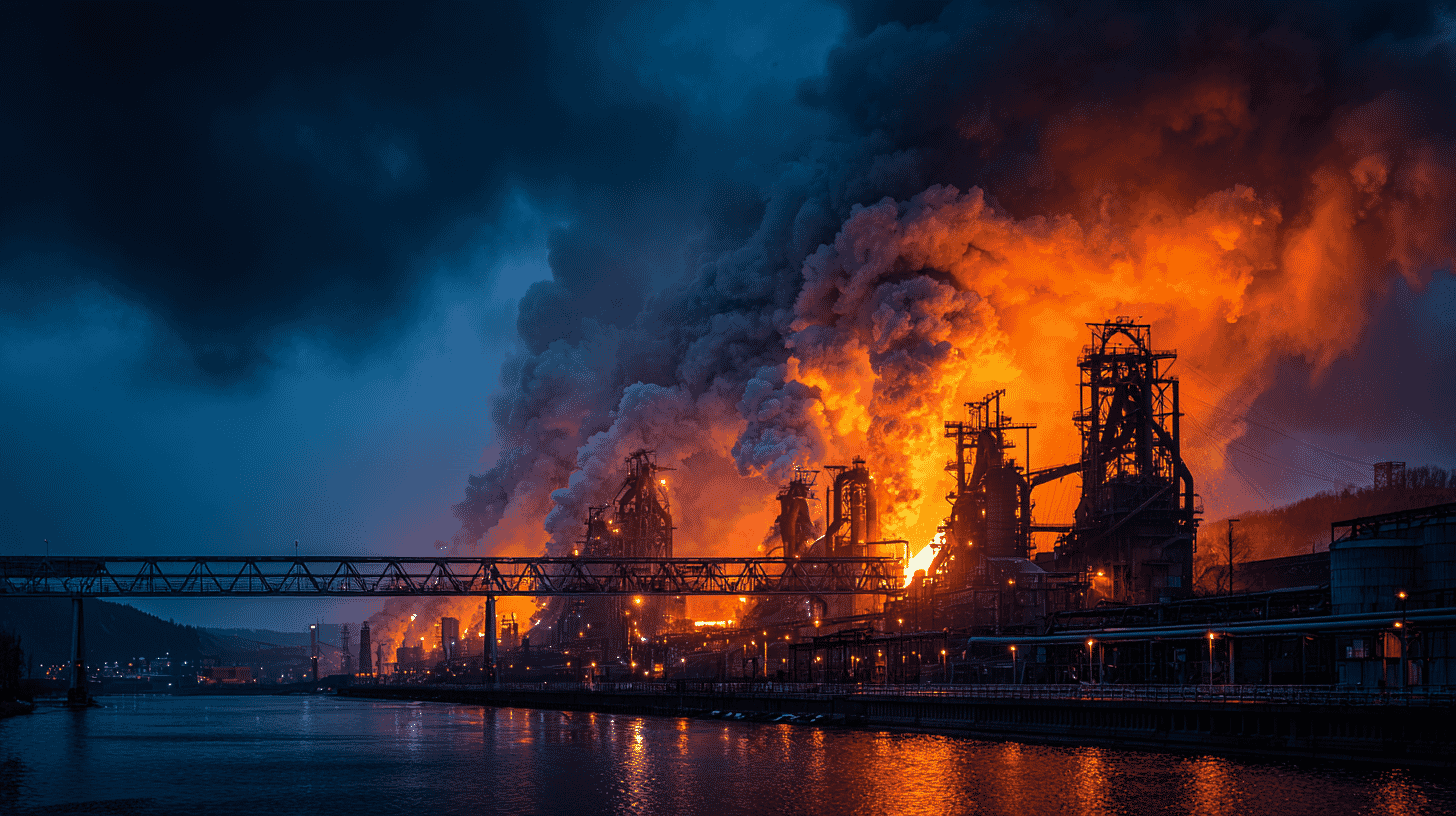
🏭 Japan's largest steelmaker has issued the biggest convertible bond in Japanese corporate history. After completing its $14.9 billion acquisition of U.S. Steel, Nippon Steel raised more than ¥1 trillion in fresh capital, including ¥600 billion in convertible bonds alone. Here is how Japan's steel giant is reshaping the global industry, and why it matters beyond Japan.
Japan's Largest-Ever Convertible Bond: ¥600 Billion in One Shot
In February 2026, Nippon Steel announced the issuance of euro-yen convertible bonds (CBs). Initially planned at ¥550 billion, the offering was upsized to ¥600 billion on February 24 amid strong demand from overseas institutional investors. This represents the largest convertible bond issuance by any Japanese company in history, according to data from LSEG (London Stock Exchange Group).
The issuance came in two tranches. The original plan was ¥275 billion each for the 2029 and 2031 maturities; both were lifted to ¥300 billion. Each carries zero-coupon interest, meaning bondholders receive no interest but hold the right to convert into shares at a fixed price. Conversion prices were set at ¥730.3 for the 2029 tranche and ¥737 for the 2031 tranche, premiums of 10% and 11% respectively over the February 24 close. In Japan's rising interest rate environment, the structure lets Nippon Steel raise large sums without interest payments.
The bonds were issued in March 2026. Together with a syndicated loan from the Japan Bank for International Cooperation (JBIC), a government-backed institution, this series of financing secured full repayment of the roughly ¥2 trillion bridge loan used for the U.S. Steel acquisition. The Nikkei put the combined raise, convertible bonds included, at around ¥1.3 trillion.
Why Does Nippon Steel Need This Much Money?
The primary driver is the company's landmark acquisition of U.S. Steel, which closed on June 18, 2025, for a total enterprise value of $14.9 billion.
To finance the deal, Nippon Steel initially relied on a bridge loan of approximately ¥2 trillion ($13 billion), arranged primarily by Japan's three mega-banks: MUFG, Sumitomo Mitsui, and Mizuho. Bridge loans are temporary financing meant to be replaced with longer-term capital. With the repayment deadline set for June 2026, the refinancing had to be finished before then.
As of February 2026, CFO Takahiko Iwai stated that the remaining bridge loan balance had been reduced to approximately ¥1.3 trillion ($8.5 billion). The company has already completed several rounds of refinancing, including ¥500 billion in subordinated loans (July 2025) and approximately ¥200 billion in hybrid bonds and syndicated loans (May 2024).
The 18-Month Political Drama Behind the U.S. Steel Deal
Nippon Steel first announced its bid for U.S. Steel in December 2023. Founded in 1901 by Andrew Carnegie and J.P. Morgan, U.S. Steel was once the symbol of American industrial might, at one point the world's largest corporation. What followed was an 18-month odyssey through American politics.
President Biden blocked the deal on January 3, 2025, citing national security concerns based on a CFIUS (Committee on Foreign Investment in the United States) review. Opposition came from both sides of the aisle, with Democratic and Republican politicians alike arguing that a crown jewel of American industry should remain in domestic hands. The United Steelworkers union fiercely opposed the acquisition.
President Trump initially opposed the deal too. But after ordering a fresh CFIUS review in April 2025, his stance shifted. On May 30, 2025, visiting a U.S. Steel plant near Pittsburgh, he called Nippon Steel a "great partner."
On June 13, 2025, Trump signed an executive order allowing the deal to proceed under specific conditions. The acquisition closed on June 18, with U.S. Steel being delisted from the New York Stock Exchange and becoming a wholly owned subsidiary of Nippon Steel North America.
The "Golden Share": Unprecedented Government Control
The most striking feature of this deal is the "Golden Share" mechanism, a tool historically used in European privatizations but virtually unknown in U.S. corporate governance.
Under this arrangement, the U.S. government holds a special share in U.S. Steel that grants:
- Board appointment rights: The president can appoint one of three board directors
- Veto power over major decisions: Headquarter relocation, investment reductions, factory closures, and salary cuts all require presidential approval
- American leadership requirements: The CEO must be a U.S. citizen, and a majority of board members must be U.S. citizens
Trump personally holds these veto powers rather than delegating them to a government agency, an arrangement experts have described as unusual. After Trump leaves office, these powers transfer to the Treasury and Commerce Departments.
Additionally, Nippon Steel committed to $11 billion in new investments by 2028, including $2.4 billion for facilities in Pennsylvania's Mon Valley region.
According to legal experts, this golden share approach is unprecedented in CFIUS practice and could become a model for future foreign investments in strategic U.S. industries.
Nippon Steel's $39 Billion Five-Year Blueprint
On December 12, 2025, Nippon Steel unveiled its "2030 Medium-to-Long-Term Business Plan," targeting approximately ¥6 trillion (about $40 billion) in capital and business investment across fiscal 2026 through 2030:
| Investment Area | Amount |
|---|---|
| Overseas (U.S. Steel, AM/NS India, Thailand, etc.) | ~¥4 trillion |
| Domestic (efficiency, decarbonization, electrical steel) | ~¥2 trillion |
It is the first Nippon Steel plan in which overseas investment exceeds domestic. The targets for fiscal 2030 are ¥1 trillion or more in consolidated underlying profit, ROE of around 10%, and a debt-to-equity ratio near 0.7. Domestic and overseas operations are each expected to contribute at least ¥500 billion, with U.S. Steel accounting for more than half of the overseas figure. President Tadashi Imai has framed the plan as a return to the top of the global industry.
Why Convertible Bonds Instead of a Stock Offering?
Nippon Steel's choice of convertible bonds over a traditional equity offering reflects a delicate balancing act with shareholders.
A public stock offering immediately increases the number of outstanding shares, diluting existing shareholders' value. Convertible bonds, by contrast, function as debt initially and convert into equity only if the stock price rises above a predetermined conversion price. If the stock price stays flat or falls, the bonds are simply repaid at maturity.
Nippon Steel used this approach in October 2021, issuing ¥300 billion in convertible bonds that were largely converted into equity as the stock price climbed.
Still, markets reacted nervously. When Reuters first reported the CB plans on February 5, Nippon Steel's shares dropped as much as 7.6% intraday, to ¥625.5, the sharpest decline since April 2025, before recovering to close 1.5% lower at ¥666.6. On February 25, the session after the upsizing was announced, the stock fell as much as 5.3% again.
How Nippon Steel Stacks Up Against Global Rivals
The U.S. Steel acquisition has shifted global steel industry rankings. Here is the 2025 crude steel production table published by the World Steel Association in June 2026:
| Rank | Company | Production (million tonnes) | HQ |
|---|---|---|---|
| 1 | China Baowu Group | 124.76 | China |
| 2 | ArcelorMittal | 63.43 | Luxembourg |
| 3 | Nippon Steel | 57.78 | Japan |
| 4 | Ansteel Group | 57.61 | China |
| 5 | HBIS Group | 42.49 | China |
Nippon Steel's output rose from 43.64 million tonnes in 2024 to 57.78 million tonnes in 2025, lifting it from fourth place to third as U.S. Steel's tonnage was folded in. ArcelorMittal still leads it by roughly 5.7 million tonnes.
ArcelorMittal, headquartered in Luxembourg, operates in over 60 countries and has long been the benchmark for global steel consolidation, largely built through Lakshmi Mittal's acquisition strategy in the 2000s. It has faced headwinds recently. In 2025 it ended long steel production in South Africa, shut a mill in Ontario, Canada, and closed a steelworks in Romania, citing high energy costs. Its joint venture with Nippon Steel in India (AM/NS India) remains a bright spot.
Chinese producers dominate by volume, with Baowu alone producing twice as much as ArcelorMittal. But domestic overcapacity has driven massive export surges that are depressing steel prices across Asia. Nippon Steel's CFO has suggested that Chinese export volumes may be reaching their limits.
A Shifting Landscape for Japanese M&A
Nippon Steel's U.S. Steel acquisition represents a watershed moment for Japanese cross-border deal-making.
Japan's corporate history is littered with cautionary tales of overseas acquisitions gone wrong: NTT DoCoMo's failed international expansion in the early 2000s, Toshiba's disastrous Westinghouse purchase in 2006. These experiences bred caution.
But the new generation of Japanese deal-making looks different. Mitsubishi Corporation's acquisition of U.S. natural gas producer Aethon, announced in January 2026 and completed in July at roughly $7.5 billion including assumed debt, SoftBank's Arm Holdings journey, and now Nippon Steel's politically charged U.S. Steel purchase all point to growing sophistication and resilience.
What sets the Nippon Steel deal apart is the political complexity it navigated: a Biden administration block, a Trump reversal, bipartisan opposition, labor union resistance, and an unprecedented golden share requirement. It closed anyway, as one of the largest Japanese acquisitions of a U.S. company.
Challenges Ahead
Despite the strategic vision, Nippon Steel faces near-term headwinds.
The U.S. steel market is soft. Trump's tariff policies and interest rate uncertainty have weakened demand, and Nippon Steel had been guiding to a net loss of ¥70 billion for the fiscal year ended March 2026, partly due to U.S. Steel-related costs and an explosion at one of its steelworks.
The golden share also constrains management flexibility. Closing underperforming plants or reducing investments now requires presidential approval, a significant departure from normal corporate governance.
And the debt-to-equity ratio, pushed to around 0.8x by the acquisition, needs to be brought back down to 0.7x through subordinated instruments and steady cash flow.
Yet the long-term logic is clear. Japan's domestic steel demand is shrinking alongside its population, and the growth markets are the United States, India, and Southeast Asia. In an era of decarbonization, the combination of Nippon Steel's technology and U.S. Steel's North American footprint could create real advantages in green steel.
Update (July 2026): Results announced on May 13, 2026 showed a net profit of ¥17.1 billion for the fiscal year ended March 2026, reversing the guided ¥70 billion loss, helped by improved inventory valuation. Guidance for the year ending March 2027 is ¥220 billion in net profit, with U.S. Steel expected to contribute more than ¥100 billion.
How important is the steel industry in your country? What do you think about a foreign company acquiring a national industrial champion? We'd love to hear your perspective, so share your thoughts in the comments!
References
- https://www.nikkei.com/
- https://www.newsweekjapan.jp/headlines/business/2026/02/586605.php
- https://www.bloomberg.com/jp/news/articles/2026-02-05/T9Z0ALKK3NY900
- https://www.arabnews.jp/article/business/article_169950
- https://www.csis.org/analysis/understanding-trumps-decision-approve-nippon-steel-deal
- https://en.wikipedia.org/wiki/Acquisition_of_U.S._Steel_by_Nippon_Steel
- https://worldsteel.org/data/world-steel-in-figures/world-steel-in-figures-2026/
- https://steelindustry.news/nippon-steel-acquires-u-s-steel/




Global Discussion
15 comments