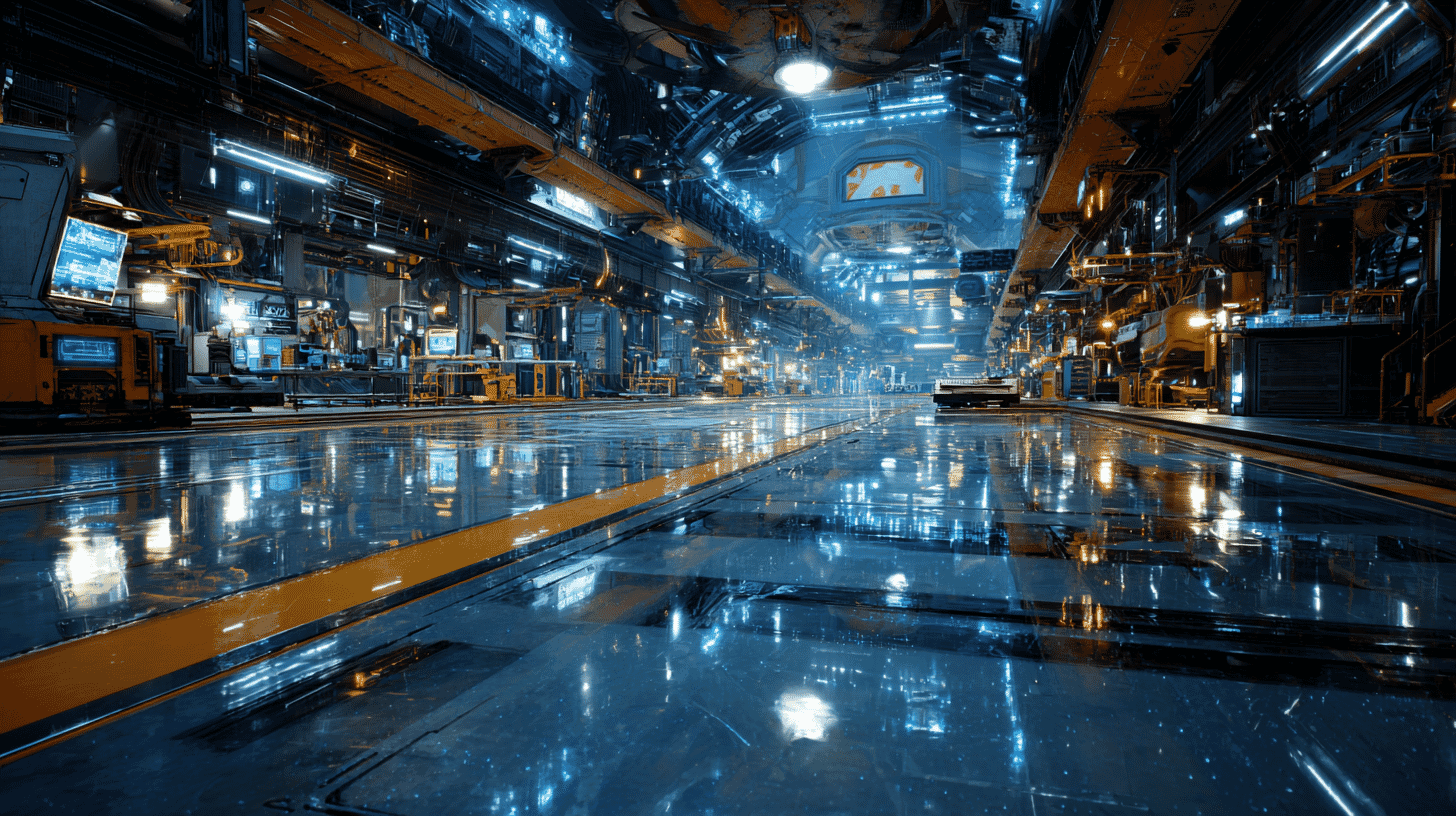
OpenAI, Google, DeepSeek, the frontrunners of AI development are all American or Chinese companies. Now Japan is mounting a national counterattack. Four of the country's biggest corporations, SoftBank, NEC, Honda, and Sony, have joined forces to create a new AI development company, backed by roughly $6.3 billion in government funding over five years. But Japan isn't trying to build the next ChatGPT. Instead, it's betting on "Physical AI", artificial intelligence that controls robots and factory equipment, playing to the strengths of its legendary manufacturing sector.
What Is "Japan AI Foundation Model Development"?
In April 2026, SoftBank, NEC, Honda, and Sony Group established a new company called "Japan AI Foundation Model Development" (日本AI基盤モデル開発), headquartered in Shibuya, Tokyo. Each of the four core companies invested roughly 10–15% of the equity, with a SoftBank executive who has led the company's domestic AI efforts appointed as CEO.
Beyond the core four, Nippon Steel, Kobe Steel, and Japan's three megabanks, MUFG, SMBC, and Mizuho, also invested as minority shareholders. Preferred Networks (PFN), a prominent Japanese AI startup, will participate as a development partner. The company plans to assemble around 100 elite AI developers and aims to build a foundation model with approximately 1 trillion parameters, the largest ever in Japan.
The division of roles is clear: SoftBank and NEC lead the development of the AI "brain" (the foundation model itself), while Honda applies it to autonomous driving and Sony deploys it across gaming, entertainment, and semiconductors. The finished AI will be made available not just to investors but to Japanese companies broadly.
The Government Goes All-In: NEDO's $6.3 Billion Commitment
This corporate initiative is tightly linked to a national strategy led by Japan's Ministry of Economy, Trade and Industry (METI).
In March 2026, NEDO (New Energy and Industrial Technology Development Organization), Japan's key research funding agency, opened applications for a massive program called the "Multimodal Foundation Model Development for AI Robots and Physical AI." Running from fiscal 2026 through 2030, the program offers up to approximately $2.4 billion per project per year, making it one of the largest AI funding initiatives in the world.
What's notable is the design. Rather than writing a blank check, the government conducts annual "stage-gate reviews," continuing support only if projects meet defined technical benchmarks. This reflects lessons from Japan's past failures, notably the Fifth Generation Computer Project of the 1980s, a billion-dollar national initiative that produced impressive research but failed commercially.
The funding comes partly from Japan's GX (Green Transformation) bonds, which means projects must also demonstrate energy efficiency, a requirement that aligns with Japan's broader sustainability goals.
Why "Physical AI"? Japan's Strategic Choice
The reason Japan isn't trying to out-build ChatGPT or Gemini is straightforward: it can't.
Developing general-purpose AI requires vast internet-scale datasets and tens of billions of dollars. OpenAI, Google, Anthropic, Meta, and China's DeepSeek and Alibaba are already deep in this race. Japan entering now would be like joining a marathon at mile 20.
Instead, Japan is targeting "Physical AI", AI that operates in the real, physical world. This means building multimodal foundation models that process not just text and images, but also sensor data, motion data, and physical properties from real-world environments.
The strategic logic is compelling. Japan's manufacturing sector has accumulated decades of proprietary industrial data, factory operation logs, robot motion patterns, quality control records. This data doesn't exist on the open internet and can't be scraped by Silicon Valley or Chinese tech giants. It's Japan's unique "data moat."
Think of it this way: while the US and China are fighting over who builds the smartest chatbot, Japan is asking, "Who builds the smartest factory robot?"
How Japan's Approach Differs from the US and China
The American AI race features OpenAI, Google, Anthropic, and Meta pouring hundreds of billions into general-purpose AI, models that write, code, reason, and generate images. China's DeepSeek, Alibaba, and Baidu pursue a parallel path, building their own models to reduce dependence on American technology.
Japan's new company deliberately avoids this battlefield. Instead of trying to beat GPT-5 or Gemini at text generation, it's building AI models that can understand how a welding robot should adjust its pressure based on metal temperature, or how an autonomous vehicle should navigate a tight Japanese residential street.
The market opportunity is substantial. Physical AI is projected to grow into a roughly $120 billion global market by 2030. And Japan starts with structural advantages: it has the world's highest density of industrial robots, decades of manufacturing expertise, and companies like FANUC, Honda, and Sony that operate at the intersection of hardware and software.
The Challenges: Why Optimism Alone Won't Cut It
This venture faces serious headwinds.
Data standardization is the biggest bottleneck. Japanese manufacturers have accumulated enormous datasets, but each company stores data in proprietary formats. Without cross-industry data standards, training a unified AI model on this data is extremely difficult. Getting rival manufacturers to agree on common formats is a political challenge as much as a technical one.
The talent gap is real. About 100 developers is ambitious for Japan, but modest by global standards. OpenAI alone employs thousands. Competing for top AI researchers against Silicon Valley salaries and stock options remains one of Japan's most persistent challenges.
Compute infrastructure requires massive investment. SoftBank plans to invest approximately $12.6 billion in data centers over six years, converting a former Sharp LCD factory in Sakai, Osaka, and building a new facility in Tomakomai, Hokkaido. But even this pales in comparison to the data center investments by Microsoft, Google, and Amazon.
Japan's track record with national tech projects is mixed. The Fifth Generation Computer Project (1982–1992) and the "Information Grand Voyage Project" both consumed large budgets without delivering commercial breakthroughs. Defenders of the new initiative argue that this time, with private-sector leadership and stage-gate accountability, the outcome will be different.
Sovereign AI: Data Security as National Security
One often-overlooked dimension is "Sovereign AI", the idea that a nation should control its own AI infrastructure rather than depending on foreign systems.
As AI increasingly handles sensitive industrial data, factory performance metrics, supply chain details, proprietary processes, the risk of that data flowing to foreign servers grows. Using OpenAI or Google's models means data may be processed on American servers. A domestic AI model keeps that data within Japan's borders.
This is essentially the AI equivalent of the semiconductor debate: just as nations now see chip manufacturing as a matter of national security, they're beginning to view AI foundation models the same way.
The Bottom Line: What's Your Country's AI Strategy?
Japan isn't trying to outrun the US or China in general-purpose AI. Instead, it's carving out a niche where its decades of manufacturing expertise become an advantage, building AI that moves robots, runs factories, and controls vehicles.
Whether this $6.3 billion bet will pay off depends on whether Japan can solve the data standardization problem, attract world-class talent, and avoid the pitfalls of past government-led tech initiatives.
In Japan, opinions range from enthusiastic ("Finally, Japan is fighting back!") to skeptical ("Haven't we seen this movie before?"). What about your country? Is your government investing in domestic AI, relying on American or Chinese models, or taking a completely different approach? Share your perspective in the comments.








Global Discussion
15 comments