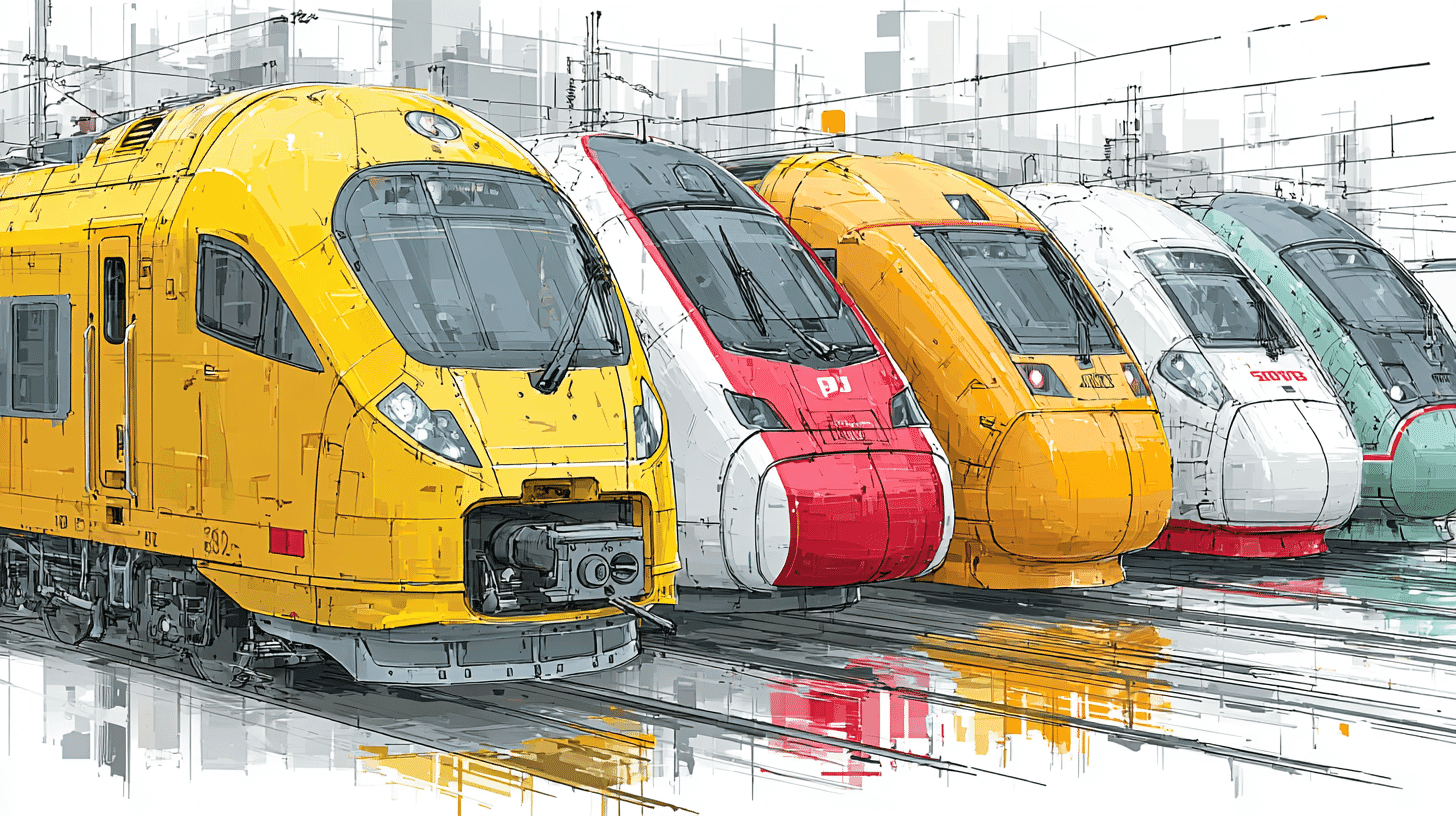
"It's the successor to Doctor Yellow, so of course it'll be yellow too, right?" That was the assumption among rail fans worldwide. But when JR Central revealed the design of "Doctor S" on April 16, 2026, the body was white: a perfectly normal N700S in the standard white-with-blue-stripe livery. The only yellow left is a single letter in the logo. Why did JR Central walk away from one of the most beloved color symbols in railway history?
The "White Doctor" Makes Its Debut
JR Central, the operator of the Tokaido Shinkansen, announced the name and logo of the successor to the legendary Doctor Yellow inspection train on April 16, 2026. The new vehicle is called "Doctor S" (pronounced "Doctor Ess"), and the "Dr.S" logo features the letter S rendered in the same vivid yellow that once defined Doctor Yellow's body.
The catch: the rest of the train is white, with the standard blue stripe of any N700S. The Dr.S logo goes on both lead cars and every odd-numbered car, 20 spots across each 16-car set. Four sets are planned. Revenue service starts October 2026, and the inspection equipment goes operational in January 2027.
JR Central's T4 Doctor Yellow trainset retired on January 29, 2025, after a final northbound inspection run from Hakata to Tokyo and more than 1.57 million kilometers in service. In June 2026, JR West pinned down its own timetable: the T5 set makes its last run in January 2027. With Doctor S taking the white path, the all-yellow inspection train vanishes entirely from the Tokaido and Sanyo Shinkansen.
Why Not Yellow? JR Central's Reasoning
The explanation given in coverage of the announcement is straightforward: Doctor S is a passenger train.
Doctor Yellow was a non-revenue work vehicle. It carried no passengers and existed solely to inspect the rails. Painting it bright yellow served a clear functional purpose: it had to be visually unmistakable from regular passenger trains, especially at night or in bad weather inside crowded depot yards.
Doctor S is fundamentally different. It will run as a regular Nozomi, Hikari, or Kodama service while simultaneously inspecting the track. Anyone with a ticket can board it. It will stop at every station along its route just like any other N700S.
If JR Central had painted Doctor S entirely yellow, station platforms would have descended into chaos. Imagine waiting for your scheduled train and seeing a fully yellow Shinkansen pull in. Is this Doctor Yellow? But it's the time of my reservation. Can I get on, or is this off-limits? The reader comments on Japanese rail blogs after the announcement zeroed in on this exact concern: passenger confusion, plain and simple.
There's also a practical angle. A standard white body with stick-on Dr.S logos slots cleanly into the existing maintenance workflow, with no dedicated paint process needed for four trainsets.
What "Yellow" Actually Means in Railway Color Codes
There's a widespread misunderstanding, even within Japan, about why Doctor Yellow was yellow in the first place. People often assume the color was chosen because "yellow is cheerful" or "yellow stands out beautifully." But railway-yellow is not aesthetic. It's functional. It's a hazard-warning color.
Since Japan's national rail era (Japanese National Railways, before privatization in 1987), yellow has been the standard color for non-revenue rolling stock: track maintenance machines, inspection cars, overhead-wire service vehicles. It identifies trains that don't carry passengers and aren't part of regular timetables. Conventional-line maintenance vehicles in Japan are still yellow today for the same reason.
In other words, Doctor Yellow's yellow was never about luck. The "lucky yellow Shinkansen" status was a cultural overlay applied later, a happy accident of folklore. The actual function was strictly visibility, identification, and accident prevention.
By that logic, Doctor S has no functional reason to be yellow. As a regular passenger train, it actually shouldn't be. The decision to keep only the S logo yellow is JR Central's compromise: function takes priority, but the cultural inheritance gets a respectful nod.
What Color Are Inspection Trains in Other Countries?
Beyond the Shinkansen, every major high-speed rail network has its own inspection trains, and the color choices vary fascinatingly.
JR East's Shinkansen inspection train, the E926 "East i," is white with red accents, completely different from Doctor Yellow despite serving the same purpose. The conventional-line "East i-E" and "East i-D" use the same white-and-red scheme. The "yellow equals inspection" rule applies specifically to the Tokaido and Sanyo Shinkansen, not to JR group companies as a whole.
JR Central's own conventional-line inspection train, the Kiya 95 "Doctor Tokai," is white with bright yellow stripes, less flashy than Doctor Yellow but still carrying a partial hazard-color element.
Internationally, the UK's "New Measurement Train" (a converted HST) wears the yellow livery used by Network Rail across all infrastructure-maintenance vehicles. France's "TGV Iris 320" looks essentially like a regular TGV. China's "CRH 2-010A" uses the same white base as other CRH series.
In short: an entirely yellow inspection train is the global exception, not the norm. The "lucky yellow Shinkansen" phenomenon was a uniquely Japanese cultural convergence between functional safety coding and pop folklore. Doctor S's white body, in a sense, brings Japan closer to international convention.
For Rail Photographers: Where to Catch Doctor S
The classic Tokaido Shinkansen photo spot is the Fuji River bridge area. From Fujikawa Station on the JR Tokaido Line (the conventional line, not Shinkansen), it's roughly a 15-20 minute walk to the Fuji City Fuji Riverbed Rest Square, the iconic frame where Mt. Fuji and a Shinkansen appear together. Early morning light is best, before clouds wrap the mountain.
The rice fields near Yoshiwara Station, accessible from Shin-Fuji Shinkansen Station, are another favorite. During the May–June flooding season, you can capture an N700S reflected in the water mirror of the rice paddies. From Mishima Station platform, you can frame Mt. Fuji together with a stationary N700S.
Unlike Doctor Yellow, whose secret schedule made each sighting a thrill, Doctor S runs on the published timetable. With four trainsets running daily Nozomi/Hikari services, your odds of seeing one on any given trip skyrocket. In fact, a lot of travelers will probably ride a Doctor S without ever realizing it.
For photo enthusiasts, the new ritual will be telephoto hunting for the yellow Dr.S logo on the lead-car door. Stationary shots are easiest at Tokyo, Nagoya, and Shin-Osaka, though most stations prohibit tripods at the platform edge.
Could There Be a "Yellow Doctor S Special" Someday?
Reader comments on Japanese rail blogs have floated an interesting idea: could JR Central run a limited-time fully-yellow Doctor S as a commemorative event?
It would not be unprecedented in principle. Commemorative wraps and heritage liveries are a familiar part of the JR playbook. But JR Central has announced nothing of the sort for Doctor S, and everything beyond that is speculation. Given the cultural weight Doctor Yellow leaves behind, a tribute livery in some future anniversary year is merely hard to rule out.
What's Lost, What's Gained
The emotional reaction to "the doctor without yellow" makes sense. Doctor Yellow was never just a maintenance vehicle. It was a piece of collective memory: a symbol of luck for Japanese kids, a marker of Japan's rail culture for international travelers, a recurring main character in countless social media moments.
Doctor S, in trade, takes inspection from roughly once every ten days to something close to continuous monitoring. Watching the trackside infrastructure that often is how you catch faults before they become failures. The visual icon recedes; the underlying mission of protecting passengers strengthens.
JR Central's choice to keep just the S logo yellow walks a thoughtful middle path. There is also an inheritance you cannot see: the aluminum body panels from the retired T4 set are being recycled into the roof and side sections of the Doctor S trainsets. The yellow train literally lives on inside the white one.
What color are inspection trains in your country? When function and cultural symbolism conflict, which do you think should win? And do you have any treasured memories of spotting a yellow Doctor Yellow on a Japan trip? Share your thoughts.


Global Discussion
0 comments