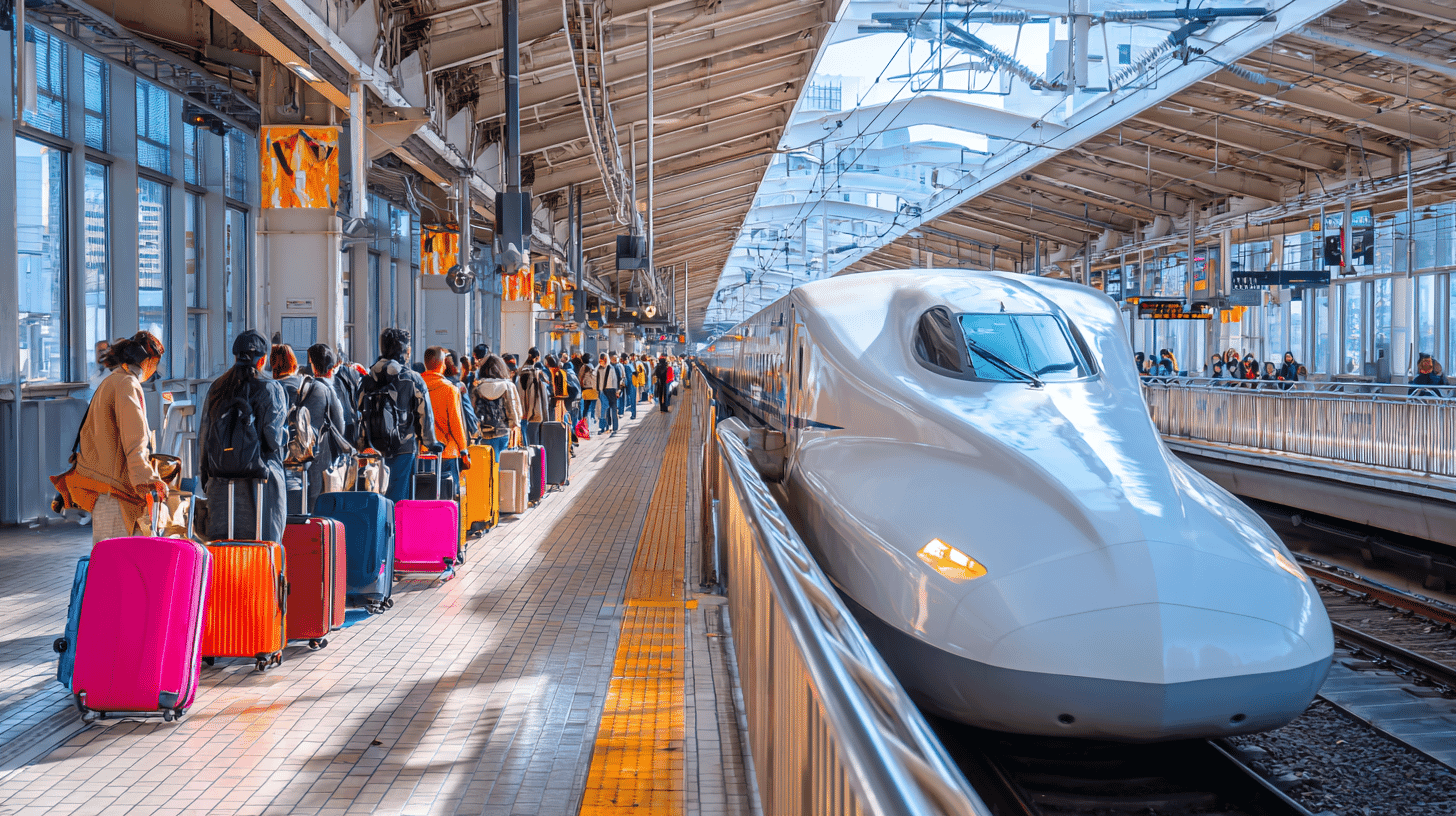
Tohoku, Nagano, Niigata, all on one pass, bullet trains included. JR East has overhauled its rail passes for international visitors. Since March 14, 2026, a new "JR EAST PASS" covers all JR East lines for ¥35,000 over 5 days. As Japan welcomes over 40 million visitors a year, the reform aims to spread tourism beyond Tokyo and into the countryside.
The New JR EAST PASS: Full Coverage at a Flat Rate
JR East launched a comprehensive new "JR EAST PASS" on March 14, 2026, replacing and consolidating the previous Tohoku area and Nagano-Niigata area passes.
New JR EAST PASS details:
- 5-day pass: ¥35,000 adults (¥17,500 children)
- 10-day pass: ¥50,000 adults (¥25,000 children)
- Coverage: All JR East lines plus select private railways (Tokyo Monorail, Aoimori Railway, IGR Iwate Galaxy Railway, etc.)
- Sales start: February 18, 2026 (Japan/online), March 1, 2026 (overseas travel agencies)
- Valid from: March 14, 2026
From the Tohoku Shinkansen to Aomori, the Joetsu Shinkansen to Echigo-Yuzawa, the Hokuriku Shinkansen to Karuizawa, all covered under one pass. Previously, travelers who wanted to explore both the Tohoku and Nagano-Niigata regions needed to purchase separate passes.
Expanded Coverage and Price Adjustments
Along with the new pass, existing options are getting significant updates.
Passes with expanded coverage:
The "JR East-South Hokkaido Rail Pass" (jointly offered with JR Hokkaido) was extended beyond Hakodate and Sapporo to include Tohoku and Niigata areas. The Joetsu Shinkansen and Uetsu Main Line become accessible. Price adjusts from ¥35,370 to ¥40,000 for 6 days.
The "Hokuriku Arch Pass" (jointly offered with JR West) adds the popular Koshinetsu region, including the Tokyo metropolitan area, Chuo Line, and Oito Line. Price adjusts from ¥30,000 to ¥35,000 for 7 days.
Price increases for other passes:
- JR TOKYO Wide Pass (3 days): ¥15,000 → ¥16,000
- N'EX TOKYO Round Trip Ticket (14 days): ¥5,000 → ¥5,200
- JR Tohoku-South Hokkaido Rail Pass (6 days): ¥30,640 → ¥32,000
- SENDAI AREA PASS: ¥1,320 → ¥1,420
Discontinued Passes
Important note: The current "JR EAST PASS (Tohoku area)" and "JR EAST PASS (Nagano, Niigata area)" were discontinued on March 13, 2026. Travelers planning to use these passes should transition to the new options.
The last available start date for the current passes is March 8. Sales were suspended from March 9-13 for use dates during that period.
Why the Overhaul Now?
The backdrop is Japan's surging inbound tourism.
According to the Japan National Tourism Organization (JNTO), Japan welcomed 42.68 million international visitors in 2025, a new record. Tourism spending reached ¥9.5 trillion, making it a significant pillar of the Japanese economy.
However, the concentration of tourists in Tokyo, Kyoto, and Osaka has created "overtourism" challenges. The government has prioritized "regional distribution through local area promotion," and JR East's new pass aligns with this strategy.
A pass covering all JR East lines encourages travelers to move beyond "just Tokyo to Nikko" or "just Tokyo to Sendai" toward circuit-style journeys like "Tokyo → Sendai → Morioka → Akita → Niigata → Nagano → Tokyo."
Self-Service Pass Exchange Coming
As part of convenience improvements, starting April 1, 2026, JAPAN RAIL PASS reservations can be exchanged at select ticket vending machines. This applies to JR East's passport-reader-equipped reserved seat ticket machines.
Previously, pass exchanges required visiting staffed counters, often resulting in long queues during peak seasons. Machine-based exchange should reduce congestion and wait times significantly.
New ticket machines introduced since July 2025 feature enhanced multilingual support, designed for easier use by international travelers.
Japan's Tourism Infrastructure Investment
JR East's pass reform is part of Japan's broader tourism infrastructure development.
The 2026 fiscal year budget for the Japan Tourism Agency reached ¥138.3 billion, 2.4 times the previous year and a record high. Much of this funding comes from the international tourist tax, which will increase from ¥1,000 to ¥3,000 during fiscal 2026.
Key initiatives include:
- Overtourism countermeasures: ¥10 billion (8.34x increase)
- Smooth entry/exit environment: ¥12.7 billion
- Regional tourism development: ¥1.8 billion
The government targets 60 million visitors and ¥15 trillion in spending by 2030, making transportation infrastructure upgrades essential.
The Japanese Perspective on "Foreigner-Only" Passes
Rail passes have long sparked debate among Japanese residents.
"Why can foreigners ride cheaper than us?" This question has persisted since rail passes were introduced. At ¥35,000 for 5 days, the new JR EAST PASS pays for itself with a single round trip from Tokyo to Aomori. Japanese residents pay over ¥30,000 for the same journey at regular fares.
From the railway companies' perspective:
- Short-term visitors can't provide stable commuter pass revenue
- Upfront bulk payment benefits cash flow
- Regional line ridership increases
- Related spending (hotels, shopping, dining) expands
For Japan's "tourism nation" ambitions, improving transportation access is unavoidable. Rail passes serve as crucial tools in this strategy.
Concerns About Price Increases
Multiple passes are seeing price hikes in this reform.
When the nationwide JAPAN RAIL PASS increased by roughly 70% in October 2023, backlash was significant overseas. Social media filled with complaints like "outrageous increase" and "fewer foreigners will visit rural areas." Some surveys reported 70% of respondents saying they would no longer use the pass.
However, this JR East reform differs in coupling price increases with service improvements. Whether the "expanded coverage justifies higher prices" narrative gains acceptance remains to be seen.
Remaining Challenges
JR East's pass overhaul represents progress in inbound accommodation, but challenges remain.
Narita Airport Access: Keisei Railway's Skyliner isn't covered by JR East passes. Travelers arriving via Narita still can't use these passes for their first journey.
Kansai Connection: While the "Hokuriku Arch Pass" with JR West is expanding, comprehensive passes covering Tokyo to Osaka remain limited. Coordination with JR Central, which operates the Tokaido Shinkansen, is a future focus.
Balancing Overtourism: While promoting regional visits, the pass also improves access to already-crowded destinations like Nikko and Hakone. Managing the balance between distribution and concentration remains an ongoing challenge.
Japan offers comprehensive rail passes for international visitors, enabling flat-rate travel including bullet trains across wide areas. Meanwhile, some Japanese residents question why similar options aren't available domestically. Does your country offer special transportation passes for foreign tourists? Or do visitors pay the same fares as residents?








Global Discussion
18 comments