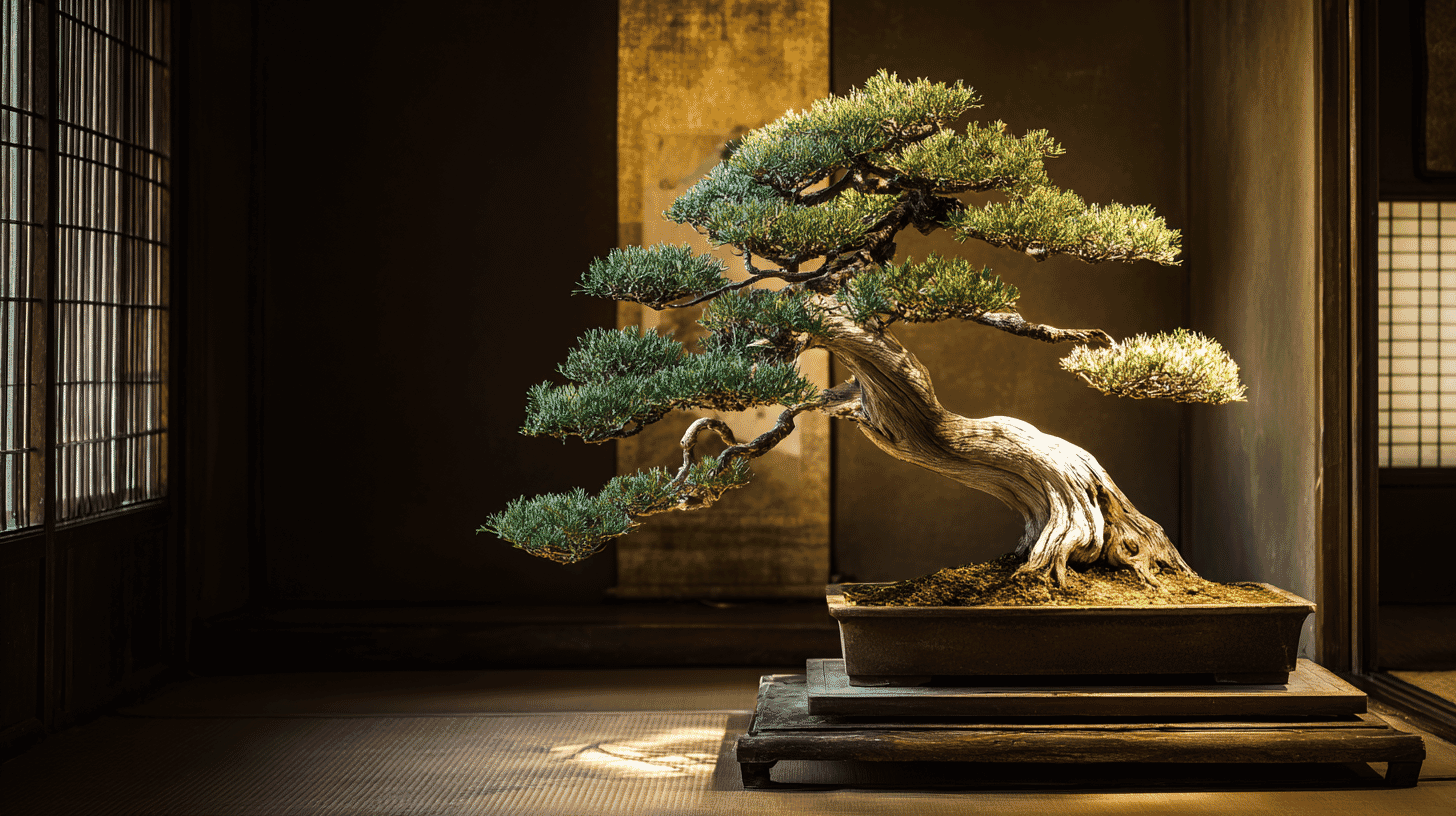
Imagine holding an entire forest in the palm of your hand. A single tree, living for centuries in a pot no bigger than a dinner plate, shaped by generations of human hands yet still wild at its core. This is bonsai: not a miniature decoration but a living philosophy, and it is starting to travel.
Is the Bonsai Market Really Growing?
The global bonsai market is expanding. The size of it, though, depends heavily on who is counting.
Mordor Intelligence puts the global bonsai market at $8.3 billion in 2025, reaching $13.3 billion by 2030 at a 9.89% CAGR. The firm itself notes that outside estimates swing widely because scopes and assumptions differ, and the spread bears that out: market.us has $7.9 billion in 2025 growing to $18.4 billion by 2035, while another house puts 2024 at $9.35 billion rising to $12.8 billion by 2033.
The numbers disagree. The direction does not. Nearly every estimate lands on annual growth somewhere around 9-11%, which is enough to say bonsai is moving from niche hobby to industry. Asia-Pacific accounts for roughly 46% of global revenue.
Several forces are driving this boom. The post-pandemic wellness movement has led millions worldwide to discover gardening as a form of meditation, and bonsai, which demands patience, presence, and daily attention, fits perfectly into the mindfulness trend. Urbanization also plays a role: as living spaces shrink in cities from New York to Shanghai, bonsai offers a way to bring nature indoors without requiring a backyard.
Japan's bonsai exports tell a compelling story. According to Japan's Ministry of Finance trade statistics, bonsai export value reached $6.14 million in 2023, nearly doubling from 2019 figures. A key catalyst was the EU opening its doors to large-scale imports of Japanese black pine.
Wabi-Sabi: Why the World Is Falling for "Imperfect Beauty"
At the heart of bonsai lies "wabi-sabi" (侘び寂び), a uniquely Japanese aesthetic philosophy that finds profound beauty in imperfection, transience, and incompleteness. Unlike Western aesthetics that often celebrate symmetry and perfection, wabi-sabi embraces the cracked, the weathered, and the unfinished.
Teppei Kojima, a bonsai producer who founded TRADMAN'S BONSAI, a brand that fuses bonsai with street culture, was struck by the absence of wabi-sabi in overseas bonsai when he first encountered them during business trips abroad. He noted that Western bonsai often tries to express "completion," while Japanese bonsai is precious precisely because it is never complete. This realization drove him to dedicate his career to sharing what he calls "truly beautiful bonsai" with the world.
Wabi-sabi's global appeal is no accident. In an era of mass consumption and curated social media perfection, people are increasingly drawn to the idea of beauty that ages gracefully. The popularity of "kintsugi", the Japanese art of repairing broken pottery with gold, reflects the same cultural shift. Bonsai, with its celebration of gnarled bark, weathered wood, and the passage of time, has become a symbol of this counter-movement.
Trees as Letters Left Behind
Bonsai is far more than a horticultural technique. Each tree carries the story of every person who has tended it, sometimes spanning multiple generations. The whitened deadwood on a bonsai trunk, known as "shari" (舎利) and "jin" (神), represents the tree's survival through harsh conditions, a visible testament to the coexistence of life and death.
A key concept in the bonsai world is "mederu" (愛でる), a Japanese word with no direct English equivalent. More than simply "looking at," it means to gaze upon something with tenderness, to appreciate its existence with one's whole being. Passing a bonsai tree to the next generation is like leaving a letter without words, a message transmitted beyond language.
As Kojima describes, many foreigners who engage with bonsai begin to notice sensitivities that Japanese people take for granted: "listening to the sound of insects," or "what the season shows us." These experiences transcend the five senses and tap into what he calls a sixth sense of connection with nature.
TRADMAN'S BONSAI: Where Tradition Meets Street Culture
One of the most exciting developments in the bonsai world is TRADMAN'S BONSAI, founded in 2015 by Teppei Kojima. Having grown up immersed in American street culture, skateboarding, hip-hop, fashion, tattoos, Kojima brings a completely different sensibility to the ancient art.
His team has collaborated with global brands including shu uemura, Nike, Dior, and RIMOWA, and participated in an installation where contemporary artist Daniel Arsham expressed wabi-sabi through a Porsche 356 Speedster. In 2024, Kojima was selected as one of Forbes Japan's "Culturepreneur 30."
"Tradition is a continuous series of innovations," Kojima believes. This philosophy is shattering the stereotype of bonsai as an "old person's hobby" and repositioning it as a living art form that resonates with younger generations. The brand opened a flagship store in Tokyo's Marunouchi district in 2025, bringing bonsai into the heart of urban lifestyle.
Where to Experience Bonsai in Japan
Omiya Bonsai Art Museum (Saitama)
The world's first public museum dedicated to bonsai, housing masterpiece trees estimated to be hundreds of years old. Regular workshops including beginner-friendly bonsai-making sessions are available. Located a 5-minute walk from JR Toro Station.
Hours: Mar–Oct 9:00–16:30 / Nov–Feb 9:00–16:00
Omiya Bonsai Village (Saitama)
Celebrating its 100th anniversary in 2025, this is Japan's largest bonsai community. The area's official address literally includes "Bonsai-cho" (Bonsai Town), the only place in Japan with "bonsai" in its address. Six bonsai nurseries operate here, offering sales, workshops, and educational programs. The annual Grand Bonsai Festival (May 3–5) features exhibitions, sales, and hands-on workshops.
Seikoen Bonsai Nursery
Established during the Kan'ei era (1624–1643), this historic nursery pioneered "saika bonsai", a modern style combining flowers and trees to recreate Japanese landscapes. Their workshops welcome beginners and international visitors.
TRADMAN'S BONSAI Marunouchi Store (Tokyo)
A flagship shop where street culture meets traditional bonsai. Browse modern-style bonsai in a contemporary space, with occasional pop-up events and workshops.
Kokufu-ten Exhibition
Held annually in February at the Tokyo Metropolitan Art Museum in Ueno, this is Japan's most prestigious bonsai show, often called "the Olympics of bonsai." Masterpieces selected from across Japan are displayed, attracting growing numbers of international visitors each year.
Getting Started: Mini Bonsai for Beginners
If full-scale bonsai feels intimidating, consider starting with mini bonsai. Trees under 20cm tall (about 8 inches), or even palm-sized "mame bonsai", are available from just $20–30 and can thrive on a windowsill. "Kokedama" (moss balls), where roots are wrapped in moss rather than planted in a pot, have also become popular as stylish interior accents.
Online platforms like Etsy have made it easier than ever to purchase authentic Japanese bonsai internationally. YouTube and Instagram bonsai communities offer tutorials on pruning, repotting, and seasonal care, making the art form accessible to complete beginners worldwide.
What Bonsai Opens Up
The international expansion of bonsai exemplifies Japan's growing cultural soft power. The World Bonsai Convention, held every four years since 1989, has traveled to countries worldwide. The 2017 edition in Saitama attracted enthusiasts from over 40 countries and regions.
Saitama City has established the Saitama International Bonsai Academy, training aspiring bonsai artists from around the world. Graduates' works are exhibited at the Omiya Bonsai Art Museum, creating a cycle of international cultural exchange.
Bonsai naturally aligns with contemporary global values: sustainability, mindfulness, and slow living. In a world of disposable products and instant gratification, the practice of nurturing a single tree for decades, or centuries, represents an antidote to modern restlessness.
In Japan, bonsai is treasured as "living art" passed down through generations. The sensitivity to find an entire universe within a small pot is deeply rooted in Japanese culture. How does this compare to gardening traditions in your country? Does your culture have a tradition of appreciating nature in miniature? We'd love to hear your thoughts.









Global Discussion
15 comments