⚔️ Samurai weren't just warriors — they were poets, bureaucrats, scholars, and even women in positions of power. The British Museum's first-ever exhibition dedicated to Japan's legendary warrior class has just opened in London, bringing together around 280 objects from 29 lenders worldwide. From armor gifted to Queen Victoria by the Tokugawa shogunate to Assassin's Creed and Louis Vuitton, it's a sweeping 1,000-year journey through myth and reality.

The British Museum's First Full-Scale Samurai Exhibition

On February 3, 2026, the special exhibition "Samurai" opened at the Sainsbury Exhibitions Gallery in London's British Museum. Running through May 4, 2026, the show is expected to attract approximately 140,000 visitors over its three-month run.

Despite holding one of Europe's largest Japanese collections — roughly 26,000 objects spanning from prehistory to the present — the British Museum has never staged a major exhibition focused specifically on samurai culture until now. The lead curator is Dr. Rosina Buckland, the Asahi Shimbun Curator of Japanese Collections, who developed the exhibition in collaboration with Professor Oleg Benesch from the University of York. The pair have also co-authored an illustrated catalogue published by British Museum Press.

Dr. Buckland notes that while samurai dominated Japanese history for centuries, the reality of their lives was often quite different from popular understanding. This exhibition, she emphasizes, is the first to interrogate the samurai myth from the medieval period right through to the present day.

Around 280 Objects — From Battlefields to Pop Culture

The exhibition draws from the museum's own holdings and 29 national and international lenders, with many items being shown in the UK for the first time.

Highlight 1: Tokugawa Armor Gifted to Queen Victoria

One of the star attractions is a suit of armor presented by the Tokugawa family to Queen Victoria in 1860 — a diplomatic gift that physically embodies centuries of Anglo-Japanese relations. Also on display is a helmet gifted by Tokugawa Hidetada, the second Tokugawa shogun, to the King of England, demonstrating that cultural exchange between Japan and Britain stretches back far further than many realize.

Highlight 2: A Newly Acquired Suit of Armor

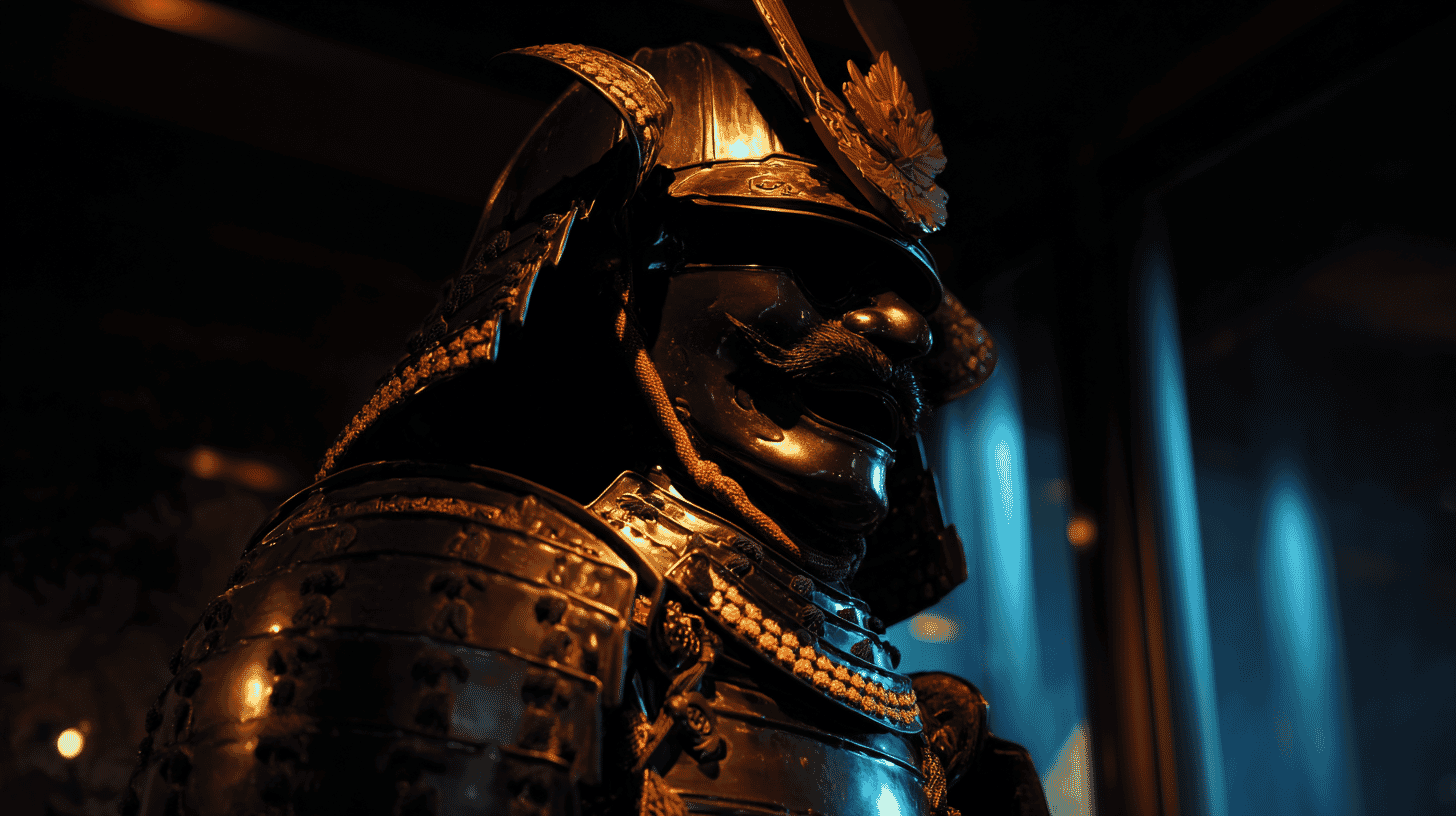
A suit of armor recently purchased by the British Museum makes its public debut. Combining a 1519 helmet, 1696 armor, and 1800s textiles, its golden standard shaped like iris leaves was designed to make the wearer both identifiable and fearsome on the battlefield — a striking example of how samurai armor functioned as both protection and performance.

Highlight 3: A Woman's Firefighting Uniform

On loan from the John C. Weber Collection, a vivid vermilion woman's firefighting jacket and hood challenges the assumption that samurai were exclusively male warriors. Worn by women serving within Edo Castle, its motifs of tasselled anchors and waves evoke water as protection against fire — a constant threat in the wooden city of Edo (present-day Tokyo), where fires were so common they were nicknamed the "flowers of Edo."

Highlight 4: A European's Samurai Fantasy

From Venice's Museum of Oriental Art comes a portrait of Henry of Bourbon, Count of Bardi, who visited Japan in 1889 and commissioned himself portrayed as a Japanese warrior. Painted at a time when the samurai class had already been abolished, it powerfully illustrates the Western romanticization of samurai culture in the late 19th century.

Highlight 5: Modern Connections — Games, Fashion, and Art

The exhibition doesn't stop at historical artifacts. It includes materials from the video games Assassin's Creed: Shadows (2025) and Nioh 3 (2026) — the latter launched just three days after the exhibition opened. A Louis Vuitton outfit inspired by Japanese armor is also featured, and the show explains how Star Wars' character designs drew on samurai aesthetics. Contemporary Japanese artist Tetsuya Noguchi has created new works specifically for the exhibition, bridging traditional armor imagery with modern artistic sensibility.

"Bushido" — A Myth Invented After the Fact?

The exhibition's central intellectual argument is the demythologization of the samurai.

The warrior class (known in Japan as bushi) rose to political dominance in the 1100s. But after large-scale warfare ended in 1615, samurai transitioned from fighters to an elite social class serving as government ministers, scholars, poets, and painters. Women of samurai lineage also received education and held positions of authority.

When the hereditary status of samurai was abolished in the late 19th century, the concept of "bushido" — a supposed ancient code promoting patriotism and self-sacrifice — was rapidly constructed and disseminated. However, researchers argue this was largely an invention of modern nationalism, bearing little resemblance to medieval warrior reality.

Professor Benesch states that the story behind the global obsession with the samurai is far more complex than the familiar image suggests. Chinese, Korean, and European influences profoundly shaped samurai identity, even as samurai were shaping the world's understanding of Japan.

A "Homecoming" Exhibition Is Also Planned

Separately from the Samurai exhibition, the Tokyo Metropolitan Art Museum will host "British Museum Japanese Art Collection: Hyakka Ryōran — Edo Paintings Across the Sea" from July 25 to October 18, 2026. Selected works from the British Museum's approximately 40,000 Japanese art objects will "come home" to Japan, with a subsequent tour to the Nakanoshima Museum of Art in Osaka.

This bidirectional exchange — the British Museum presenting Japanese culture internationally while returning treasures to their country of origin — represents an ideal model of cultural diplomacy.

Final Thoughts: How Is Your Country's "Warrior Myth" Told?

The British Museum's Samurai exhibition presents the warrior not merely as a fighter, but as a multifaceted figure — scholar, administrator, artist, and woman. It reveals that much of what the world believes about samurai was constructed in the modern era as nationalist mythology.

In Japan, reactions range from pride that Japanese culture is receiving prestigious international attention, to debate over whether bushido was truly an "invented tradition," to discomfort about Japanese cultural artifacts being housed in a foreign institution.

Does your country have its own warrior mythology? Knights, Vikings, Mujahideen, Hwarang — every culture has its legendary fighters. How has your country's warrior image been retold, romanticized, or challenged over time? We'd love to hear your perspective in the comments.

References

Reactions in Japan

I seriously want to visit the British Museum Samurai exhibition. Had no idea Tokugawa Hidetada's helmet was in London. The fact that Japan-UK exchange goes back 400 years is incredibly moving. Definitely scheduling my next London business trip to coincide.

I agree 0
I disagree 0

I jumped when I heard 280 swords but turns out 280 is the total exhibit count, not just swords... Still, the British Museum × Samurai combo is peak excitement. Want to organize a pilgrimage tour with my sword-enthusiast friends.

I agree 0
I disagree 0

The perspective that bushido was a modern invention is near-consensus in Japanese academia, but hasn't reached the general public. The British Museum addressing this head-on is significant. I hope the context that Nitobe Inazo's 'Bushido' was essentially self-presentation for English-speaking audiences comes through clearly.

I agree 0
I disagree 0

As an apprentice armor craftsman, I'm happy but also conflicted. The beauty of lacquer layering and iron forging techniques behind those iris-leaf crests doesn't really come through in photos. I might cry seeing the real thing. London's far though.

I agree 0
I disagree 0

The Japanese section at the British Museum is always crowded around the armor displays even normally. With a special exhibition expect serious crowds. Fridays are open until 20:30 so late viewing is recommended. £23 tickets feel steep but the content justifies it.

I agree 0
I disagree 0

Honestly, it bothers me that Japan's precious cultural artifacts are overseas. Diplomatic gifts are one thing, but many items likely left Japan during the chaos of the Meiji era. Instead of a 'homecoming exhibition,' I wish they'd actually come home for good.

I agree 0
I disagree 0

Nioh 3 launching 3 days after the exhibition opens is totally calculated lol. Koei Tecmo's marketing is too good. Having Assassin's Creed Shadows and Nioh 3 displayed at the British Museum is proof that games are recognized as culture.

I agree 0
I disagree 0

When teaching world history, I always get asked about differences between knights and samurai. This exhibition's framing of bushido as a modern invention is excellent material for thinking about nationalism and history. I'd love to use it as teaching material.

I agree 0
I disagree 0

Tetsuya Noguchi's new work being displayed at the British Museum is genuinely remarkable. His pieces full of humor and melancholy about modern people wearing armor perfectly fit the exhibition's theme of deconstructing samurai myth. I've been following his THIS IS NOT A SAMURAI international tour.

I agree 0
I disagree 0

Bushido being an 'invented tradition' might be academically accurate, but it's also true that something has genuinely been passed down as part of the Japanese spirit. If the exhibition says 'it was all fake,' that's disappointing. Please don't deny Japanese pride.

I agree 0
I disagree 0

The inclusion of a woman's firefighting uniform is truly significant. Samurai women didn't just stay in the 'inner quarters' — they were on the front lines of fire prevention at Edo Castle. There's also an online lecture on 'Women Samurai' scheduled for March 5. Japanese gender researchers should pay attention.

I agree 0
I disagree 0

Went on opening day. Even on a weekday morning there was a decent queue. The moment you enter the exhibition hall, the armor's presence is overwhelming. Heard a British grandpa telling his grandson 'these are Japanese knights' which was a bit funny. Not exactly accurate but works as an entry point I guess.

I agree 0
I disagree 0

I understand the exhibition's intent, but as a 6th-dan kendo practitioner, hearing 'bushido is a myth' feels oversimplified. The culture of self-cultivation through martial arts definitely existed in the Edo period. Being a modern construct doesn't mean everything is fiction.

I agree 0
I disagree 0

Tickets are £23 (about ¥4,500)... the permanent collection is free but special exhibitions still charge. But a comparable exhibition in Japan would cost around ¥2,500, so it's probably fair given the content. Hearing that many light-sensitive Japanese artworks are rarely shown makes it feel like a must-see.

I agree 0
I disagree 0

Including manga and video games is so British Museum. Like the 2019 Manga exhibition, there's a UK approach that positions Japanese pop culture as an extension of cultural heritage. Japanese art museums should learn from this perspective.

I agree 0
I disagree 0

Interesting that Louis Vuitton's armor-inspired outfit is displayed. Wonder if it'll get called cultural appropriation. Assassin's Creed Shadows got massive backlash but high fashion gets a pass? Feels like double standards.

I agree 0
I disagree 0

Voices from Around the World

Thomas Hartley

As a Londoner I've visited the British Museum countless times, and the Japanese armor is always the most popular in the permanent gallery. This special exhibition is on another level entirely. Went on opening day and waited 30 minutes even arriving first thing. The message that bushido is an 'invented tradition' is intellectually stimulating — somewhat like our own King Arthur legend, I suppose.

Sarah Chen

The portrait of Count Bardi commissioning himself as a samurai is peak colonial-era exoticism and honestly uncomfortable. Thinking about how that romanticizing gaze continues in today's anime and gaming fandom is somewhat sobering.

Pierre Dumont

France has a long history of Japonisme. Just as Impressionist painters were captivated by ukiyo-e, samurai armor was enthusiastically collected in 19th-century Europe. The exhibition's attempt to 'deconstruct the myth' is intriguing, but isn't myth itself also part of culture?

Kim Minjun

As a Korean, I have mixed feelings. While samurai are celebrated globally as cultural icons, I wonder how the historical violence — like the invasions of Korea — is addressed. If the exhibition aims for a multifaceted portrait, the impact on East Asian neighbors should be included.

Marcus Weber

Compared to German armor collections, Japanese armor has a unique balance of practicality and aesthetics. A golden crest shaped like iris leaves represents a completely different design philosophy from European heraldry. I'd love to see a collaborative exhibition with Vienna's arms museum.

Emma Richardson

Australia has Indigenous warrior cultures but they're rarely given major museum exhibitions. Samurai becoming such an international 'brand' owes a lot to media and entertainment. I wish Indigenous warrior stories received this level of attention too.

Raj Mehta

India had warrior classes like the Rajputs and Marathas, but their global recognition doesn't come close to samurai. Japan's soft power strategy is brilliant. The pipeline from Kurosawa films → games → museum exhibitions is fully realized.

Carlos Reyes

Mexico had Aztec Eagle Warriors and Jaguar Warriors who wore animal-themed combat dress. There are parallels with samurai deer antler and iris crests. A cross-cultural warrior exhibition comparing fighting traditions worldwide would be amazing.

Isabella Colombo

Thrilled about loans from Venice's Museum of Oriental Art. The Count of Bardi portrait isn't well known even in Italy, so I hope this brings attention to unexpected Italian-Japanese cultural connections. Hearing that a portrait of Ito Mancio from the Tenshō embassy exists in this context is exciting.

David Okafor

The Yoruba and Benin Kingdom of Nigeria also had sophisticated armor and warrior cultures. The British Museum 'holds' Benin Bronzes too, but those were colonial loot. Samurai armor apparently came as diplomatic gifts, but we should remain sensitive about the provenance of cultural artifacts.

Anna Kowalska

Poland had the Winged Hussars with unique feathered armor. Like samurai crests, they prioritized visual impact on the battlefield. The 'aesthetic of display' in warrior culture is clearly universal, crossing East and West.

Jake Morrison

Got into samurai through Ghost of Tsushima. Reading the exhibition's explanations about how different the historical reality is from the idealized game version was eye-opening. But the gap itself is what makes it fascinating — romance exists because myths exist.

Liu Wei

From a Chinese perspective, comparing Japanese warrior culture with Chinese martial traditions (like the cult of Guan Yu) is fascinating. If bushido was a modern invention, China's concept of 'yi' (righteousness) was also retroactively romanticized through 'Romance of the Three Kingdoms.' East Asian warrior myths have influenced each other.

Ahmed Al-Rashidi

Saudi Arabia also has nomadic warrior cultures alongside poetry traditions. Just as samurai practiced both combat and tea ceremony or poetry, Arab warriors composed verse. 'The pen and the sword' isn't uniquely Japanese — it's a universal human theme.

Yuki Tanaka-Smith

New Zealand's Māori have a warrior culture with the taiaha weapon and the haka tradition. Both samurai and Māori warriors emphasized pre-battle rituals and spiritual discipline. The spiritual dimension of warrior cultures across different societies deserves more discussion.

Erik Johansson

As a Swede, I see parallels with Vikings. The 'raiders and plunderers' image was greatly exaggerated by later generations — in reality they were largely traders and settlers. The pattern of warrior myths being co-opted by nationalism is universal.