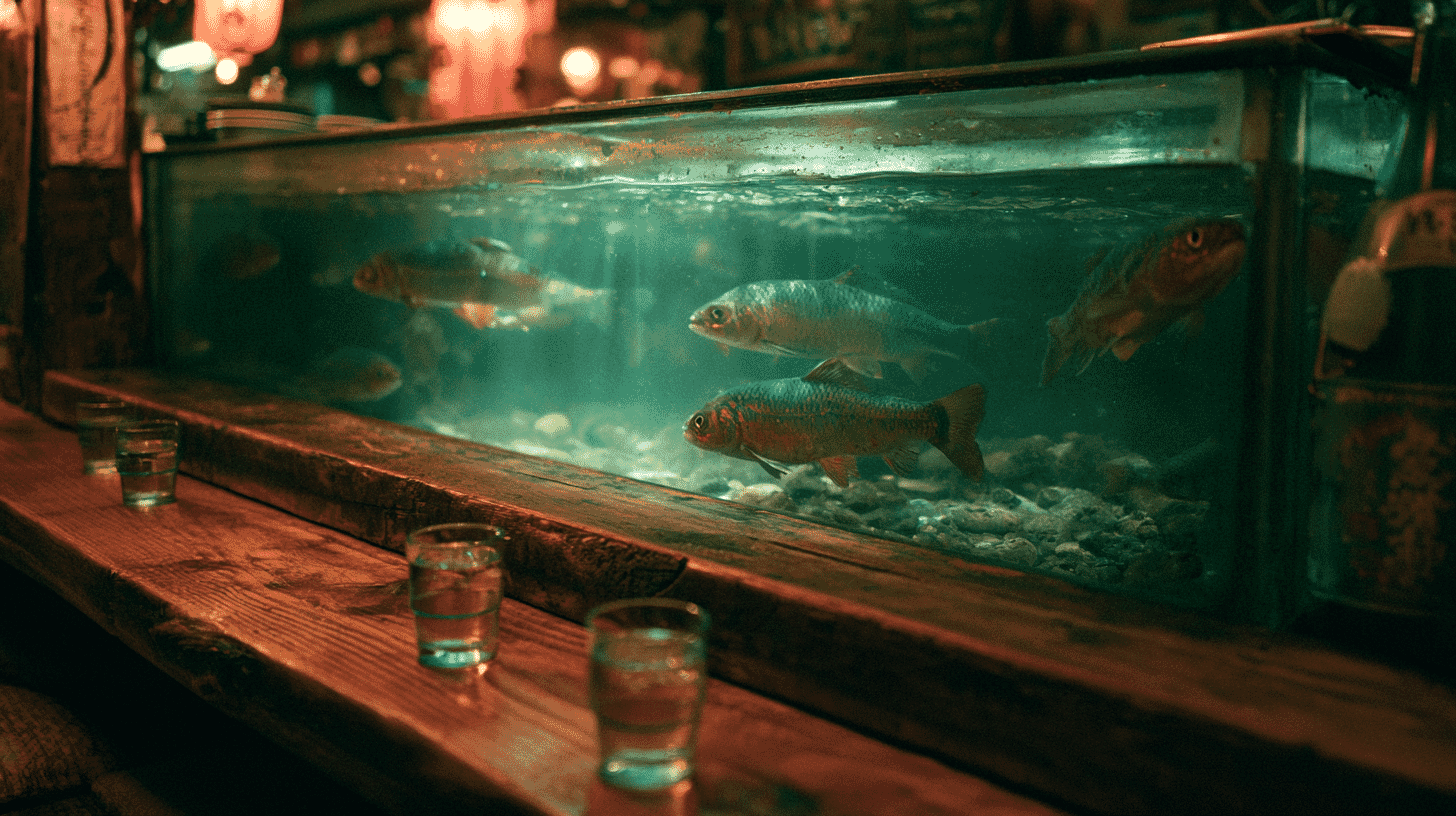
Walk past the back gate of Umitamago, an aquarium in Oita on Japan's southwestern island of Kyushu, and you'll find a machine with a thick hose sticking out of it. Drop in a 100-yen coin (about 63 cents), press the button, and water comes gushing out. A lot of it: 120 liters, or roughly 32 US gallons, the equivalent of sixty 2-liter bottles. Taste it, and it's salty.
According to a report published by local broadcaster TOS TV Oita on October 16, 2026, it's a seawater vending machine. Most people who visit the aquarium have no idea it exists.
What comes out is the aquarium's own seawater
It's nothing like the glowing boxes of canned drinks. This "vending machine" looks more like a water pump with a coin slot.
What it dispenses is the same seawater that fills the aquarium's tanks. A staff member told TOS that the water has been run through sand filters to strip out germs and tiny creatures that can cause disease, and buyers can take it home.
It only accepts 100-yen and 500-yen coins, and there's no change machine. It's open to anyone from 9 a.m. to 5 p.m. The machine sits on the way to the aquarium's No. 2 parking lot, and if you tell the guard at the entrance, you can drive right up to it.
TOS reported that the price hasn't gone up, despite the inflation Japan has been living with.
Who buys 120 liters of seawater?
TOS gave two answers. Izakaya restaurants use it to refresh the tanks where they keep live fish, and people who keep saltwater fish at home buy it for their aquariums.
It was supposed to disappear
The machine is older than Umitamago itself. It dates back to the aquarium's predecessor, the Oita Ecological Aquarium Marine Palace, which opened in 1964. That building closed on December 1, 2003, and the facility reopened as Umitamago on April 1, 2004.
When the aquarium made that move, the staff member told TOS, the plan was to leave the seawater machine behind.
What changed the plan was a remark at a restaurant. The company president was told there that the place relied on Marine Palace's water. The president then told staff to give back to the community, and the machine was hastily installed where it stands today.
The report doesn't name the restaurant or say what year the machine went back in.
A year when vending machines are vanishing
In April 2026, Kyodo News reported figures from Inryo Soken, a Tokyo beverage research firm: Japan had 1.95 million soft-drink vending machines at the end of 2025 (a preliminary count), the first time in 30 years of records the number fell below 2 million. It was down 90,000 from a year earlier, the steepest drop on record, and about 20 percent below the 2014 peak.
The main reason was price hikes. Drink makers kept passing higher costs on to customers, shoppers started avoiding the pricier machines, and companies are now pulling unprofitable units off the streets.
Umitamago's seawater machine sits outside that story. It wasn't put there to make money.
Out front, a walrus is waiting
Out front, one of the aquarium's signature acts is a walrus performance built on banter between the animal and its trainer.
The parking lot along National Route 10 is shared with the neighboring Takasakiyama Natural Zoological Garden, a mountain park known for its wild Japanese macaques. According to the aquarium's FAQ, though, there is no combined ticket.
Japanese vending machines already sell ponzu sauce and antique kimono, and JR East runs vending machines in British stations and airports. A hose that pours out 120 liters of seawater for 100 yen is a different kind of oddity altogether.
So, does any aquarium where you live sell its seawater out the back?
References
- https://tosonline.jp/news/20261016/00000005.html
- https://www.oanda.jp/lab-education/market_news/kn_2026040601000980/
- https://en.wikipedia.org/wiki/Oita_Marine_Palace_Aquarium
- https://www.umitamago.jp/exhibition_guide/show/
- https://www.umitamago.jp/access/
- https://www.umitamago.jp/help/faq/
- https://en.wikipedia.org/wiki/Takasakiyama_Natural_Zoological_Garden





Global Discussion
4 comments