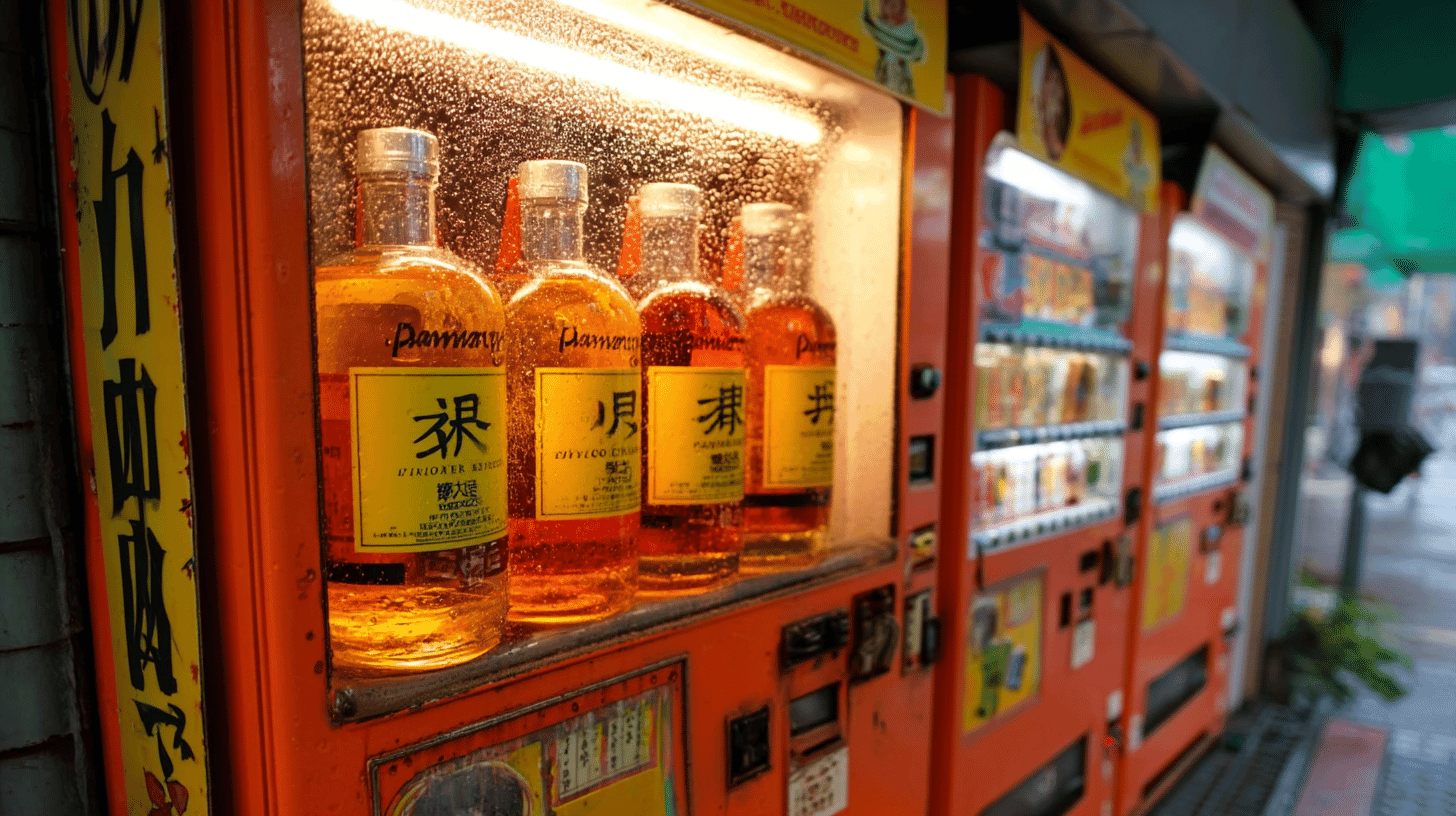
On a street corner in Tsuruhashi, Osaka, stands a vending machine that sells only ponzu. Emblazoned with "Money back if you don't like it," the machine holds the life story of a man who went from banker to fugu chef, and a dose of Osaka merchant spirit.
The Birth of Tsuruhashi's Ponzu Vending Machine
Osaka's Tsuruhashi district is known for its lively yakiniku restaurants and Korea Town. Step off at JR Tsuruhashi Station and the savory smell of grilling meat greets you, along with rows of shops selling Korean ingredients and kimchi. Tucked into this bustling neighborhood stands an unusual vending machine.
Inside, you won't find canned coffee or bottled water. It's stocked entirely with ponzu, a citrus-based Japanese condiment. Across the front, in bold letters, is the phrase: "Money back if you don't like it!"
It's run by Ko Heiretsu, chairman of Upper Corporation. Today, seven of these machines operate around the Tsuruhashi area, a distinctive part of the local scenery.
From Banker to Fugu Chef
Ko was born and raised in Tsuruhashi. After 21 years as a banker, at the age of 50 he made a major change: he opened the fugu (pufferfish) restaurant he had long dreamed of, called "Toraya."
The road was far from smooth. His first venture failed and left him struggling. But he refused to give up, taking part-time work to get by while earning his culinary license and returning to the kitchen.
Toraya ran as a tecchiri (fugu hotpot) specialty restaurant for ten years before closing. Yet one flavor born in that kitchen became the seed of his next venture.
The Craft Behind "Gold Ponzu"
The homemade ponzu he served was built on Yuasa soy sauce from Wakayama, prized as one of Japan's finest, with carefully chosen ingredients layered in: bonito flakes from Makurazaki in Kagoshima, kombu from Rishiri in Hokkaido, and shiitake from Oita, finished with sudachi and yuzu from Tokushima.
The side of the machine carries a beaming photo of Ko alongside the words "Ponzu Master" and "Japan Ponzu Council Hall of Fame." Less a third-party rating than a declaration: the restaurant is gone, this flavor stays.
There are several products. The standard Tsuruhashi Ponzu sells for ¥450 (200ml) or ¥750 (365ml). Tsuruhashi Kimchi Ponzu, ¥450 for 200ml, nods to the Korean culture rooted in the neighborhood. At the top sits "Gold Ponzu," ¥1,500 for 365ml, flecked with gold leaf and often bought as a good-luck gift.
"Mottainai" Thinking Sparks a Vending Machine Business
Why sell ponzu from vending machines? The idea came from Ko's sense of "mottainai," the Japanese distaste for waste.
Seeing old vending machine units discarded by sake shops closing down, he thought they still worked fine and could be reused to sell ponzu.
The appeal was clear: round-the-clock availability, lower labor costs, and, above all, novelty. Selling a condiment this way drew repeated media coverage, including MBS's "Sando no Meshi yori Are ga Suki!" and Yomiuri TV's "Osaka Honwaka TV."
The machines were already being covered around 2017, when anything other than drinks in a vending machine was still unusual. Some now call them a forerunner of Japan's current vending machine boom.
What "Money Back If You Don't Like It" Really Means
The line on the machine isn't just marketing copy. It reflects Ko's confidence in the product and his pride as an Osaka merchant.
By Ko's account, the only refund ever requested involved a container that had been dented.
"Gold Ponzu is a 'happiness-bringing ponzu.' I want it to help bring families together," he says. Plain words from someone who quit a bank, watched a business fail, and requalified as a chef while working part-time jobs.
Japanese Vending Machine Culture and Local Specialties
Japan is one of the world's great vending machine nations. The Japan Vending System Manufacturers Association counted about 3.91 million units at the end of 2024, combining vending machines and automated service machines, with drinks machines accounting for roughly 2.2 million of them. The United States has more machines outright, but per unit of land area Japan holds the highest density.
Machines once meant mostly drinks and cigarettes. But convenience-store coffee has eaten into canned-coffee sales, and as the number of smokers falls, tobacco machines are disappearing too.
Moving into the space are machines selling local specialties. Shizuoka's "Chabacco" sells tea in cigarette-style packaging; fresh-squeezed orange juice machines have appeared in cities. The Tsuruhashi ponzu machine arrived early in that wave.
For visitors, the machines themselves have become something to look at. They run safely around the clock, dispense hot and cold drinks from the same unit, and take cashless payment. Canned oden, ramen, gyoza, and now ponzu. Not knowing what's inside is a good part of the appeal.
Every region of Japan has its own condiments: miso, soy sauce, dashi, sauces of every kind. Your hometown may well have something that would sit oddly well in a vending machine.
What gets sold in vending machines where you live? If there were a 24-hour machine for local specialties, what would you put in it?




Global Discussion
15 comments