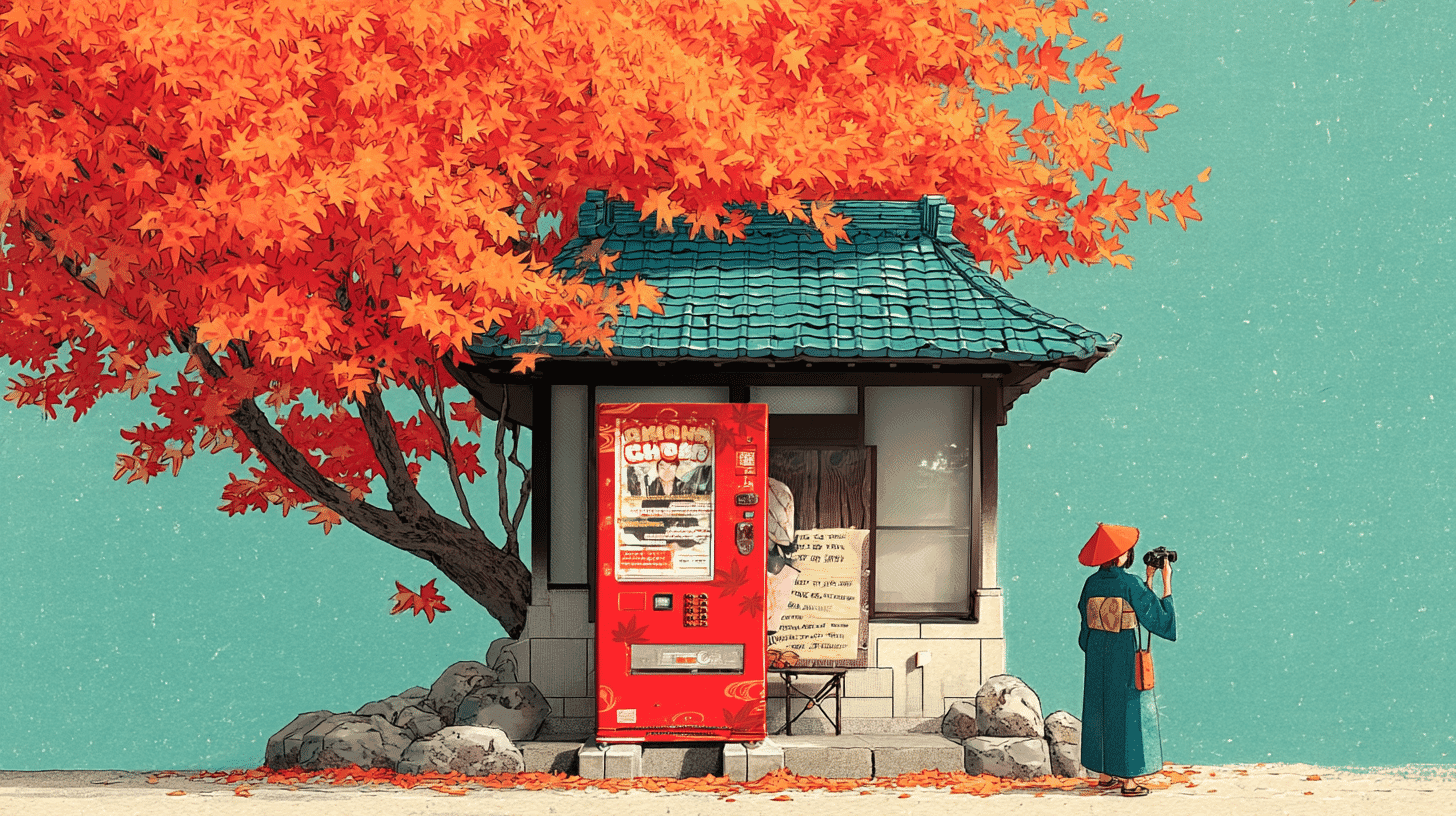
🎰 A one-minute walk from Nikko Toshogu, one of Japan's most famous World Heritage shrines, there's a vending machine standing outside a small theater. It doesn't sell drinks. It sells antique kimono. Every item costs a flat 1,000 yen, about $6, and here's the fun part: you don't get to choose which one you get.
A theater with a door problem
The machine belongs to Nikko Momijiza, a small playhouse in Nikko, Tochigi Prefecture, just one minute on foot from the approach to Toshogu shrine and right next to the municipal parking lot used by visitors. Reopened in April 2023, it stages taishu engeki, Japan's "popular theater," several times a day, with tickets starting at 1,300 yen (around $8) for a single act.
If you've never heard of taishu engeki, you're not alone. It's a form of stage entertainment said to have grown out of Edo-period kabuki, stripped of formality and aimed squarely at ordinary audiences. More than a hundred troupes still tour Japan today, moving between small playhouses and hot-spring halls every month. Performers switch costumes and wigs song after song, dancing to everything from old enka ballads to current pop hits. It's loud, close-up and unpretentious, and almost invisible to foreign tourists.
The Momijiza had a very specific problem, though. Open the front door and you are looking straight at the audience seats. That is the theater's own account, published by Houzyu, the Osaka-based vending machine company that supplied the unit. For first-timers, that's intimidating. The theater had tried inviting food trucks and pop-up stalls to slow people down outside, but scheduling made it impossible to do every day. What they needed was something that stood there around the clock and gave passersby a reason to stop.
Put in 1,000 yen, get a mystery kimono
The answer arrived on November 1, 2024, timed to Nikko's famous autumn foliage season: a vending machine wrapped in maple-leaf designs, loaded with antique haori and michiyuki: short kimono jackets and traditional coats that you can throw on over regular clothes, no dressing skills required. Everything costs the same 1,000 yen, and what comes out is up to chance.
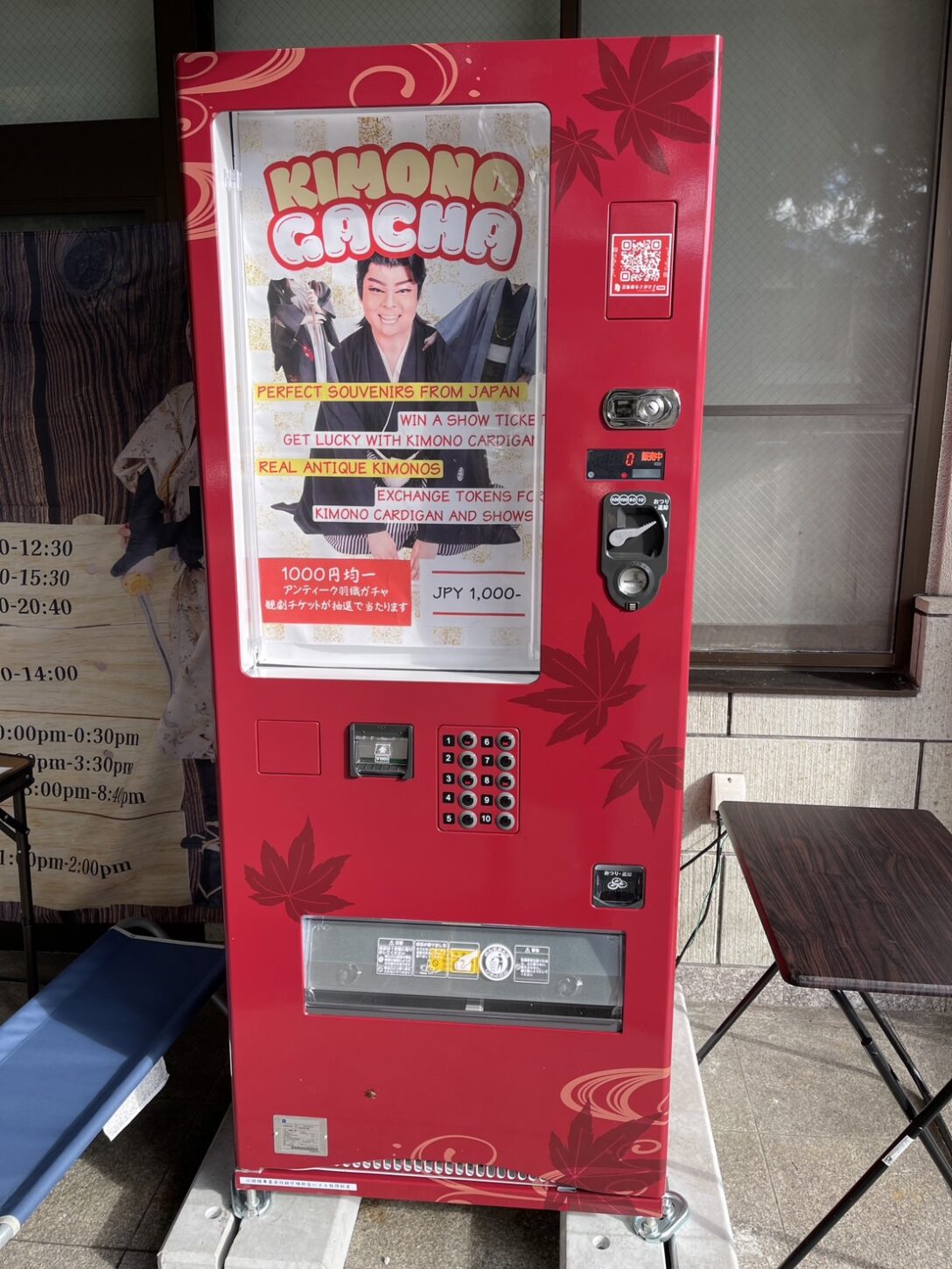
Source: Houzyu Co., Ltd.
The pickup is the clever part. Per the launch announcement, each purchase comes with a numbered tag, which you trade in with the staff inside the theater to receive your haori. In other words, the machine is the entrance and the pickup counter is past the door, the exact door that first-time visitors found so hard to open. The gacha walks you straight into the playhouse.
There's a bonus, too: at the exchange you enter a lottery for free tickets to a Momijiza performance, though by the operator's own cheerful admission, as of late 2024 nobody had won one yet.
Houzyu bills it as Japan's first kimono gacha vending machine, its own claim and worth noting, made possible by a multi-purpose unit that handles both refrigerated and room-temperature goods, food or otherwise. The theater, for its part, says it got the idea after spotting the company's ad on Instagram, having already been intrigued by another oddball machine in town: Nikko's origami vending machine.
From the discard pile to a traveler's shoulders
There's a second story folded into this one. The launch announcement says the antique kimono in the machine were entrusted by a shop specializing in kimono remakes, to be passed on to new owners instead of being thrown away, and that the pieces were chosen for their woven patterns and embroidery.
Japan has a well-known surplus of kimono: garments that families no longer wear sit in drawers for decades, and many end up discarded. Meanwhile, among foreign travelers, antique kimono have become a sought-after souvenir, light, packable and one of a kind, and Nikko already has antique kimono shops popular with international visitors. Seen that way, a 1,000-yen vending machine is doing something bigger than it looks: sending orphaned jackets off to new lives on travelers' shoulders around the world.
Why this works on tourists
A full kimono rental means time, money, and a professional fitting; a haori goes on over your clothes like a cardigan. Add the gacha factor (Japan has hundreds of thousands of capsule-toy machines, and not knowing what you'll get has become an attraction in itself), and then the setting: put on your mystery jacket and the cedar-lined approach to a World Heritage shrine is your photo backdrop. One box, three things Japan-bound travelers already love.
Houzyu's write-up mentions staff at the station's tourist center remarking on the machine, more foreign visitors stopping in front of the theater out of curiosity, and listings on vending machine fan sites helping draw people in. The theater says it may use the machine's empty slots to sell local sweets like anmitsu and castella as Nikko souvenirs.
One caveat: the details above come from the theater and the vending machine company themselves, and describe the service as it launched in November 2024. If you're planning a visit, check the theater's latest announcements before you go.
In Japan, tradition sometimes comes out of a vending machine. Is there anywhere in your country where travelers can try on traditional clothing this casually? And would you trust a machine to pick yours?



Global Discussion
4 comments