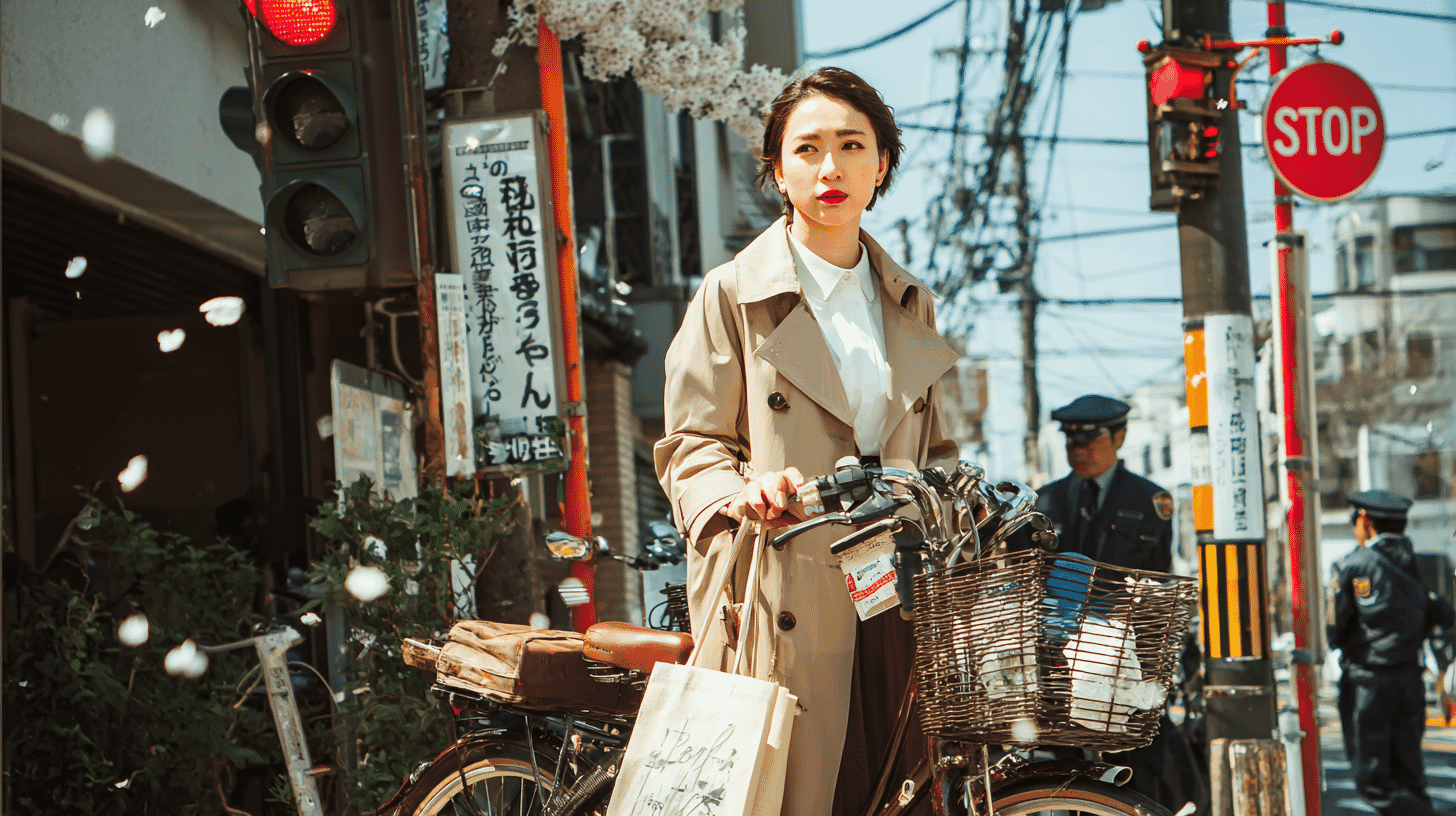
Planning to explore Japan on a rental bike? As of April 1, 2026, checking your phone while cycling could cost you $75, and running a red light will set you back $38. Japan has rolled out its new "Blue Ticket" fine system for bicycle violations, and yes, foreign tourists are fully subject to these rules. Whether you're pedaling through Kyoto's temple district or cruising Tokyo's backstreets, here's everything you need to know to avoid an unexpected fine.
What Is the Blue Ticket System?
The Blue Ticket, or ao-kippu (青キップ), is Japan's on-the-spot fine system for minor traffic violations. Previously used only for cars and mopeds, the system has now been extended to bicycles. Before this change, police could only issue verbal warnings or yellow caution cards for cycling infractions, which had little deterrent effect.
Starting April 1, 2026, officers can issue immediate fines to any cyclist aged 16 or older. Fines range from ¥3,000 to ¥12,000 ($19–$75) and must be paid in cash at a post office or bank within eight days. If paid on time, no criminal record is created. Failure to pay can escalate to a court summons and potential criminal proceedings.
For context, more serious violations like drunk cycling already carry "Red Ticket" penalties (criminal charges) since November 2024, with fines up to ¥1 million ($6,300) or five years in prison.
The 14 Key Violations and Their Fines
¥3,000 (~$19) Fines
- Riding double: Carrying a passenger on your shoulders or back. Child seats with small children are an exception.
- Riding side by side: Cycling next to another rider instead of single file.
¥5,000 (~$31) Fines
- Umbrella riding: Holding an umbrella while cycling. Very common in Japan, now very finable.
- Earphone use: Wearing headphones that cover both ears while riding.
- No lights at night: Cycling after dark without a functioning headlight.
- Failing to stop at a stop sign: Japan's stop signs are inverted red triangles reading "止まれ" (tomare). Cyclists must come to a complete stop.
- Running a flashing red light: Flashing red signals require a full stop before proceeding.
- Defective brakes: Riding a bike with non-functioning brakes.
¥6,000 (~$38) Fines
- Running a red light: Going through a standard red traffic signal.
- Riding on the right side: Japan drives on the LEFT. Cycling on the right side of the road means you're riding against traffic, a violation that's easy for tourists from right-hand-traffic countries to commit accidentally.
- Obstructing pedestrians at crosswalks: Blocking or interfering with pedestrians who have the right of way.
¥7,000 (~$44) Fine
- Entering a closed railroad crossing: Passing through when the crossing gates are down. Extremely dangerous and strictly enforced.
¥12,000 (~$75) Fine
- Using a smartphone while riding: Holding or operating a mobile phone while cycling. This is the most expensive Blue Ticket violation and a growing cause of accidents in Japan.
The Sidewalk Gray Zone
Here's where things get complicated. Japan has very few dedicated bike lanes, and many streets are narrow. For decades, cyclists have routinely ridden on sidewalks, it's been one of the defining features of cycling in Japan. Under the new rules, sidewalk riding is technically a ¥6,000 violation, but there are important exceptions.
You CAN ride on the sidewalk when signs specifically permit it (look for a blue circle with a bicycle and pedestrian icon). Cyclists under 13 or over 70 are always permitted on sidewalks, as are riders with physical disabilities. Sidewalk riding is also allowed on roads with very heavy traffic or extremely narrow widths, though this is a judgment call by individual officers.
When riding on the sidewalk is permitted, cyclists must stay on the side closest to the road, ride slowly, and always give way to pedestrians. Police have indicated that enforcement will focus on dangerous behavior, riding fast through pedestrians or forcing people to dodge, rather than slow, careful sidewalk riding.
Yes, Tourists Are Subject to These Fines
Japan's Road Traffic Law applies to everyone on Japanese roads regardless of nationality, visa status, or how long you're staying. Short-term tourists, foreign residents, and Japanese citizens are all treated equally.
According to legal experts, Japan is not a signatory to the Vienna Convention on Road Traffic, which means some traffic rules and road signs may be unfamiliar to visitors. The "keep left" rule catches many tourists from right-hand-traffic countries off guard, and unfamiliar stop signs (red inverted triangles with Japanese text) can be easy to miss.
Fines must be paid in cash at a post office or bank, credit cards are not accepted. While there's no official multilingual guide for receiving a ticket, police in tourist-heavy areas like Kyoto and Fukuoka have been distributing bicycle rule flyers in multiple languages.
Tips for Rental Bike and Bike-Share Users
Japan's bike-sharing services, Docomo Bike Share, HELLO CYCLING, LUUP, have boomed in recent years, making cycling one of the easiest ways for tourists to get around. Here's how to ride smart under the new rules:
Ride on the left, always. This is the single most important rule for visitors from right-hand-traffic countries. Be especially careful after turning at intersections, that's when people instinctively drift to the wrong side.
Never touch your phone while riding. If you need to check Google Maps, pull over and stop completely. The ¥12,000 fine for phone use is the steepest penalty.
Check your lights before riding at night. Rental bikes usually come with lights, but confirm they work before heading out.
Learn the stop sign. It's a red inverted triangle with "止まれ" written on it. Treat it exactly like a STOP sign, full stop required, even on a bicycle.
Leave the umbrella in your bag. Japan's convenience stores sell cheap vinyl umbrellas everywhere, but riding with one is now fineable. Pack a lightweight rain jacket instead.
Carry cash. If you do receive a ticket, you'll need to pay the fine at a post office or bank in cash within eight days.
Japan's Unique Bicycle Culture
Japan's relationship with bicycles is unlike anything you'll find in Amsterdam or Copenhagen. The star of the show is the mamachari (ママチャリ), literally "mama's chariot", a sturdy utility bike with a front basket, rear child seat, built-in lock, and kickstand. About 80% of Japanese households own a bicycle, and the mamachari is the workhorse of daily life: grocery runs, school drop-offs, commuting to the train station.
Station-front bicycle parking (chuusha-jou) is another uniquely Japanese sight. Major train stations have massive multi-story bicycle garages, some underground and fully automated. You ride your bike onto a platform, and a robotic arm stores it in a cylindrical tower below ground. These "eco-cycle" systems regularly go viral on social media among foreign visitors.
Japan also requires "crime prevention registration" (bouhan touroku) for all bicycles, essentially registering your bike with the police. It helps recover stolen bikes and serves as proof of ownership if stopped by officers.
How Does Your Country Compare?
Japan's Blue Ticket system represents a dramatic shift from the historically relaxed approach to cycling enforcement. Some countries have been stricter for years, parts of Australia mandate helmets, and Germany enforces bike lane usage, while others remain more lenient. In the Netherlands, cycling infrastructure is so developed that many of these violations simply don't arise.
What are the cycling rules in your country? Could you get fined for checking your phone while riding? Are you allowed on sidewalks? Whether you're planning a trip to Japan or you're a cycling enthusiast, we'd love to hear how your country handles bicycle safety.
References
- Tokyo Metropolitan Police, Blue Ticket System for Bicycles https://www.keishicho.metro.tokyo.lg.jp/kotsu/jikoboshi/bicycle/cycle_kaisei.html
- NHK World, Japan's new bicycle traffic rules https://www3.nhk.or.jp/nhkworld/en/news/backstories/4699/
- The Japan Times, What to know about Japan's new traffic rules for cyclists https://www.japantimes.co.jp/news/2026/03/25/japan/crime-legal/bicycle-crackdown/
- GaijinPot, New Bike Laws in Japan Explained https://blog.gaijinpot.com/new-bike-laws-in-japan-explained-effective-april-2026/







Global Discussion
14 comments