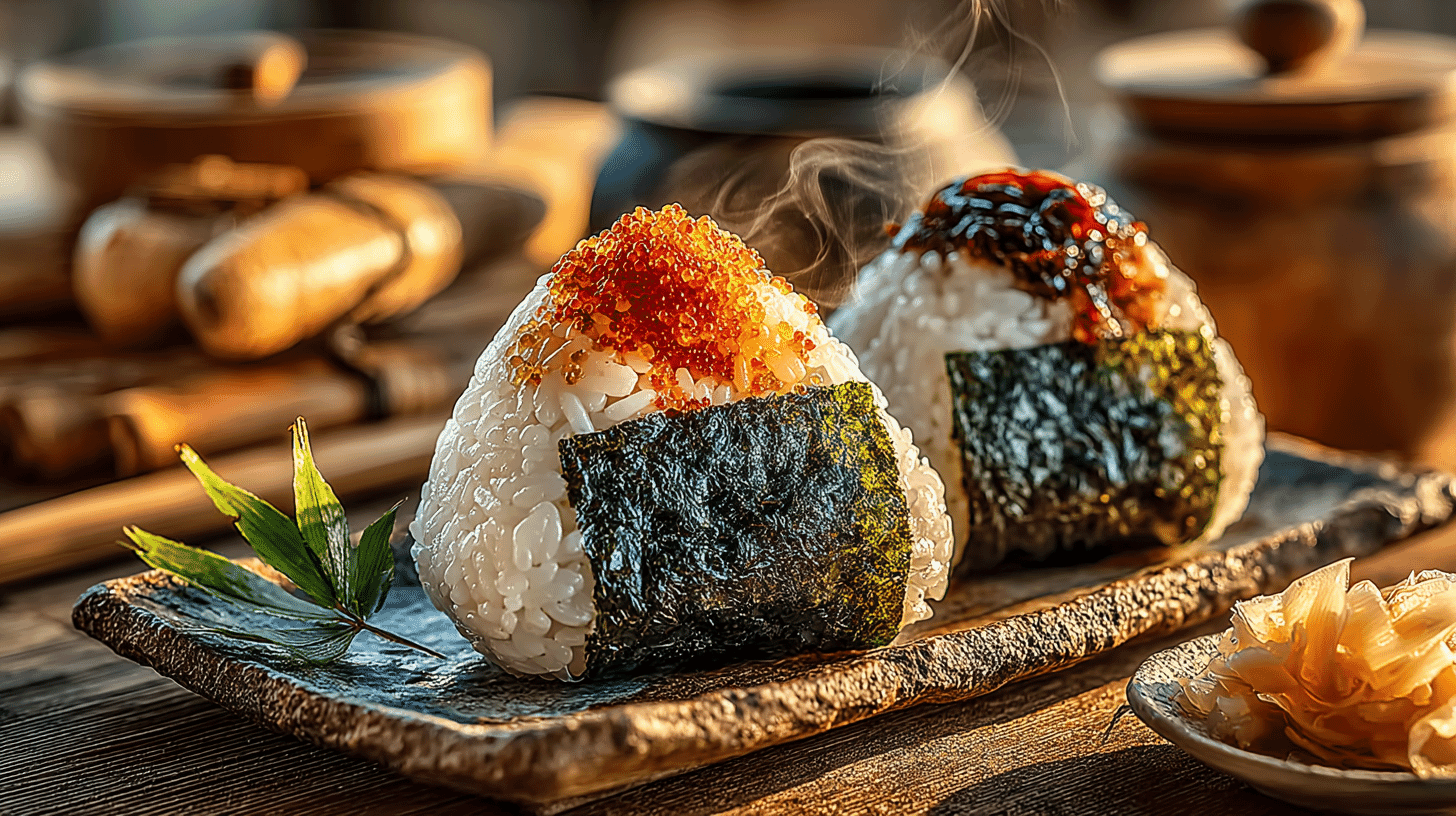
It's not just sushi anymore. Ramen, onigiri, matcha, natto: Japan's "second wave" of food culture is decisively reshaping how the world eats. In 2025, Japan's agricultural and food exports hit a record $11.3 billion, and Japanese restaurants abroad surpassed 181,000. Tonkotsu ramen chains from Fukuoka now operate 400+ locations from New York to Jakarta. Onigiri shops draw weekend lines in Paris, and matcha sales have tripled at London health food stores. Japanese food is no longer exotic; it's becoming everyday.
The Numbers Tell the Story
According to Japan's Ministry of Agriculture, Forestry and Fisheries (MAFF), the country's agricultural and food exports reached ¥1.7 trillion ($11.3 billion) in 2025, a 12.8% increase over the previous year and the 13th consecutive annual record. The top destination was the United States ($1.84 billion), followed by Hong Kong, Taiwan, China, and South Korea.
To put this in perspective: in 2013, the figure was just ¥550 billion. Exports have more than tripled in twelve years.
Driving this surge is an explosion of Japanese restaurants worldwide. MAFF data shows approximately 181,000 Japanese restaurants operating outside Japan in 2025, doubling from about 89,000 in 2015. More restaurants mean more demand for ingredients, soy sauce, miso, green tea, wagyu beef, scallops, sake, all riding the wave of this expanding "restaurant infrastructure."
From Fukuoka to the World: Tonkotsu Ramen's Global Conquest
At the vanguard of Japan's food globalization are two brands born in Fukuoka's Hakata district: Ippudo and Ichiran.
Ippudo, founded in 1985, now operates over 400 locations across Japan and abroad, with 277+ overseas stores spanning 15 countries (as of March 2022, and still expanding). When it opened its first New York location in Manhattan's East Village in 2008, the company hosted a press reception for 50 media outlets, generating massive buzz. The store pulled in ¥450 million (about $3 million) in its first year, more than ten times a typical domestic location.
Ichiran, founded in 1960, is famous for its "Flavor Concentration Booths", partitioned counter seats designed so diners can focus entirely on their ramen without distraction. It operates about 90 locations, including stores in New York, Hong Kong, and Taiwan.
What both brands share is a fundamental reimagining of tonkotsu ramen's image. Traditional Hakata ramen shops were smoky, cramped, and male-dominated. Ippudo founder Shigemi Kawahara created stylish interiors with jazz music, making ramen accessible to women dining alone. This "image revolution" became the foundation for international expansion.
In New York, Ippudo introduced the concept of "ramen dining", pairing bowls with craft beer in an upscale setting, elevating ramen from fast food to dining experience. Across Asia, they've embraced localization: chili crab ramen in Singapore, tom yum ramen in Thailand, and region-specific variations that respect local palates while maintaining the core tonkotsu DNA.
Onigiri: The Third Wave of Japanese Food Goes Global
The fastest-growing Japanese food trend worldwide might be the most unexpected: the humble onigiri rice ball.
At Omusubi Gonbei's location near the Palais-Royal in Paris, weekend lines of 20–30 people are the norm. Since opening its first U.S. store in New Jersey in 2013, the chain now runs four directly-managed locations in New York and Paris, using rice, salt, and nori all imported from Japan to maintain authentic quality.
In Hong Kong, the onigiri chain Waa Yue Kee expanded from its first store in 2011 to about 120 locations in a decade. In France, supermarkets now stock onigiri in their lunch sections, marketing them as "Japanese sandwiches." Germany and the United States are seeing their own waves of specialty onigiri shop openings.
Why is onigiri resonating abroad? Several reasons converge. Price accessibility: unlike sushi or ramen, the ingredients are simple, rice, salt, nori, and a filling, making it an affordable grab-and-go meal. Visual power: the distinctive black triangle shape is unlike anything in other food cultures, making it inherently photogenic and iconic. Luxury brand Fendi even released an onigiri-shaped mini bag, proving the silhouette's cultural penetration extends to fashion.
The biggest catalyst, however, is anime and manga. Onigiri appears constantly in Japanese animation, prompting overseas fans to ask "what is that triangular black food?" TikTok and YouTube are flooded with onigiri-making tutorials racking up millions of views, and home onigiri-making has become a global hobby.
In Japan itself, specialty onigiri shops have exploded, Tabelog listed 2,155 as of February 2025, up 15% year-over-year. Major companies like Komeda Holdings have launched new onigiri-focused brands, signaling that the trend has serious commercial legs.
Green Tea Exports Hit $480 Million: Matcha Is Coloring the World Green
Japan's green tea exports (including matcha) reached a record ¥72 billion (approximately $480 million) in 2025. In the first half alone, exports hit ¥26.3 billion, a staggering ¥10.4 billion increase over the same period the previous year.
The driver is overwhelmingly matcha. Global cafe chains led by Starbucks have made matcha lattes a permanent menu fixture. Matcha-flavored sweets, ice cream, and baked goods have proliferated. The health-conscious consumer market has embraced matcha as a "superfood" for its antioxidants and L-theanine content.
But behind the boom lies a structural crisis. The heavy oil needed for tea production has surged in cost, and tea industry bankruptcies have hit record levels. Demand is soaring while the supply side struggles, a contradiction that threatens the sustainability of the matcha boom. Japan's agriculture minister has signaled intent to address the issue, but solutions won't come quickly.
There's also the problem of counterfeit matcha flooding overseas markets. Authentic matcha is made from shade-grown tea leaves (a process called kabuse saibai that boosts umami), stone-ground into a fine powder. It's vivid green with a balance of bitterness and sweetness. Cheap powdered green tea labeled as "matcha" is a common deception, buyers should look for origin certification and that characteristic bright color.
Natto: The World's "Most Hated Food" Sees 60x Export Surge
Natto, fermented soybeans known for their sticky texture, pungent aroma, and polarizing taste, was once considered the Japanese food least likely to go global. That narrative is collapsing. Some natto producers have seen exports increase by 60 times.
Four tailwinds are driving the shift. First, the broader Japanese food boom has lowered psychological barriers: consumers who entered through sushi or ramen are now willing to try natto as a "next level" challenge. Second, the health movement: nattokinase's blood-clot-dissolving properties and soy isoflavones have attracted wellness-focused consumers. Third, the fermented food trend: alongside kimchi, kombucha, and sauerkraut, natto has earned its place as a gut-health powerhouse. Fourth, social media virality: TikTok videos of foreigners trying natto for the first time have generated tens of millions of views, paradoxically fueling curiosity.
Fascinatingly, natto-like fermented soybean products exist worldwide. Nigeria has dawadawa, India has kinema, and Thailand has thua nao, all fermented soybean condiments that look and smell remarkably similar to natto. The fact that distant cultures independently arrived at the same fermentation technique suggests something universal about natto's appeal.
Knives, Soy Sauce, and Restaurant Chains: Exporting Japan's Food Infrastructure
The ripple effects of Japan's food boom extend far beyond ingredients. The tools and condiments that make Japanese cooking possible are also surging in global demand.
Japanese kitchen knives are experiencing explosive popularity among professional chefs and home cooks worldwide. Traditional production centers, Sakai (Osaka), Seki (Gifu), and Echizen (Fukui), are becoming globally recognized alongside Germany's Solingen and France's Thiers. For inbound tourists, buying a Japanese knife has become a quintessential souvenir, and the surge in overseas Japanese restaurants (181,000 and counting) directly fuels professional demand.
Condiment makers are expanding aggressively. Kikkoman established a local subsidiary in Ho Chi Minh City in 2025 to strengthen its Southeast Asian distribution network. The company already derives over 70% of its revenue from overseas markets, selling soy sauce in more than 100 countries.
Restaurant chains are pushing into new frontiers. Ootoya opened its first Philippines location, and Torikizoku (a popular yakitori chain) plans to enter the market by autumn. With a population exceeding 100 million, the Philippines represents a massive untapped market, Japanese food is still relatively scarce there compared to other Southeast Asian countries.
Geopolitical Risks: Tariffs, Trade Wars, and Japanese Food Exports
The outlook isn't all rosy. The Trump administration's tariff policies have introduced uncertainty, with reciprocal tariffs applied to some Japanese food products since April 2025. However, high-demand items like green tea and wagyu have maintained export volumes despite the surcharges.
China's restrictions on Japanese seafood imports, imposed after the release of ALPS-treated water from Fukushima in 2023, continue to affect scallop exports. Japanese producers have responded by rapidly diversifying export destinations to Vietnam, Thailand, and Canada, and scallop export values are recovering.
What Japanese Food Is Really Exporting
When UNESCO inscribed washoku as an Intangible Cultural Heritage in 2013, it was a cultural milestone. Today it's an economic one too. If sushi made Japanese food "premium," onigiri is making it "everyday," ramen "experiential," matcha "healthy," and natto "adventurous." What's ordinary in Japan is a revelation abroad.
What's your country's relationship with Japanese food? Beyond sushi, what's your favorite Japanese dish? We'd love to hear your perspective.
Related Articles
References
- https://www.maff.go.jp/j/press/yusyutu_kokusai/kikaku/260203.html
- https://www.jetro.go.jp/biznews/2026/02/f4ba9ae10c6b7b72.html
- https://www.digima-japan.com/knowhow/world/18071.php
- https://news.yahoo.co.jp/expert/articles/63ddddccfbe997190170ae921cf0370df82b65dd
- https://ysandpartners.com/jp/blog/growing-popularity-of-japanese-onigiri-rice-balls-in-usa/
- https://at-living.press/food/41019/







Global Discussion
15 comments