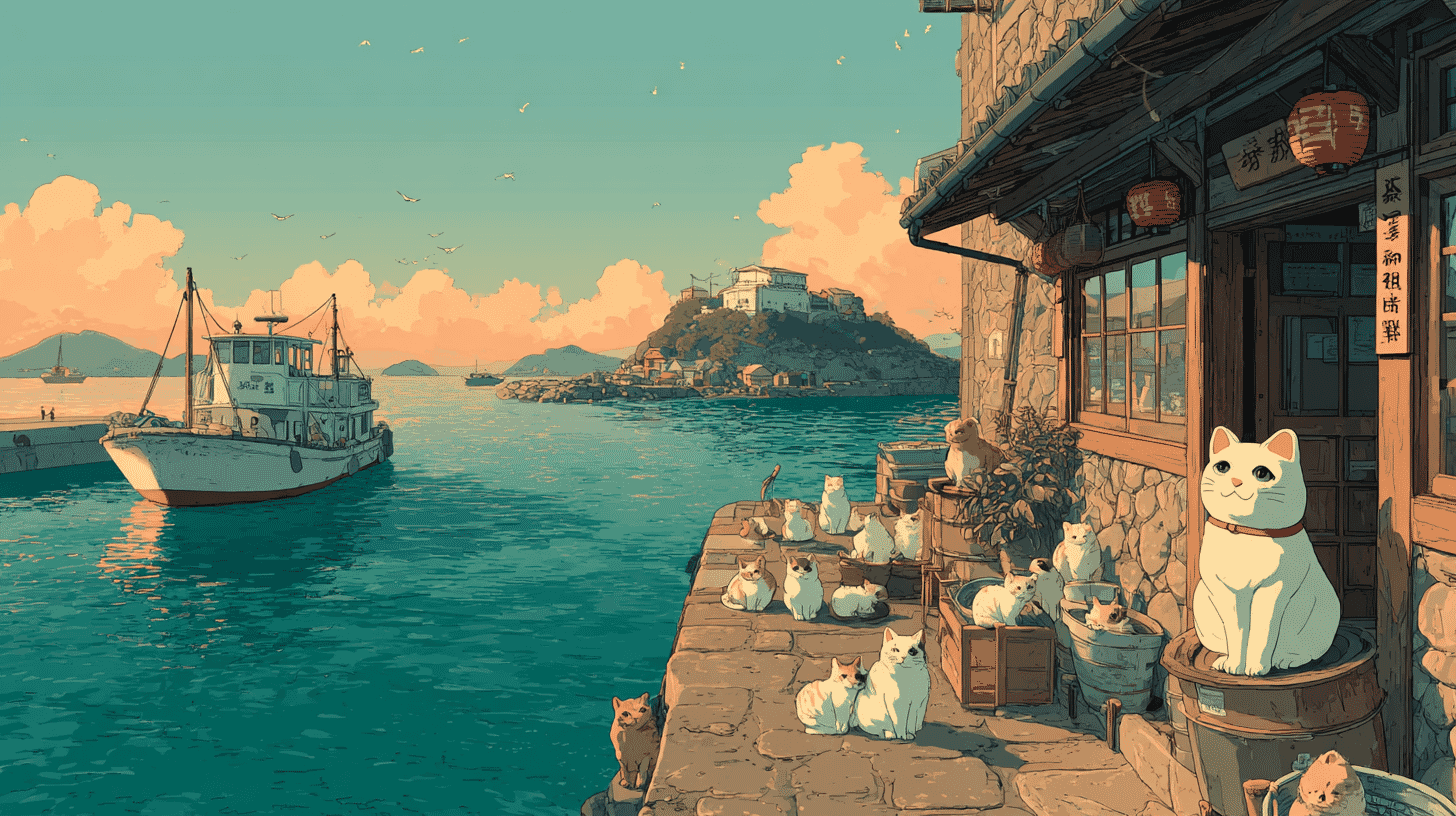
Just a 17-minute ferry ride from Fukuoka City, a tiny heart-shaped island in Japan's Genkai Sea is home to roughly 200 cats, and only about 270 human residents. Ainoshima (相島), named one of CNN's "World's 6 Best Places to See Cats" back in 2013, is going viral all over again in spring 2026 as TikTok and Instagram travelers rediscover this feline paradise off the coast of Kyushu.
An Island Where Cats Outnumber People
Ainoshima belongs to Shingu Town in Fukuoka Prefecture, sitting about 7.5 kilometers offshore in the Genkai Sea. The municipal ferry "Shingu" makes the crossing five to six times daily, carrying up to 150 passengers. The moment you step off the boat, friendly cats stroll right up to greet you, some rubbing against your legs, others lounging lazily by the harbor wall.
The island spans roughly 8 kilometers in circumference, and when viewed from above, it forms a distinctive heart shape, earning it the nickname "Island of Love." A large maneki-neko (beckoning cat) statue stands near the port as the island's unofficial mascot.
But Ainoshima is far more than cats. It appears in the Man'yoshu, Japan's oldest poetry anthology compiled over 1,200 years ago. During the Edo period, when Japan was otherwise closed to the outside world, Ainoshima served as a reception point for Korean diplomatic envoys (Joseon Tongsinsa), making it a rare site of international cultural exchange in isolationist Japan.
Why So Many Cats? A Fisherman's Bargain
The story of Ainoshima's cats begins with the island's fishing heritage. For generations, fishermen kept cats to protect their nets and stored grain from rats. The practice of feeding cats leftover fish scraps, bycatch too small or bony to sell, created a symbiotic relationship that sustained both species.
On a small island with no cars, no predators, and mild winters, the cat population grew steadily over the decades until it eventually surpassed the number of human residents. Today, a local volunteer group called the Ainoshima Cat Society manages daily feeding schedules and monitors the cats' health.
The Reality Behind "Cat Paradise"
The postcard image of a feline utopia masks real challenges. Before organized intervention, overcrowding led to disease outbreaks, malnourished cats, and territorial fighting. Some visitors and mainland residents even dumped unwanted pet cats on the island, worsening the situation.
In 2021, the Japanese animal welfare organization Doubutsu Kikin (Animal Fund Japan) launched a massive TNR campaign, Trap, Neuter, Return. Over four days, approximately 100 volunteers captured and spayed or neutered 233 cats on the island, far exceeding the initial estimate of 80 unsterilized cats.
The TNR campaign dramatically improved health conditions across the colony. The Ainoshima Cat Society now conducts regular health checks, and the partnership between island residents and volunteer groups has become a model for sustainable coexistence. Cat abandonment, however, remains an unsolved problem.
Going Viral: Again: in 2026
Ainoshima first caught global attention in 2013 when CNN included it in their list of the world's best cat destinations. A local photographer known as Fubirai further boosted the island's fame with intimate cat portraits that spread across social media.
In spring 2026, a fresh wave of TikTok and Instagram posts from foreign tourists has reignited international interest. Videos tagged #ainoshimaisland, #catisland, and #japancats have gone viral across English, French, and Spanish-speaking communities. The appeal is universal: a sun-drenched fishing village where dozens of friendly cats wander freely against a backdrop of sparkling ocean.
Japan's "Big Three" Cat Islands Compared
Japan has more than ten islands commonly referred to as "cat islands" (neko-jima), but three stand out internationally.
Tashirojima (Miyagi Prefecture) has roughly 55 residents and over 100 cats. The island is home to a "Cat Shrine" (Neko Jinja) and famously bans dogs entirely. It gained additional attention during its recovery from the 2011 Great East Japan Earthquake.
Aoshima (Ehime Prefecture) is the most extreme ratio: only a handful of residents versus over 100 cats. With just two ferry trips per day and virtually zero tourist infrastructure, it offers the rawest cat island experience, and the hardest to reach.
Ainoshima (Fukuoka Prefecture) boasts the largest cat population at roughly 200 and is by far the most accessible. It's about an hour from Hakata Station in central Fukuoka, and the island has restaurants, a café, a tourist information center, and bicycle rentals. For first-time cat island visitors, Ainoshima is the best starting point.
Visitor Guide: Rules and Recommendations
There are important rules to follow when visiting Ainoshima.
The number one rule: do not feed the cats. Handouts from tourists disrupt the cats' ecosystem and can trigger territorial conflicts. Also avoid chasing cats or picking them up forcefully. They are feral animals, friendly ones, but still feral. Let them approach you on their terms.
The round-trip ferry from Shingu Port costs about ¥960 (roughly $6). On the island, you can enjoy fresh sashimi sets at Maruyama Shokudo or the signature heart-shaped "Love Croquette" made from fish paste. The tourist center "Shima-no-Eki Ainoshima" serves a hijiki seaweed croquette burger and sells cat-themed souvenirs. Electric-assist rental bicycles let you cruise the 5.4-kilometer loop road, passing ancient stone tumuli (a nationally designated historic site), the striking rock arch known as Hanagurise (Megane Rock), and dramatic coastal cliffs.
What Cat Islands Teach Us About Coexistence
Ainoshima's cats are not just tourist attractions. They are living participants in a fishing community's centuries-old way of life, part of the island's identity. The TNR model Ainoshima has adopted shows that tourism and animal welfare can coexist, offering a template for communities worldwide wrestling with stray animal populations.
An island where cats and humans live side by side. Does your country have a place like this? What's the relationship between stray cats and communities where you live?









Global Discussion
14 comments