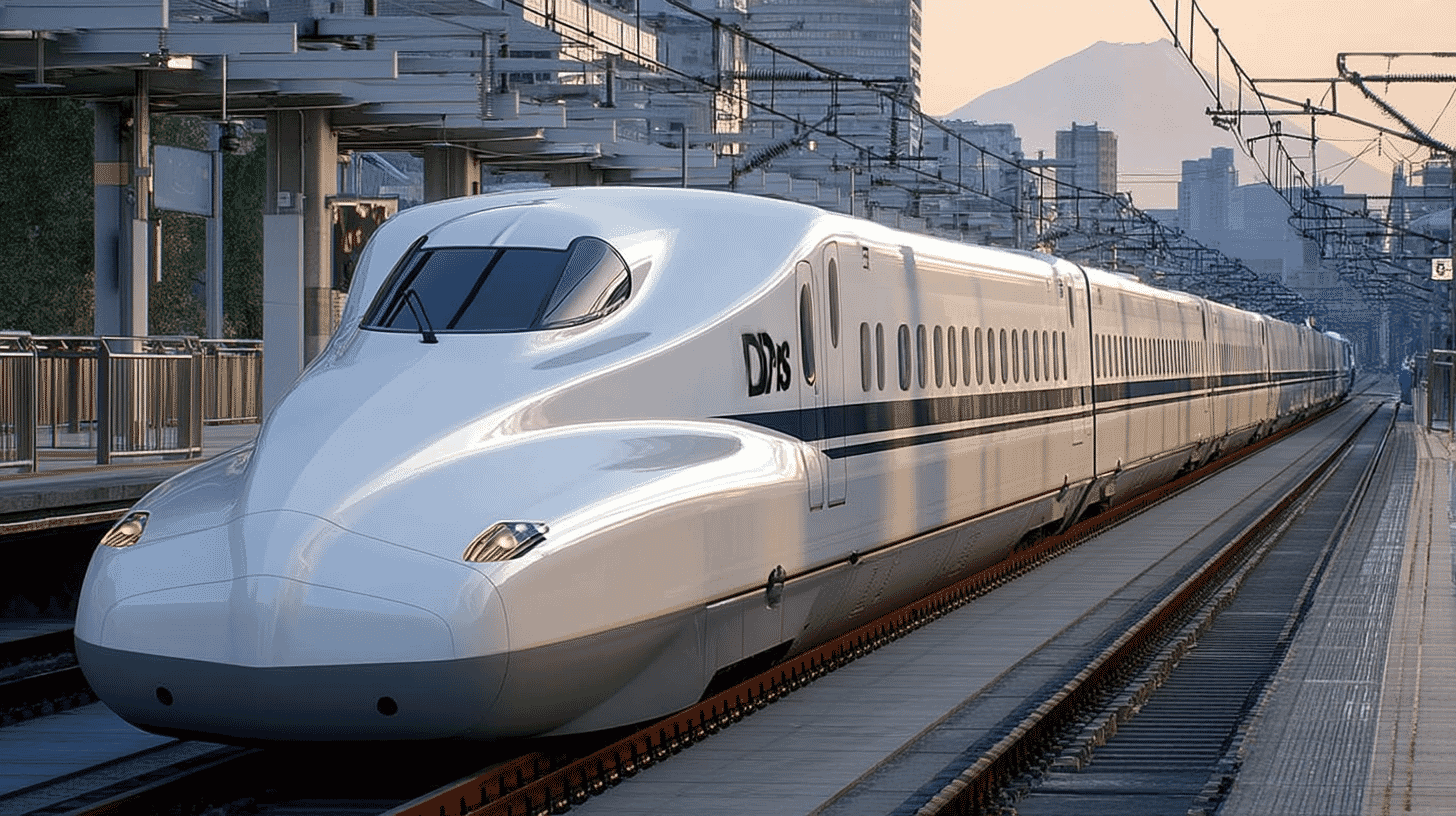
Spotting the bright yellow Shinkansen known as "Doctor Yellow" was said to bring good luck, and for decades, rail fans across the world traveled to Japan just for the chance to glimpse it. But on January 29, 2025, Japan's most beloved inspection train quietly made its final run. Now, JR Central has announced the successor. Its name is "Doctor S", and though the body is no longer yellow, the yellow logo carries the legacy forward.
Doctor S: The New "Train Doctor" for Tokaido Shinkansen
On April 16, 2026, Central Japan Railway Company (JR Central) officially announced the name and logo for the successor to the retired Doctor Yellow inspection train. The new vehicle will be called "Doctor S" (pronounced "Doctor Ess"), and a distinctive "Dr.S" logo, with the "S" rendered in the same vivid yellow as the legendary Doctor Yellow, will appear at 20 locations on each 16-car trainset, most prominently beside the doors of the lead cars.
The "S" comes from the latest Tokaido Shinkansen rolling stock, the N700S, and from other S-branded Tokaido services such as the "S Work" business carriages and "S Wi-Fi for Biz." Combined with "Doctor," the name is meant to convey continuity, the S-series taking over the doctoring duties from the Yellow series.
A total of four 16-car sets will be introduced. Revenue service starts October 2026, and the inspection equipment itself will go live in January 2027. At the press conference, JR Central President Shunsuke Niwa said he hoped Doctor S would be loved as much as its predecessor, operating in a "dual role", carrying passengers while watching over the tracks.
Why the World Loved Doctor Yellow
For readers unfamiliar with the legend: Doctor Yellow was the nickname for Japan's Shinkansen track-and-overhead-wire inspection train, painted a striking bright yellow that set it apart from the white passenger trains. Its formal name was the "Shinkansen Electric Track Comprehensive Test Car," but almost nobody called it that.
What made Doctor Yellow magical wasn't just the color, it was the mystery. The train ran the Tokyo-to-Hakata route roughly every ten days, but the schedule was never made public. You couldn't plan to see it. You had to get lucky. From this grew a beloved piece of Japanese modern folklore: spotting Doctor Yellow on your travels was said to bring good fortune.
This "lucky yellow Shinkansen" captured imaginations well beyond Japan's borders. International rail enthusiasts planned entire trips around potential sightings. English-language media ran farewell features when retirement was announced. JR Central's T4 set made its ceremonial final run on January 29, 2025, departing Tokyo Station with "Thank you T4" messages stuck to its windows while fans gathered on the platform in tears. The JR West-owned T5 set is scheduled to retire after 2027, at which point the yellow Shinkansen will vanish entirely from Japan's rails.
Why Japan Runs Dedicated Inspection Trains in the First Place
Many countries have high-speed rail, France's TGV, Germany's ICE, China's CRH, Spain's AVE. But Japan's Shinkansen occupies a unique position: since the Tokaido line opened in October 1964, it has maintained over 60 years with zero passenger fatalities from derailments or collisions. Roughly 356 trains per day carry about 360,000 passengers, at speeds up to 177 mph (285 km/h). No other rail network of that density and speed can claim the same record.
The philosophy behind this track record is preventive maintenance at an obsessive level, finding defects before they cause problems, rather than reacting after they do. That requires measuring track geometry, overhead-wire wear, and signal equipment continuously, under realistic operating conditions. Doctor Yellow did exactly that, running at up to 168 mph while instruments on board recorded the condition of every meter of rail and wire it passed over.
This "measure while moving at speed" concept wasn't invented in Japan alone, but Japan was an early pioneer. Similar inspection trains now exist worldwide, the New Measurement Train in the UK, TGV Iris 320 in France, the CRH 2-010A in China, but Doctor Yellow remained unique in one way: it became a cultural icon that ordinary people, not just engineers, knew and loved.
What Changes With Doctor S: What It Means for Japanese Safety
The biggest shift with Doctor S is philosophical. Doctor Yellow was a dedicated inspection train, running solely to measure the track. Doctor S will be a regular N700S passenger train with inspection equipment built in. It will carry paying customers while simultaneously monitoring the infrastructure, a "dual role" as JR Central described it.
The practical advantage is frequency. Doctor Yellow ran about three round trips per month. Doctor S trainsets, embedded in the regular Nozomi and Hikari schedules, will effectively inspect the track every single day, multiple times per day. Problems will be detected sooner, the maintenance schedule can respond faster, and overall safety margins increase.
AI adds another layer. Cameras mounted on the lead cars, combined with image-analysis algorithms, will now detect obstacles and foreign objects on the tracks that workers used to check on foot overnight. That reduces the burden on maintenance crews, who increasingly face Japan's chronic labor shortage, while increasing coverage.
There's even a sustainability touch: aluminum parts from the retired Doctor Yellow T4 set have been horizontally recycled and reused for the roof and side panels of Doctor S. The predecessor literally lives on in the body of its successor.
How Tourists Might Still "Spot" Doctor S
Part of Doctor Yellow's charm was the thrill of the hunt. Doctor S inherits something of this, though in a subtler form. Because Doctor S is an otherwise normal white N700S, travelers won't recognize it from a distance. But the bright yellow "Dr.S" logos placed at 20 spots on each trainset, particularly beside the doors of the lead cars, will be the giveaway.
Practically speaking, this means any traveler riding a Nozomi or Hikari between Tokyo and Shin-Osaka could, by chance, be riding a Doctor S. If you find yourself boarding an N700S at a major Tokaido Shinkansen station, glance at the lead car's doors. A yellow "S" inside a circle means you've boarded a train that is simultaneously doctoring the very tracks beneath you, and perhaps, according to the old legend, you've just gotten lucky.
A Quieter Kind of Guardian
Some fans have expressed sadness that the yellow body is gone. That's understandable, Doctor Yellow was more than a train, it was a symbol. But the Doctor S design represents another deeply Japanese instinct: the constant push for more efficient, more frequent, more continuous improvement. A dedicated inspection fleet is expensive to run and limited in coverage. Embedded inspection across the daily fleet delivers more data, more often, for less.
By keeping the "S" yellow, and only the "S", JR Central acknowledged the emotional weight that Doctor Yellow carried. The icon evolves, but the mission stays the same: keeping the world's safest high-speed railway exactly that, for generations to come.
Starting October 2026, somewhere on the Tokaido Shinkansen, a white train will pull into a platform with a small yellow insignia that reads "Dr.S." It won't announce itself, and most passengers will never notice. But the doctor is in.
In Japan, many people find comfort knowing that their bullet trains are constantly being checked, re-checked, and watched over by systems most travelers never see. How does rail safety work in your country? Do you have any favorite memories of Doctor Yellow, or thoughts on the new Doctor S? Share your story in the comments.
References
- https://trafficnews.jp/post/657293
- https://www.watch.impress.co.jp/docs/news/2102280.html
- https://www.tetsudo.com/news/4033/
- https://en.wikipedia.org/wiki/Doctor_Yellow
- https://livejapan.com/en/in-tokyo/in-pref-tokyo/in-tokyo_train_station/article-a0005499/
- https://www.timeout.com/tokyo/news/jr-centrals-lucky-yellow-bullet-train-to-be-retired-in-2025-061824







Global Discussion
15 comments