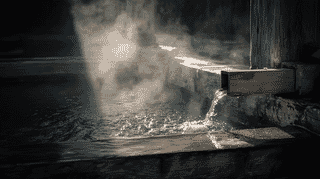
🏚️ What comes to mind when you hear the word "ruins"? Crumbling buildings, haunted locations, an eerie atmosphere... In Japan, however, a photo exhibition has been challenging this perception for 11 consecutive years. "Kawaru Haikyo Exhibition 2026" captures the hidden beauty within abandoned spaces, transforming decay into art through the lens of Japan's unique aesthetic philosophy: Wabi-Sabi.

"Kawaru Haikyo Exhibition 2026" — An 11-Year Celebration of Ruins as Art

From February 27 to March 29, 2026, TODAYS GALLERY STUDIO. in Asakusabashi, Tokyo, will host the "Kawaru Haikyo Exhibition 2026." A touring exhibition in Nagoya follows in April. Now entering its 11th year, this exhibition has played a pivotal role in establishing ruins photography as a legitimate art form in Japan.

The title "Kawaru" (meaning "to change") holds profound significance. It refers to the moment when visitors' preconceptions are completely transformed—when "ruins = creepy" becomes "ruins = beautiful." This perceptual shift is at the heart of what the exhibition aims to achieve.

Understanding Japan's "Haikyo Aesthetic"

Japan has developed a unique concept known as "haikyo bigaku" (ruins aesthetic). This isn't simply an appreciation of old things, but rather a sensibility that finds beauty in the very process of decay itself.

Internationally, the word "Haikyo" has become established as a term for Japanese ruins exploration culture. While Western "Urban Exploration" tends to emphasize adventure and discovery, Japanese Haikyo places value on the history and narrative of places, favoring quiet observation and documentation.

The Deep Connection Between Wabi-Sabi and Ruins

At the foundation of ruins aesthetics lies Japan's traditional concept of beauty: Wabi-Sabi. This uniquely Japanese philosophy finds beauty in imperfection, impermanence, and incompleteness.

"Wabi" represents austere, tranquil beauty, while "Sabi" describes the patina and depth that emerge through the passage of time. Sen no Rikyū, the father of the Japanese tea ceremony, taught that a cracked tea bowl holds greater value than a perfect one. This philosophy resonates directly with the aesthetics of ruins photography.

Crumbling walls, moss-covered staircases, sunlight streaming through abandoned windows—these may not meet Western standards of beauty. Yet to Japanese eyes, they reveal transience, silence, and the poetry of time itself.

15 Creators Reimagining the Beauty of Decay

The exhibition features 15 accomplished creators with strong followings on social media.

"toshibo," with 360,000 followers on X (formerly Twitter), captures the structural beauty of ruins through innovative compositions. "YULILY," with over 60,000 Instagram followers, is renowned for delicate contrasts of light and shadow. And aerial specialist "Nagi" (@neji_maki_dori) will unveil highly anticipated new video works at this exhibition.

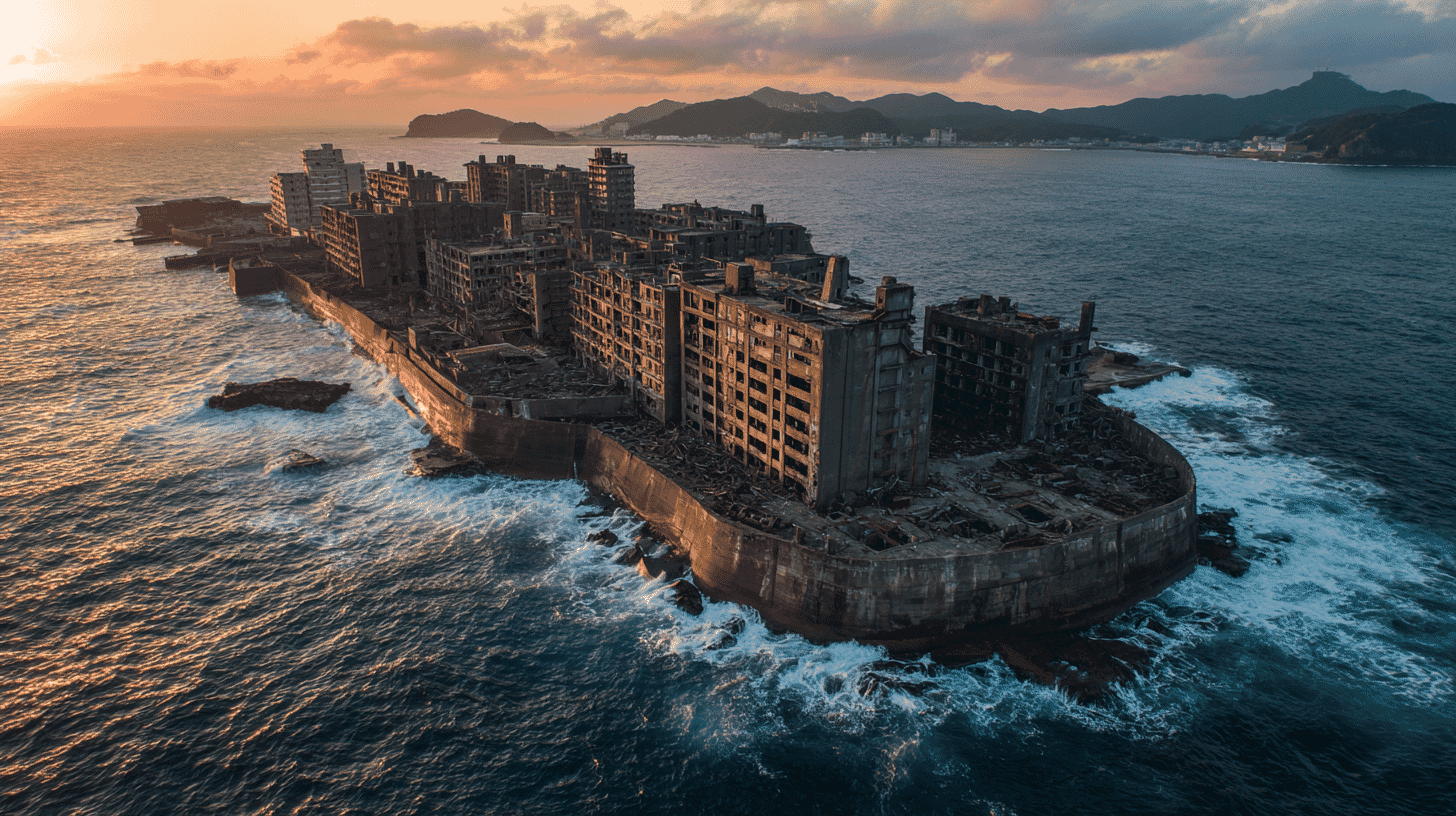
Particularly noteworthy is Nagi's drone footage. The work captures historical architecture in Belgium and France, as well as the UNESCO World Heritage site Gunkanjima, from perspectives never before seen. It's an ambitious piece that three-dimensionally expresses "the time that ruins have lived through."

Gunkanjima — Japan's Most Famous "Ruins Heritage"

Gunkanjima (Hashima Island, Nagasaki Prefecture) symbolizes Japan's ruins culture. This artificial island flourished through coal mining from 1890, housing over 5,000 residents at its peak. After the mine closed in 1974, it became uninhabited and was registered as a UNESCO World Cultural Heritage site in 2015.

The otherworldly landscape of concrete high-rise apartments rising from the sea has earned it the title "King of Ruins." In 2024, the TV drama "Diamonds Sleeping in the Sea" brought renewed attention to the island, dramatically increasing both domestic and international visitors.

Gunkanjima's World Heritage status demonstrates that "ruins" are not mere decay but cultural heritage that conveys human history and endeavor. This represents international recognition of Japan's ruins aesthetic.

Global Interest and Cultural Significance

In recent years, the concept of Wabi-Sabi has captured worldwide attention. In interior design, "Wabi-Sabi Style" has become trendy, favoring simple, natural materials. As a counterpoint to Western values that pursue perfection, the Japanese sensibility of appreciating imperfect beauty is being reevaluated.

Ruins photography exists within this cultural current. Thanks to social media, Japanese Haikyo photographers have gained fans worldwide. Australian photographer Shane Thoms introduced Japanese ruins culture to international audiences through his book "Haikyo: The Modern Ruins of Japan," generating significant response.

Event Details

Tokyo Venue

  • Dates: February 27 (Fri) – March 29 (Sun), 2026
  • Location: TODAYS GALLERY STUDIO. (5F, 5-27-6 Asakusabashi, Taito-ku, Tokyo)
  • Hours: 11:00–17:00 (until 18:00 on Saturdays)
  • Closed: Every Monday
  • Admission: ¥700 (Free for children 3 and under)

Nagoya Venue

  • Dates: April 4 (Sat) – April 26 (Sun), 2026
  • Location: TODAYS GALLERY STUDIO. NAGOYA (1-17-12 Shinsakae, Naka-ku, Nagoya, Aichi)
  • Hours: 11:00–17:00
  • Closed: Every Monday and Tuesday
  • Admission: ¥700 (Free for children 3 and under)

Talk Event

  • Date: March 7 (Sat), 2026, 13:00–
  • Speakers: toshibo, Drone Japan, enubie
  • No advance reservation required

Final Thoughts — How Are Ruins Viewed in Your Country?

In Japan, ruins are not simply "abandoned places." They hold sleeping histories, make the passage of time visible, and contain fragile yet beautiful stories. This exhibition has communicated these values to countless visitors over 11 years.

How are ruins perceived in your country? Are they "negative legacies" that should be demolished, or "cultural heritage" worth preserving? Does your culture find beauty in decay? We'd love to hear about your country's perspective on ruins and abandoned places.

References

Reactions in Japan

I went to the Kawaru Haikyo Exhibition last year and I'm definitely going again! I used to think ruins were scary, but after seeing this exhibit, I completely fell into the rabbit hole. The way light enters, the texture of moss—it's truly art.

I agree 0
I disagree 0

11 years is amazing. The themes and approaches evolve each year so it never gets boring. So excited for this year's drone footage. Shooting Gunkanjima from above sounds incredible.

I agree 0
I disagree 0

The photographers' perspectives are truly remarkable. It's not just ruins—you can almost see the time that passed and the human lives that were lived there. It's like wabi-sabi expressed through contemporary art.

I agree 0
I disagree 0

Honestly, I have mixed feelings about beautifying ruins. There are issues like trespassing and the feelings of people in areas that became abandoned. But I have to admit the photos are beautiful.

I agree 0
I disagree 0

I love toshibo's work so much. I've been following them on X forever, but seeing the actual prints is completely different. Planning to buy the catalog again this year.

I agree 0
I disagree 0

700 yen for this quality is a bargain. It's great for dates and also works well if you want to take your time with the art alone. Asakusabashi is easy to access too.

I agree 0
I disagree 0

As Japanese, I'm proud of our sensibility to appreciate the beauty of decay. I'm glad this different value system, separate from Western perfectionism, is being shared with the world.

I agree 0
I disagree 0

Seeing abandoned schools and hospitals in rural areas makes me feel sad. It's like facing the reality of declining birth rates and aging population. But reframing it as 'beauty' is a fresh perspective.

I agree 0
I disagree 0

YULILY's photos perfectly capture 'tranquility.' It's strange how you can feel the silence in a photo that has no sound.

I agree 0
I disagree 0

I thought the ruins boom would be temporary, but it's been going for 11 years now. That means there's something that truly resonates with Japanese people.

I agree 0
I disagree 0

This exhibition was what got me into photography, so it's meaningful to me. Now I photograph ruins myself too. Always following rules and etiquette, of course.

I agree 0
I disagree 0

When I showed it to my foreign friends, they were amazed asking 'Why do broken buildings look so beautiful?' I think it's the perfect exhibition to explain Japanese aesthetics.

I agree 0
I disagree 0

The merchandise is so cute. I still use the clear file I bought last year. Looks like there are bonus items this year too, might buy them with the catalog.

I agree 0
I disagree 0

I thought photo exhibitions were intimidating, but this one is enjoyable even for beginners. The explanations are clear and it's Instagram-worthy too.

I agree 0
I disagree 0

The issue of preserving ruins should be discussed more. Whether to use them as tourism resources or demolish them for safety. I hope this exhibition raises such questions.

I agree 0
I disagree 0

I want to go to the talk event but it's on Saturday... I have work. I wish they would archive and stream it.

I agree 0
I disagree 0

Voices from Around the World

Emily Watson

Japanese ruins photography is truly on another level. It's such a different approach from European urban exploration—more poetic, almost meditative. I feel like I finally understand wabi-sabi through these photos.

Michael Chen

I've been interested ever since watching a documentary about Gunkanjima. The Japanese perspective of viewing ruins as 'beautiful' rather than 'scary' is refreshing. In America, ruins are mostly seen as dangerous no-go zones.

Sophie Müller

Germany has many ruins from the East German era, but the idea of elevating them to art form wasn't common here. This Japanese cultural perspective is educational.

Alexandre Dubois

They shot Belgian and French ruins with drones? I'd love to see that. It's fascinating to see how Japanese artists perceive the ruins in my own country.

James Thompson

We have castle ruins in the UK, but they're seen as 'historical monuments.' The Japanese approach of making art from modern ruins is an interesting angle.

Maria Garcia

In Spain, old buildings are either restored or demolished. The concept of enjoying 'the beauty of decay' is hard to grasp, but looking at the photos, I do find them beautiful. Cultural differences are fascinating.

David Kim

Ruins photography is popular in Korea too, but it doesn't seem as established as an 'aesthetic' like in Japan. Having a dedicated exhibition running for 11 years might be uniquely Japanese.

Anna Kowalski

Poland still has ruins from WWII. Beautifying them feels complicated because they remind us of sad history. But I think there's something to learn from the Japanese perspective.

Lucas Santos

In Brazil, you often can't approach ruins due to safety concerns. I envy the Japanese environment where you can safely enjoy 'ruins art.'

Jennifer Williams

As an interior designer, wabi-sabi style has been trending. I never thought about its connection to ruins photography, but they definitely come from the same aesthetic sensibility.

Thomas Anderson

I learned about Japanese ruins through Australian photographer Shane Thoms' book. After seeing his work, I've wanted to visit Japanese ruins myself.

Yuki Tanaka

I'm Japanese living in America. Here, ruins have an image of 'unsafe areas.' It's hard to explain Japanese culture like this to foreign friends, but knowing about this exhibition helps.

Henrik Johansson

In Sweden, we have 'hygge' which values coziness, but Japanese wabi-sabi has a different depth. The idea of appreciating imperfection isn't common in Scandinavia.

Rachel Brown

The quality of the photography is genuinely high. It's completely different from those 'aesthetic ruins' photos floating around on social media. This is legitimate art.

Pierre Martin

As a French person, I'm pleased that Japanese artists are photographing ruins in my country. Seeing our landscapes through different cultural eyes is refreshing.