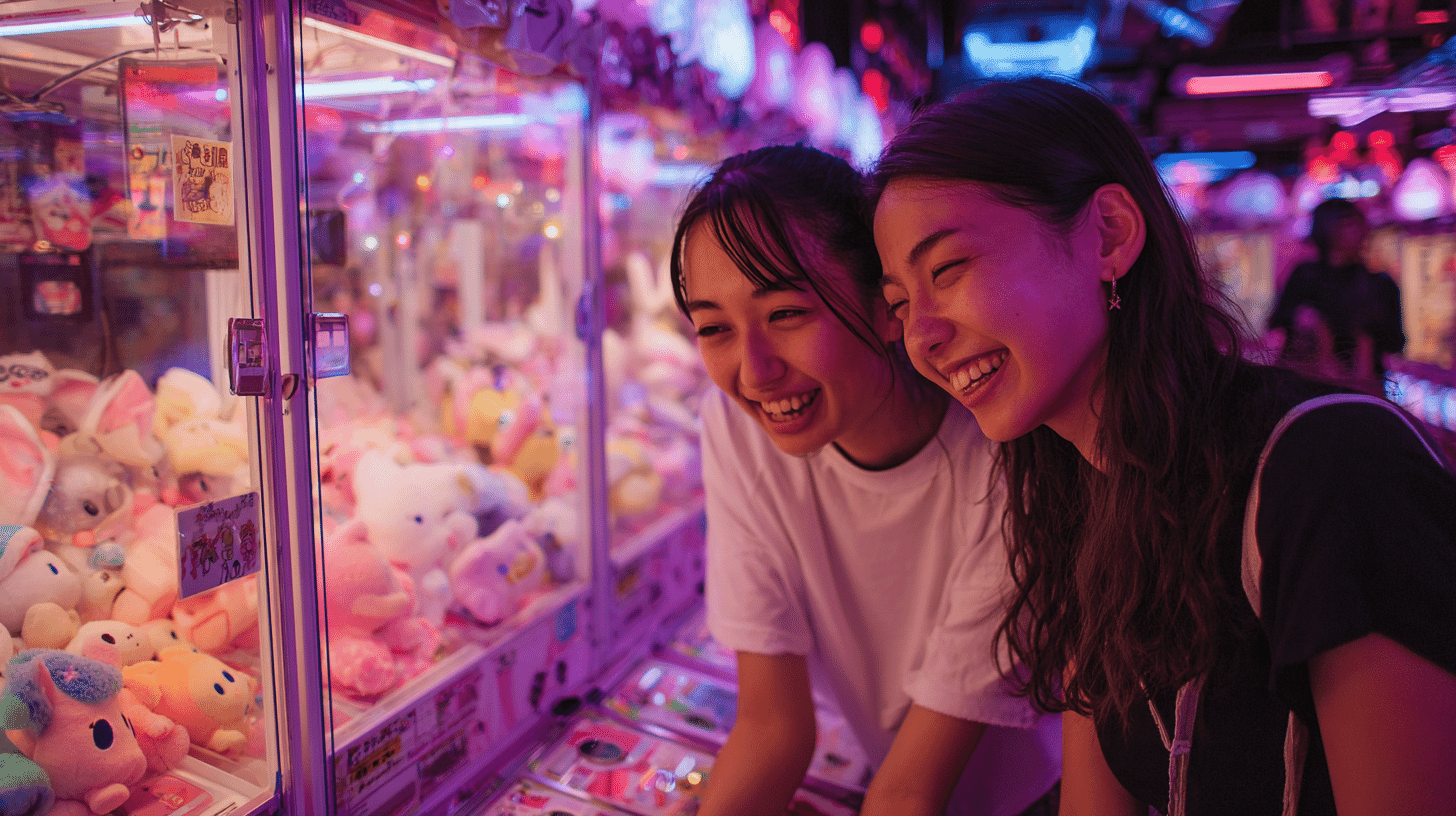
In the 1990s, Japanese game centers buzzed with an unmistakable energy. Lines of players waited their turn at Street Fighter II cabinets, while the sounds of shooting games and racing simulators filled the air. But step into a major Japanese arcade today, and you'll witness a dramatically different scene.
The floor space is now dominated by rows upon rows of crane games, known locally as UFO Catchers, their glass cases filled with colorful plushies, anime figures, and character merchandise. The legendary "fighting game temples" of yesterday have transformed into "prize game specialty stores."
What drove this remarkable transformation?
The Current State of Japan's Arcade Industry: Hard Numbers
Japan's arcade industry has been contracting for decades. According to Teikoku Databank research, approximately 8,000 arcade locations have closed over the past 10 years, with a staggering 30% disappearance rate in just the last five years alone.
From roughly 87,000 game centers in 1993, the number plummeted to approximately 10,000 by 2021. Bankruptcies and closures have increased for two consecutive years, reaching 18 cases in fiscal 2023, the highest in five years.
The picture is not uniformly bleak, though. National Police Agency figures show the number of arcades licensed under Article 5 of the entertainment business law rose in both 2022 and 2023, and the industry association's own count edged back up to 10,061 in 2021. What is vanishing is mostly the small neighbourhood venue; the business is consolidating into large stores.
Small and medium-sized neighborhood arcades have been hit especially hard. Rising electricity costs, coin exchange fees, and consumption tax increases have squeezed operating margins. Teikoku Databank's analysis puts operating profit at 6 yen for every 100 yen in sales.
Five Reasons Why Crane Games Became the Main Attraction
1. Dramatic Differences in Revenue Efficiency
The economics of a video cabinet and a crane cabinet barely resemble each other.
Fighting games and rhythm games typically cost 100 yen per play. A skilled player might occupy a machine for an hour or more, capping the venue's income. Moreover, modern arcade games require network connectivity, with operators paying transmission fees to manufacturers for each play. The actual profit remaining for the arcade amounts to just a few dozen yen per session.
Crane games, by contrast, complete a single play cycle in mere seconds to tens of seconds. Players repeatedly insert coins attempting to win prizes, generating continuous revenue. With prize costs estimated at 100-300 yen, just a few plays generate sufficient profit margins.
2. Shifting Customer Demographics
Traditional arcades catered primarily to hardcore gamers dedicated to mastering specific titles. Today's visitors are predominantly "casual users", couples, families, and groups looking for shared entertainment.
These customers can't easily abandon their companions to focus intensely on single-player games. Crane games, however, offer perfect group entertainment where spectators and players share the excitement together.
Young women have become notably visible at major chain locations, attracted by plushies and figures featuring popular anime characters. These customers represent entirely new demographics who previously had little connection to arcade culture.
3. The Rise of Home Gaming and Smartphones
Fighting games, racing games, and other titles once exclusive to arcades are now available in high-quality versions on home consoles and smartphones. The necessity of visiting game centers has diminished significantly for these traditional gaming experiences.
Crane games, though, cannot be replicated at home. Working the arm, watching the prize wobble, and carrying the thing out the door only happen if you go there.
4. Prize Quality Improvements and IP Power
Crane game prizes sit under a retail-value ceiling set by National Police Agency guidance. It was fixed at roughly 800 yen in 2001 and raised to roughly 1,000 yen by a notice issued in March 2022, the first change in about two decades.
Those extra 200 yen changed what could go in the cabinet. Oversized plushies, detailed figures, and limited-edition items unavailable for regular purchase have proliferated. These "can't buy even if you wanted to" rare prizes create powerful incentives.
Collaborations with popular anime franchises like ONE PIECE and Demon Slayer have proven especially successful since the 2010s, attracting people who don't normally play games but desperately want merchandise featuring their favorite characters.
5. Controllable Store Operations
Traditional arcade game revenue depends heavily on the popularity of individual titles. Expensive cabinets can become expensive decorations if games fail to attract players. Market trends shift rapidly, and today's hit may be tomorrow's dust collector.
Crane games allow operators more control over outcomes through prize selection and difficulty settings. Stock popular character merchandise, calibrate appropriate challenge levels, and stable returns become achievable.
Major Companies Leading Industry Transformation
GENDA has emerged as a rapid growth story in the arcade sector. Founded in 2018, the company acquired Sega Entertainment in 2020 and runs facilities under the GiGO brand. As of August 2024, the group operated roughly 800 sites in Japan and abroad including its karaoke business, plus about 1,400 unstaffed game corners.
GiGO stores center on crane games, with the Ikebukuro flagship boasting around 280 machines, among the largest concentrations in central Tokyo. Other major chains including Bandai Namco Amusement's "namco" and Taito's "TAITO STATION" have similarly expanded their crane game offerings.
Round One has rolled out "Giga Crane Stadium" zones at more than 50 sites nationwide. Kansai TV reported on one store that took crane machines from a small corner to 60% of the floor over three years and saw sales rise 1.8 times.
Online Crane Games: A New Market Frontier
Crane game popularity has extended into the digital realm. "Online crane games" allow players to remotely operate real machines via smartphone apps or browsers, with the market reportedly reaching approximately 30 billion yen by 2024.
Since Cyberstep launched the predecessor to "Toreba" in 2011, nearly 50 companies have entered this space. During COVID-19 restrictions, usage surged as homebound consumers sought entertainment options.
Won prizes ship directly to players' homes, creating new opportunities for those in rural areas or with limited time for arcade visits.
Inbound Tourism: Why Foreign Visitors Love Japanese Crane Games
Japanese crane games have become major attractions for international tourists. Convenience store chain Lawson started placing crane games in selected Kansai stores in October 2022, scaled up in spring 2024, passed 1,000 locations in August 2025, and reached 1,300 by that November, with sales running about 50% above target. Tourist areas like Kyoto and Odaiba report particularly strong foreign customer interest.
Several factors explain crane games' international appeal: exceptional prize quality, machine precision, and the "skill element" that rewards practice. Unlike pure luck-based games, crane games offer improvement through technique, perhaps appealing to gamers' competitive instincts.
Future Outlook: Where Is the Crane Game Market Heading?
According to the Japan Amusement Industry Association, prize game revenue reached 364.3 billion yen in fiscal 2023, up 8% year on year, and now accounts for 68% of all amusement facility sales. The "third boom" driven by anime and figure prizes through the 2010s has run long, and newer machine types aimed at families and children have industry figures calling the current phase a fourth.
Challenges remain, however. Rising prize costs, increasing electricity expenses, and ongoing operational pressures create difficult conditions. Customer complaints about difficulty levels and occasional controversies over settings also surface.
Where to strike the balance between customer satisfaction and margin is the open question. Online integration, exclusive prizes, and better handling of overseas visitors all sit on top of that same trade-off.
What the Shift Reveals About Gaming Culture
From "arcade game temples" to "crane game paradises." The shift tracks something specific: what a store can charge for being good at a game kept shrinking, and what you can carry home took its place.
Crane games have grown into a massive industry in Japan, but what about elsewhere? Does your country have game centers? Are crane games popular, or do other games dominate? What entertainment experiences are unique to arcades in your region? We'd love to hear about the arcade scene in your country, please share your experiences in the comments!
References
- https://news.yahoo.co.jp/articles/e17e3f89cdac98a93a1652a9d977ad3eb317da03
- https://www.sbbit.jp/article/cont1/178162
- https://toyokeizai.net/articles/-/750577
- https://president.jp/articles/-/85169
- https://www.4gamer.net/games/999/G999905/20240408005/
- https://note.com/hip_ivy6431/n/ne2e506b10907
- https://gentosha-go.com/articles/-/63205
- https://www.ktv.jp/news/himitsu/221101/
- https://soranews24.com/2025/08/14/crane-games-in-japanese-convenience-stores-getting-more-and-more-popular-especially-with-tourists/
- https://japantoday.com/category/features/lifestyle/lawson-adds-ufo-catcher-crane-games-to-convenience-stores-in-japan






Global Discussion
15 comments