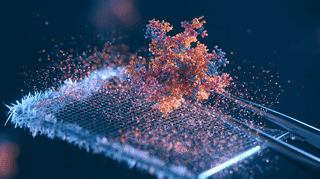
Cryo-electron microscopes flash-freeze proteins and build 3D models from millions of molecular images. What they see, what they do and what they cost, as a Kyoto university teaches undergraduates to use the data.
Restorers found 95 rolled sheets inside the secret Kannon of Shojuin Temple in Kyoto, one with ink writing not yet studied. Why Buddhist statues held objects, and how to visit the temple.
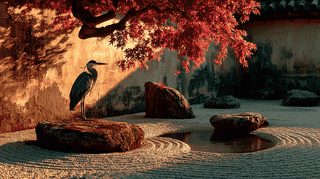
Studio Ghibli is opening a Zen exhibition in Kyoto, running October 3 to December 6, 2026, at the Kyoto City KYOCERA Museum of Art. Built around The Boy and the Heron, it traces back to a book of dialogues between producer Toshio Suzuki and three Zen monks. Here is what Zen actually is, and the surprising things it shares with Ghibli's films.
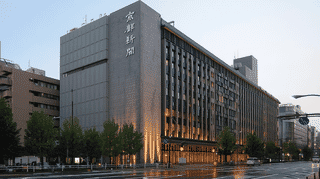
Avani makes its Japan debut in the former Kyoto Shimbun headquarters: a 240-room hotel in central Kyoto, opening around fiscal 2029, with a restaurant in the old printing-press hall.
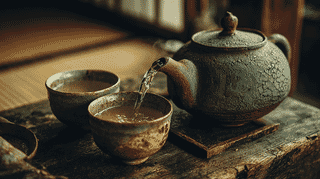
While matcha sells out worldwide, the kyusu, the side-handled teapot once found in every Japanese home, is quietly disappearing. What a kyusu is, where its odd shape came from, why it fell out of use, and why you should try a cup brewed in one when you visit Japan.
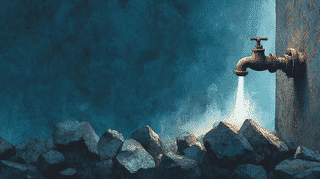
Seven months after metal-organic frameworks (MOFs) won the 2025 Nobel Prize in Chemistry, where does the technology actually stand? A status check on Atoco's air-to-water devices, scaled-up carbon capture by Svante and Kobe Steel, China's lead in MOF research output, and why an Atomis executive says a Nobel does not lower the hurdles.
Kyoto University spinout Toregem Biopharma will begin Phase 2 trials of TRG035, the world's first tooth-regeneration drug, in summer 2026, dosing 24 children with congenital tooth agenesis. A pre-Series C round of ¥850 million brings cumulative funding, grants included, past ¥4.6 billion. A look at how Japan's university-biotech funding stack works, and why a super-aged society may produce this kind of innovation first.
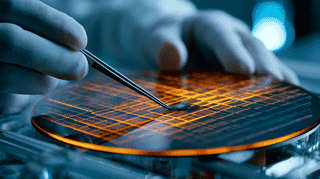
Kyoto University associate professor Mitsuaki Kaneko is commercializing SiC-based mixed-signal LSIs that work where silicon fails. His complementary JFET approach targets ADC samples in 2028-2029, opening a niche the big five SiC power players have largely ignored.
Free iOS collection ONE-DOT GAMES, built on the minimalist concept Kenji Eno (D, Enemy Zero) left behind in 2009, launched on May 17, 2026. University students who never knew him are now carrying the torch.
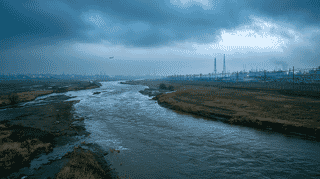
Japan's Environment Ministry confirmed PFAS contamination above national limits at 629 sites across 26 prefectures in fiscal 2024, including locations near U.S. military bases, factories, and Self-Defense Force facilities. A UN special rapporteur has voiced 'most serious concern,' while Japan's standards lag far behind those of the U.S. and EU.
Researchers at Kyoto University used Japan's near-total medical insurance database to trace esotropia (inward-turning eyes) cases from 2014 to 2019, the years smartphones swept the country. Incidence rose from 32.26 to 36.61 per 100,000 person-years; surgeries climbed from 3,061 to 3,743. The link with smartphone penetration is strong, the absolute rise is small.
Students at Daigo Junior High in Fushimi-ku, Kyoto have collected aluminum cans from their homes since 1994 and turned them into cash for the Kansai Guide Dogs for the Blind Association. Over 30 years the donations have reached 6,188,582 yen (about $39,400), enough to train two guide dogs. We unpack the school culture and the funding structure that make a 30-year relay possible.
Researcher Yohei Kawai and Professor Shin Kaneko at Kyoto University's CiRA have established a way to induce helper T cells, the conductors of the immune system, from human iPS cells without mouse feeder cells. The paper ran in Molecular Therapy on January 20, 2026. Why this matters against the three structural limits of CAR-T therapy, and where Japan stands against Fate Therapeutics in the US and China's sheer trial volume.
Yoshitaka Amano, the legendary illustrator behind Final Fantasy's iconic art, has donated fusuma (sliding door) paintings to Kyoto's Fushimi Inari Shrine. From April 25 to May 10, 2026, visitors can see these never-before-shown works themed around 'Light and Darkness.' Admission about $6.30. A rare opportunity for fans and art lovers alike.
Susumu Kitagawa of Kyoto University, joint winner of the 2025 Nobel Prize in Chemistry, has long advocated turning air itself into a resource through metal-organic frameworks (MOFs). His porous crystals can sort and capture CO2, water vapor and other molecules, putting Japan in direct conversation with players like Switzerland's Climeworks in the rapidly evolving direct-air-capture industry. Here is how a basic-science breakthrough from Kyoto could rewrite the economics of decarbonization.
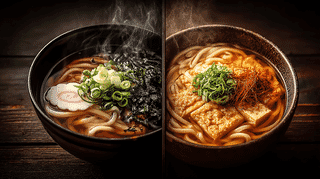
"Your broth is jet-black like motor oil!" "Yours is so pale you can see the bottom!" Japan's centuries-long East vs West udon war explained, soy sauce science, water chemistry, and a taste boundary discovered at Sekigahara.
Kyoto hotels report a 10% drop in Japanese guests for the 3rd straight year while foreign visitors rose 14.6%. Himeji Castle's new $16 dual pricing doubled revenue in month one. Data-driven analysis of Japan's tourism polarization crisis.
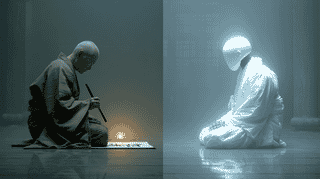
Kyoto University's AI-powered robot monk Buddharoid now offers spiritual guidance at a Kyoto temple, trained on ancient Buddhist scriptures. With 30% of Japan's 77,000 temples projected to vanish by 2040, can artificial intelligence save Buddhism? From the $1M Mindar android to BuddhaBot chatbots reaching Bhutan, we explore where faith meets technology.
The Japanese government's JAPAN SUI COLLECTION project made its European debut in Paris in March 2026, showcasing Living National Treasure lacquerwork, Sendai Tansu cabinets, and a Junko Koshino fashion show at Le Royal Monceau. Here's how 'Sui', Japan's philosophy of refined elegance, captivated 200 European leaders.
Japan's Cabinet approved a new 5-year tourism plan expanding overtourism countermeasures from 47 to 100 regions by 2030, tripling the departure tax to ¥3,000 ($19). Learn about specific measures in Kyoto, Mt. Fuji, and Kamakura, plus how to enjoy Japan responsibly.