🍃 Studio Ghibli is opening an exhibition about Zen. Not a new film, not a theme-park ride. It's a quiet show in Kyoto that asks how to get through this era. It runs this autumn at the Kyoto City KYOCERA Museum of Art, built around The Boy and the Heron and a single idea: that Ghibli's films and Zen have been pointing at the same thing all along. So what does a heron in a tower have to do with a centuries-old meditation tradition? More than you might think.
A Ghibli show that asks you to slow down
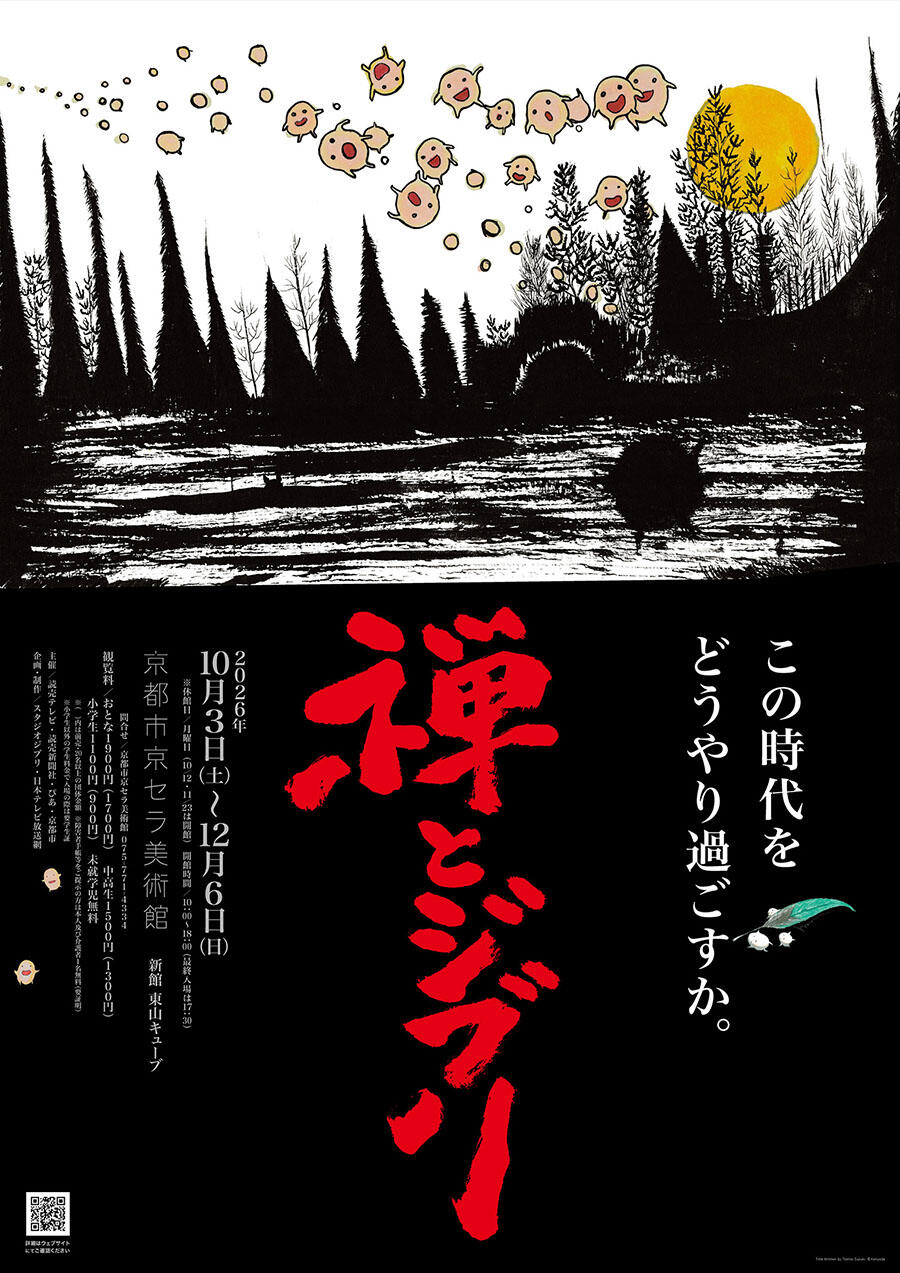
Source: Studio Ghibli
From October 3 to December 6, 2026, the Kyoto City KYOCERA Museum of Art (Higashiyama Cube, New Wing) will host "Zen and Ghibli," a show the studio itself calls "grown-up Ghibli." It opens daily from 10am to 6pm (last entry 5:30pm), closed Mondays, with tickets at ¥1,900 for adults and university students, ¥1,500 for junior and senior high schoolers, and ¥1,100 for elementary schoolers. Advance tickets go on sale August 1.
It centers on The Boy and the Heron (2023), Hayao Miyazaki's Oscar-winning feature and, the organizers say, the Ghibli film that drew the largest overseas audience in the studio's history. This isn't a standard retrospective. Instead, it gathers famous lines, scene stills, and calligraphy by producer Toshio Suzuki to surface a "way of seeing" that runs underneath Ghibli's work as a whole.
The tagline reads, roughly, "How do you get through this era?" And shortly after it closes, the same gallery hosts a companion show: "Hakuin's Zen," also produced by Ghibli, running December 17 to January 11, 2027. Hakuin was an Edo-period Zen monk famous for his brushwork, and the pairing brings the studio's understated "Zen series" into focus.
It started with a book
The exhibition traces back to a 2018 book, also titled Zen and Ghibli, written by Suzuki. His conversation partners were three Rinzai-school Zen monks: Shinsuke Hosokawa, abbot of Ryuun-ji; Nanrei Yokota, head of the Engaku-ji branch in Kamakura; and Sokyu Genyu, a temple abbot who is also an Akutagawa Prize–winning novelist. The book grew out of a year-long series in the monthly magazine Nagomi.
In it, the four read Ghibli films like Princess Mononoke and Grave of the Fireflies through Zen, and read Zen through Suzuki's decades alongside Miyazaki and the late Isao Takahata.
One line became the show's spine. Suzuki recalls that in forty years working with Miyazaki, the two have never once talked about the past. It is always, he says, "here, now."
What "Zen" actually means
Outside Japan, "Zen" has floated loose of its origins, stamped on yoga studios, minimalist furniture, and focus apps. The real thing is older and stranger than the branding.
Zen is a school of Buddhism that traveled from India to China (where it's called Chan) and reached Japan centuries ago, splitting mainly into the Rinzai and Soto lines. What sets it apart from much of Buddhism is a distrust of words. Doctrine and scripture matter less than direct experience: sitting in meditation, or zazen, and giving full attention to the present instead of replaying the past or rehearsing the future. "Here, now" isn't a slogan. It's the practice.
You've probably already met Zen without the label. The spare rock garden at Ryoan-ji, the tea ceremony, ink-brush painting, the seventeen syllables of a haiku all carry its fingerprints: empty space, restraint, and the sense that what's left out matters as much as what's there. With the global mindfulness boom, that aesthetic of stillness is having another moment.
Where the heron meets the monk
Here's the claim the exhibition makes.
Ghibli films rarely tell you who the villain is. Princess Mononoke refuses to take a side between the forest and the iron-working town. The Boy and the Heron drops you into a world it never fully explains and ends without tidy answers. Plenty of viewers walk out unsure what they just watched, and oddly moved anyway.
That, the show argues, isn't sloppy storytelling. It's a stance. Zen prizes not-dividing (refusing to split the world into good and bad), not-deciding (not rushing to slap on a label), and seeing things as they are. Ghibli's reluctance to resolve, its ease with ambiguity, the breathing room (the ma) it leaves between events: all of it lines up with how a Zen practitioner is trained to look.
There's an echo in the working process, too. In the book, Suzuki describes how he and Miyazaki throw out their old methods at the start of each film, refusing to lean on past success. That deliberate forgetting, letting go of what you've already got, is close to a Zen ideal called honrai muichimotsu: "originally, not one thing," the idea that clinging to what you possess (your own track record included) is the real source of suffering.
Why Kyoto, and why now
The show opens in Kyoto on purpose. This is a city where Zen temples and Zen-shaped habits are still part of ordinary life. The timing is deliberate as well: as mindfulness keeps spreading worldwide, the organizers are betting that a familiar lens, Ghibli, can make a slippery, word-resistant idea feel personal.
In Japan, "here, now" lands as both ancient wisdom and a very modern coping strategy for an exhausting age. Is there a film, an artist, or a tradition in your country that teaches you to stop and just look?



Global Discussion
4 comments