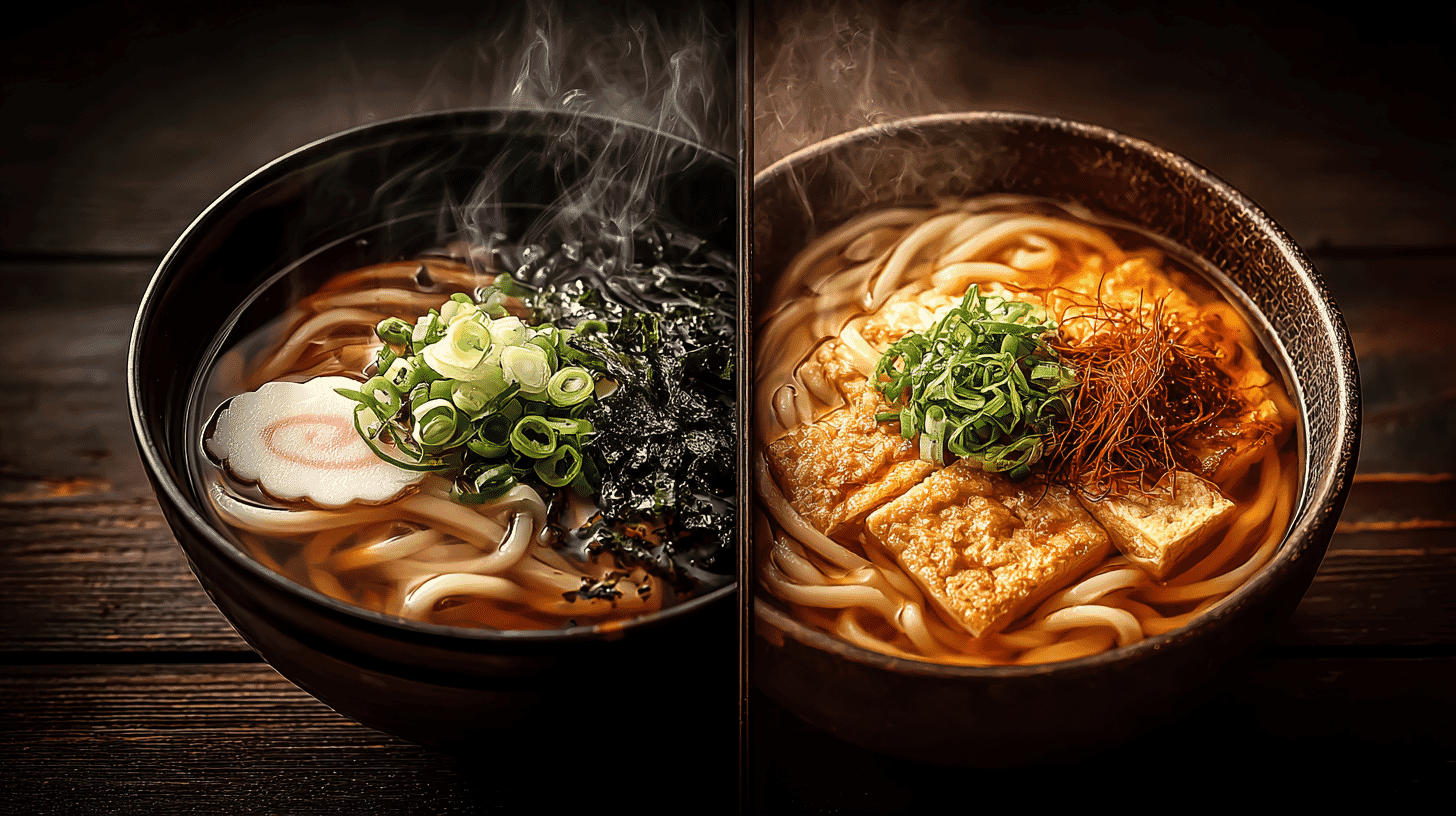
Japan is a famously polytheistic country, eight million gods living together in peaceful coexistence. Shinto, Buddhism, Christianity, and Islam all share the same spiritual zip code without drama. But one war has ripped this nation in half for 400 years and shows no sign of ending: the Great East-West Udon Broth War.
"Why is Kanto's broth so jet-black?!" "Why is Kansai's broth so pale you can see the bottom?!" These are the trigger phrases. Utter either one at a peaceful dinner table in Japan and you will instantly turn the room into a historical battlefield. Here is the full, gloriously absurd report on Japan's longest-running internal conflict.
Just Look at Them. They're Different Foods at This Point
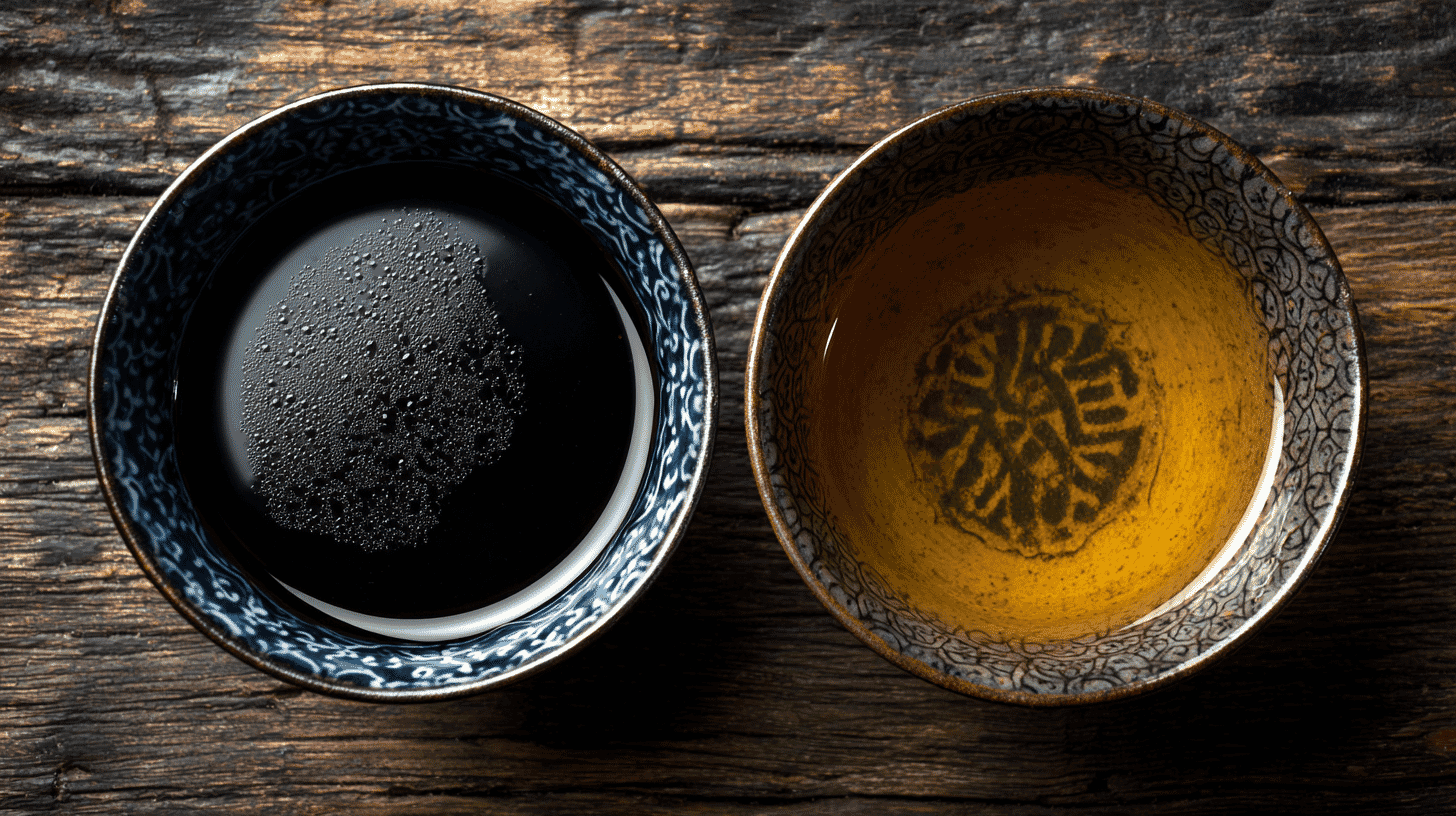
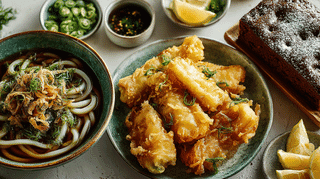
Picture two bowls of udon side by side.
Kanto (Eastern Japan) udon broth: Jet-black. You cannot see the noodles at the bottom. Show it to someone from Kansai (Western Japan) and they will ask, with genuine concern, "Is this a punishment game?"
Kansai udon broth: Transparent amber, almost clear. You can see every individual noodle from the top. Show it to someone from Kanto and they will ask, equally concerned, "Did you forget to add the broth base?"
Both dishes are called "udon," and both broths are called "tsuyu." Yet they look like completely different foods. Whether this represents Japan's glorious culinary diversity, or a nation that couldn't even standardize a noodle soup for 400 years, is still hotly debated (just kidding, nobody actually debates this, they just eat their preferred version and insult the other one).
The Ritual Insults Are Almost Artistic at This Point
For four centuries, Eastern and Western Japan have been exchanging nearly identical insults about each other's broth. It has become a kind of performance art.
Kansai's classic opener: "I can't eat that jet-black udon. It's just salty, that's all it is." Kanto's textbook rebuttal: "Just because it's black doesn't mean it's salty. Actually, Kansai's 'light' soy sauce has HIGHER salt content than Kanto's dark soy sauce. So there!" Kansai's counter-rebuttal: "The salt concentration of the soy sauce itself is not the same as the salt in the final broth, you absolute fool." Kanto's fallback: "...but it's still really black though."
This loop continues in 2026. Both sides have been arguing past each other for 400 years, and neither side has fully understood what the other side is actually eating. Incredible cultural achievement.
Plot Twist: Kansai's "Light" Soy Sauce Is Actually Saltier
Here is a fact that even most Japanese people don't know:
Dark soy sauce (濃口・koikuchi, mainly Kanto): ~16% salt Light soy sauce (薄口・usukuchi, mainly Kansai): ~18% salt
Yes, Kansai's famously pale, delicate-looking soy sauce is actually saltier than Kanto's bold dark soy sauce.
The name "light" (usukuchi / 薄口) refers to the color, not the flavor. To keep the color pale, brewers suppress fermentation and add more salt as a preservative. The result is a lighter-colored, saltier soy sauce. It was specifically designed to season food without darkening the ingredients, important for Kansai's aesthetic of showcasing natural colors.
Armed with this factoid, Kanto partisans love to corner Kansai friends at dinner parties and shout "AH-HA! Your soy sauce is saltier!" Unfortunately, Kansai's comeback is airtight: total broth saltiness depends on how much soy sauce you use, not just the concentration of the soy sauce itself.
Kanto uses more dark soy sauce. Kansai uses less light soy sauce. The result?
The total salt content of Kanto and Kansai udon broths is roughly equal.
Four hundred years of war. The final verdict: "Pretty much the same saltiness." This is what philosophers call the void.
The Real Reason: It's Literally the Water
So why did two different soy sauce cultures develop in the first place? The answer is Japan's water.
Japan is generally a "soft water" (軟水) country by global standards, but within Japan there is a difference: Kanto water is slightly harder, while Kansai water is softer. This is because the volcanic ash soil of the Kanto plain (the 関東ローム層 Kanto loam layer) dissolves extra minerals, calcium and magnesium, into the water. Kyoto's water, by contrast, is famously soft and is a huge reason Kyoto became the spiritual home of Japanese fine cuisine.
This single geological difference wrecked any hope of East-West culinary unity:
Soft water (Kansai):
- Kelp (konbu) expands quickly and releases its umami (glutamates) into the broth beautifully
- Result: A strong kelp-based dashi culture developed
- Because the dashi itself is so flavorful, you only need a tiny bit of soy sauce, hence "light" soy sauce was invented to season without darkening
Harder water (Kanto):
- Calcium in the water reacts with kelp's umami compounds, creating off-flavors and scum
- Kelp dashi just doesn't work well
- So Kanto cooks fell back on bonito flakes (katsuobushi), which work fine with harder water
- But bonito alone has a slightly harsh, pungent aftertaste
- To mask it, Kanto poured in LOTS of dark, assertive soy sauce
- Result: The broth turned black
In other words, Kanto's jet-black broth isn't an aesthetic choice, it's a defensive choice. The blackness is there to cover up water-related problems. Somewhere in that history is the tragedy of a regional cuisine cornered by geology into making its signature dish look like motor oil.
The Geography That Sealed the Divide
On top of the water issue, Edo-period logistics delivered the knockout punch.
During the Edo period (1603-1868), premium kelp from Hokkaido was shipped south along the Sea of Japan via the Kitamae-bune (北前船 / "northern trade ships") and arrived in massive quantities at Osaka and Kyoto. Kansai became Japan's biggest kelp consumer, institutionally.
Meanwhile, Edo (modern Tokyo) was a major bonito production and consumption hub. Samurai stationed in Edo during the sankin-kōtai (参勤交代 / alternate attendance) system stockpiled bonito flakes as portable preserved food.
The equation was set:
- Kansai = Soft water × Kelp economy × Light soy sauce × Transparent broth
- Kanto = Harder water × Bonito economy × Dark soy sauce × Jet-black broth
This formula was cemented in the Edo period and has remained undisturbed for 400 years. The fact that Japanese people have been following this regional template without complaint for four centuries is, in its own way, kind of impressive.
The Taste Border at Sekigahara (Yes, THAT Sekigahara)
Where exactly does the East-West divide happen?
The answer was determined not by geographers or historians, but by instant noodle engineers at Nissin Food Products in the 1970s. Developing their new cup udon "Donbei," Nissin's team boarded the Tokaido Shinkansen (the bullet train) and got off at every single station between Tokyo and Osaka, eating udon at stand-up noodle shops near each platform, taking notes on broth color and flavor.
This is, genuinely, one of the most dedicated market research projects in corporate food history.
The result: The taste border is located around Sekigahara, Gifu Prefecture.
Yes, THAT Sekigahara, the battlefield where Tokugawa Ieyasu defeated Ishida Mitsunari in the year 1600 and unified Japan under the Tokugawa shogunate. The political "divide of the realm" and the udon broth "divide of the realm" are the exact same geographical point. Japan's history and geography miraculously lining up is a recurring theme, and this one might be the most delicious example.
Today, Donbei packages are marked with "E" (East) or "W" (West):
- W (Western Japan): Toyama, Ishikawa, Fukui, Shiga, Nara, Wakayama, and west. Light soy sauce base, kelp + bonito blended dashi, delicate amber color
- E (Eastern Japan): Niigata, Nagano, Gifu, Aichi, Mie, and east. Dark soy sauce base, intense bonito dashi, dark color
- Hokkaido special edition ("Kita no Donbei" / Northern Donbei): Uses Rishiri kelp, made for Hokkaido's specific taste preferences
In 2024, Nissin went further and split every single component, noodles, broth, toppings, and seasoning spice, into E and W versions. The E-version shichimi (seven-spice powder) is red chili based; the W-version is Japanese pepper (sanshō) based. Corporate commitment to regional preference at this level is genuinely rare in consumer goods.
For pilgrims, the town of Sekigahara itself has restaurants (like Yamabikoji) that serve both Kanto-style AND Kansai-style udon in the same building. Setting up shop on the "divide of the realm" is pure marketing genius.
Uncomfortable Truth: Those "Jet-Black Tokyo Udon" Photos Are Kind of a Lie
Here's an awkward correction to 400 years of insults: when Kansai people make fun of "Tokyo's jet-black udon," the photos they're usually looking at were taken at stand-up soba (buckwheat noodle) shops at train stations or under railway arches.
These shops are primarily soba restaurants that also serve udon as a side option. And here's the key: they use the same broth for both soba and udon. In Edo-era Tokyo, soba culture was king, the proper way to eat soba was to dip the cold noodles briefly into an intensely dark, salty sauce. That sauce was never designed for udon. When these shops dump soba sauce onto udon noodles, you get the iconic "Tokyo udon that looks like motor oil" photo.
Actual Kanto-style udon specialists, traditional hand-pulled udon shops, old sweet shops that serve udon, use a much more moderate amber-colored bonito broth. Nowhere near as black as the viral Kansai-insult photos.
In other words, much of the "real Kanto udon" that Kansai has been mocking for 400 years was technically soba-broth udon, a specific Tokyo street-food phenomenon, not the general Kanto culinary standard. Someone should tell the Kansai people, but they're having too much fun mocking to stop now.
Modern Unification Efforts (and Who's Winning)
Recent decades have seen nationwide udon chains, Marugame Seimen and Hanamaru Udon, both originally from the Sanuki udon tradition of Kagawa Prefecture (western Japan), expand aggressively into Tokyo and the rest of eastern Japan.
Since Sanuki udon broth is pale, light-soy-sauce-based, and kelp-influenced (very much in the Kansai tradition), Western Japan is quietly winning the cultural war one chain location at a time. If you eat udon at a major chain in Tokyo today, you are statistically likely to be eating a Kansai-style broth. Ishida Mitsunari, defeated at Sekigahara in 1600, is finally getting his revenge, via instant udon chains.
Meanwhile, kitsune udon (topped with sweet simmered fried tofu), a pure Kansai invention, has become a nationwide standard. Kanto eats it happily. Defeat, accepted gracefully.
One final landmine: in Kanto, "tanuki udon" means udon with tempura crumbs on top. In Kansai, "tanuki" means soba with sweet fried tofu. The same word refers to different dishes on opposite sides of Sekigahara. Japan's food culture has hidden hostile translation errors built into its own language. This country is glorious and ridiculous in equal measure.
Who Is Winning, Really?
Let's score it:
- Visual impact: Kanto wins (black is more photogenic for social media)
- Ingredient prestige: Kansai wins (premium kelp vs. common bonito)
- Practicality: Tie (both are delicious)
- National chain dominance: Kansai leading (Sanuki udon chains conquering Tokyo)
- Foreign visitor shock factor: Kanto wins (nothing shocks a tourist like broth that looks like coffee)
- Historical winner: Kanto (Tokugawa won Sekigahara; Tokyo became the capital)
- Water quality winner: Kansai (soft water is globally recognized as ideal for dashi)
Final score: Basically tied. And because it's basically tied, the war will never, ever end. Meiji, the chocolate company behind Japan's other great divided-nation war (Kinoko no Yama vs Takenoko no Sato), has figured out that eternal 50-50 rivalry is the best marketing strategy. Nissin has accidentally stumbled onto the same principle with Donbei.
Try Both. Seriously.
For international visitors wanting to experience this 400-year war firsthand, we recommend one of three pilgrimages:
- Visit Sekigahara in Gifu Prefecture and eat both Kanto-style and Kansai-style udon in the same town (ultimate cross-border experience)
- Buy both E-version and W-version Donbei at any supermarket and taste-test them at home (~200 yen each, about $1.25, unbeatable value per life-changing experience)
- Eat at both a Tokyo stand-up soba shop and an old-school Osaka udon shop (Tokyo ~500 yen / $3.15, Osaka ~600 yen / $3.77)
The same dish, in the same country, presenting two completely different personalities depending on which side of a 400-year-old battlefield you're standing on, this is the essence of Japan's "narrow country, infinite diversity" food culture.
What About YOUR Country?
Does your country have a regional food war like this, where the same dish looks or tastes completely different depending on which region you're in?
American BBQ is the obvious candidate: Texas beef brisket vs. Carolina pulled pork vs. Kansas City sauce, an entire country divided by smoke. Italy's northern cream-based pasta vs. southern tomato-based pasta. Mexico's northern wheat tortillas vs. southern corn tortillas. France's butter-based northern cuisine vs. olive-oil southern cuisine. India's North (wheat, creamy curries) vs. South (rice, tangy curries). The UK's fish-and-chips regional variations.
We want to hear about yours. Which way do you lean in your country's food rivalry, and has it ever threatened a friendship?
(For the record, this author is a "loves both" centrist, which in Japan makes you the most reviled demographic of all, "indecisive person who avoids taking a stand." We're a small but proud minority.)



Global Discussion
14 comments