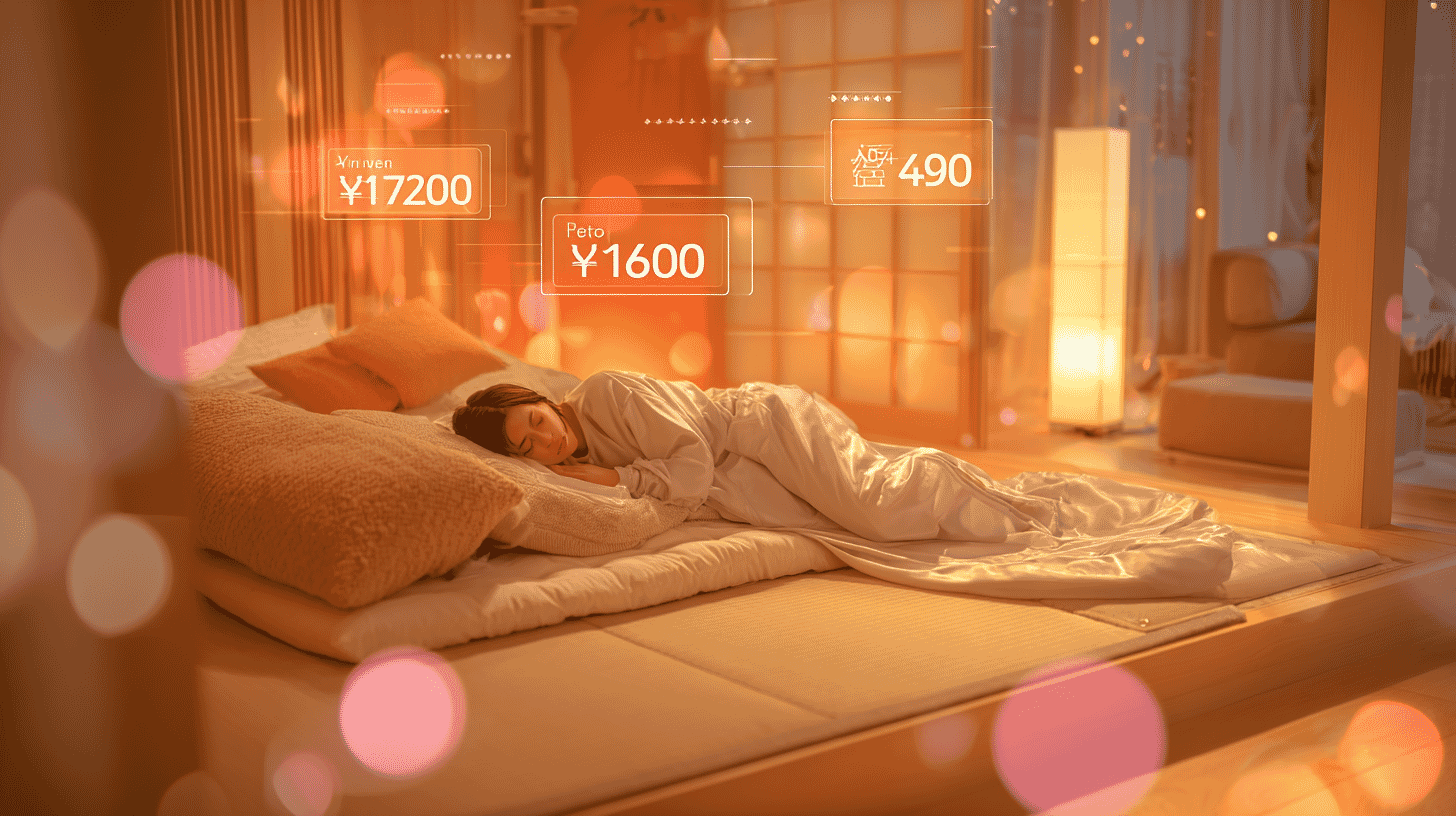
Imagine pajamas that actually help your body recover while you sleep. In Japan, "recovery wear" (clothing woven with minerals that emit far-infrared rays to boost blood circulation) has become such a phenomenon that it was nominated for the country's Word of the Year. Budget retail giants have since pushed entry prices into single digits, and Japan's tired workforce is buying.
What Is Recovery Wear? The Science Behind "Healing Pajamas"
Recovery wear refers to functional clothing with ceramics or mineral particles embedded in the fabric. These materials absorb body heat and re-emit it as far-infrared radiation, which promotes blood circulation and supports fatigue recovery. Wearers typically use them during sleep or relaxation.
The concept got a major boost in 2022 when Japan's Ministry of Health, Labour and Welfare officially classified "household far-infrared blood circulation promotion clothing" as a general medical device. This meant that manufacturers who could demonstrate scientific evidence could legally market their products with health claims like "promotes blood circulation" and "aids fatigue recovery." The classification opened the floodgates, and dozens of companies rushed to enter the market.
The current market leader is BAKUNE (meaning "deep sleep" in Japanese), made by wellness brand TENTIAL. Endorsed by popular actor Sho Sakurai, BAKUNE sells at around $165 per set (top and bottom). Other major players include VENEX, SIXPAD, MTG's "ReD" brand, and ReFa VITALWEAR, all backed by heavy TV advertising campaigns.
A Market Set to Grow 9x by 2030
According to the Japan Management Association Research Institute, the recovery wear market was valued at $125 million in 2024 and is projected to reach approximately $1.13 billion by 2030, a nearly ninefold increase.
The broader "recovery and anti-fatigue" market is even larger. The Japan Recovery Association estimates it reached $51 billion in 2025 and could exceed $140 billion by 2035, encompassing food, clothing, housing, and exercise-related products.
Why Japan? The country faces a perfect storm of fatigue-inducing factors. Japanese workers log some of the longest hours in the developed world, with average sleep times among the shortest in OECD nations. The aging population means more people dealing with chronic fatigue and poor circulation. Clothing that promises recovery simply by being worn landed on ground that was already prepared.
Budget Chains Crash the Party
Workman's "Mediheal": $25 for a Full Set
Workman's "Mediheal" is not new. The chain had been selling it to trade customers since spring 2021, reaching 1.7 million pieces cumulatively by spring 2025. What changed was autumn 2025, when Workman put 24 items in front of general shoppers at $13 per piece, or about $25 for a full set. Against BAKUNE's $165, the gap speaks for itself.
Between September and December 2025, 3.19 million items sold out across just 20 actual selling days, generating $36 million in revenue. Stockouts were so frequent that product was on shelves for only a handful of days. For 2026, Workman is putting 21 million items into the channel and targeting $233 million in sales, with TV personality So Takei as ambassador and a stated goal of leading the category on both volume and revenue by 2027.
Nitori's "N-Miraku": Recovery Wear from a Furniture Store
Nitori, Japan's largest furniture and home goods chain, entered the fray in late January 2026 with its "N-Miraku" series, selling it at Nitori stores nationwide, Shimachu and Homes outlets and the Nitori online shop. A short-sleeve T-shirt runs $10, long-sleeve tops and pants $13 each.
The products use high-purity ceramics bonded to raw material fibers, and they are registered as general medical devices. A furniture store now sells recovery you wear, right next to the bedding.
Aeon's "EX Celiant": The Supermarket Giant Returns
Aeon, the supermarket giant, is actually a veteran. Its TopValu line began using Celiant fabric in 2018, launched "Celiant Wear" in March 2019 and registered it as a general medical device that autumn, at one point targeting 1 million cumulative items by August 2021. According to an analysis in Gendai Business, development then stalled as pandemic-era demand for home clothing faded.
On December 11, 2025, Aeon returned with "EX Celiant," putting men's and women's innerwear at $22 each into about 190 stores. In February 2026, Junko Odajima, the executive officer heading Aeon Retail's apparel division, said the company aims to grow sales across its Celiant lines tenfold in fiscal 2026 and a hundredfold by fiscal 2030.
Growing Pains: Recalls and Skepticism
Rapid growth has brought challenges.
In November 2025, Relive Inc., whose "Relive Shirt" was popularized through celebrity TV commercials, announced a voluntary recall of about 480,000 "Relive Shirt α" and "Relive Spats α" items. An August 2025 revision to the health ministry's Q&A guidance had made clear that garments with far-infrared properties applied only to part of the fabric, by printing, do not qualify as this type of medical device. No health problems were reported, but the case shook the industry.
Consumer skepticism persists as well. Distinguishing scientifically backed products from marketing claims is difficult, and whether a product has been notified as a "general medical device" is becoming an important yardstick.
Whether budget and premium products differ in effect is also debated. Some reviewers say they felt almost nothing from Workman's Mediheal, while others argue the low price makes it worth trying.
Why This Is Uniquely Japanese
The way Japan has embraced recovery wear reflects a particular view of health.
Japanese has a word for the state of being neither ill nor well: mibyo. It describes the condition a lot of workers live in, and recovery wear sits exactly in that gap, more than clothing but short of medicine. Alongside it runs yojo, the centuries-old habit of tending to the body through daily routine rather than through doctors. Recovering by changing your pyjamas fits that frame without much friction.
Housing helps too. In apartments considerably smaller than Western ones, a product that takes up no additional space at all has an obvious edge over a massage chair or a home gym.
In the country where "otsukaresama desu" is the most common greeting, outsourcing recovery to your clothes is a fairly Japanese way of solving the problem.
Update: Workman Now Targets 34 Million Pieces a Year
Workman's momentum continued after this article was published. Mediheal sold 1.58 million pieces in January, 1.56 million in February and 2.08 million in March, for a three-month total of 5.22 million. In results for the year to March 2026, the line had reached about 6.83 million pieces and roughly ¥11.5 billion (about $77 million) in sales since its September 2025 launch, helping the company post record results.
At its autumn-winter launch event on September 8, Workman said cumulative sales since January 2026 had reached 12 million pieces and raised its annual plan from February's 21 million pieces and ¥35 billion to 34 million pieces and ¥50 billion. Senior managing director Tetsuo Tsuchiya declared "total victory" in the recovery wear market and is now pushing its top-end "Mediheal Cosmos" model at ¥2,900. The company wants to move beyond pyjamas and loungewear into suits and workwear, for recovering while you work.
With the price floor gone, the next contest is shifting to when people wear it.
Does your country sell clothes that promise to take away fatigue just by wearing them? What do you do to recover from a tiring day?
References
- https://gendai.media/articles/-/162335
- https://womanslabo.com/market-251201-2
- https://senken.co.jp/posts/workman-250904
- https://www.ryutsuu.biz/commodity/s021011.html
- https://prtimes.jp/main/html/rd/p/000001359.000073913.html
- https://prtimes.jp/main/html/rd/p/000005541.000007505.html
- https://www.ryutsuu.biz/commodity/s021816.html
- https://prtimes.jp/main/html/rd/p/000000085.000085299.html
- https://coki.jp/article/column/62405/
- https://www.wwdjapan.com/articles/2398722
- https://www.advertimes.com/?p=556820






Global Discussion
15 comments