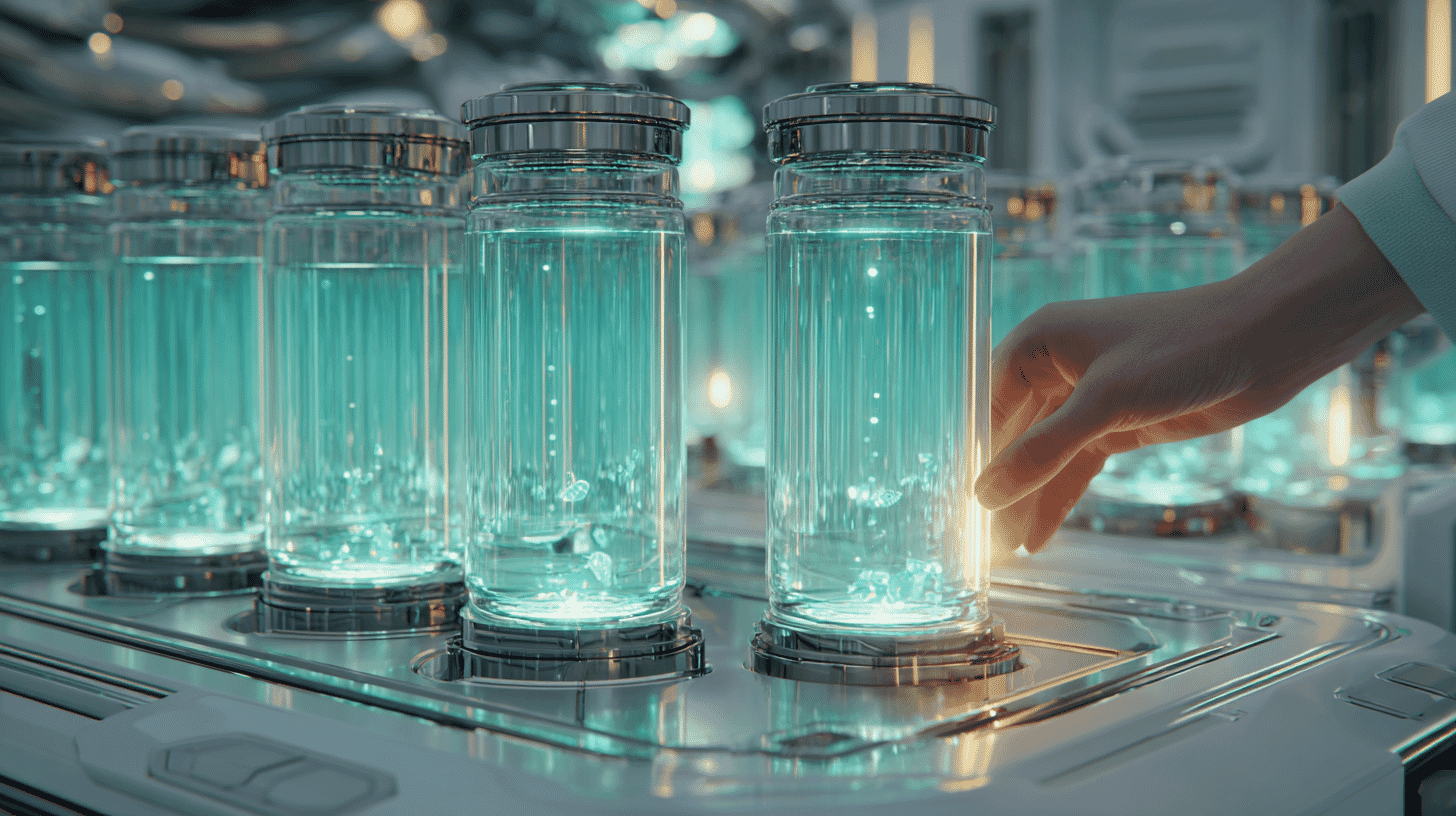
What if you could bank your own "universal cells," like a savings account for your future health? In April 2026, a new service in Japan started doing exactly that: creating and cryopreserving your personal iPS cells so they're ready when regenerative medicine catches up.
What Is iCELL BANK?
On April 7, 2026, NMT Inc. (Tokyo) launched promotional operations for "iCELL BANK," a personal iPS cell banking service. Working with partner clinics including Tokyo Asbo Clinic, the service creates iPS cells from a client's blood sample and stores them in cryogenic freezers for future medical use.
iPS cells (induced pluripotent stem cells) are ordinary cells, typically from blood, that have been reprogrammed into a versatile, almost embryonic state. They can theoretically become any cell type in the body: heart muscle, neurons, retinal tissue, cartilage, you name it. The technology was pioneered by Professor Shinya Yamanaka at Kyoto University, earning him the Nobel Prize in Physiology or Medicine in 2012. It remains one of Japan's most significant contributions to modern science.
The key advantage of banking your own iPS cells is immunological compatibility. When doctors transplant cells from another person, the recipient's immune system may attack them as foreign invaders. Cells derived from your own iPS cells avoid this rejection problem entirely, making them ideal for personalized regenerative therapy.
The Safety Technology Behind the Service
The cell processing for iCELL BANK is handled by ID Pharma, a subsidiary of the IROM Group. Their patented Sendai virus vector technology (branded CytoTune-iPS) is considered a gold standard for iPS cell generation worldwide.
Most viral vectors carry a risk of inserting genetic material directly into a cell's DNA, potentially causing mutations or cancer down the line. The Sendai virus vector, however, is an RNA virus that operates outside the cell nucleus. It delivers the reprogramming factors without ever touching the host DNA, a critical safety feature for a service meant to store cells for decades of potential future use.
Beyond Storage: Culture Supernatant and HLA Testing
iCELL BANK offers more than just freezing your cells. The "culture supernatant", the nutrient-rich liquid left over after iPS cell cultivation, contains growth factors, cytokines, and exosomes with reported anti-inflammatory, anti-aging, and skin-rejuvenating properties. This positions the service at the intersection of regenerative medicine and the booming wellness/beauty industry in Japan.
Additionally, the service includes HLA (Human Leukocyte Antigen) typing, which can reveal predispositions to certain diseases. Think of it as a genetic preview of your health risks, useful for preventive planning even if you never need the iPS cells themselves.
A Growing Market: I Peace and the Competition
iCELL BANK isn't the first personal iPS cell banking service in Japan. I Peace Inc., a Silicon Valley-based biotech founded by Dr. Koji Tanabe, a former student of Professor Yamanaka and co-author on the landmark paper reporting the first human iPS cells, has been offering its "My Peace" banking service for several years. Reported pricing is approximately $13,000 for cell creation and $200 per year for storage.
I Peace has developed automated manufacturing systems in partnership with robotics giant FANUC, aiming to scale production to thousands of clients annually. iCELL BANK, meanwhile, appears to be betting on a clinic-network distribution model, potentially lowering the barrier to entry by embedding the service within existing healthcare relationships. Pricing details are expected on the official website (nmtech.jp).
Japan vs. America: Two Philosophies of iPS Medicine
The commercialization of iPS technology is taking strikingly different paths in Japan and the United States.
Japan has gravitated toward autologous (self-derived) approaches. The Kyoto University iPS Cell Research Foundation's Stock Project creates iPS cells from donors with specific immune profiles to minimize rejection, but the ultimate goal remains using each patient's own cells. Services like iCELL BANK and My Peace embody this philosophy, your cells, your future medicine.
The U.S., by contrast, has championed allogeneic (donor-derived, off-the-shelf) approaches. Fate Therapeutics (NASDAQ: FATE) is the clearest example. The company engineers master iPS cell lines into NK cells and CAR-T cells for cancer and autoimmune diseases, manufacturing them at scale as standardized products. In 2026, Fate is advancing toward a registrational trial of FT819, an iPSC-derived CAR T-cell therapy that has shown promising results in systemic lupus erythematosus (SLE).
Think of it this way: Japan is building the "bespoke tailor" of regenerative medicine, custom-made for each individual. America is building the "ready-to-wear" model, mass-produced and immediately available. Neither approach is inherently superior; they address different medical needs and will likely coexist and complement each other.
What "Year One of iPS Therapy" Really Means
NMT's press release boldly declared 2026 as "Year One of iPS Therapy", and while that's partly marketing, there's substance behind the claim.
For over a decade after the Nobel Prize, iPS technology remained largely confined to university labs and a handful of clinical trials for conditions like age-related macular degeneration, Parkinson's disease, and spinal cord injury. But 2025-2026 has seen a notable acceleration. Orizuru Therapeutics successfully transplanted iPS-derived islet cells into a diabetes patient. Multiple clinical trials are advancing toward later stages. And now, consumer-facing banking services are multiplying.
The shift from "cutting-edge research" to "something you can buy at a clinic" is significant. It signals that iPS technology is crossing the chasm from academic curiosity to commercial reality.
Caveats remain. No general hospital in Japan is yet authorized to perform iPS cell transplants as routine treatment. Clients who bank their cells today are essentially making a bet that the technology will mature before they need it. Still, the medical logic of banking younger, healthier cells is sound, DNA accumulates damage with age, so cells preserved today will be higher quality than those made from an 80-year-old's blood decades from now.
From Lab to Neighborhood Clinic
In Japan, iPS cells are stepping out of the laboratory and into neighborhood clinics. Fourteen years after Professor Yamanaka's Nobel Prize, "owning your own universal cells" is becoming a real, if still expensive, consumer option.
How accessible are regenerative medicine and stem cell banking services in your country? What do you think about the idea of storing your own stem cells as a form of health insurance? We'd love to hear your perspective.







Global Discussion
14 comments