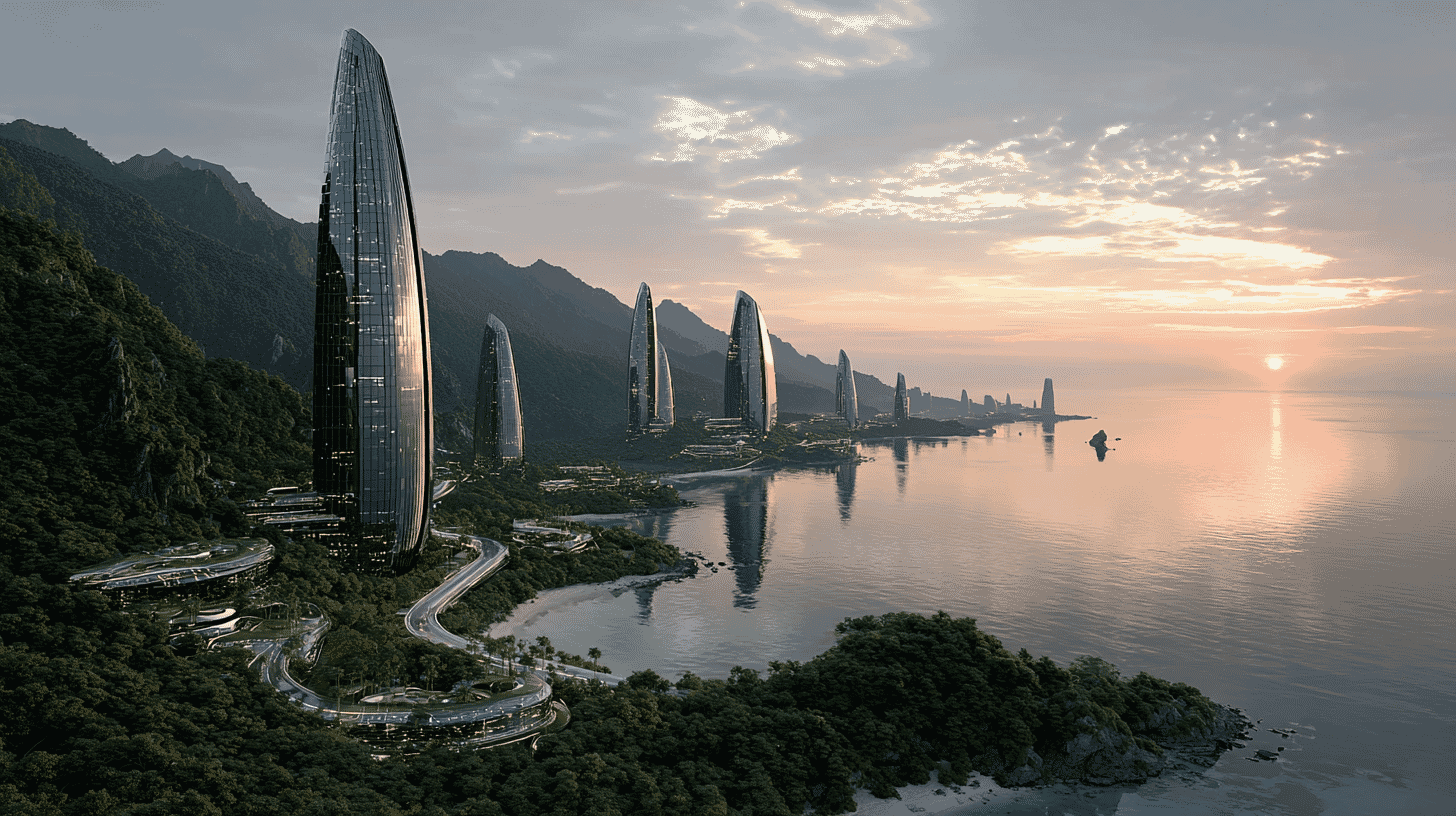
Japan's energy self-sufficiency rate sits at just 13%, among the lowest of any developed nation. Yet in April 2026, the head of Japan's Agency for Natural Resources and Energy unveiled three game-changers before the country's most powerful business lobby: perovskite solar cells, next-generation geothermal power, and offshore wind. Here's how a resource-poor island nation plans to reach carbon neutrality by 2050 through homegrown technology.
What Is Keidanren Times, and Why Does It Matter?
First, some context about the source. Keidanren (the Japan Business Federation) is Japan's premier business lobby, with roughly 1,500 member companies including Toyota, Sony, Mitsubishi, and Sumitomo. Think of it as Japan's equivalent of the Business Roundtable, but with arguably more direct policy influence, its chair holds regular meetings with the Prime Minister.
Keidanren Times is the federation's weekly publication that reports on committee discussions, government presentations, and policy debates. When something appears here, it signals that Japan's industrial establishment and government are aligned on direction and ready to act.
The April 9, 2026 issue reported on a presentation by Yoshifumi Murase, Commissioner of the Agency for Natural Resources and Energy, to Keidanren's Resources and Energy Policy Committee. Here's what he laid out.
Energy Security: Why Japan Is Racing
Japan's energy structure has a fundamental vulnerability that hasn't changed in over 50 years: it imports the vast majority of its energy. Over 90% of its oil passes through the Strait of Hormuz from the Middle East, and with geopolitical tensions escalating in the region in 2026, this dependence has become an acute concern.
On top of that, electricity demand is rising for the first time in 20 years, driven by new semiconductor factories and data center construction fueled by DX (Digital Transformation) and GX (Green Transformation) trends.
Against this backdrop, Japan's 7th Strategic Energy Plan, approved in early 2025, puts energy security front and center. It also marks a significant policy shift: nuclear power is now positioned alongside renewables as a key decarbonized power source to be utilized "to the maximum extent."
Pillar 1: Perovskite Solar Cells, Turning Building Walls into Power Plants
The most exciting piece of Japan's energy puzzle is the perovskite solar cell.
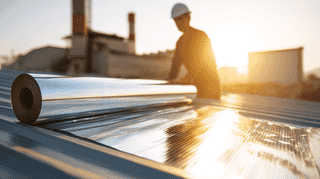
Traditional silicon solar panels are heavy and rigid, limiting installation to large rooftops and flat land. In Japan, where 70% of the terrain is mountainous, suitable sites are running out. Perovskite solar cells are thin, lightweight, and flexible, they can be applied to building walls, windows, and even vehicle surfaces.
Japan has a critical advantage here: it controls roughly 30% of the world's iodine supply, a key raw material for perovskite cells. Unlike silicon panels, which are dominated by Chinese manufacturers, Japan can build a fully domestic supply chain.
Sekisui Chemical has achieved roll-to-roll continuous production of 30cm-wide film-type perovskite cells, reaching 15% efficiency with 10-year durability. The company has also announced the world's first plan to install over 1MW of perovskite cells on building walls.
The government has committed roughly $330 million through the Green Innovation Fund, targeting commercial deployment by 2030 with generation costs below ¥14/kWh (about $0.09). Mass production at the GW (gigawatt) scale is planned before 2030.
However, competition is fierce, China and Europe are investing heavily, and while Japan leads in large-format production and durability, Chinese companies are rapidly scaling up manufacturing capacity.
Pillar 2: Next-Generation Geothermal, Tapping the Volcano Nation's Potential
Japan ranks third globally in geothermal resources. Yet most of that potential lies beneath national parks and hot spring resorts (onsen), creating decades of conflict between energy development and environmental/cultural preservation.
Next-generation geothermal technology uses deeper formations and closed-loop systems called EGS (Enhanced Geothermal Systems) that can operate without affecting existing hot springs. Unlike solar and wind, geothermal provides stable, 24/7 baseload power regardless of weather.
Starting in fiscal 2026, Japan introduced a "formula pricing" system for geothermal feed-in tariffs, where the purchase price adjusts continuously based on plant output capacity. This is expected to encourage larger-scale developments beyond the 15,000 kW ceiling that had been typical.
Pillar 3: Offshore Wind, Harnessing the World's 6th Largest EEZ
Japan's Exclusive Economic Zone (EEZ) is the world's 6th largest at roughly 4.47 million square kilometers. The government targets 10 GW of offshore wind by 2030 and 30–45 GW by 2040.
The real prize is floating offshore wind. Unlike fixed-bottom turbines that require shallow waters, floating platforms can operate in deep seas, unlocking Japan's vast EEZ. Legislative groundwork for EEZ-based wind farms advanced in 2025.
Challenges remain significant. Japan has no domestic large-scale wind turbine manufacturers. Inflation has driven up costs. And when Mitsubishi Corporation's consortium withdrew from offshore wind projects in August 2025, it underscored the tough economics, floating wind's feed-in tariff is set at ¥36/kWh (about $0.24), the highest of any renewable source.
Hydrogen Supply Chain: Japan Leads in "Carrying" Technology
Hydrogen burns clean, zero CO2, but producing, transporting, and storing it at scale remains expensive. Japan was the first country to publish a national hydrogen strategy in 2017 and has been building end-to-end supply chain capabilities ever since.
Kawasaki Heavy Industries launched the world's first liquefied hydrogen carrier ship. Chiyoda Corporation completed the world's first international hydrogen supply chain demonstration in 2020, shipping hydrogen from Brunei to Japan as MCH (methylcyclohexane) and using it for power generation.
The government aims to bring hydrogen supply costs below ¥20/Nm³ (about $0.13), competitive with fossil fuels. The Hydrogen Society Promotion Act passed in May 2024 supports adoption in sectors like steelmaking and chemicals where electrification alone can't achieve decarbonization.
CCS/CCUS: Burying Carbon Underground
CCS (Carbon dioxide Capture and Storage) captures CO2 from factory and power plant emissions, then stores it in deep geological formations.
Japan's flagship demonstration at Tomakomai, Hokkaido, injected 300,000 tons of CO2 into sub-seabed formations between 2016 and 2019. The CCS Business Act passed in May 2024, establishing the legal framework for commercial operations.
The government has selected 9 "Advanced CCS Projects" spanning oil refining, steel, chemicals, pulp and paper, and cement. Combined, these projects aim to store approximately 13 million tons of CO2 annually by 2030. Japan is also pursuing cross-border CCS with Malaysia and Singapore through the Asia CCUS Network.
Green Steel: Decarbonizing One of the Dirtiest Industries
Steelmaking is one of the biggest industrial CO2 emitters. Traditional blast furnace methods use coal (coke) to extract oxygen from iron ore, generating massive emissions. "Hydrogen-reduced steelmaking" replaces coal with hydrogen, and this is the core technology behind green steel.
In January 2025, the Ministry of Economy, Trade and Industry published findings from its Green Steel Study Group. Because the cost premium is substantial, the government offers subsidies covering one-third of capital investment and a tax credit of ¥20,000 (about $130) per ton of green steel produced.
The IEA suggests the global green steel market could reach 100 million tons by 2030. Japan's world-class high-quality steel technology positions it well, if it can manage the cost transition.
Nuclear Power's Return: Riding a Global Wave
The Keidanren report also covered nuclear energy. The 7th Strategic Energy Plan positions nuclear alongside renewables for "maximum utilization" as a decarbonized power source.
Restart of the Kashiwazaki-Kariwa and Tomari plants is being accelerated, and on-site surveys for a successor reactor at the Mihama plant have begun. The target: nuclear providing about 20% of the power mix by 2040. This aligns with global trends, U.S. tech companies are securing reactor capacity, and Europe is increasingly embracing nuclear again.
The Big Picture: Winning Through Technology in a Resource-Poor Nation
Japan's energy strategy boils down to "technology self-sufficiency." Iodine for perovskite cells, hydrogen transport engineering, CCS know-how, Japan is concentrating national resources in areas where it has world-class competitive advantages.
But the challenges are real: rising consumer costs through the renewable energy surcharge, community resistance to new installations, and the sheer speed of global competition. China's perovskite manufacturing scale-up is a particular threat.
With 24 years until the 2050 carbon neutrality target, Japan's energy transition is a massive societal experiment testing both technological capability and policy execution.
How is the energy transition progressing in your country? Do you think perovskite solar cells and a hydrogen-powered society will become reality? Share your thoughts in the comments.
References
- https://www.keidanren.or.jp/journal/times/2026/0409_06.html
- https://www.enecho.meti.go.jp/about/special/johoteikyo/energykihonkeikaku2025_kaisetu03.html
- https://www.enecho.meti.go.jp/about/special/johoteikyo/green_steel_2026.html
- https://www.enecho.meti.go.jp/about/special/johoteikyo/suisohou_01.html
- https://www.enecho.meti.go.jp/about/special/johoteikyo/ccs_law_01.html
- https://green-innovation.nedo.go.jp/project/hydrogen-supply-chain/



Global Discussion
15 comments