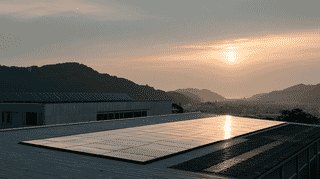
Japan's Environment Ministry will stop subsidising the purchase of conventional solar panels for new projects from fiscal 2027. The stated reason was not carbon but industry: the money was benefiting factories abroad.
A century-old Japanese packaging company will launch a flexible CIGS solar cell in early 2027, betting that proven, long-life thin-film tech can beat still-maturing perovskite to Japan's weak roofs and walls. The contrarian logic, and the catches.
Japan's new cargo ship HTV-X1 reentered the atmosphere on the night of May 26, 2026, completing a roughly seven-month mission (JAXA announced it the next day). In its final three months it gathered on-orbit data on next-gen space solar cells, including a domestic perovskite made by Ricoh, and received a radio signal from the ground. Here's why perovskite in space is a different story from perovskite on rooftops.
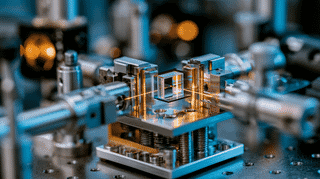
Kyoto Institute of Technology and JST have demonstrated a spinor condensate at room temperature, a quantum state once confined to cryogenic cold. Here is what it means for light-based quantum devices and Japan's distinct path versus Google and USTC.
Between March and May 2026, Japan launched a wave of perovskite solar cell demonstrations across the country—world efficiency records, rice paddies, mountain tea fields, skyscraper windows, highway parking areas, and Toyota's Woven City. We unpack for international readers why everything is happening at once.
A deep dive into Japan's latest energy policy as reported in the April 2026 Keidanren Times. Covering the three pillars of perovskite solar cells, next-gen geothermal, and offshore wind, plus hydrogen supply chains, CCS demonstrations, and green steel initiatives toward carbon neutrality by 2050.
Sekisui Chemical has officially launched SOLAFIL, Japan's first commercially produced film-type perovskite solar cell. Lightweight and flexible enough for walls and curved surfaces, this next-gen technology positions Japan at the forefront of the global perovskite race against Chinese and European rivals.
Chiba Prefecture sits atop an estimated 500-year supply of iodine, the key material in Japan-invented perovskite solar cells. If combined, they could form a fully domestic energy cycle. We break down the potential and the hurdles standing in the way.
Panasonic's glass-type perovskite solar cells will be installed on the exterior of Hankyu Hanshin Properties' new headquarters—a first for new office buildings in Japan. This landmark step brings Japan-invented next-generation BIPV solar technology closer to mainstream adoption, in a building already certified ZEB Ready and DBJ Green Building 5-Star.
Japan's perovskite solar cell market is projected to surge to nearly $26 billion globally by 2040, with key materials exceeding $9.5 billion. This flexible, lightweight technology invented in Japan could revolutionize renewable energy by enabling installation on walls, windows, and curved surfaces previously impossible for traditional solar panels.