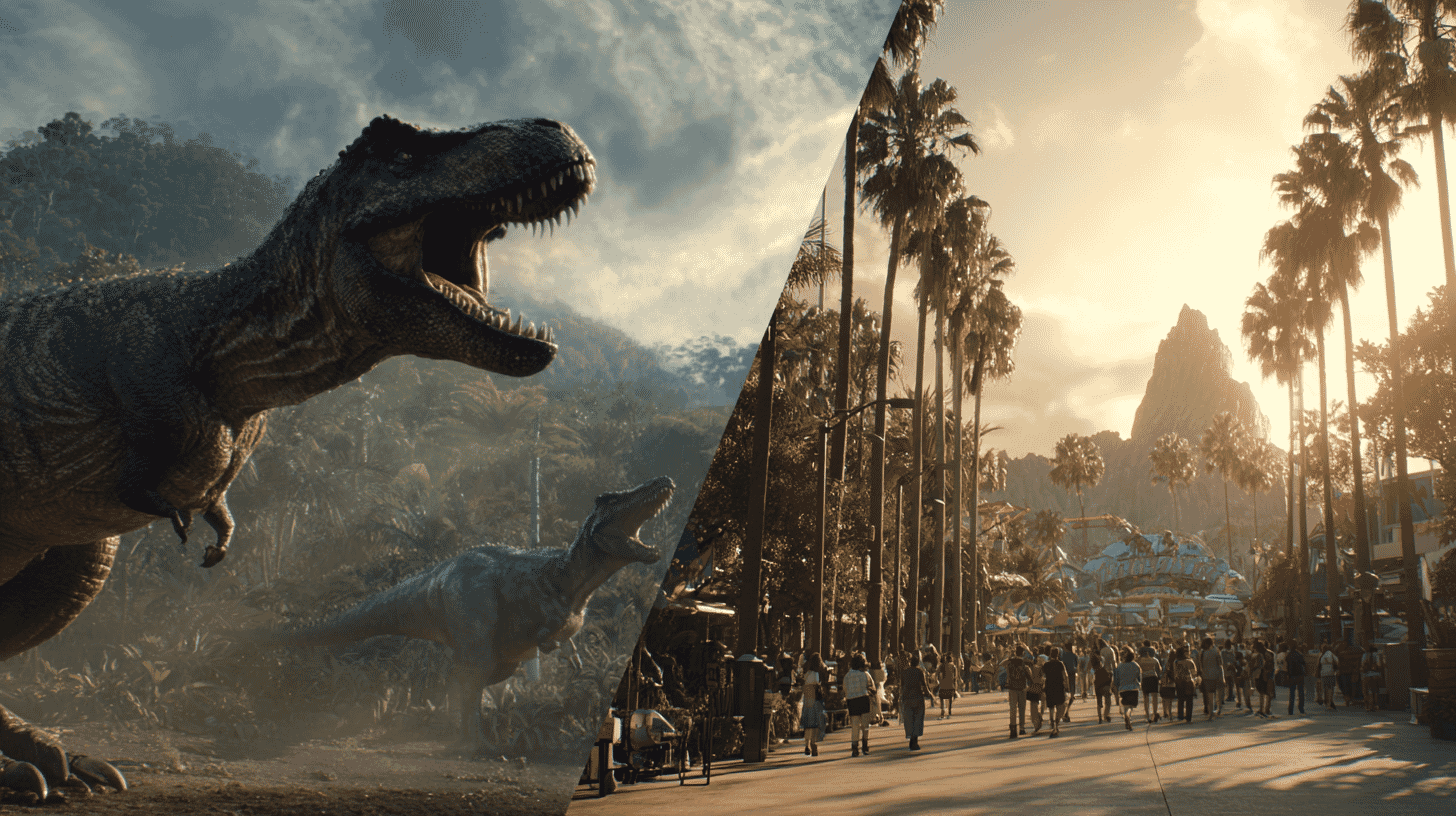
On July 25, 2025, JUNGLIA Okinawa opened its doors in the Yanbaru region of northern Okinawa, Japan. This ambitious theme park project, spearheaded by Tsuyoshi Morioka and his marketing company Katana (刀), the team credited with reviving Universal Studios Japan, was hyped as potentially becoming "Okinawa's Disneyland." The anticipation was so immense that even Prime Minister Shigeru Ishiba attended the pre-opening press conference.
However, six months after its grand opening, the park's reputation has taken a dramatic turn. What was supposed to be a revolutionary tourist destination has faced massive backlash, declining visitor numbers, and significant financial losses. This article explores what happened to JUNGLIA Okinawa and what the future might hold.
What is JUNGLIA Okinawa?
JUNGLIA Okinawa is a large-scale theme park spanning approximately 60 hectares (about 13 Tokyo Domes) across Nakijin Village and Nago City in Okinawa Prefecture. Built on the site of the former Orion Arashiyama Golf Club, the park positions itself as a "nature-immersive" experience, leveraging the subtropical environment of the Yanbaru forest.
The park features dinosaur-themed attractions, outdoor activities like ziplines and buggy rides, and spa facilities including a Guinness World Record-certified infinity bath.
Key Attractions
The park offers several signature experiences:
- Dinosaur Safari: An immersive experience of escaping from T-Rex
- Sky Phoenix: A zipline soaring above the jungle canopy
- Horizon Balloon: A balloon ride offering 360-degree panoramic views
- Buggy Voltage: Off-road buggy adventures through nature
- Spa JUNGLIA: Hot spring facilities with the world's largest infinity bath
Ticket Pricing
Admission costs 6,930 yen for adults (12+) and 4,950 yen for children (4-11). Combined park and spa tickets run 9,570 yen for adults and 6,490 yen for children. Premium passes for priority access to popular attractions cost an additional 990-2,970 yen each.
Why Did Public Perception Collapse?
1. The Gap Between Advertising and Reality
Pre-opening TV commercials featured Hollywood-quality CGI depicting thrilling encounters with realistic dinosaurs. Visitors expecting an experience comparable to Universal Studios were instead met with dinosaur statues scattered throughout a natural setting. Social media exploded with complaints about "misleading advertising" and the stark contrast between promotional materials and the actual experience.
2. Extreme Wait Times and Capacity Issues
During the opening period, wait times for popular attractions reached a staggering 430 minutes (over 7 hours). Many visitors reported only being able to experience one or two attractions during their entire day at the park despite paying premium admission fees.
The fundamental problem lies in structural capacity limitations. Experiential attractions like Sky Phoenix can reportedly accommodate only about 200 guests per day due to the time required for each experience, creating inevitable bottlenecks despite low overall park attendance.
3. The Google Review Deletion Controversy
Within days of opening, over 400 reviews had been posted on Google Maps, with ratings averaging in the low 2s out of 5. However, the review count suddenly dropped to single digits, sparking accusations of review manipulation by the park operators.
While JUNGLIA issued a statement denying involvement and it was later determined that Google's spam detection algorithms were responsible for the deletions, the incident fueled a major public relations crisis.
4. Operational Problems
Numerous operational issues were reported during the initial period:
- The official app crashed under heavy traffic, preventing guests from obtaining attraction passes
- Tickets purchased through travel agencies required on-site exchange, forcing visitors to wait in multiple lines
- Insufficient shade and rest areas left guests suffering in the subtropical heat
- Weather-dependent outdoor attractions frequently suspended operations
5. Poor Accessibility
Located in the mountainous northern region of Okinawa's main island, JUNGLIA requires approximately 90 minutes by car from Naha Airport. Public transportation options are extremely limited, making rental cars essentially mandatory. Even with a car, visitors must park at partner locations and take shuttle buses, adding significant time and complexity to the journey.
Financial Situation
Japan Entertainment (JE), the operating company, reported a net loss of 5.098 billion yen for the fiscal year ending June 2025. While this reflects pre-opening preparation costs, the company's ongoing financial health remains under scrutiny.
The project has received substantial public funding, including 8 billion yen from the Cool Japan Fund and 36.6 billion yen in syndicated loans led by Shoko Chukin Bank, along with additional financing from the Okinawa Development Finance Corporation. This significant public investment has intensified public interest in the park's success or failure.
Closure of Katana's Other Venture
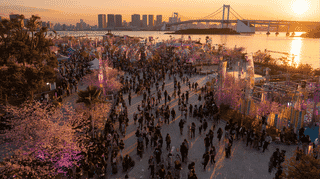
On December 25, 2025, Katana announced that Immersive Fort Tokyo, its theme park in Odaiba, Tokyo, would close on February 28, 2026, just two years after opening in March 2024.
Morioka attributed the closure to the facility being "oversized" for actual demand. The original business plan anticipated demand for large-scale "light experiences," but guests gravitated toward limited-capacity "deep experiences" instead. This miscalculation raises questions about similar projections made for JUNGLIA Okinawa.
Improvement Efforts
In response to criticism, the management has implemented various improvements:
Key Changes Since November 2025
- Transition from first-come-first-served to app-based lottery system for attraction passes
- Introduction of special evening experiences starting at 5 PM
- Addition of new shows including "Kachashi Party"
- Launch of discounted afternoon tickets with added benefits
- Okinawa residents' campaign offering free child admission with paying adult
The park also released its second "Progress Report" in December 2025, documenting improvements made in response to guest feedback. In Naha, it ran an open feedback campaign for visitors and non-visitors alike, collecting 1,714 responses.
Future Outlook
Six months in, JUNGLIA Okinawa was carrying real problems. Cumulative attendance stood at roughly 650,000 (about 100,000 of them spa visitors), below initial projections, and parking lots often ran at only 20-30% capacity.
However, from a regional tourism development perspective, JUNGLIA represents an important investment in northern Okinawa. Nearby hotels have reported increases in international visitors, suggesting some positive economic ripple effects are beginning to emerge.
Theme park experts have suggested that "humbly demonstrating the improvement process" is crucial for recovery. While the potential for a turnaround exists, structural issues like attraction capacity limitations and accessibility problems will require considerable time to address. A dramatic short-term recovery seems unlikely.
Update: One Year On, Roughly One Million Visitors
On April 29, 2026, the park opened Yambaru Tornado, its first large ride attraction since launch: a rotating ride roughly 16 meters across, reaching about 20 meters at its highest point, seating up to 48 people at once. Ahead of that opening, management said operational fixes had raised throughput to roughly 1.2 to 1.7 times opening levels on large attractions such as Dinosaur Safari and more than double on extreme attractions such as Sky Phoenix, and that January 2026 had set a monthly attendance record. The daily admission cap of around 5,000, set to protect the guest experience, was expected to rise.
On July 25, 2026, at its first anniversary, JUNGLIA Okinawa reported first-year attendance of about one million, a combined figure including the adjacent spa, with revenue projected above 10 billion yen. Kenji Kato, CEO of operator Japan Entertainment, told reporters the attendance figure had "regrettably not reached what we hoped for." At opening, the break-even benchmark cited was around 1.5 million, half the annual figure for the Okinawa Churaumi Aquarium, which draws over three million. Total project cost was 70 billion yen.
Against that, the local think tank Ryugin Research Institute calculated the park's first-year economic ripple effect within the prefecture at 49.4 billion yen, and noted that northern Okinawa, long a region tourists drove past, now has foot traffic.
That 49.4 billion figure also shifts depending on the benchmark. Before opening, an estimate compiled by Kansai University and others projected 658.2 billion yen in economic impact for the first year alone. The methods differ, the pre-opening figure excluded construction and nearby hotel development, but the two are an order of magnitude apart. Set alongside attendance at a third of the Churaumi Aquarium's, it shows how high expectations had been set.
The one-million figure itself needs a caveat. It is a combined count including the adjoining spa. At the six-month mark the operator had broken that out, 100,000 spa-only visitors; at the anniversary it did not. Kato also cited bad weather, the rainy season and typhoons, among the reasons for falling short. (As of September 2026)
What do you expect from theme parks in your country? In Japan, short wait times, experiences matching expectations, and value for money are highly valued. How does this compare to theme park culture in your country? We'd love to hear your thoughts in the comments!




Global Discussion
15 comments