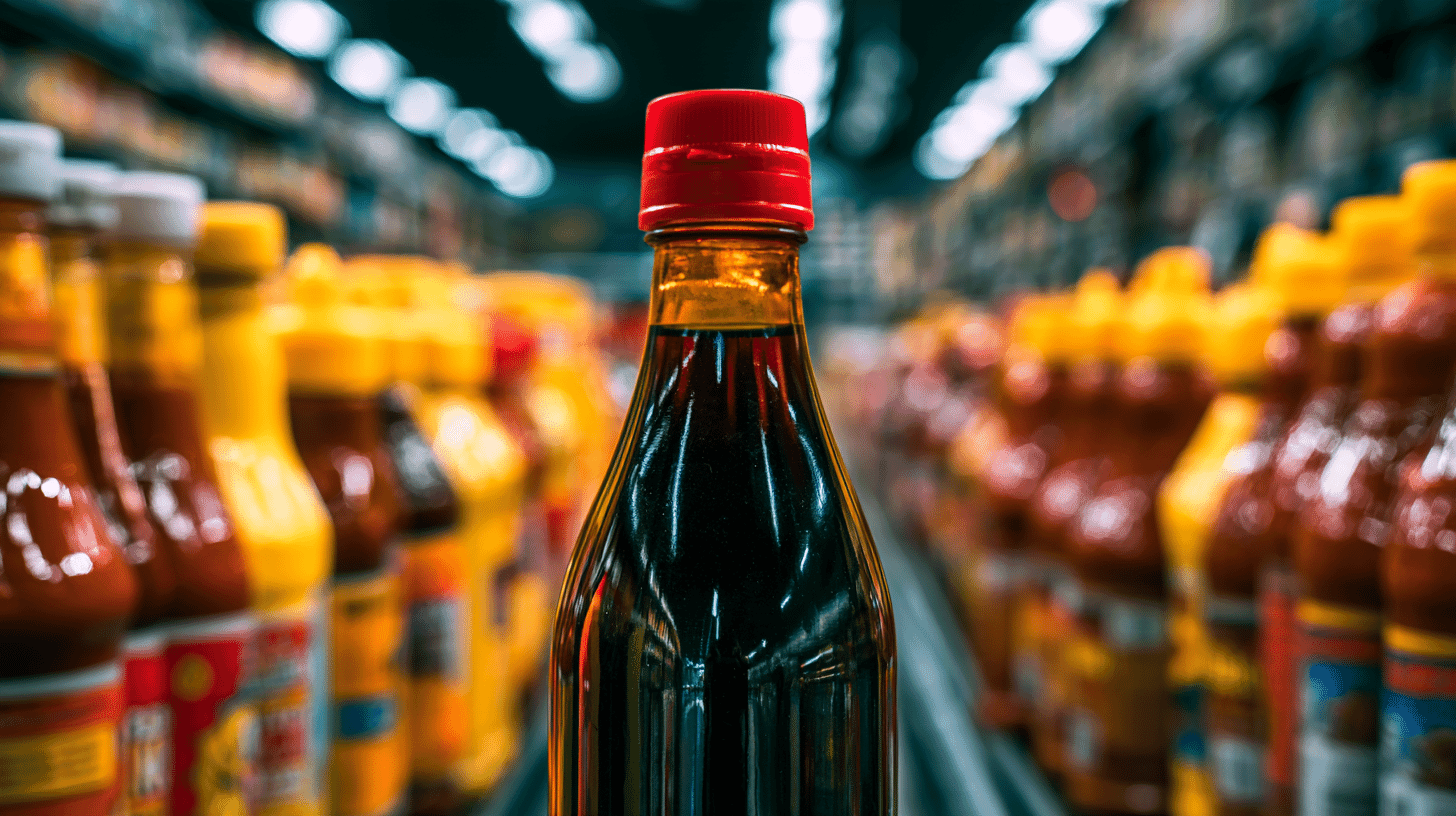
🥢 In November 1971, a Wisconsin village of farmers sat down in a hall and voted on whether to let a Japanese soy sauce maker build a brewery on its prairie. Fourteen people said no. Fifty-five years later, North America generates about two-thirds of Kikkoman's profit, and in September the company switched on its third American plant.
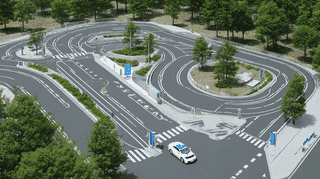
A $560 million brewery in Jefferson, Wisconsin
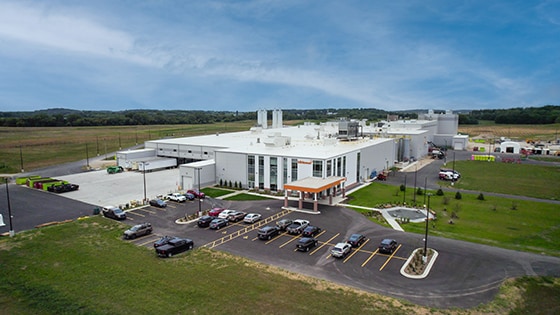
The ribbon came down on September 18. Governor Tony Evers was there, so was Japanese Ambassador to the United States Shigeo Yamada, and so was Yuzaburo Mogi, Kikkoman chairman and honorary CEO. Mogi called Jefferson the natural next chapter for a company that dates its sauces and seasonings back more than 350 years.
Source: Kikkoman Corporation press release
Kikkoman is putting about $560 million into the Jefferson site over ten years. Add the upgrades running in parallel at its original Walworth plant and the company's Wisconsin commitment passes $800 million, bringing more than 80 high-paying jobs. The state's economic development agency is backing that with as much as $15.5 million in tax credits, released only as the jobs and the capital spending actually land.
It is a 240,000-square-foot building on a 100-acre site. Construction began in April 2024, brewing started in May 2026, and as of September 2026 the first bottled product is due to ship in October.
What runs through the site is not only soy sauce. There is teriyaki sauce, and there are seasonings with no soy sauce in them at all, on a line flexible enough to cope with different viscosities and formats, from glass bottles to BPA-free plastic to bulk industrial containers. It is a plant built for an American condiment business, not for a Japanese pantry item.
Before choosing Jefferson, Kikkoman looked at 64 Midwestern locations. The reasons Mogi gives for the site are close to the ones the company gave in 1972: agricultural suppliers nearby, water of the quality the brewing demands, and a local workforce.
The plant now anchors a 165-acre food and beverage industrial park in the city, and the company marked the opening with $250,000 toward restoring native prairie in Jefferson County. The ceremony ran to taiko drumming, a live calligraphy demonstration and the Jefferson High School show choir.
The vote was 54 to 14
The first plant had to be voted through.
Kikkoman opened a sales company in San Francisco in 1957. Demand climbed through the 1960s and shipping costs climbed with it, so Keizaburo Mogi, Yuzaburo's father, set up a committee to look at making soy sauce in America instead of hauling it across the Pacific. The question reached a town hall in Walworth, Wisconsin, and several rounds of hearings. On the evening of November 7, 1971, they voted: 54 in favor, 14 against.
The objections were not really about soy sauce. One resident later told the Chicago Tribune that people feared the place would be a wholly Japanese operation, with Japanese workers and Japanese machinery. Kikkoman's answer was structural rather than rhetorical. It bought soybeans and wheat from farmers nearby, trained American workers in a brewing process from scratch, and housed its Japanese staff in the surrounding towns rather than in a compound. At the opening in 1973, which drew a crowd of 10,000, Keizaburo Mogi told the village that what stood there was an American Kikkoman plant, not a Kikkoman plant that happened to sit in America.
The plant opened with 147,000 square feet, about 35 American employees and 15 Japanese ones. By 1974 a Harvard Business School case was praising it as an overseas venture that had somehow generated no friction, at a moment when US-Japan trade relations were generating plenty. Wisconsin's development agency now calls it one of the earliest American plants any Japanese company built, and the highest-producing soy sauce facility Kikkoman operates anywhere. A second American plant followed in Folsom, California, shipping from October 1998.
The trick was refusing to sell it as Japanese
Getting onto American shelves is one thing; moving out of the international aisle is another. Kikkoman managed the second through a sequence of decisions that were not obvious at the time.
A San Francisco Chronicle advertisement in 1956 called it an all-purpose seasoning, and the phrase eventually moved onto the label itself. Staff grilled meat in supermarkets and handed out samples under the "Delicious on Meat" banner, while the company pushed recipes through newspapers and magazines. The pitch was not about cooking Japanese food. It was about what to put on a steak.
The bottled sauce came next. In 1961, working from suggestions by its American employees, Kikkoman combined soy sauce, wine and a blend of spices and launched a teriyaki barbecue marinade for North America. Sales grew 30 to 50 percent a year in the early going. By 1966 the company was buying billboards at prime spots in Los Angeles, on the reasoning that in a country that lives in its cars, the roadside is where the audience sits.
American teriyaki and Japanese teriyaki are not the same thing. In Japan, teriyaki is a technique: fish glazed with soy sauce and mirin over high heat, the shine giving the dish its name. The sweeter, thicker sauce Americans recognize owes more to Japanese immigrant families in Hawaii, who folded in pineapple juice, fresh ginger and brown sugar. Kikkoman bottled the Hawaiian direction, not the Japanese one. By Kikkoman's own account, that sauce is now second only to soy sauce in the lineup of its overseas subsidiaries.
Fifty years later, in the accounts
Overseas sales volume of Kikkoman-brand soy sauce has grown at an average of 7 percent a year from fiscal 1974 through fiscal 2025. Not a spike: half a century of compounding.
In the year ended March 2026, the group booked revenue of 745.5 billion yen, about $4.73 billion, and business profit of 79.5 billion yen, roughly $505 million. North America alone produced 403.4 billion yen of that revenue, about $2.56 billion, and 53.6 billion yen of profit, about $340 million. The domestic business turned over 169.6 billion yen and made 11.5 billion yen.
Japan is the home market. North America is the business. KFI says North American soy sauce sales have risen by an average of more than 6 percent a year over the past decade, and that Kikkoman has led the US soy sauce market throughout that period. A third plant is what that arithmetic buys.
Wisconsin runs a version of the same math. By the development agency's count, more than 80 Japanese companies now operate in Wisconsin, supporting over 10,200 jobs, and Japan has invested more than $4.2 billion in the state since 2003, second only to Canada.
So check your own shelf
You do not need a set of accounts to measure how far soy sauce has traveled. A supermarket will do. Find the soy sauce: is it filed under international, Asian or oriental foods, beside the curry paste and the rice noodles? Or has it drifted over to the condiment aisle, standing next to the ketchup and the mustard as if it had always been there?
In the United States that second move took half a century, and it took selling soy sauce as something to put on a steak rather than something to put on sushi. The same slow migration is happening to other Japanese foods right now. Which aisle is it in where you live?
References
- https://www.prnewswire.com/news-releases/kikkoman-foods-inc-officially-opens-third-us-production-facility-in-jefferson-wisconsin-302883607.html
- https://www.kikkoman.com/jp/news/2026/20260918.html
- https://wedc.org/gov-evers-wedc-join-kikkoman-to-celebrate-grand-opening-of-new-production-facility-in-jefferson/
- https://www.kikkoman.com/en/news/2026/20260918_1591.html
- https://www.kikkoman.com/jp/ir/lib/oversea.html
- https://www.kikkoman.com/en/corporate/history/outline/
- https://www.kikkoman.com/en/culture/teriyakisaucemuseum/
- https://artfulliving.com/kikkoman-soy-sauce-walworth-wisconsin-plant/

Global Discussion
3 comments