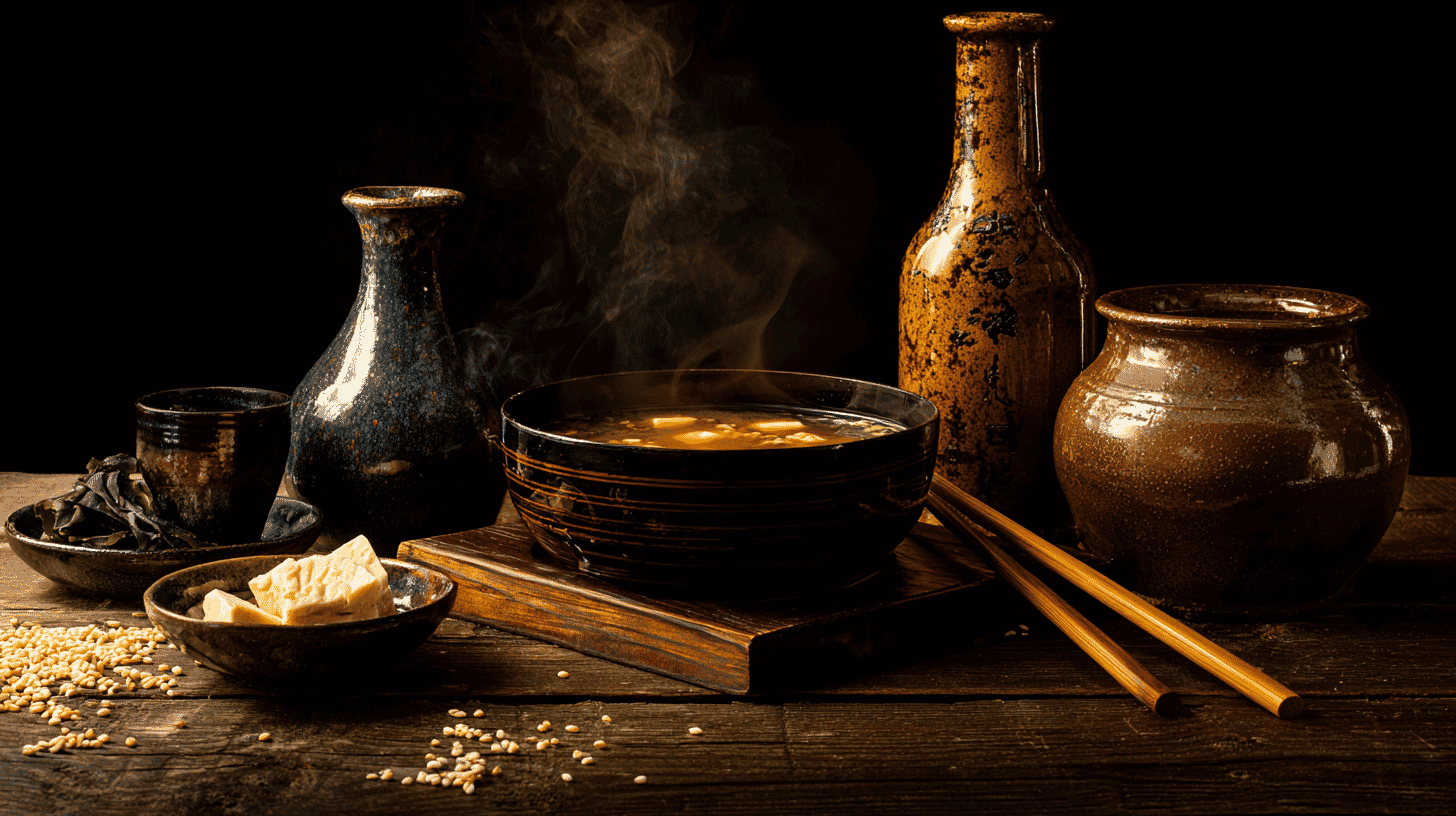
Japan is called a "fermentation superpower," and with good reason. From miso soup at breakfast to soy sauce on sushi, fermented foods are woven into every corner of Japanese daily life. Now the rest of the world is catching on. Miso exports have increased roughly sevenfold in three decades, natto is selling for $20 a pack in upscale American supermarkets, and Michelin-starred chefs are calling Japanese fermentation techniques "culinary magic." Here is why Japan's ancient food traditions are becoming a global phenomenon.
Japan: The Fermentation Superpower
Japan boasts an unparalleled diversity of fermented foods. While fermentation exists in every food culture, from German sauerkraut to Korean kimchi, no country has developed as wide a range of fermented seasonings and staples as Japan. Miso, soy sauce, sake, rice vinegar, mirin, natto, nukazuke pickles, katsuobushi (fermented dried bonito), the list is extensive.
The secret behind this diversity lies in a microscopic organism: Aspergillus oryzae, commonly known as koji mold. Designated as Japan's "national fungus" (kokkin) in 2006, koji is the cornerstone of Japanese fermentation. Unlike Western fermentation, which primarily relies on lactic acid bacteria or yeast, Japanese fermentation centers on koji's extraordinary enzyme-producing capabilities. Koji breaks down proteins into amino acids and starches into sugars, creating the complex layers of umami flavor that define Japanese cuisine.
Japan's warm, humid climate provides ideal conditions for koji cultivation, and centuries of meticulous craftsmanship have refined fermentation techniques to an art form. From the tane-koji (koji seed) specialists of the Muromachi period to today's artisanal producers, Japanese fermentation represents a living tradition of scientific precision passed down through generations.
The Health Benefits Driving Global Demand
The global explosion of interest in Japanese fermented foods is intimately tied to the growing "gut health" movement. Scientific research increasingly supports what Japanese people have known intuitively for centuries: fermented foods are remarkably good for you.
Gut Microbiome Enhancement: Fermented foods introduce beneficial bacteria, probiotics, into the digestive system. The human gut contains approximately 100 trillion microorganisms across 1,000 species. Consuming fermented foods helps maintain a healthy balance of these bacteria, supporting digestion, nutrient absorption, and immune function. Approximately 60% of the body's immune function is concentrated in the gut, making intestinal health a cornerstone of overall wellbeing.
Natto and Cardiovascular Health: Natto, the sticky fermented soybeans that challenge many first-time eaters with their distinctive aroma, contains a unique enzyme called nattokinase. First isolated in the 1980s, nattokinase has shown potential to break down fibrin, the protein that forms blood clots, potentially reducing the risk of cardiovascular conditions. Natto is also exceptionally rich in vitamin K2, which supports bone density and calcium metabolism. Research has found correlations between higher natto consumption in eastern Japan and lower rates of hip fractures compared to western regions where natto is less popular.
Miso and Comprehensive Nutrition: Miso, fermented soybean paste, delivers a nutritional punch that belies its simplicity. The fermentation process transforms soybeans (already rich in protein and isoflavones) into a more bioavailable form, making nutrients easier to absorb. Soy isoflavones, which have a structure similar to estrogen, may help regulate hormonal balance and support bone health. While the precise mechanisms of miso's health benefits are still being researched, population studies consistently associate regular miso consumption with positive health outcomes.
Soy Sauce and Umami Science: Beyond sodium delivery, naturally brewed soy sauce contains over 300 identifiable flavor compounds created through the fermentation process. These compounds contribute to umami, the "fifth taste", which allows food to achieve deep, satisfying flavor with minimal additional seasonings. This is one reason why Japanese cuisine achieves complex taste profiles while remaining relatively low in fat and sugar.
The Global Boom: From Niche to Mainstream
The numbers tell a compelling story. Japan's miso exports grew from approximately 2,800 tons in 1990 to roughly 20,000 tons by 2023, with export value exceeding 5 billion yen. The United States is the largest single destination, taking about 5,000 tons in 2023, roughly a quarter of the total.
In the broader fermented food market, the trajectory is equally impressive. The global fermented food market was valued at approximately $250 billion in 2024, with projections suggesting it could reach $400 billion or more by the mid-2030s. Soy-based fermented products, including miso, natto, and tempeh, represent one of the fastest-growing segments, with compound annual growth rates exceeding 9%.
Several converging trends are fueling this growth:
The Wellness Revolution: Post-pandemic health consciousness has accelerated interest in foods that support immunity. Consumers who once reached for supplements are now looking for "food as medicine," and fermented products fit perfectly into this paradigm.
Plant-Based Eating: The rise of veganism and flexitarian diets has created enormous demand for plant-based protein sources with satisfying flavors. Miso and soy sauce provide umami depth that can replace meat-based stocks, while tempeh (an Indonesian cousin of Japan's soybean fermentation traditions) is being reimagined as a protein-rich meat alternative. In California, miso is particularly popular among vegan and plant-based consumers as a key source of plant protein.
Chef-Led Discovery: World-class chefs have become powerful ambassadors for Japanese fermentation. In New York, events hosted by the Soy Sauce Information Center have drawn packed audiences of professional chefs eager to explore fermentation techniques. Miso is being "reinterpreted" as a base for "fermented soups," and even natto is appearing in creative vegan dishes. In Virginia, a culinary school dedicated to teaching Japanese fermentation techniques has opened its doors.
The UNESCO Effect: The 2013 inscription of "Washoku" (traditional Japanese cuisine) as a UNESCO Intangible Cultural Heritage was a turning point. International recognition of Japanese food culture as a whole boosted demand for its foundational ingredients, particularly fermented seasonings.
The Koji Revolution Beyond Borders
Perhaps the most fascinating aspect of the Japanese fermentation boom is how its techniques are inspiring innovation abroad. Companies like Prime Roots in the United States have harnessed koji's power to develop mycelium-based meat alternatives, using fungal proteins as their foundation, a distinctly different approach from the soy and pea protein base used by most competitors.
Meanwhile, American craft food producers are experimenting with shio-koji (salt koji) as a marinade, miso as a flavor base for non-Asian dishes, and koji-aged charcuterie. The term "koji" is becoming part of the global culinary vocabulary in ways that would have been unimaginable a decade ago.
In high-end markets, the premiumization of Japanese fermented products is striking. Los Angeles' Erewhon Market, a luxury organic grocery chain, sells natto at nearly $20 per pack, roughly ten times the price of standard natto in Japan. This positioning of everyday Japanese foods as premium wellness products reflects a fundamental shift in how the world perceives these traditions.
Challenges: Preserving Tradition in a Boom
The global boom is not without its complications. As an NHK Close-up Gendai special highlighted in October 2025, the very success of Japanese fermented foods abroad has raised concerns about preserving traditional production methods at home. Wooden barrel (kioke) fermentation, the centuries-old method that produces the most complex flavors, is declining as producers face economic pressure to adopt faster, stainless-steel methods.
The KIOKE Project, centered in Shodoshima, Kagawa Prefecture, represents a grassroots effort to preserve wooden barrel brewing. Meanwhile, traditional fermented foods in remote areas, like sendango starch in Tsushima, face the threat of disappearing entirely as rural populations age and decline.
There's also the question of authenticity. As global demand surges, mass-produced versions of miso, soy sauce, and other fermented products may bear little resemblance to their traditionally crafted counterparts. Quick-brewed soy sauce made in weeks, versus naturally fermented soy sauce aged for a year or more, offers a fundamentally different product, though both may carry the same label.
Fermentation as Cultural Bridge
What makes the Japanese fermentation story so compelling is that it transcends mere food trends. Fermentation embodies a philosophy, a partnership between human craftsmanship and microbial life, patience over speed, complexity over simplicity. In a world increasingly drawn to processed convenience, the idea that time and microbes can transform simple soybeans into something extraordinary carries a resonance that goes beyond nutrition.
Japan is not the only country with rich fermentation traditions, of course. Korea has kimchi, Indonesia has tempeh, Ethiopia has injera, and Europe has its cheeses and sauerkraut. But Japan's unique contribution, the mastery of koji and the extraordinary diversity of foods built around it, is what sets its fermentation culture apart on the global stage.
As the world develops a deeper appreciation for fermented foods, it's worth asking: what fermented traditions exist in your own country? Are they being preserved, reimagined, or forgotten? The Japanese fermentation boom is not just a story about Japan, it's an invitation to rediscover the microbial wisdom embedded in food cultures everywhere.
References
- https://www.jetro.go.jp/ext_images/agriportal/platform/us/pf_lag_2303.pdf
- https://2025-japan-pavilion.go.jp/magazine/backissues/issue03/feature02/
- https://www.jtbbwt.com/business/trend/detail/id=2884
- https://japanwonderguide.com/about-fermented-food/
- https://www.maff.go.jp/j/pr/aff/2211/spe1_01.html
- https://www.futuremarketinsights.com/reports/fermented-foods-and-beverages-market
- https://www.precedenceresearch.com/fermented-foods-market






Global Discussion
15 comments