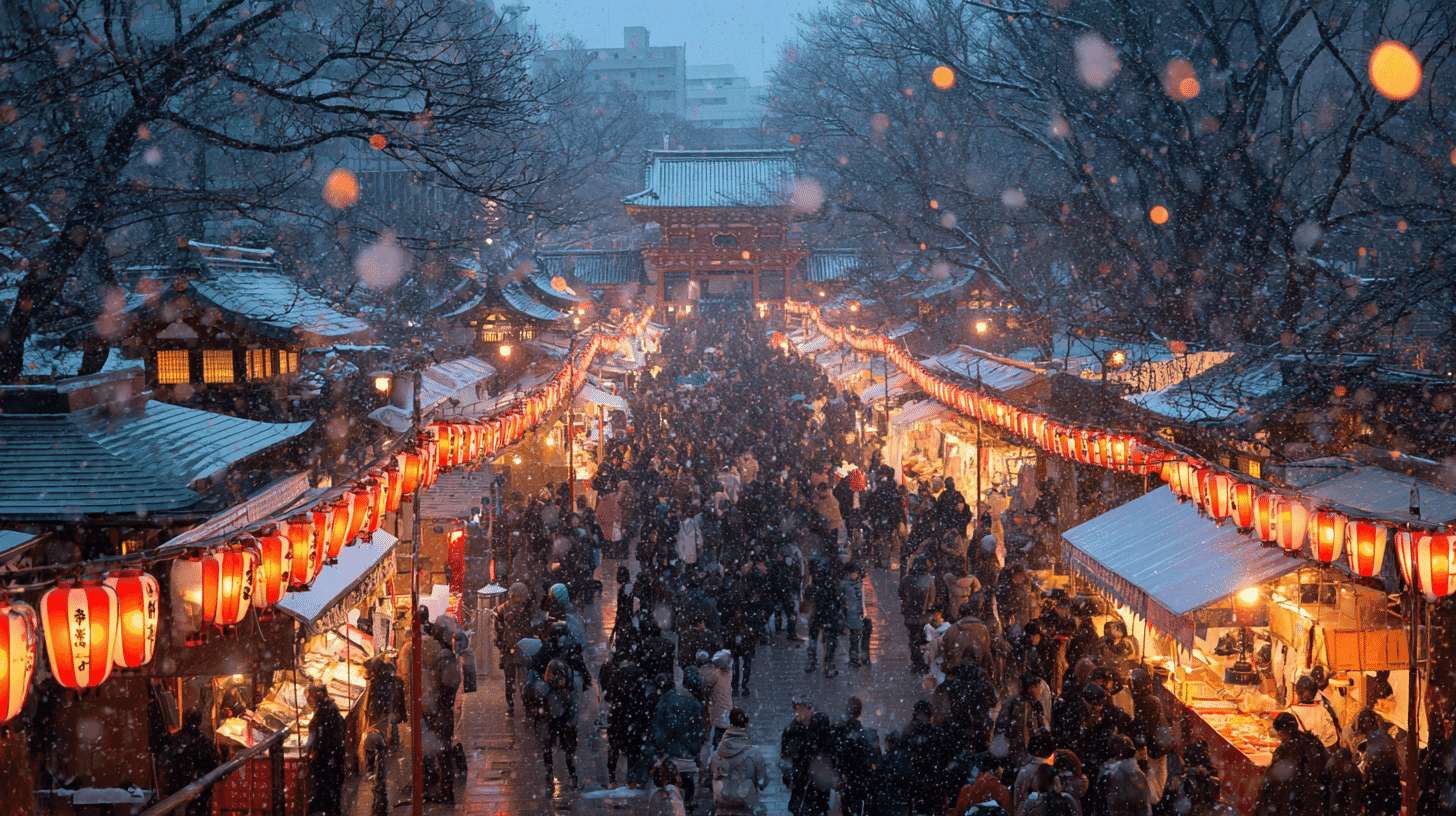
⛩️ Hatsumode (初詣) is the Japanese tradition of making the first shrine or temple visit of the New Year. In 2009, the last year the National Police Agency compiled crowd figures, 99.39 million visits were counted over the first three days of January alone; the previous year's 98.18 million and this figure are the highest in the agency's records. The agency stopped publishing the count from 2010, saying shrines and temples measured attendance too differently for the totals to be reliable, so there is no national figure after that. By any measure it remains one of the largest religious gatherings in the world.
During Hatsumode, Japanese people express gratitude for the past year and pray for blessings in the new one: health, family safety, business prosperity, and personal wishes. For many Japanese, this ritual marks the true beginning of their new year.
The History and Origins of Hatsumode
From "Toshigomori" to Modern Traditions
The origins of Hatsumode trace back to the Heian period (794-1185) through a practice called "Toshigomori" (年籠り), meaning "year seclusion." In ancient times, the head of each household would spend the night from New Year's Eve until New Year's morning at the local shrine, praying throughout the night for a bountiful harvest and family prosperity.
This practice eventually split into two separate rituals: "Joya-mode" (New Year's Eve worship) and "Gantan-mode" (New Year's Day worship). Modern Hatsumode evolved primarily from the latter tradition.
The Role of Railways in Shaping Modern Hatsumode
During the Edo period (1603-1868), people practiced "Eho-mairi" (恵方詣), visiting shrines in the year's auspicious direction called "eho." However, the Meiji era (1868-1912) brought dramatic changes with the expansion of railway networks.
Railway companies aggressively promoted visits to famous shrines and temples along their lines, regardless of direction. This marketing transformed Hatsumode from a direction-based practice into the modern custom of visiting popular shrines and temples. The Hatsumode we know today was essentially shaped during this period of railway expansion.
Osaisen, the Coin in the Box
What is Osaisen?
Osaisen (お賽銭) refers to the monetary offering made to gods or Buddha when visiting shrines and temples. The character "賽" (sai) means "thanksgiving visit to a deity," indicating that osaisen was originally meant as gratitude for answered prayers.
In ancient times, people offered rice, cloth, or produce from sea and mountain rather than money. The shift to monetary offerings began during the Kamakura period (1185-1333). Tsurugaoka Hachimangu Shrine in Kanagawa Prefecture is credited with installing Japan's first official offering box.
Different Meanings at Shrines and Temples
Osaisen carries slightly different meanings at Shinto shrines and Buddhist temples.
At shrines, osaisen represents gratitude and thanks to the kami (gods) for daily blessings. At temples, however, offerings are considered "ofuse" (alms), a form of Buddhist training in releasing attachment and worldly desires.
Both traditions share the belief that making offerings purifies the giver and removes spiritual impurities. The word "jozai" (浄財) often inscribed on offering boxes means "pure donation given without expectation of return."
Lucky and Unlucky Offering Amounts
The Power of Japanese Wordplay
Japanese culture places great importance on "goroawase": wordplay based on the sounds of numbers. The most popular offering amount is 5 yen, because "go-en" sounds exactly like "ご縁" (goen), meaning "good fortune" or "blessed connection."
Lucky amounts and their meanings:
- 5 yen - "May I have good fortune" (go-en = blessed connection)
- 11 yen - "May I have a good connection" (ii-en)
- 15 yen - "May I have sufficient good fortune" (jūbun na go-en)
- 20 yen (four 5-yen coins) - "May I have double good fortune"
- 25 yen - "May I have double good fortune" (nijū-go-en)
- 35 yen - "May I have repeated good fortune" (saisan go-en)
- 41 yen - "May I always have good connections" (shijū ii-en)
- 45 yen - "May I always have good fortune" (shijū go-en)
- 10,000 yen - "Man-en" sounds like "enman" (円満), meaning "harmony" or "completeness"
Amounts to Avoid
Some amounts are considered unlucky due to negative wordplay:
- 10 yen - "Tō-en" sounds like "distant connection," pushing luck away
- 500 yen - Interpreted as "no bigger fortune than this"
- 65 yen - "Roku na go-en ga nai" (no decent fortune)
- 75 yen - "Nan no go-en mo nai" (no fortune at all)
- 85 yen - "Yappari go-en ga nai" (still no fortune)
However, these are folk beliefs based on wordplay, not religious doctrine. Most importantly, the sincerity of your prayer matters far more than the amount offered.
Regional Variations
Sony Life's 47-Prefecture Lifestyle Survey 2025, conducted October 22-30 among 4,700 people aged 20 to 59, asked how much respondents planned to offer at the coming New Year. Akita Prefecture led with an average of 1,925 yen, followed by Shizuoka (1,478 yen) and Tokyo (1,439 yen). The national average was 603 yen, up sharply from 286 yen when the same question was last asked in 2019. These are intended budgets rather than amounts actually offered, which is worth discounting for.
Proper Worship Etiquette
At Shinto Shrines: Ni-rei Ni-hakushu Ichi-rei
The standard worship protocol at shrines is called "ni-rei ni-hakushu ichi-rei" (二礼二拍手一礼): "two bows, two claps, one bow."
- Enter through the torii gate - Walk along the sides, not the center (reserved for gods). Bow slightly before entering.
- Walk along the approach - Avoid the center path.
- Purify at the temizuya (water pavilion) - Using the ladle, rinse left hand, right hand, mouth (into left hand), left hand again, then the ladle handle.
- Make your offering - Place coins gently, never throw them.
- Ring the bell - This announces your presence to the deity.
- Perform the ritual:
- Bow deeply twice
- Clap twice at chest height
- With hands together, make your prayer
- Bow deeply once more
Exceptions at Certain Shrines
Some major shrines have different protocols. Izumo Taisha, Usa Jingu, and Yahiko Shrine use "two bows, four claps, one bow." At Ise Jingu, priests perform an elaborate "hachi-do-hai ya-hirade" (eight bows, eight claps), though regular visitors follow the standard two-two-one pattern.
At Buddhist Temples
Temple etiquette differs notably: no clapping. The basic form is "gassho ichi-rei" (合掌一礼), hands pressed together with one bow.
- Purify hands and mouth
- If incense is available, waft the smoke over yourself
- Make your offering and bow
- Ring the waniguchi (temple bell) if present
- Press palms together in prayer
- Bow once to conclude
Hatsumode Activities
Omamori and Ofuda
Visitors typically receive new protective charms (omamori) and sacred tablets (ofuda) during Hatsumode, while returning the previous year's items for ritual burning (otakiage). Ideally, you should return items to the shrine or temple where you received them, though most places accept items from elsewhere.
Omikuji Fortune Slips
Drawing omikuji (fortune-telling paper slips) adds excitement to Hatsumode. Results range from "dai-kichi" (great blessing) to "dai-kyo" (great misfortune). You may tie your slip at a designated spot in the grounds or keep it as a personal talisman.
Ema Votive Tablets
Writing wishes on wooden ema tablets is another beloved tradition. Common prayers include academic success, romantic fulfillment, health, and career prosperity.
When Should You Go?
While there are no strict deadlines, general guidelines exist:
- San-ga-nichi (January 1-3) - The busiest period with the most festive atmosphere
- Matsu-no-uchi (through January 7, or 15 in Kansai) - Still considered proper "first visit" timing
- Throughout January - Some accept any January visit as Hatsumode
If you prefer avoiding crowds, visiting after the first three days offers a more peaceful experience. Some regions, particularly in Western Japan, maintain the "sansha-mairi" tradition of visiting three different shrines or temples.
In Japan, these are cherished ways to welcome the new year. But what about your country? Do you have traditions of visiting religious sites or special customs for welcoming good fortune in the new year?








Global Discussion
15 comments