
🦴 Most cancers are diseases of age. Osteosarcoma is not. It targets the growing bones of children and teenagers, and it does so in a weirdly specific place: the knee. Why there, and why then, has been one of the quieter mysteries of cancer biology. A team at the University of Tokyo has now traced the answer back to the ordinary business of a growing bone, using a clue they stumbled on while studying something else entirely.
Osteosarcoma is rare. Japanese reporting on the study puts it at roughly one to 1.5 cases per million people, fewer than 200 a year nationwide. But rarity is cold comfort to the families affected, most of them parents of adolescents. And it is exactly why the treatment has barely moved in a generation.
A cancer that ignores the usual rules
Cancer usually behaves like a slow accident. Cells accumulate genetic damage over decades, and the risk climbs with age, which is why most tumors are diagnosed in older adults. Osteosarcoma breaks that pattern. It peaks in the teens, during the growth spurt, and it favors the ends of the long bones where growth is fastest: the lower thigh bone and the upper shin, right around the knee.
That combination of young patients, a specific spot and a narrow window of time is a fingerprint. It suggests the cancer is tied to something happening in the bone as it grows, not to the slow drip of age-related damage. But no one had pinned down what that something was.
The research group, led by Professor Yasuhiro Yamada at the University of Tokyo's Department of Molecular Pathology, published their answer in Nature Communications on June 26, 2026. The first author, Masato Saito, is an orthopedic surgeon who specializes in bone tumors. And the whole thing started by accident.
The accidental clue
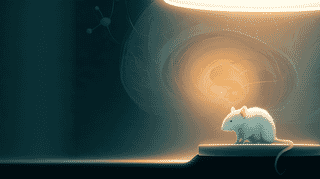
Yamada's lab studies aging. To do that, they built a special strain of mouse designed to light up cells that switch on a gene called p21.
p21 is a brake. When a cell's DNA is damaged, a guardian protein called p53 flips p21 on, and p21 halts the cell cycle so the cell stops dividing until the damage is dealt with. In aging tissue, p21 tends to accumulate. So the researchers expected their "p21 reporter" mice to glow mainly in old, worn-out cells.
Instead, one region lit up brightly in young mice: the growing end of the leg bones. The cells carrying the p21 brake there were not old and tired. They were osteoblasts, the cells that build new bone, and they were dividing furiously.
That is a strange thing to see. A cell that is actively multiplying while also flying the "damaged, slow down" flag. When the team looked closer, they found the reason. Fast-growing juvenile bone forces its osteoblasts to copy their DNA at high speed, and that speed causes what biologists call replication stress: the molecular equivalent of a printing press jamming as it runs too hot. The cells sense the strain through their DNA damage response and raise p21 as a precaution. In other words, the growing bone is a place of constant, low-level, self-managed stress. That turns out to be the soil osteosarcoma grows from.
This isn't a quirk of mice. The team also examined bone tissue from five young people and found the same signature: p21 sitting in proliferating osteoblasts near the growing end of the thigh bone.
The knee's hidden growth signal
Why the knee specifically? Those stressed, dividing osteoblasts don't act alone. They cluster next to the growth plate, the cartilage band that lengthens a child's bones, and they depend on a chemical signal it sends out, called Indian hedgehog (IHH).
Think of IHH as a "keep growing" message broadcast from the growth plate to the bone cells around it. It keeps the young osteoblasts in their proliferative, immature state. When the growth plate matures at the end of puberty and stops broadcasting, those cells settle down and the p21 signal fades. The team confirmed the link with a drug that blocks the hedgehog pathway: switch off the signal, and the proliferating population shrinks.
That already explains the timing and the location: the vulnerable cells exist only near an active growth plate, and only while a child is still growing.
The accelerator and the brake
The core of the study is where the team deliberately turned the mechanism into a cancer, to see what it takes.
They focused on two genes that show up again and again in human osteosarcoma. One is c-Myc, a powerful growth driver that is often amplified in patients. Call it the accelerator. The other is TP53, the gene for that guardian protein p53, which is lost or broken in the great majority of osteosarcomas. Call it the brake.
Pressing the accelerator alone was not enough. When the researchers cranked up c-Myc in juvenile bone cells, the cells did multiply rapidly, but only while the growth plate was still signaling, and the growth stalled once the plate matured. The brake, p53, kept responding to the mounting stress and holding things in check. No lasting tumor formed.
Then they did both at once: pushed the accelerator and cut the brake. Within about four weeks, the mice developed osteosarcoma. Not occasionally, but in every long bone, with the tumors turning aggressive and spreading to the lungs, the same organ osteosarcoma spreads to in people. The disease that normally takes over a year to appear in mouse models showed up in weeks, and it looked like the human illness.
The logic fits the clinic. It is the failure of the p53 brake, not the replication stress itself, that lets a primed cell tip into cancer, which is why nearly all human osteosarcomas carry a broken p53 alongside a growth-driving mutation like c-Myc.
What it means for drugs
Understanding a cause is not the same as having a cure, and the team is careful about that. The hedgehog-blocking drug that reined in the early cells failed once p53 was already gone, meaning it might matter only at a very early stage, if at all. This is a map of the disease, not a prescription.
But a map is exactly what osteosarcoma research has been missing. The standard treatment, a chemotherapy combination known as MAP (methotrexate, doxorubicin and cisplatin) plus surgery, dates to the 1970s and 80s and has barely changed since. Japanese reporting puts five-year survival at 70 to 80% when the cancer hasn't spread (international series tend to cite 60 to 70% for localized disease), falling to roughly 20 to 30% once it recurs or metastasizes. Those numbers have refused to budge for decades.
Here is where the comparison with Western drug pipelines gets pointed. Osteosarcoma is officially an orphan disease, and small markets attract small investment. One recent survey counted more than 860 clinical trials, but over 90% were early-stage phase I or II, and only a sliver reached the large phase III trials that change practice. Most of them recombine the same decades-old chemotherapy drugs. The clearest genuinely new agent, an immune modulator called mifamurtide, is approved and widely used in Europe but has never been cleared by the US FDA, a split that leaves an American teenager and a French teenager with different options for the same cancer. Targeted drugs and immunotherapies are being tested, but none has delivered a first-line breakthrough.
The bottleneck, in other words, isn't a shortage of drugs to try. It's a shortage of solid targets and of animal models that behave like the human disease. That is what basic research like this supplies: a mouse that reliably grows human-like osteosarcoma in weeks gives developers somewhere to test, and a mechanism explaining why p53 loss is decisive tells them what to aim at.
This is the less visible half of cancer progress, and the half public research tends to carry. Rare and pediatric cancers seldom justify a pharmaceutical company's bet on their own, so the upstream work of figuring out how a disease begins usually falls to academic labs first.
On the treatment side of the same disease, a separate Japanese effort, an oncolytic virus developed at Kagoshima University, has reached final-stage clinical trials (related article). The Tokyo work sits one step upstream, filling in the "why does it start" that any therapy is ultimately aimed at.
In Japan the story is being framed as a rare-cancer breakthrough with drug discovery on the horizon. How does your country pay for research into cancers too rare to be profitable, and who does that work when the market won't?







Global Discussion
0 comments