A University of Tokyo-led team finds Ryugu's sodium in clay and about 90% of its chlorine in serpentine, implying water a hundred times less salty than the sea. A Kyoto-led team had read a brine.
High-speed cameras trade detail for duration. A University of Tokyo team packs frames tightly at first and spreads them out later, linking roughly 5 orders of magnitude in time with 11 frames in a single shot.
Masahiko Inami read Ghost in the Shell as lab homework and helped build optical camouflage from reflectors and a projector. The world called it an invisibility cloak. He says that name would never have sparked the idea.
Get out of bed if you are not asleep in 20 minutes. That rule belongs to CBT-I, which a University of Tokyo analysis puts at 41% remission against 28% for pills. Japan covered it in June 2026, after rejecting it in 2024.
A University of Tokyo and Arc Institute team has shown how the IS621 jumping gene cuts itself out of an E. coli genome, resolving a chicken-and-egg puzzle that had stood since 2024.
Seven Japanese research groups repeated two landmark University of Tokyo senolytics experiments under blinded conditions and found no effect. The original team's rebuttal ran the same day, in the same journal.
In 200 colorectal cancer patients from Tokyo and Osaka, 44.8 percent of tumours carried a gut bacterium's mutational signature, rising to about 70 percent under 40. The damage may predate the age of ten.
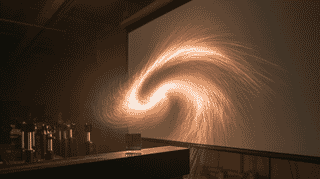
The hat, found in 2023, tiles the plane forever without repeating. A Japanese team etched 372,100 of its points into a silicon nitride film, fired a laser, and got back a pinwheel of light with no mirror image.
AIST and Tokyo startup OptQC have switched on MoQuren, a photonic quantum computer that needs no refrigerator and no vacuum chamber. What it can do now, and how Japan's bet differs from the US and China.
Why does osteosarcoma cluster in the knees of growing teenagers? A University of Tokyo team, working from an accidental clue in aging research, has pieced together how the cancer starts: an accelerator gene (c-Myc), a brake gene (p53), and a signal from the bone's growth plate. It could reshape drug discovery for a rare cancer.
Altermagnetism, the third type of magnet that stunned physics in 2024, had one flaw: no one could steer it. A Tokyo-KEK team aligned its domains in MnTe with a tiny millitesla field and watched them flip with polarized neutrons, with a stray field 10,000 times smaller than a ferromagnet's.
The Super-Kamiokande collaboration has caught the first-ever evidence of the diffuse supernova neutrino background, the combined glow of every massive star that has died since the universe began. Here is what it could reveal, and the spoonful of gadolinium that made it possible.
Damaged neurons were thought to be beyond repair. A University of Tokyo team led by Noboru Mizushima just challenged that in mice: switch the cell's cleanup system, autophagy, back on, and the protein junk clears, motor skills and memory return. A new angle on neurodegeneration from a disciple of Nobel laureate Yoshinori Ohsumi.
NTT, the University of Tokyo, RIKEN and OptQC squeezed light to a record 10.1 dB, over 90% of its quantum noise gone. How a 1998 teleportation gamble became the core of Japan's optical quantum computer.
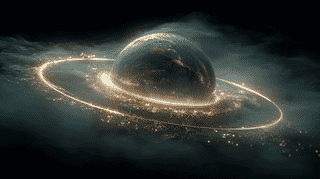
Researchers in Japan made a four-micrometer sphere of chiral polymer that lases in a flat ring, like Saturn. The molecules self-assembled into a surface swirl that gives the light a direction. A clear look at the first angle-selective lasing from a sphere, driven by its own surface chemistry.
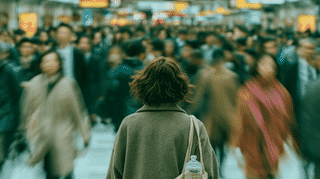
Discovered by accident during a COVID-era experiment, a University of Tokyo and Navarra study found about 65% of people drift counterclockwise when walking freely. Handedness and culture don't explain it, and even five-year-olds do it.
The University of Tokyo's Kono Lab, with Aisin and ARM Technologies, ran the world's first end-to-end demo storing green hydrogen in a room-temperature, non-flammable liquid, moving it between cities in a simple container, and generating power directly. We unpack the efficiency claims against ammonia and MCH, and how it diverges from US, European and Chinese hydrogen-carrier strategy.
In 1998, Akira Furusawa achieved the world's first unconditional quantum teleportation at Caltech. For two decades, no one knew what it was for. By 2024, that same trick was running an optical quantum computer on the cloud. From the teleportation misconception to the reframe that turned it into a processor, and the startup OptQC's push for a homegrown machine.
In 2004, Japanese cosmologist Katsuhiko Sato said 96% of the universe was a mystery. Twenty years and billions of galaxies later, it still is, and DESI's latest data suggests the mystery just got deeper. Here's why that's not a failure.
In 2004, a University of Tokyo brain scientist said humans are born wired for grammar. In 2022, ChatGPT learned language without any such wiring. The half-century debate Chomsky started is wide open again.