Here is something you can try tonight, for free. If you have been lying in bed awake for fifteen or twenty minutes, get up and go somewhere else until you feel drowsy again. It sounds like folk wisdom. It is not. It is one instruction out of a clinical protocol, and on June 1, 2026, that protocol entered Japan's public health insurance.
The rule you can start tonight
The full set is short. Do not get into bed until you are sleepy. Do nothing in bed except sleep. Get up at the same hour every morning regardless of how the night went. Do not nap in bed. And if you have not fallen asleep within fifteen to twenty minutes, get out of bed, and come back when the drowsiness returns. The idea is to stop your brain from filing the bed under "places where things happen."
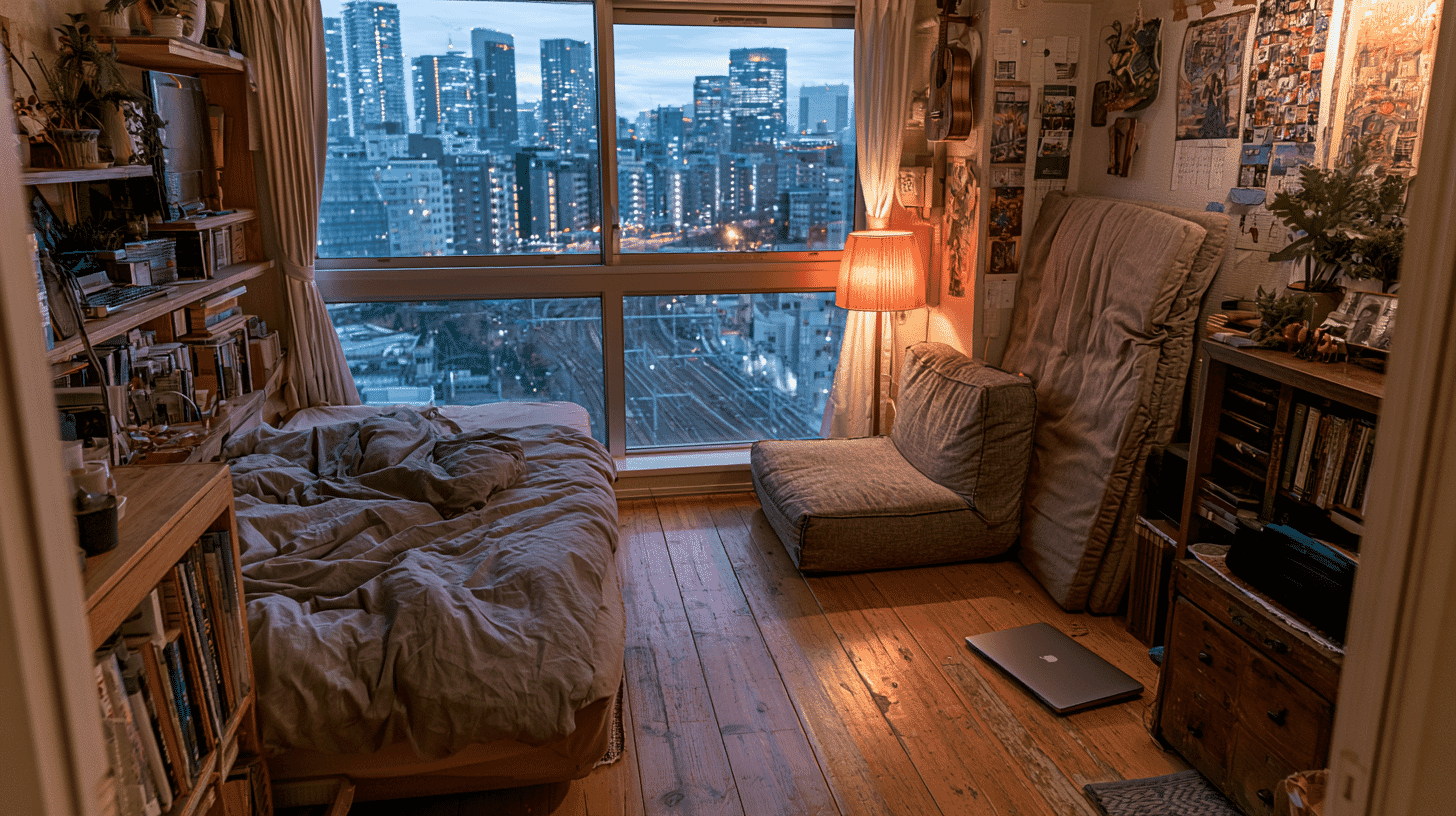
This is called stimulus control, and it circulates freely as a lifestyle tip. A Japanese book excerpt published on September 3, 2026 lays it out in detail, down to the furniture: a sofa will do, or a one-person chair, or a cushion on the floor, with the lighting turned down to a warm orange, and all of it somewhere other than the bedroom.
What usually gets lost in transmission is that stimulus control is not a standalone remedy. It is one component of cognitive behavioral therapy for insomnia, CBT-I, a multi-part course a clinician normally runs over several weeks. Keep that distinction in view, because the numbers people quote belong to the whole package, not to the one rule.
41% against 28%, and what that figure covers
A network meta-analysis led by Yuki Furukawa of the University of Tokyo Hospital's Department of Neuropsychiatry, with collaborators at Kyoto University, the University of Bern and the University of Pennsylvania, pooled 13 randomized controlled trials covering 823 people. It went online on August 26, 2024 and ran in the November issue of Psychiatry and Clinical Neurosciences.
Patients who started treatment with CBT-I were in remission 24 weeks later 41% of the time, with a confidence interval from 31% to 53%. Patients who started with medication reached 28%. The odds ratio for CBT-I over medication was 1.82, and the authors rated the certainty of that comparison as high. Adding medication on top of the therapy did not beat therapy alone, and the therapy group dropped out less often, which matters: a treatment nobody finishes is not a treatment.
Read the qualifier carefully. That 41% belongs to multicomponent CBT-I, not to the twenty-minute rule on its own. The American Academy of Sleep Medicine's guideline reflects the same split. It gives multicomponent CBT-I its one strong recommendation, and only conditional recommendations to the single components, stimulus control among them, alongside sleep restriction and relaxation therapy. Sleep hygiene advice used by itself it recommends against. Doing one piece of a protocol is better than nothing. It is not the thing that produced 41%.
Rejected in 2024, covered in 2026
Japan revises its fee schedule every two years, and the 2026 revision took effect on June 1. The mental health section gained one line: insomnia joined the conditions treatable under item I003-2, cognitive therapy and cognitive behavioral therapy. The tariff is 480 points when a physician delivers the session, 350 for a physician and nurse together, and 330 for a newly created category involving a licensed public psychologist. A point is worth ten yen, so a patient paying the standard 30% share spends between 990 and 1,440 yen per session, roughly six to nine dollars. The session must run more than thirty minutes to be billable.
This was the second attempt. In a joint statement dated December 23, 2024, the Japanese Association for Cognitive Therapy and the Japan Primary Care Association recorded that at the 2024 revision both face-to-face CBT-I and a prescription app had been turned down, on the grounds that "sufficient medical usefulness had not been demonstrated." The statement then objected to what came next: the app had been resubmitted on its own, while face-to-face therapy still had no coverage. Both arrived together in June 2026.
The opening is narrow. Reporting on the revision says the insomnia indication is limited to patients who also have depression or an anxiety disorder, or whose doctor judges that two or more sleep medications have not worked well enough. Coverage begins where the pills have already failed, which inverts the order the Tokyo analysis recommends. The cap is eight sessions, half the sixteen allowed for the other listed conditions. To bill the psychologist category, a clinic needs a full-time licensed psychologist who has spent two years in the outpatient department of a facility already providing this therapy, sat in on sixty treatment sessions, delivered psychological support in at least five cases and sixty sessions, and completed the required training. Japan had 76,547 licensed public psychologists on the register at the end of June 2026. How many clear that bar is not a figure anyone appears to have published.
The app arrived the same day. Medcle, from the Tokyo company SUSMED, runs nine weeks: seven days of sleep hygiene guidance, then eight weeks of CBT-I. Its reimbursement price is 24,100 yen, about $154, of which a patient pays roughly 7,650 yen. It can be billed once per patient, ever, the prescribing doctor needs six hours of training, and it excludes anyone already on sleep medication, anyone with a psychiatric diagnosis and anyone with a serious physical illness. The official forecast puts peak uptake at 19,677 patients, in a country where one adult in five told the 2024 National Health and Nutrition Survey that sleep does not leave them rested.
Where exactly are you supposed to go?
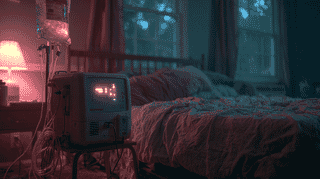
Now the part the guidelines skip, because they were written for countries with spare rooms. Stimulus control assumes a second one. You leave the bed, you sit somewhere dim, you come back when you are sleepy.
Japan's average apartment-building dwelling measures 50.31 square meters and has 2.71 living rooms, according to the 2023 Housing and Land Survey. In Tokyo the average dwelling is 64.02 square meters and 3.16 rooms, and 17.8% of households fell below the national minimum housing floor-area standard. Half of Tokyo's households, 50.26% at the 2020 census, consist of exactly one person. For a large share of the people most likely to be awake at 2 a.m. in a Japanese city, the room you are told to leave and the room you are told to go to are the same room, and the armchair you are supposed to retreat to is a futon folded against the wall.
That minimum standard is no longer in the plan. On March 27, 2026, the cabinet adopted a new national housing plan that drops it. The single-person figure of 25 square meters, in place for decades, survives only in the past tense: something to bear in mind, the plan says, while promoting homes of more than about 40 square meters. The ministry's stated reason was that lifestyles and housing choices have diversified to the point where the standard was no longer needed. Three months after the government stopped drawing a floor under how small a home may be, it started paying for a therapy whose central instruction is to go to another room.
No accident, then, that this advice reaches Japanese readers as furniture instructions from an interior coordinator rather than as a treatment plan from a clinician. If the therapy is a spatial protocol and the space is not there, someone has to solve for the space.
Britain worked this out in 2022
The American Academy of Sleep Medicine published its behavioral guideline at the end of 2020, and in April 2026 added a companion guideline that suggests against putting medication on top of the therapy. Britain's NICE went further on May 19, 2022, recommending the digital program Sleepio for people who cannot get face-to-face therapy, explicitly in place of sleep hygiene leaflets and sleeping pills rather than alongside them.
Japan arrived in June 2026, four years after NICE and more than five after the American guideline, and arrived through a narrow door: only after the pills fail, only eight sessions, only at clinics that can staff it. The direction is right. What is left is the distance between what the insurance card covers and what a person can actually book.
So the practical position, if you are reading this at 2 a.m., is roughly this. The twenty-minute rule is worth trying and costs nothing, and if you have no second room, the salvageable part is simply refusing to work, eat and scroll in the bed. If sleeping pills have already failed you, the door that opened in June is the one to ask a doctor about, because that is exactly who it was built for. Meanwhile 36.2% of Japanese men and 33.9% of Japanese women sleep less than six hours a night, and among adults aged 20 to 59 only 73.0% say sleep leaves them rested. They are not waiting for the health system. They are buying books about where to put the lamp.
So: in your country, is insomnia something a doctor treats, an app treats, or something you are quietly expected to fix yourself? And if someone told you to get out of bed and sit somewhere else until you felt sleepy, would you have somewhere to sit?
References
- https://president.jp/articles/-/118386
- https://onlinelibrary.wiley.com/doi/10.1111/pcn.13730
- https://www.medrxiv.org/content/10.1101/2024.04.24.24306311v1
- https://npsy.umin.jp/information/%E4%B8%8D%E7%9C%A0%E7%97%87%E6%B2%BB%E7%99%82%E3%81%AF%E4%B8%8D%E7%9C%A0%E3%81%AE%E8%AA%8D%E7%9F%A5%E8%A1%8C%E5%8B%95%E7%99%82%E6%B3%95%E3%81%8B%E3%82%89%E5%A7%8B%E3%82%81%E3%82%8B%E3%81%93%E3%81%A8/
- https://aasm.org/new-guideline-supports-behavioral-psychological-treatments-for-insomnia/
- https://pmc.ncbi.nlm.nih.gov/articles/PMC13076838/
- https://www.nice.org.uk/guidance/mtg70
- https://jact.jp/wp_site/wp-content/uploads/2024/12/%E4%B8%8D%E7%9C%A0%E7%97%87%E3%81%AE%E8%AA%8D%E7%9F%A5%E7%99%82%E6%B3%95%E3%83%BB%E8%AA%8D%E7%9F%A5%E8%A1%8C%E5%8B%95%E7%99%82%E6%B3%95%E3%81%AE%E8%A8%BA%E7%99%82%E5%A0%B1%E9%85%AC%E5%8C%96%E3%81%AB%E9%96%A2%E3%81%99%E3%82%8B%E5%85%B1%E5%90%8C%E5%A3%B0%E6%98%8E.pdf
- https://www.jccpp.or.jp/files/items/468/File/2026revision%20of%20medical%20fees.pdf
- https://diamond.jp/articles/-/393133
- https://www.susmed.co.jp/news/post/12299/
- https://healthcareit.jp/?p=7800
- https://www.scj.go.jp/ja/info/kohyo/pdf2/kohyo-26-h260828.pdf
- https://www.mhlw.go.jp/content/10900000/001603146.pdf
- https://www.stat.go.jp/data/jyutaku/2023/pdf/kihon_gaiyou.pdf
- https://www.toukei.metro.tokyo.lg.jp/jyutaku/2023/jt23tgaiyou.pdf
- https://www.mlit.go.jp/jutakukentiku/house/content/001416995.pdf
- https://www.tokyo-np.co.jp/article/186879



Global Discussion
3 comments