A 400-year-old herbal liquor is being acquired by Japan's biggest Kampo medicine company for $45 million, after a takeover run by Japan's best-known activist investor. Two pillars of Japanese traditional medicine are coming together through an unusually shaped deal.
What Tsumura Is Actually Buying
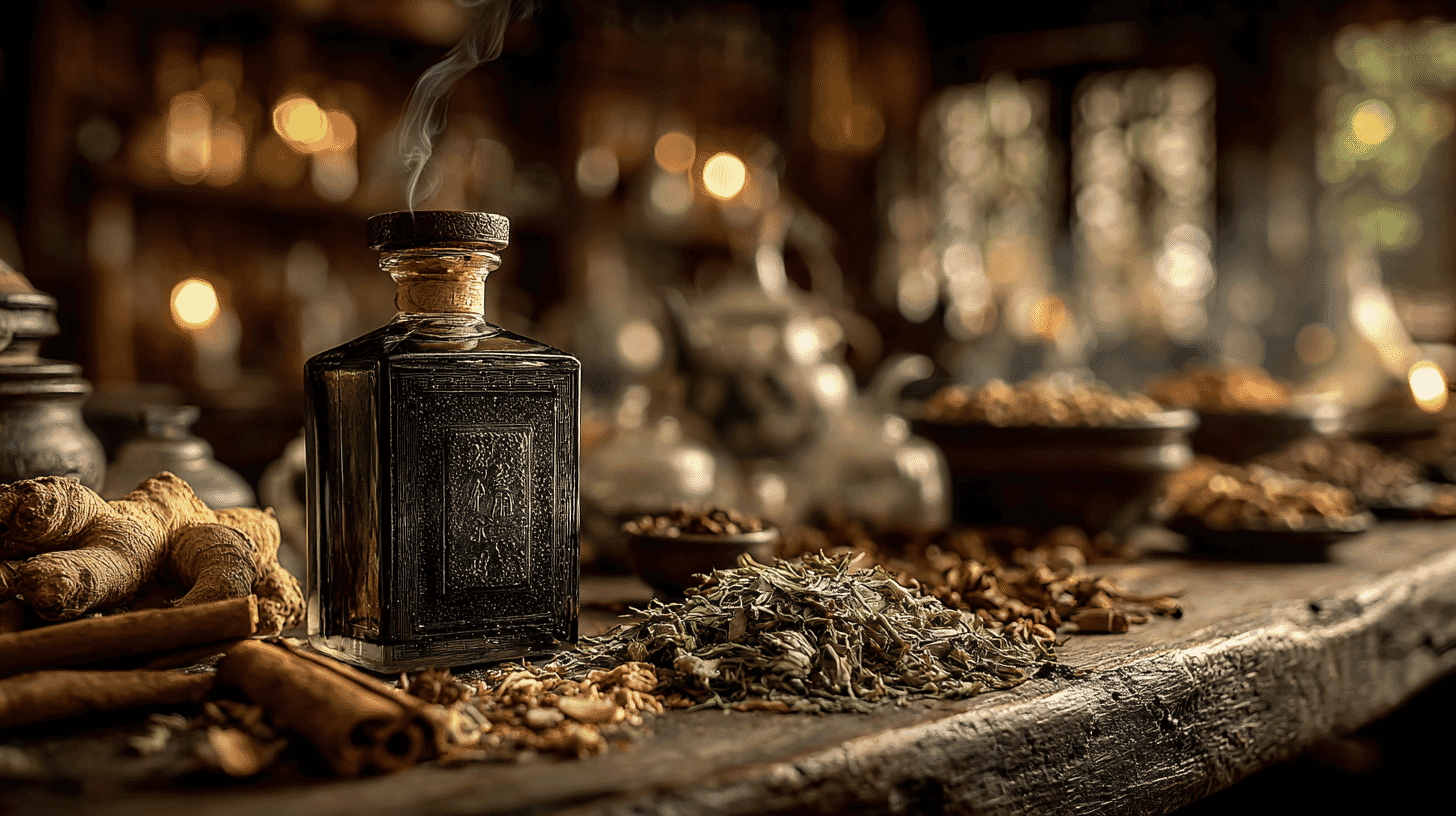
On February 25, 2026, Tsumura, Japan's dominant Kampo (traditional herbal medicine) company, announced it would acquire the core business of Yomeishu Seizo for about ¥6.8 billion ($45 million). Yomeishu Seizo makes Yakuyo Yomeishu, the medicinal herbal liquor in the red bottle that has been produced continuously since 1602, when it originated in Ina, in what is now Nagano Prefecture.
Tsumura controls over 80% of Japan's prescription Kampo market and offers 129 of the 148 formulations covered by national health insurance. This is the first time the two lineages have sat inside one corporate group.
The Murakami Connection
This is not an ordinary acquisition. It runs through several stages, using investment vehicles linked to Yoshiaki Murakami, Japan's best-known activist investor.
First, Reno, an investment firm associated with Murakami, ran a tender offer (TOB) for Yomeishu shares at ¥4,050 per share, from February 25 to April 8, 2026. The price was set at a discount to the ¥4,595 close on the day before the announcement.
After the TOB, Reno takes 66.66% through a share consolidation and squeeze-out and transfers those shares to Yuzawa, which holds the remaining 33.34%. Yuzawa is effectively owned by Yukihiro Nomura, a relative of Murakami. Yomeishu is delisted from the Tokyo Stock Exchange's Prime Market in the process.
Cash, securities and real estate carried at roughly ¥39.4 billion are then separated out as non-operating assets, leaving a company focused on the medicinal Yomeishu line. Around July to August 2026, Tsumura buys all the shares. The business goes to Tsumura; the assets stay with the investors.
A deal with U.S. private equity firm KKR had fallen through in December 2025 when Yuzawa refused to sell its stake. In March of that year, Taisho Pharmaceutical Holdings had already exited a long-standing partnership by selling its entire holding to Yuzawa.
Why Tsumura Wanted Yomeishu
The strategic rationale is compelling on multiple levels.
Brand power: Yomeishu is one of Japan's most recognized consumer health brands, thanks to decades of TV advertising and its distinctive red bottle. While Tsumura dominates prescription Kampo, its over-the-counter (OTC) presence has been limited. Yomeishu instantly gives Tsumura a household name in consumer markets.
Shared raw materials: Both Kampo medicines and Yomeishu are made from "shoyaku", processed botanical ingredients (medicinal herbs). Tsumura operates an extensive supply chain across China, including herb cultivation, processing, and quality control facilities. Integrating Yomeishu's raw material procurement into this network promises cost savings and quality consistency.
Distribution synergy: Tsumura has strong sales channels into hospitals and pharmacies nationwide. Yomeishu's sales have been declining, down roughly 9% year-over-year for April–December 2025, as supplements and functional foods have eaten into its market. Tsumura's medical distribution network could help revitalize the brand.
Global expansion: This is the headline story. Tsumura's long-term vision calls for overseas revenue to reach 50% of total sales by 2031, up from approximately 10% today. Yomeishu has a history of international sales dating back to before World War II, by 1940, exports accounted for 30% of total production. The product is currently exported to over a dozen countries, including China, Malaysia, Singapore, and Brazil.
Kampo Goes Global, Evidence Is the Key
Japanese Kampo medicine traces its roots to Chinese Traditional Medicine (TCM) but has evolved independently in Japan over centuries. What makes it unique globally is its full integration into Japan's national healthcare system. Currently, 148 Kampo formulations are covered by health insurance, and according to the Japan Society for Oriental Medicine, 89% of Japanese physicians prescribe Kampo medicines.
Tsumura is actively pursuing international validation. Its U.S. subsidiary, TSUMURA USA, INC., based in Princeton, New Jersey, is conducting clinical trials on Daikenchuto (TU-100), a flagship Kampo formula, for post-surgical ileus (intestinal obstruction). The goal is to prove the drug's safety and efficacy by Western pharmaceutical standards.
The company has also launched "KAMPOmics," a research framework that combines multi-omics analysis (genomics, proteomics, metabolomics) with network science to scientifically decode how Kampo medicines work. Classical Kampo concepts like "sho" (individual constitution-based diagnosis) and "mibyo" (pre-symptomatic conditions) align remarkably well with modern trends in precision medicine and preventive healthcare.
The Global Traditional Medicine Boom
This acquisition comes against the backdrop of explosive growth in global traditional medicine markets.
The worldwide complementary and alternative medicine market is estimated at roughly $222.6 billion in 2025. At the projected 25% compound annual growth rate, that would pass $2 trillion by 2035. The Traditional Chinese Medicine market alone is valued at about $268 billion in 2025, and Asia-Pacific accounts for over 62% of the global total.
Japan's herbal medicine market stands at around $3 billion (2024) and is expected to grow to nearly $12 billion by 2035, representing a compound annual growth rate of 13.3%.
Interest is surging in Western countries too. The U.S. National Institutes of Health allocated $154 million for complementary medicine research in 2024. Prestigious institutions like the Mayo Clinic, Cleveland Clinic, and Johns Hopkins now offer integrative medicine programs. Germany leads Europe's alternative medicine market with a 28.6% share, having institutionalized naturopathy within its healthcare system.
Japan's Kampo vs. China's TCM, Quality as a Competitive Edge
China dominates the traditional medicine market in sheer scale, with over 2,800 TCM hospitals and 35 accredited universities. However, Japanese Kampo has a distinct competitive advantage: pharmaceutical-grade quality control.
Tsumura manages an end-to-end value chain from herb cultivation to finished products, ensuring consistency that meets stringent pharmaceutical standards. While Chinese manufacturers have recently introduced innovations like QR-tracked traceability and AI-powered herb pairing, Tsumura's quality management system remains a global benchmark.
Interestingly, Tsumura is also entering the Chinese market itself. The company has expanded its Tianjin factory to produce up to 2,250 tons of extract powder annually and formed a joint venture with China Ping An Insurance to pursue "zhongchengyao" (Chinese patent medicine) products. It's essentially a "reverse export", bringing Japanese quality standards to the birthplace of traditional East Asian medicine.
Yomeishu, A One-of-a-Kind Product
Yomeishu is classified as a Class 2 pharmaceutical in Japan. Not a supplement, not merely an alcoholic beverage, but a registered medicine. It contains 14 medicinal herbs infused in mirin (sweet rice wine), at 14% alcohol, comparable to wine.
Its recognized medicinal effects include treatment for gastrointestinal weakness, poor appetite, poor complexion, cold sensitivity, physical fatigue, general weakness, and recovery support during or after illness. The recommended dose is 20mL taken three times daily before meals or at bedtime.
While sales have slowed in recent years due to competition from supplements and functional foods, Yomeishu's status as a licensed pharmaceutical product creates a high barrier to entry for competitors. In the "medicinal liquor" category, it holds a near-monopoly. Combined with Tsumura's brand strength and distribution capabilities, the potential for domestic and international growth is substantial.
What This Means for Traditional Medicine Worldwide
Tsumura's acquisition of Yomeishu is more than a business deal. It brings together two distinct streams of Japanese traditional medicine, Kampo (herbal prescriptions) and yakushu (medicinal liquor), under one corporate umbrella for the first time.
Around the world, there is growing recognition that Western medicine alone cannot address all health challenges, particularly chronic conditions and sub-clinical health issues. China's TCM, India's Ayurveda, and Japan's Kampo are all gaining international attention. What sets Japan's approach apart is its commitment to evidence-based validation and pharmaceutical-grade quality control.
Whether this merger can propel Japanese traditional medicine onto the global stage remains to be seen. But as the wellness industry booms and consumers everywhere seek alternatives to synthetic pharmaceuticals, the timing could hardly be better.
How popular are traditional medicines and health products in your country? Are they covered by your healthcare system like Kampo is in Japan? We'd love to hear about your experience, share your thoughts!
Update: Reno's tender offer closed on April 8, 2026 with 6,920,500 shares tendered, above the 1,903,900-share minimum, so the offer succeeded. Settlement began on April 15 and Reno became Yomeishu Seizo's largest shareholder with 49.70%; the total paid was about ¥28 billion. Yomeishu is due to be delisted around June 2026 after a share consolidation, with Tsumura acquiring all shares between July and August to make it a wholly owned subsidiary. Separately, the Kurasuwa retail business is being spun off into a new company whose shares will be sold to Yamada Bee Farm. (As of August 2026)







Global Discussion
15 comments