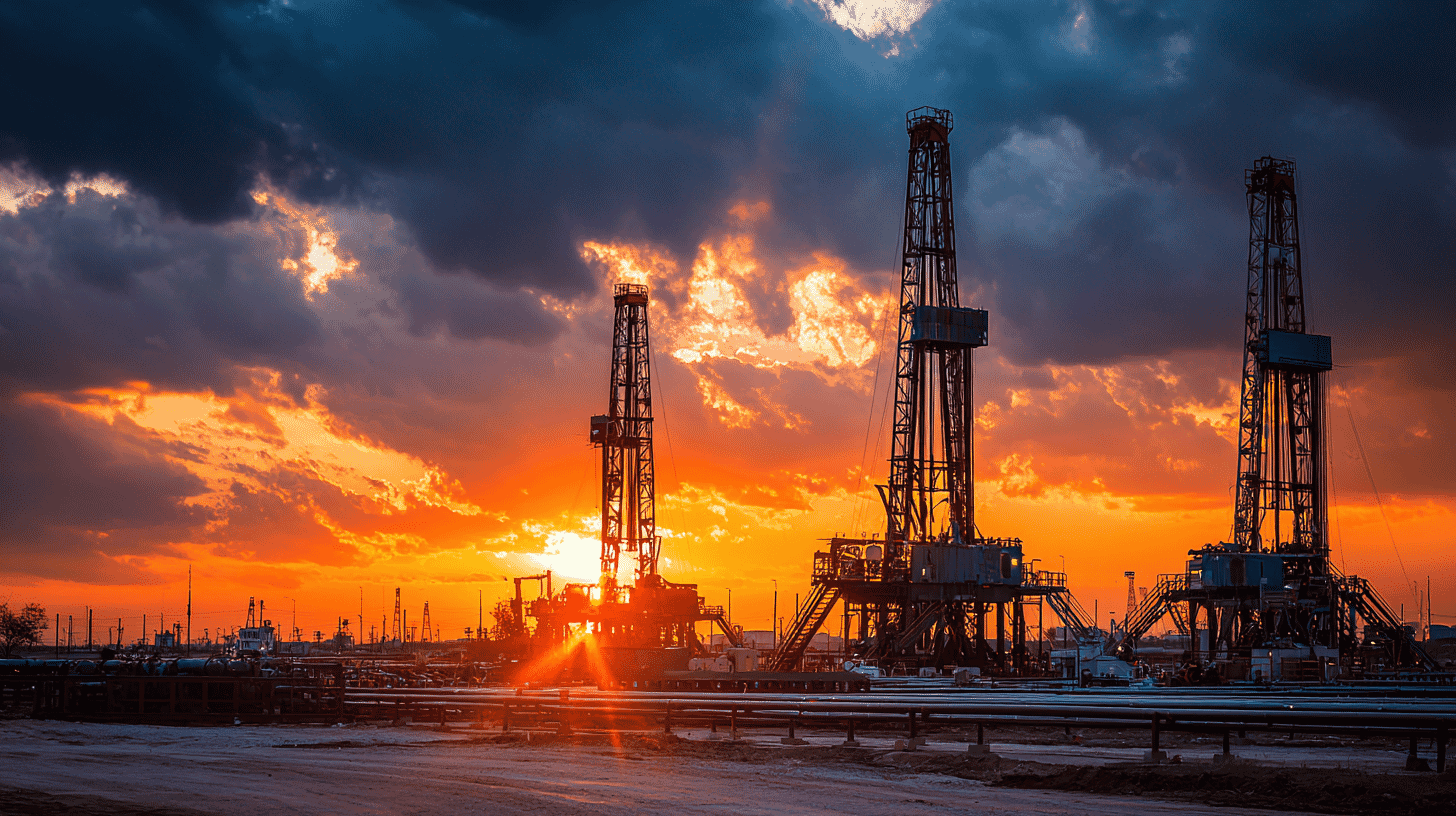
Mitsubishi Corporation has bought US shale gas producer Aethon for a total of about 1.2 trillion yen including assumed debt, its largest deal ever, completed in July 2026. It gives the trading house an integrated chain in the US from gas production through transport to LNG exports. Here is what the deal, made five months after Mitsubishi pulled out of offshore wind, means for Japan's energy security.
Record-Breaking Japanese Investment in American Shale
On January 16, 2026, Mitsubishi Corporation announced it would acquire all interests in Aethon, the collective name for Aethon III LLC, Aethon United LP and related companies, from existing investors including the Ontario Teachers' Pension Plan, RedBird Capital Partners and Aethon Energy Management, marking the largest purchase ever by a Japanese company in the American shale sector. The deal values the business at approximately $7.5 billion, comprising $5.2 billion in equity and $2.33 billion in assumed debt.
The deal marks Mitsubishi's entry into U.S. shale gas production and creates an integrated energy value chain from upstream extraction to LNG exports. The acquisition is expected to close in the April-June quarter of 2026, subject to customary regulatory approvals.
Understanding Aethon Energy
Aethon, founded in 1990 and headquartered in Dallas, Texas, stands as one of the largest privately held natural gas producers in the United States. Under the leadership of founder and CEO Albert Huddleston and President Gordon Huddleston, the company has built a leading position in the Haynesville Shale formation.
Key characteristics of Aethon's assets include:
- Current Production: Approximately 2.1 billion cubic feet per day (equivalent to ~15 million tonnes of LNG annually)
- Growth Plan: Targeting an increase to approximately 18 million tonnes of LNG equivalent (about 2.6 billion cubic feet per day)
- Net Acreage: Nearly 400,000 acres of prime shale territory
- Infrastructure: Over 1,700 miles of pipeline systems
To put this in perspective, Aethon's production capacity represents roughly one-quarter of Japan's total LNG imports in 2024, which stood at approximately 66 million tonnes.
Strategic Rationale: Building an Integrated Value Chain
At the press conference, Mitsubishi Corporation President Katsuya Nakanishi said the acquisition lets the company to handle gas operations comprehensively, from production through transportation to sales within the United States. Securing stable supply from American sources, he added, matters for Japan's energy security.
Prior to this deal, Mitsubishi maintained presence in North American energy through various channels including LNG exports via Cameron LNG, domestic U.S. gas marketing operations, and shale gas development in Canada through its stake in Ovintiv's British Columbia operations. However, the company lacked direct upstream ownership in the United States.
The acquisition creates a comprehensive value chain:
- Upstream: Shale gas development and production at Haynesville
- Midstream: Pipeline transportation and gathering systems
- Downstream: Domestic U.S. sales and LNG exports to Japan, Asia, and Europe
The strategic location of Aethon's assets near Gulf Coast LNG export terminals, particularly Cameron LNG where Mitsubishi holds liquefaction capacity rights, provides significant logistical advantages for efficient export operations.
Anticipating AI and Data Center Energy Demands
A critical driver behind this acquisition is the explosive growth in power demand driven by artificial intelligence and data center expansion. Mitsubishi's statement highlighted that the U.S. gas market represents the world's largest in domestic demand, production, and exports, with further growth anticipated from rising power requirements of AI and data center operations.
As hyperscale data centers proliferate globally, natural gas-fired power generation remains essential for reliable baseload electricity. Mitsubishi is positioning itself to capture that demand while exploring links with its existing U.S. power generation and data center businesses.
Trump Administration's Pro-LNG Stance Creates Favorable Environment
President Donald Trump has reversed the Biden administration's restrictions on new LNG export permits, signaling clear support for the industry. The administration has also announced plans to accelerate LNG development in Alaska, suggesting continued expansion of U.S. LNG export capacity.
During Prime Minister Shigeru Ishiba's February 2025 meeting with President Trump, Japan committed to purchasing "record amounts" of LNG from the United States. Mitsubishi's investment aligns with this broader framework of enhanced U.S.-Japan energy cooperation.
Implications for Japan's Energy Security
Japan remains heavily dependent on energy imports, relying on foreign sources for 99.7% of its oil, 97.7% of its LNG, and 99.6% of its coal. LNG supply routes traverse geopolitically sensitive areas including the Strait of Hormuz and the South China Sea.
The Seventh Strategic Energy Plan, approved by the Cabinet in February 2025, sets ambitious targets for increasing Japan's "self-development ratio" of fossil fuel resources, from 37% in fiscal 2023 to over 50% by 2030 and 60% by 2040. Mitsubishi's acquisition directly supports this national policy objective.
Additionally, uncertainties surrounding the Sakhalin-2 project in Russia underscore the importance of supply diversification. Securing stable gas procurement from a trusted ally like the United States carries substantial energy security benefits.
Financial Expectations and Market Response
According to Mitsubishi, the acquisition will begin contributing to earnings from fiscal year 2027, with projected net income contribution of approximately 70-80 billion yen (roughly $450-530 million) by fiscal year 2028.
The company is pursuing a 4 trillion yen investment plan aimed at achieving 1.2 trillion yen in net income by March 2028. However, market skepticism persists regarding this target, with Mitsubishi's shares declining approximately 2% following the announcement.
Notably, Aethon represents a well-optimized asset portfolio, having been refined by private equity investors including Ontario Teachers' Pension Plan and RedBird Capital Partners. The deal structure includes an option for the founding family to repurchase up to 25% of upstream and midstream assets within six months of closing, providing risk mitigation.
Japanese Trading Houses Accelerate U.S. Shale Investments
Mitsubishi's move represents part of a broader wave of Japanese energy company investments in American shale:
- JERA: Acquired Haynesville shale assets in Louisiana for $1.5 billion in October 2025
- Tokyo Gas: Purchased Rockcliff Energy II for $2.7 billion in 2023, consolidating regional operations
- Japan Petroleum Exploration (JAPEX): Announced $1.3 billion acquisition of Verdad Resources in December 2025
Mitsubishi already holds Japan's largest LNG production capacity at 14.9 million tonnes annually worldwide, with plans to expand to 18 million tonnes by the early 2030s. This acquisition significantly advances that objective.
Natural Gas in the Energy Transition
Natural gas produces lower CO2 emissions compared to oil and coal, positioning it as a "bridge fuel" during the transition to a decarbonized economy. However, concerns persist regarding methane leakage and the potential for gas investments to delay renewable energy deployment.
Alongside the acquisition announcement, Mitsubishi revealed a strategic alliance with Aethon to explore opportunities in LNG exports, carbon capture utilization and storage (CCUS), geothermal energy, and low-carbon natural gas. The company intends to run fossil-fuel acquisition and decarbonization technology in parallel.
The decision is clearer set against what came just before. In August 2025 Mitsubishi announced it was pulling out of offshore wind projects in three Japanese sea areas. Five months later it put its largest sum ever into fossil fuel production. It reads as a reallocation of capital: closing a business whose economics did not add up and moving money into a field where it has half a century of experience, going back to Brunei LNG in 1969.
If successful, this acquisition could establish a precedent for Japanese trading houses to assume larger roles within the global energy value chain.
Update: On July 15, 2026, Mitsubishi announced that the deal had closed. It acquired all of Aethon's shares effective July 14, making the company a wholly owned subsidiary at a confirmed total of roughly 1.2 trillion yen. Operations now sit with Adamas Energy, a wholly owned Mitsubishi subsidiary based in Dallas, headed by Gordon Huddleston. (Added August 2026)
How does your country approach energy security? What role does natural gas or LNG play in your national energy policy? We'd love to hear your perspective!
References
- https://the-shashi.com/tse/8058/decisions/haynesville-gas-acquisition-2025/
- https://www.mitsubishicorp.com/jp/en/news/release/2026/20260116002.html
- https://www.cnbc.com/2026/01/16/mitsubishi-shale-gas-assets-texas-louisiana-deal.html
- https://jpt.spe.org/mitsubishi-enters-us-shale-gas-with-7-2-billion-purchase-of-aethon-assets
- https://finance.yahoo.com/news/mitsubishi-buys-aethon-us-gas-141220712.html
- https://invezz.com/news/2026/01/16/mitsubishi-to-buy-aethon-us-gas-assets-for-7-5b-in-shale-push/
- https://justthenews.com/nation/states/center-square/mitsubishi-buys-louisiana-texas-shale-gas-assets-75b








Global Discussion
15 comments